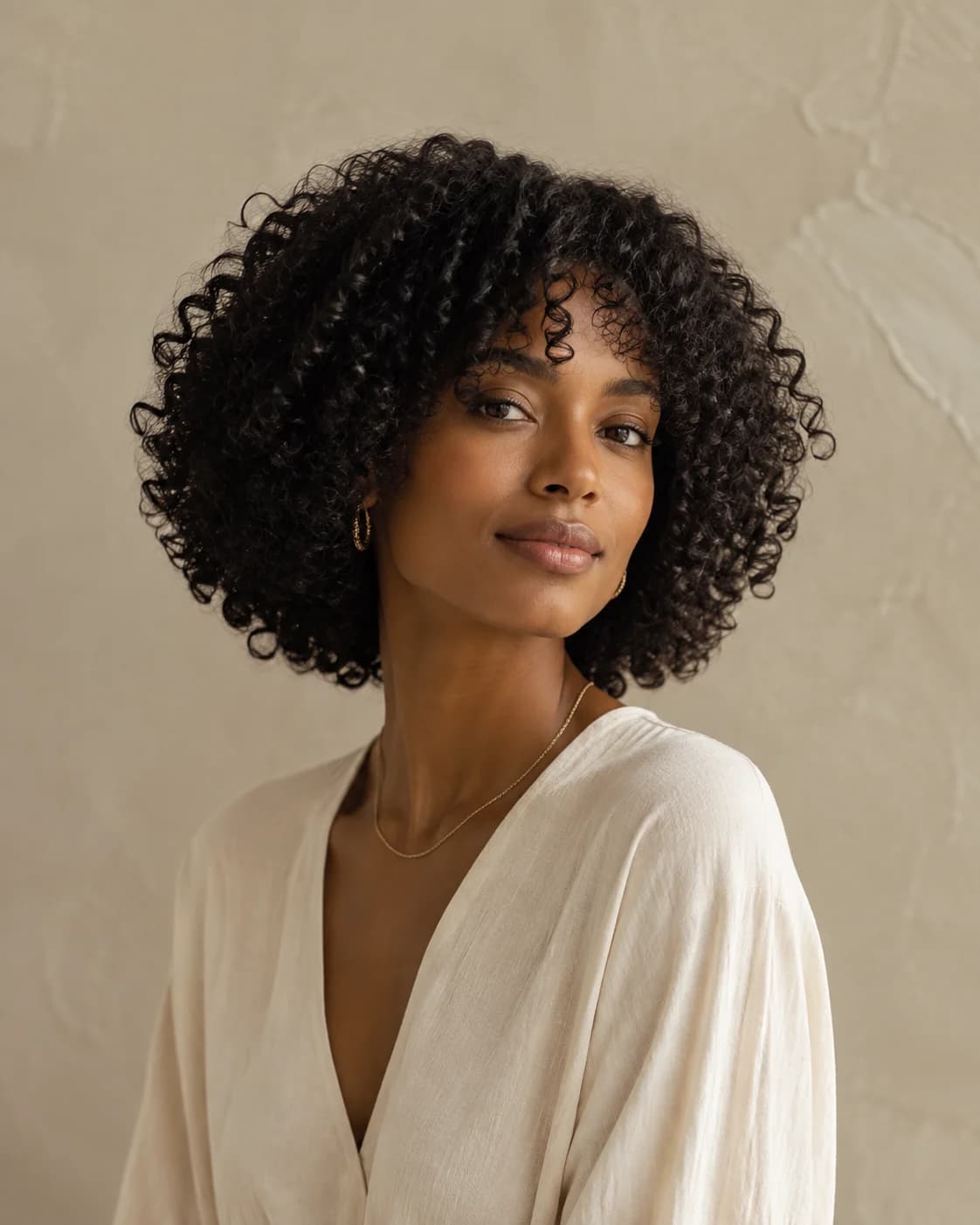
Identify where the wave begins
Some waves start at the root; others form only through the mid-lengths. Heavy length can stretch a loose pattern, while very short layers may sit straighter or spring more than expected.
Notice what happens without heat styling. The position of the natural bend helps determine where a layer can reinforce movement rather than interrupt it.
Keep flexibility in the shape
Collarbone cuts, long blended layers, and soft shags can all suit wavy hair because they allow movement without requiring a rigid finish. A strong blunt line can also work when you want the wave to sit over a clear perimeter.
Choose based on how often you wear the hair natural versus smooth. A good plan should accommodate both if that is part of your real routine.
Talk about humidity and day-two hair
The first styled day is only one version of the haircut. Tell your stylist whether your wave expands, drops, or becomes more defined after sleeping on it.
Ask for a styling demonstration you can repeat with your normal products and drying method. The easiest cut is the one whose finish you can reproduce.
Bring one reference with polished waves and one with a looser, air-dried finish. Both reveal useful expectations.

Map the sections that behave differently
Do not reduce your hair to one pattern label. Note whether the canopy is straighter than the underside, whether the nape curls, whether the front drops quickly, and which side forms a stronger bend. Those differences help explain why one layer may spring while another appears almost one-length.
A stylist can use that map to adjust elevation and weight instead of imposing perfect symmetry on an uneven pattern. The goal is a balanced overall shape, not identical wave formation in every section. Bring a day-one and day-three photo if the pattern changes noticeably between washes.
Choose how much definition the routine requires
Some wavy cuts look strongest with separated, defined bends; others work as a softer, brushed texture. Decide whether you enjoy applying product in sections, diffusing, refreshing, or simply letting the hair dry with minimal handling. A heavily textured reference may rely on more technique than its “undone” finish suggests.
Ask for one repeatable home method and a second low-effort option. If you use heat, keep temperature and frequency conservative because repeated excessive heat can damage the hair shaft. The cut should provide a coherent outline even when the wave is looser than on the best styling day.
A flexible wavy haircut has two good settings: the defined version and the ordinary air-dried version.
Three terms that make this conversation clearer.
You do not need to prescribe technique. Use these words to describe the visible structure, name the behavior you want, and ask what your stylist would adapt.
Density
The amount of hair growing across an area of the scalp, not the thickness of each individual strand. Density can vary across the same head and changes how much visual weight a perimeter, fringe, or layer plan can retain after hair is removed.
SAY IT IN THE CHAIR“Which areas have enough density for this layer plan, and where should we protect visual fullness?”Open full definition
Strand thickness
The diameter of an individual hair strand, commonly described as fine, medium, or coarse. It is different from density: someone can have many fine strands or fewer coarse strands, and the two facts can lead to different decisions about layers and perimeter weight.
SAY IT IN THE CHAIR“Can we separate my strand thickness from my overall density before choosing how much weight to remove?”Open full definition
Shrinkage
The difference between stretched or wet length and the position hair takes when dry in its usual pattern. Shrinkage is not uniform across every section, so a useful haircut plan considers the dry silhouette and the shortest springing areas rather than one overall number.
SAY IT IN THE CHAIR“Please choose the shortest pieces from their dry position and account for the sections that spring the most.”Open full definition
Turn this guide into a decision.
Three honest answers are more useful than ten additional reference photos. Your responses stay on this page and can be changed at any time.
- 01Can you describe what your hair does after your normal wash and dry?
Include pattern, shrinkage, density, expansion, and the finish you wear most often.
- 02Have you named the boundary you do not want traded away?
Examples: tie-back length, full ends, an open forehead, dry length, or support for natural texture.
- 03Does the plan fit your real styling and maintenance rhythm?
Count ordinary mornings, fallback styles, trim frequency, and the way the shape is likely to grow.
The short answers.
Are layers good for wavy hair?
Often, but placement matters. Layers can encourage movement or remove too much weight depending on the pattern, density, and length.
What length is easiest for wavy hair?
There is no universal length. Collarbone and longer shapes are flexible, while shorter cuts can be easy when the natural wave supports the intended silhouette.
How this guide was built.
HairChapter separates haircut structure from styling, trend names, and medical claims. Our recommendations are decision tools, not universal rules: a stylist should adapt the direction to your starting length, density, pattern, condition, growth habits, and normal routine.
We do not claim that a photograph or AI preview can predict a finished service. Sudden shedding, patchy loss, scalp pain, persistent irritation, or an unexplained change in density belongs with a qualified medical professional—not a haircut guide.
Sources for health-related statements
- American Academy of Dermatology — Hair styling without damage Conservative heat-styling guidance