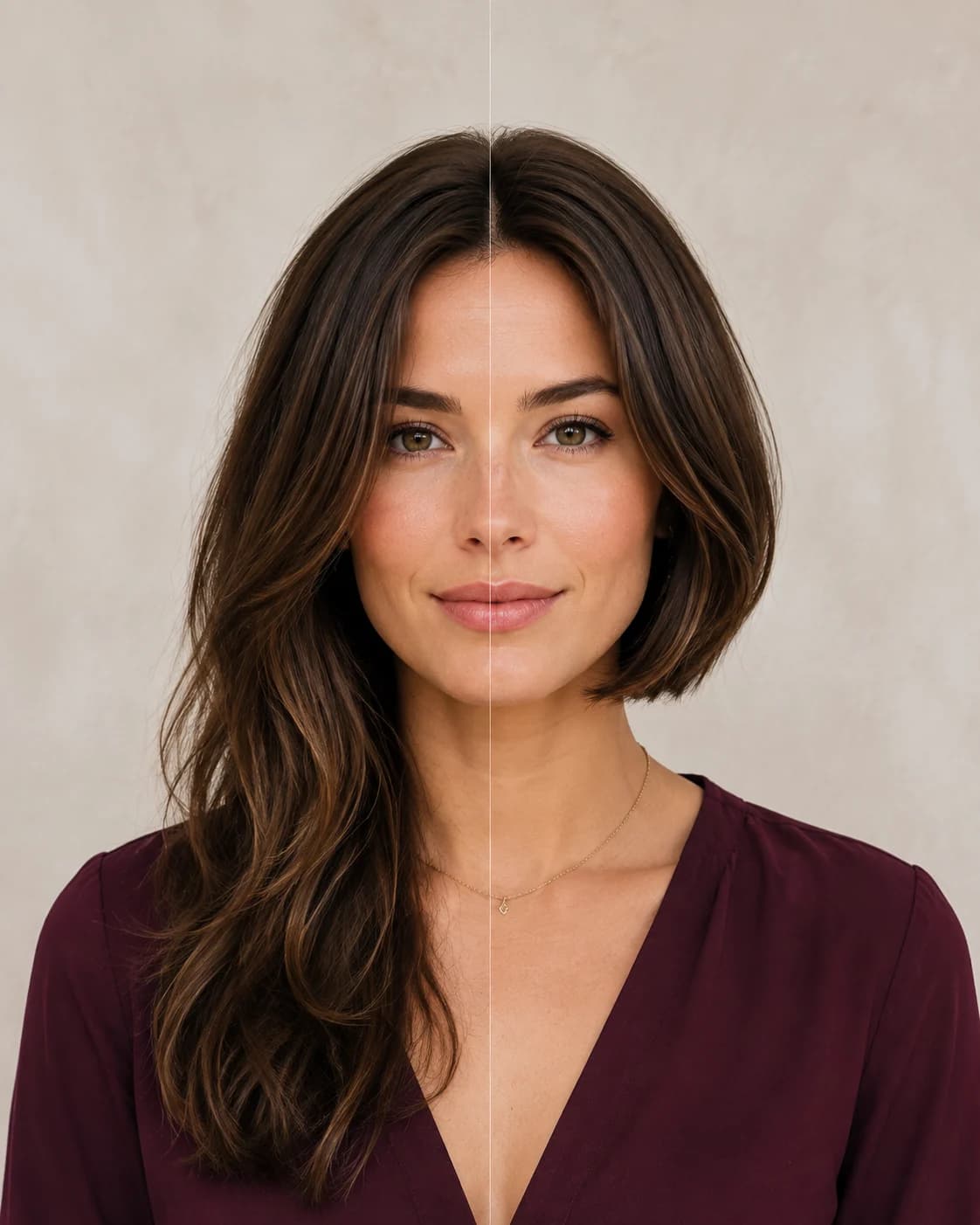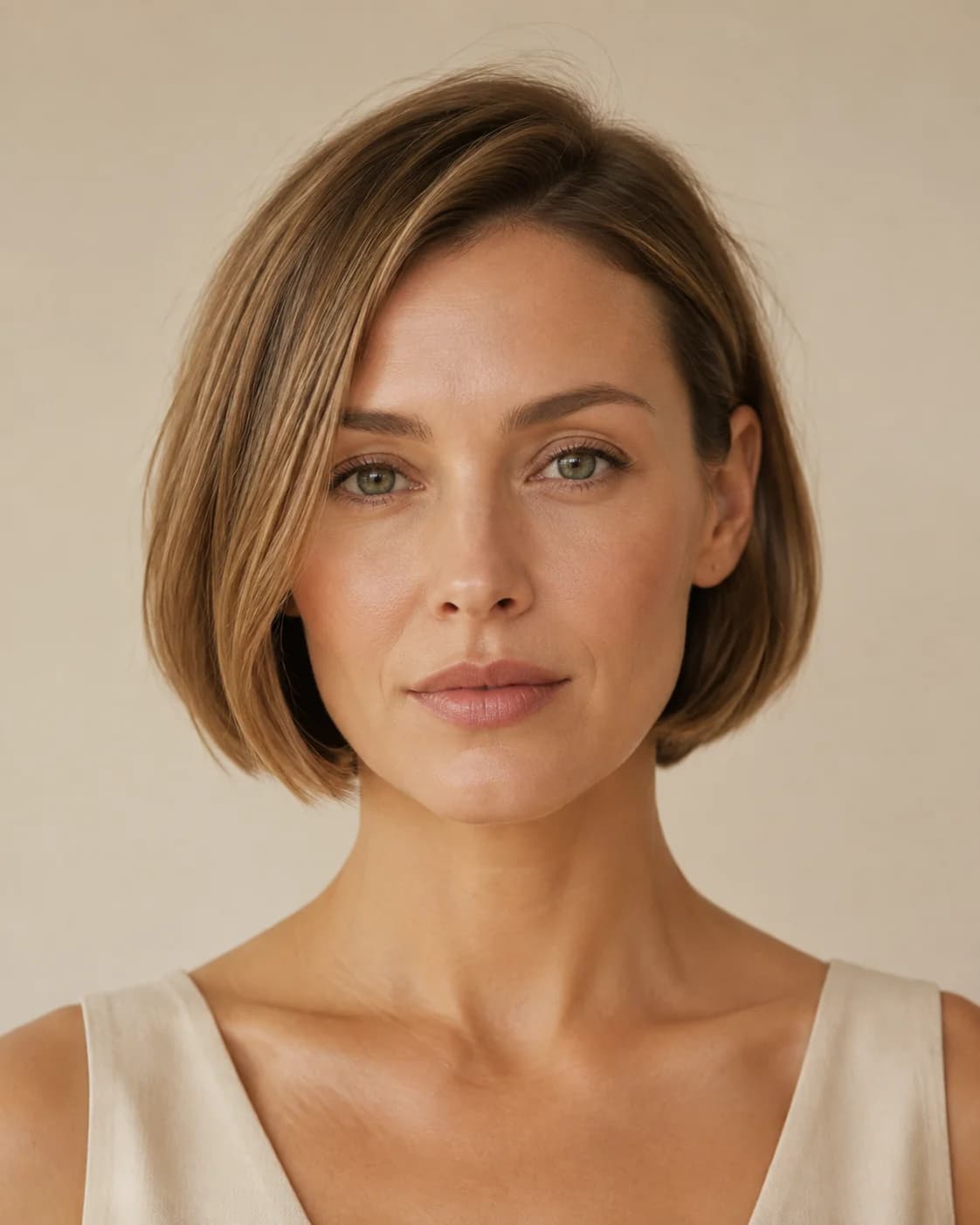
What haircut suits me? Start with your routine
A haircut that suits you needs to work on an ordinary morning, not just in a reference photo. Before choosing a length, decide whether you need to tie it back, usually air-dry, or notice your texture changing in humidity. These practical needs help you narrow down cuts you can actually maintain.
Your non-negotiables are not limitations. They are a useful brief. They help a stylist decide where layers can begin, how much weight to remove, and whether a fringe is realistic for your mornings.
- Usual styling time
- Need to tie it back
- Natural texture and shrinkage
- Preferred salon schedule
Choose the feeling before the shape
Words such as soft, graphic, polished, airy, compact, or expressive are more useful than chasing a haircut name. The same long bob can look precise and architectural or loose and relaxed depending on its perimeter, graduation, and finish.
Pick two feeling words and one word you do not want. “Soft and modern, never overly layered” gives clearer direction than “something flattering.”
Try this brief: “I want it to feel soft and intentional, but not so layered that the ends lose fullness.”
Use face shape for adjustments, not permission
Face shape can help fine-tune where volume sits or where the shortest face-framing piece lands. It should not be used as a rule that bans you from a bob, fringe, or long layers.
Two people with a similar face outline may need completely different cuts because one has dense curls and the other has fine, straight hair. Texture, density, growth patterns, and routine change the decision more than a simple oval-or-round label.

Preview a direction, then consult a professional
A hairstyle preview helps you compare the overall idea: shorter versus longer, open forehead versus fringe, polished versus textured. Look for the version that feels recognizably like you—not the one that changes the most.
Bring the preview to your stylist as a conversation starter. Ask what must change for your real texture and starting length. The best result is a collaboration between a clear intention and professional technique.
Read reference photos like an editor
A reference is a bundle of decisions: length, outline, layer placement, fringe, finish, color, lighting, and the model’s own density. Separate those decisions before deciding that you want the entire look. Cover the face and ignore the color for a moment. Study where the visual weight sits, how solid the ends appear, and where the shortest piece begins.
Save one image for the silhouette and, if necessary, a second for a specific detail. Label them in plain language. “Shape from photo one, cheekbone frame from photo two, no fringe” is more useful than asking a stylist to average several unrelated pictures.
- The outside shape you want to see
- The shortest point you can comfortably wear
- The amount of fullness you want at the ends
- The finish you will recreate at home
Make the final decision reversible where it matters
Not every part of a haircut carries the same commitment. A slightly longer perimeter can be shortened after you see it dry; a fringe cannot be put back. Internal weight can often be refined gradually; a highly disconnected layer map takes longer to grow together. Identify which change feels exciting and which would feel difficult to undo.
When you are uncertain, keep the highest-commitment detail conservative and let a lower-commitment detail create the freshness. That may mean a stronger face frame with the length preserved, a new perimeter without a fringe, or softer layers before a dramatic shag. A good first version leaves room to learn from your own hair.
Final check: “Which part of this plan is hardest to reverse, and am I comfortable making that change today?”
Three terms that make this conversation clearer.
You do not need to prescribe technique. Use these words to describe the visible structure, name the behavior you want, and ask what your stylist would adapt.
Silhouette
The complete outside shape a haircut creates when viewed as a whole: compact, rounded, triangular, elongated, wide, narrow, or deliberately irregular. It is often the most reliable feature to compare before discussing small details or a polished finish.
SAY IT IN THE CHAIR“I want this overall shape, but I am open to changing the internal technique for my hair.”Open full definition
Maintenance window
The period during which a haircut still performs the job it was designed to do before a particular detail needs reshaping. The true window is set by the first meaningful change—often a fringe, nape, perimeter, crown, or loss of internal balance.
SAY IT IN THE CHAIR“Which detail will stop working first, and what is a realistic return window for that part?”Open full definition
Consultation brief
A short, usable description of the result you want and the reality it must support. The strongest brief combines one structural change, one non-negotiable boundary, your normal styling routine, and a question that invites the stylist to adapt the plan.
SAY IT IN THE CHAIR“I want to change this, keep this boundary, and make sure the result still works when I style it this way.”Open full definition
Turn this guide into a decision.
Three honest answers are more useful than ten additional reference photos. Your responses stay on this page and can be changed at any time.
- 01Can you describe one structural change without using a face-shape rule?
Choose length, perimeter, layers, fringe, or internal weight—not “whatever flatters me.”
- 02Have you named the boundary you do not want traded away?
Examples: tie-back length, full ends, an open forehead, dry length, or support for natural texture.
- 03Does the plan fit your real styling and maintenance rhythm?
Count ordinary mornings, fallback styles, trim frequency, and the way the shape is likely to grow.
The short answers.
What haircut is easiest to maintain?
Usually one that works with your natural texture, keeps enough length for your routine, and grows out without a hard line. “Low-maintenance” depends on your hair and habits, not one universal cut.
Should I choose a haircut based on face shape?
Use face shape to adjust details such as layer placement or fringe length, but give texture, density, growth patterns, and styling time equal or greater weight.
How this guide was built.
HairChapter separates haircut structure from styling, trend names, and medical claims. Our recommendations are decision tools, not universal rules: a stylist should adapt the direction to your starting length, density, pattern, condition, growth habits, and normal routine.
We do not claim that a photograph or AI preview can predict a finished service. Sudden shedding, patchy loss, scalp pain, persistent irritation, or an unexplained change in density belongs with a qualified medical professional—not a haircut guide.