Search HairChapter
Search all haircut guides, look profiles, decision tools, and topic desks.
THE REFERENCE PHOTO CHECK
A saved look is not yet a useful reference.
Test what the image actually communicates before it becomes the instruction for a cut you have to live with.
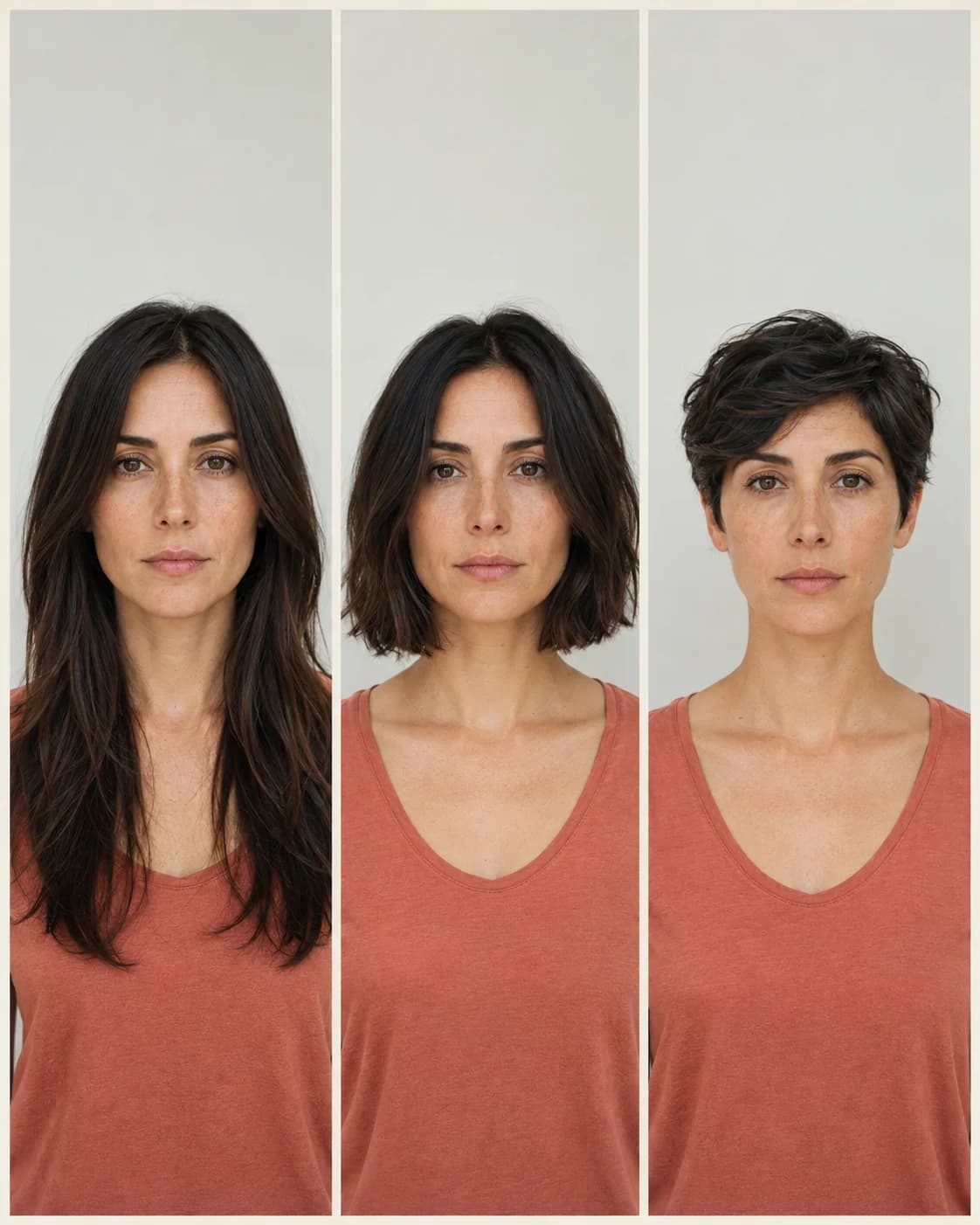
- Shape
- Detail
- Hair behavior
- Realistic alternative
REFERENCE QUALITY CHECK / INTERACTIVE
Will this photo actually help in the chair?
A strong reference does not promise an identical result. It isolates the detail you want and gives your stylist enough context to translate it to your starting hair.
- 01
Can you see the whole silhouette?
The crown, sides, perimeter, and relationship to the jaw, neck, or shoulders should be visible together.
- 02
Can you name the exact detail you saved?
Choose the shortest point, outside line, volume placement, layer map, fringe opening, or finish—not simply “the vibe.”
- 03
Does the hair behave enough like yours?
Compare density, pattern, shrinkage, starting length, and finished state rather than focusing on the person’s identity.
- 04
Do you have an honest current-hair baseline?
Include one clear image of your own hair in its normal part and usual finish, especially if you arrive heat-styled or tied back.
- 05
Do you have a safer contrast option?
One bolder direction and one lower-commitment version reveal your true boundary better than ten nearly identical screenshots.
THE FOUR-IMAGE SET
Give every photo one job.
A large folder creates noise when every image is expected to explain everything. Four deliberate roles make the conversation easier to follow and easier to adapt.
- 01YOUR HAIR NOW
The honest baseline
A recent front, side, and back view in the part and finish you wear most often. This shows the starting length, density distribution, pattern, and growth behavior the new cut has to work with.
- 02THE OUTSIDE SHAPE
The full silhouette
One reference showing crown, sides, perimeter, and shoulders together. Save it for the overall length, width, and placement of volume—not for every visible detail.
- 03ONE THING TO REPEAT
The priority detail
A focused image for the exact element you care about most: shortest layer, fringe opening, solid ends, face-frame landing point, or degree of movement.
- 04YOUR REAL BOUNDARY
The safer alternative
A longer, fuller, softer, or lower-maintenance version of the same direction. The contrast gives your stylist room to adapt without guessing what you are unwilling to trade away.