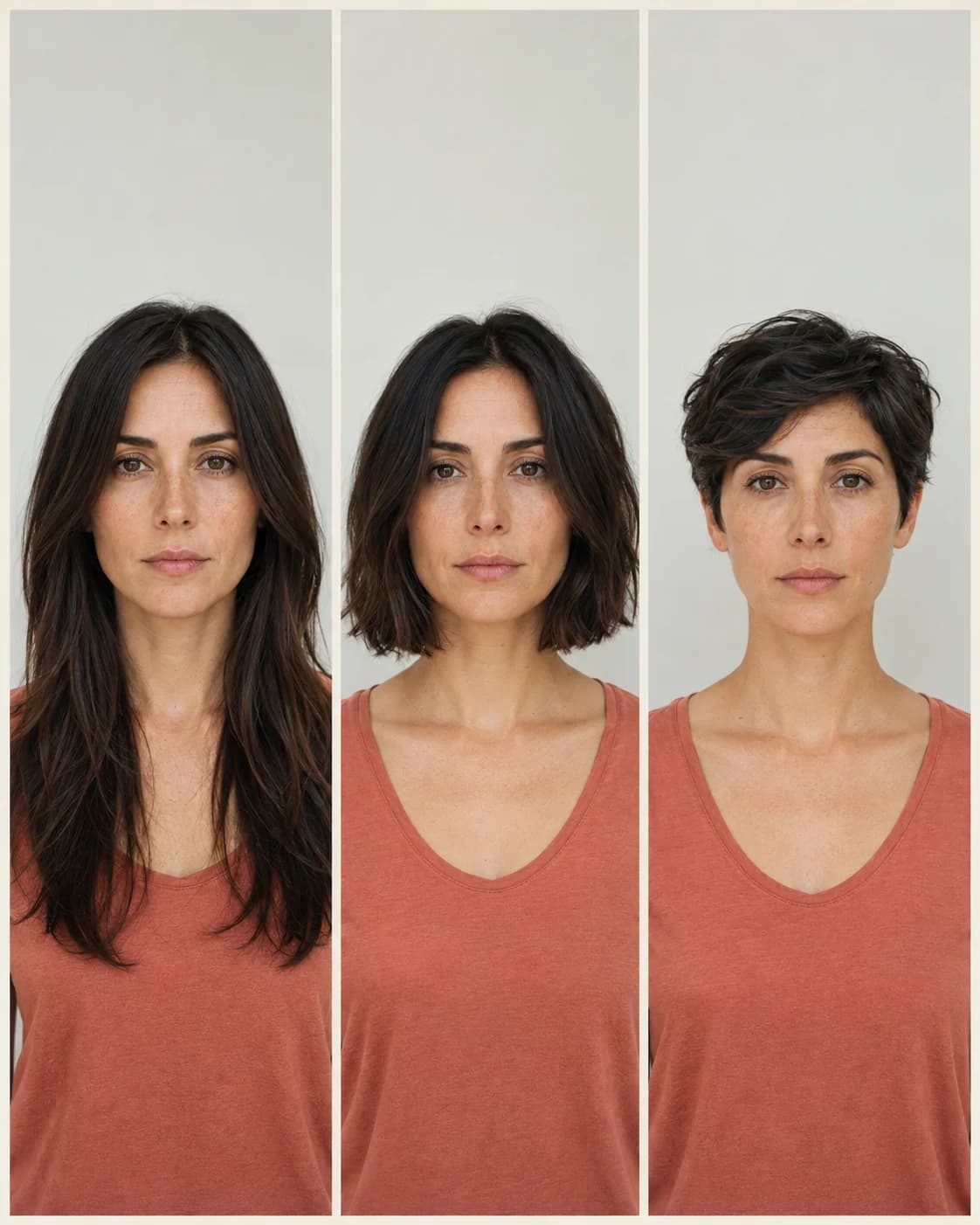

THE HAIRCUT DECISION STUDIO

Less guessing.
Better questions.

Six free tools

Move from “I want something different” to a decision that makes sense for your hair, routine, and next appointment.

Choose where to start
Structured bob haircut viewed as a complete silhouette
DECISION, NOT DIAGNOSIS

The useful question is not whether a cut is “allowed.” It is what the shape will ask of your texture, routine, and maintenance budget.

YOUR DECISION PASSPORT / STORED ON THIS DEVICE

One path. Every useful answer carried forward.

Complete only the steps that remove uncertainty for you. Your progress stays in this browser and updates automatically when a tool reaches a real result.

  1. 01 / OPEN

    Find the direction

    Start with routine, finish, and appetite for change.

    Open finder
  2. 02 / OPEN

    Choose between options

    Compare two nearby ideas by trade-off, not by polish.

    Compare cuts
  3. 03 / OPEN

    Check the reference

    Make sure every saved image has one clear job.

    Check photo
  4. 04 / OPEN

    Plan the upkeep

    Set a realistic styling and rebooking expectation.

    Plan upkeep
  5. 05 / OPEN

    Build the handoff

    Turn the decision into a brief a stylist can adapt.

    Build brief
NEXT USEFUL MOVE

Find the direction

Start with routine, finish, and appetite for change.

Open finder

CHOOSE YOUR ENTRY POINT

Start at the decision you are stuck on.

You do not need to use everything. Pick one tool now, then follow the next useful step only if you need it.

Clean haircut perimeter photographed from the side01

START WITH YOUR REALITY

Haircut finder

Answer a short sequence about length, texture, styling time, and the change you actually want. The result gives you a useful direction—not a rigid face-shape rule.

Use it when
You have inspiration, but no clear starting point.
Leave with
A direction, practical filters, and a mini salon brief.
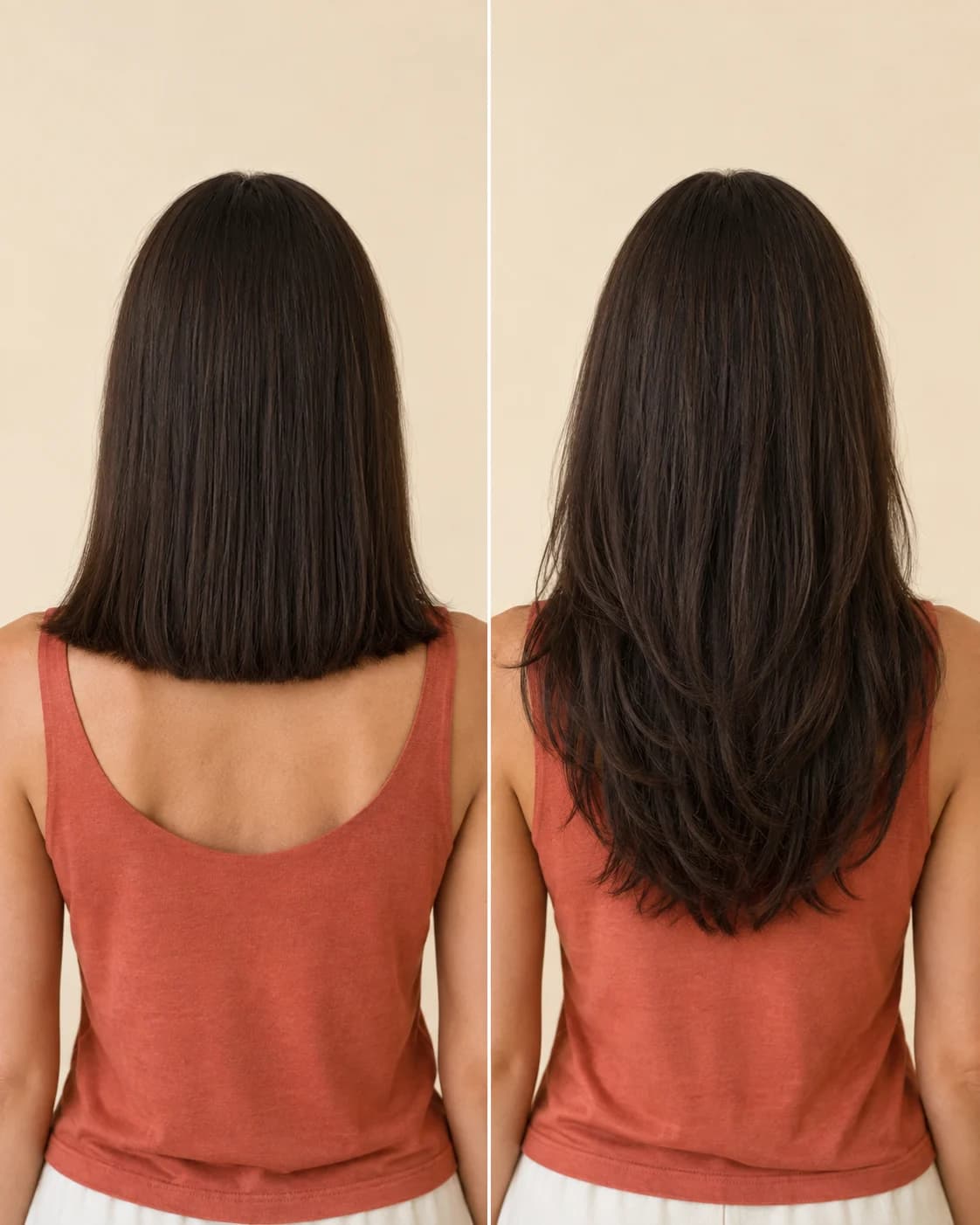
Find your direction
Blunt and layered haircut silhouettes compared side by side02

SEE THE TRADE-OFF

Comparison lab

Put two nearby haircut ideas under the same lens. Compare shape, daily styling, grow-out, appointment rhythm, and the kind of movement each choice creates.

Use it when
Two saved cuts look similar, but would live differently.
Leave with
A side-by-side verdict and the right guide to read next.
Compare haircut shapes
Two hairstyle directions compared under consistent visual conditions03

CHECK THE REFERENCE

Reference photo check

Run a saved haircut image through five practical checks. See whether it shows the full silhouette, names one detail, reflects comparable hair behavior, and includes enough context for adaptation.

Use it when
A saved image looks right, but you are not sure what it really communicates.
Leave with
A 0–5 quality score and the first missing piece to repair.
Check a reference photo
Polished mid-length haircut with a controlled perimeter04

PLAN THE REAL UPKEEP

Maintenance planner

Estimate a practical rebooking window from the precision of the shape, current length, usual finish, and how much visible grow-out you are comfortable wearing.

Use it when
You like the cut, but need to know what it will ask of your calendar and mornings.
Leave with
A planning range, daily effort estimate, and the first detail to watch.
Plan the maintenance window
Long layered haircut showing movement through the lengths05

LEARN THE LANGUAGE

Haircut glossary

Translate salon vocabulary into visible outcomes. Every term explains what changes in the silhouette, how it behaves, and a natural sentence you can use in the chair.

Use it when
A reference or stylist uses words you cannot picture.
Leave with
A plain-English definition and a useful way to say it.
Look up a haircut term
Stylist and client planning a haircut during a consultation06

MAKE IT SALON-READY

Salon brief builder

Turn one desired change, one firm boundary, your real routine, and a realistic maintenance window into a concise brief your stylist can question and adapt.

Use it when
Your appointment is booked and the idea needs structure.
Leave with
A copyable, printable consultation brief.
Build your salon brief

THE FULL DECISION PATH

From vague idea to useful conversation.

Each step removes a different kind of uncertainty. The sequence keeps you focused on lived results instead of chasing a perfect reference image.

  1. 01

    Find direction

    Start with your texture, routine, and appetite for change—not a trend name.

  2. 02

    Compare trade-offs

    See what each option asks of you after the salon finish is gone.

  3. 03

    Plan the upkeep

    Set an honest expectation for styling time, grow-out, and salon rhythm.

  4. 04

    Check the reference

    Confirm that each image has one clear job and enough real-hair context.

  5. 05

    Learn the language

    Name the visible details precisely enough to discuss them.

  6. 06

    Build the brief

    Bring priorities and boundaries while leaving technique to your stylist.

WHEN WORDS NEED A VISUAL CHECK

Test the direction before it becomes the cut.

Use Hair Muse to preview a hairstyle on your own photo, compare options, and bring a stronger visual reference into the consultation.

Try Hair Muse on the App Store