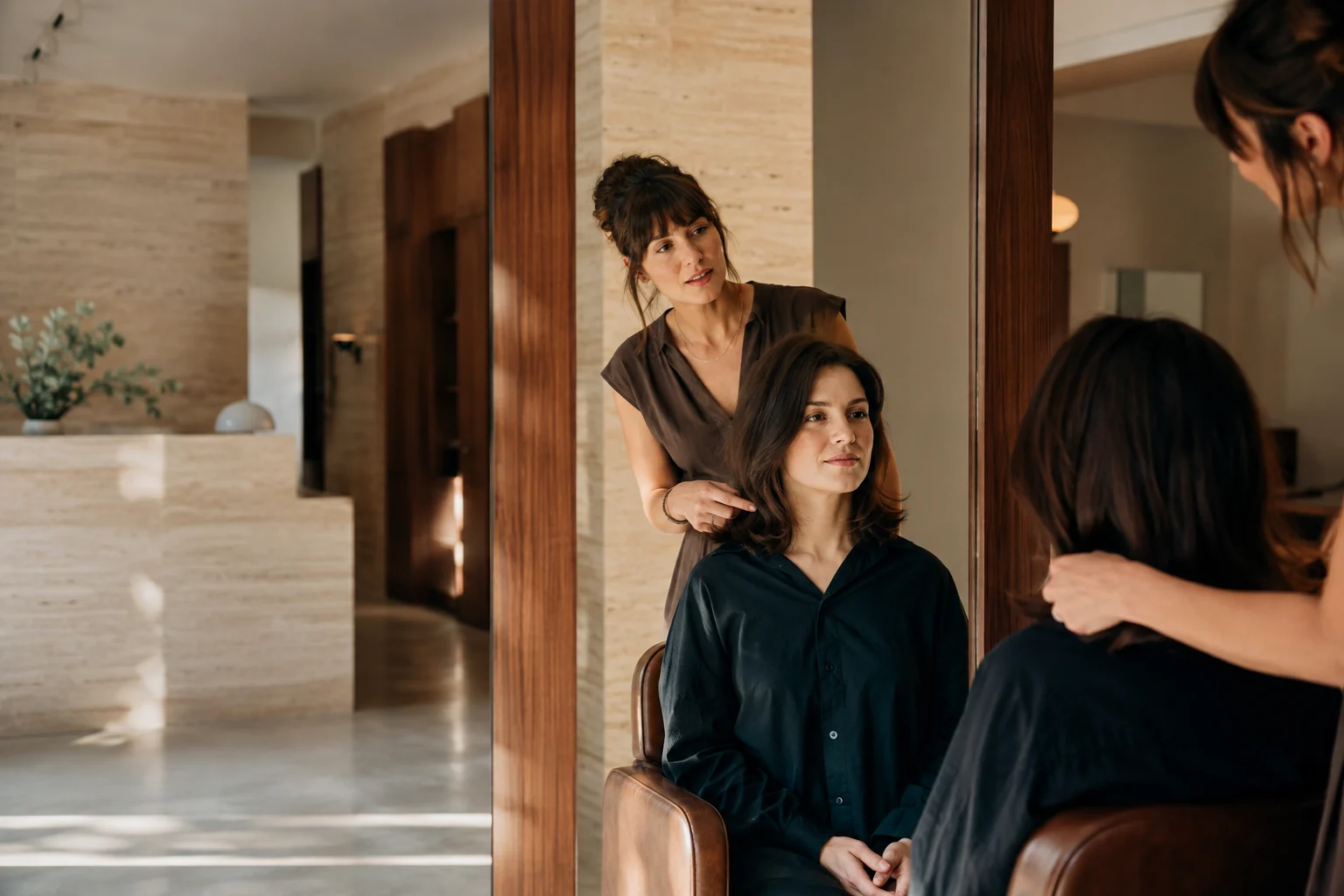
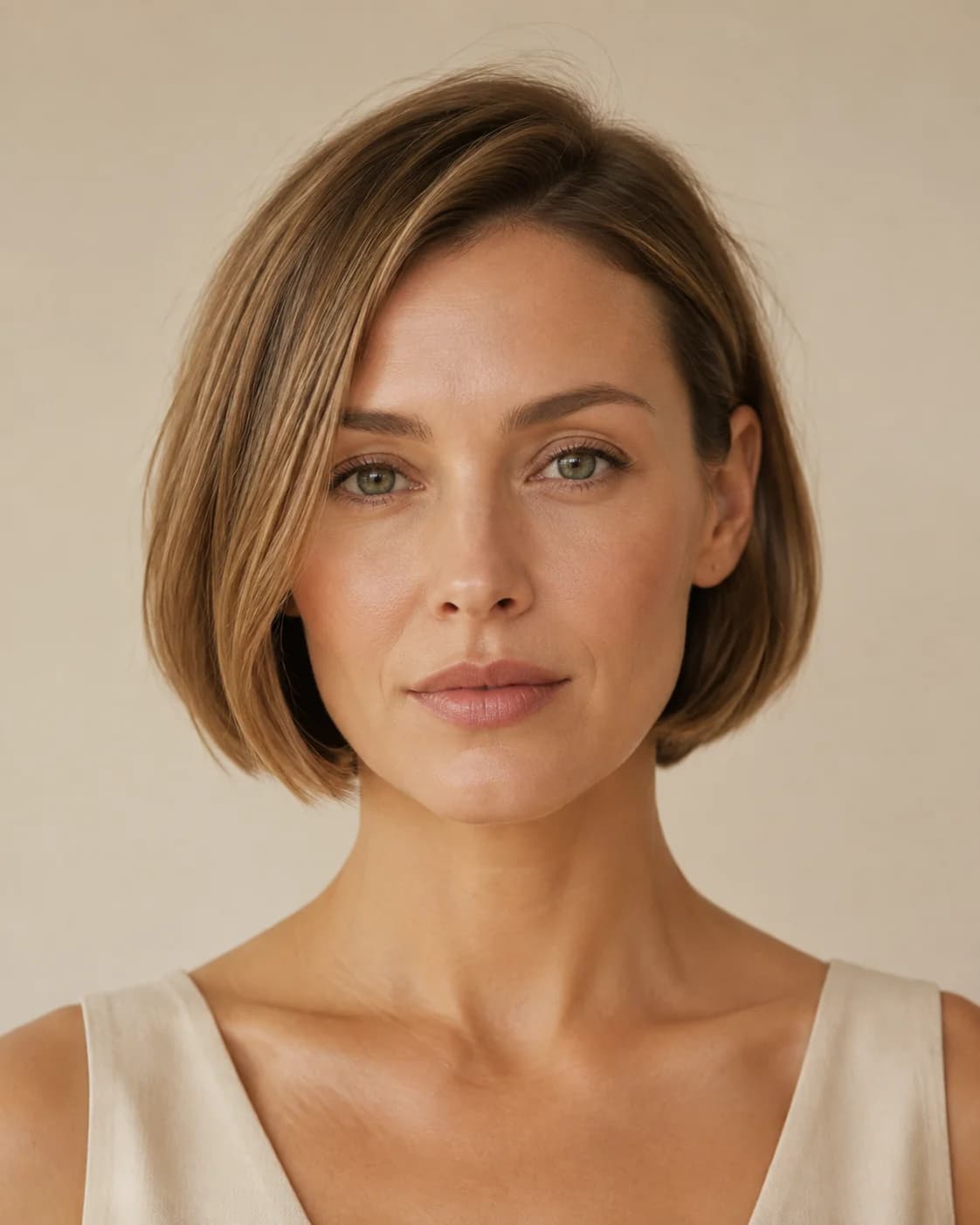
Photograph your current hair honestly
Take front, side, and back photos in soft daylight. Wear the hair as you normally do and avoid portrait filters. The stylist needs to see the current perimeter, density, and natural fall.
If you switch between natural and heat-styled finishes, include both. That shows the range the haircut must support.
Annotate what you like
For every inspiration image, name the exact detail: length, fringe opening, crown volume, end density, or overall mood. Also note what you do not want copied.
Two specific images are usually more useful than a large board containing conflicting cuts.
Use previews as a comparison tool
A virtual preview can help compare major directions on the same face and photo. Keep the lighting and angle consistent so length and proportion are easier to judge.
Bring the preferred preview and the original photo. Your stylist can then explain how the digital direction should change for your actual texture and density.
The best consultation set: three current-hair angles, two focused inspirations, one preview, and three non-negotiables.

Make the camera tell the truth
Stand several feet from a plain background in soft, even daylight. Keep the camera near head height and use the normal lens rather than a wide-angle setting close to the face. Include the full head, hairline, shoulders, and ends. Strong overhead light, portrait blur, and beauty filters can hide density, flyaways, and the real perimeter.
For the back view, have another person hold the camera level instead of using a mirror selfie. Take the side views with your chin neutral and hair resting naturally. If length changes when curly hair dries, photograph it fully dry in the state you wear most often.
- Front view with hairline visible
- Both profiles with the ends in frame
- Back view at head height
- Optional natural and styled versions
Organize the set into a one-minute story
Put your current photos first, then the preferred silhouette, then one or two detail references. Remove images that contradict the main goal unless you can explain the difference. The stylist should be able to understand your starting point, desired change, and boundary without decoding a large camera roll.
Add a short note under each saved image: “length,” “solid ends,” “fringe opening,” or “not the color.” Finish with three written priorities and one thing you do not want. This turns the collection from inspiration into a brief.
If an image cannot be explained in one sentence, it probably does not belong in the final consultation set.
Three terms that make this conversation clearer.
You do not need to prescribe technique. Use these words to describe the visible structure, name the behavior you want, and ask what your stylist would adapt.
Consultation brief
A short, usable description of the result you want and the reality it must support. The strongest brief combines one structural change, one non-negotiable boundary, your normal styling routine, and a question that invites the stylist to adapt the plan.
SAY IT IN THE CHAIR“I want to change this, keep this boundary, and make sure the result still works when I style it this way.”Open full definition
Baseline
The lower edge or foundation of a haircut, especially visible in bobs and other compact shapes. A strong baseline can make the ends read as fuller and more graphic; a softer or broken baseline can make the outline feel lighter and less exact.
SAY IT IN THE CHAIR“I want the bottom line to feel complete, but not so sharp that the grow-out looks abrupt.”Open full definition
Maintenance window
The period during which a haircut still performs the job it was designed to do before a particular detail needs reshaping. The true window is set by the first meaningful change—often a fringe, nape, perimeter, crown, or loss of internal balance.
SAY IT IN THE CHAIR“Which detail will stop working first, and what is a realistic return window for that part?”Open full definition
Turn this guide into a decision.
Three honest answers are more useful than ten additional reference photos. Your responses stay on this page and can be changed at any time.
- 01Can you state one clear priority for this appointment?
A useful priority is specific enough to protect when the reference needs adaptation.
- 02Have you named the boundary you do not want traded away?
Examples: tie-back length, full ends, an open forehead, dry length, or support for natural texture.
- 03Does the plan fit your real styling and maintenance rhythm?
Count ordinary mornings, fallback styles, trim frequency, and the way the shape is likely to grow.
The short answers.
Should my hair be styled in the reference photo?
Use your normal finish. If you regularly wear it both natural and styled, bring one photo of each.
Can I use an AI hairstyle image at the salon?
Yes, as a direction. Make clear that it is a preview and ask the stylist what is realistic for your starting length, texture, and density.
How this guide was built.
HairChapter separates haircut structure from styling, trend names, and medical claims. Our recommendations are decision tools, not universal rules: a stylist should adapt the direction to your starting length, density, pattern, condition, growth habits, and normal routine.
We do not claim that a photograph or AI preview can predict a finished service. Sudden shedding, patchy loss, scalp pain, persistent irritation, or an unexplained change in density belongs with a qualified medical professional—not a haircut guide.