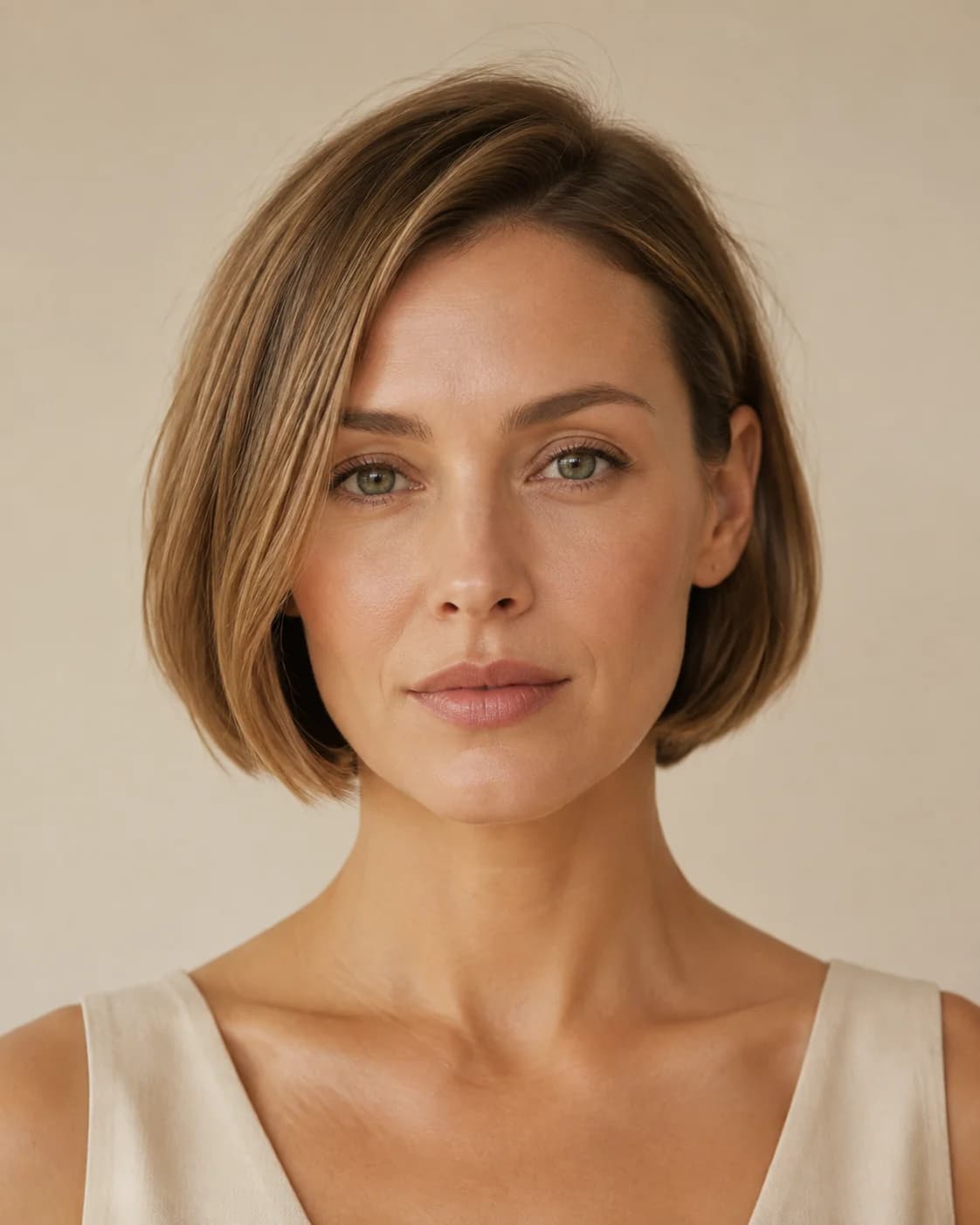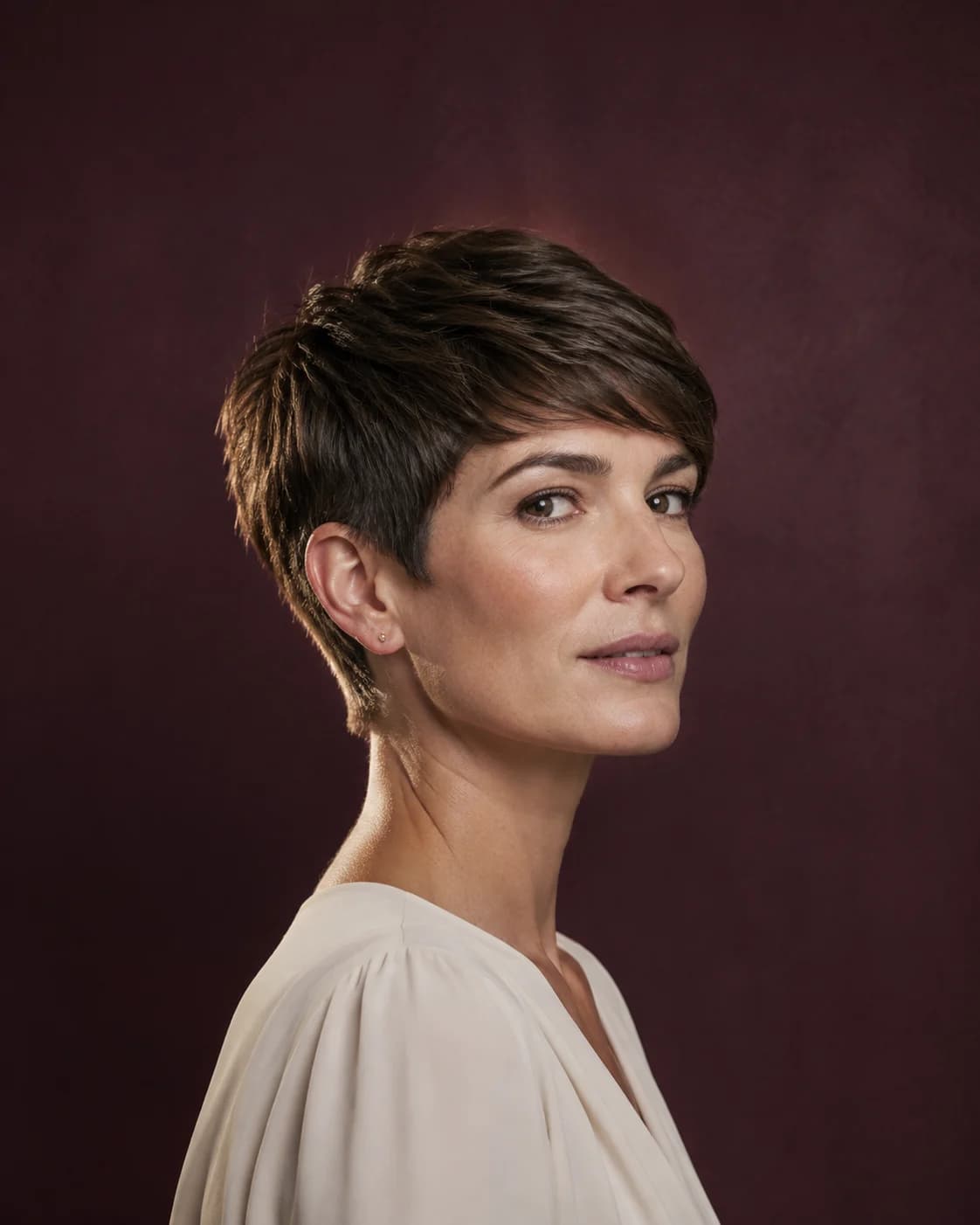
Choose the kind of pixie first
A close crop, long sweeping pixie, soft scissor-cut shape, tapered pixie, and bixie do not create the same daily experience. Save references that share a similar amount of length at the crown, fringe, ears, and nape instead of collecting every short haircut under one name.
Pick two words for the outline: soft, sharp, tucked, piecey, rounded, graphic, airy, or compact. Those words help determine whether the cut should expose the ears, follow the head closely, or preserve enough length for movement.
Read your growth patterns before going short
Cowlicks at the crown, front, and nape become more visible when surrounding weight disappears. That does not rule out a pixie, but it changes where length may need to stay. Let the stylist assess the hair dry and in its natural direction before it is combed flat.
Ask what each strong growth pattern will do in the proposed shape. Sometimes going shorter allows a section to stand intentionally; sometimes extra length is what keeps it controlled. The answer depends on the direction and the finish you want.
Calculate both kinds of maintenance
A short cut can reduce drying and detangling time while increasing the frequency of salon reshaping. A precise nape or close side can lose its intended line quickly. A longer, softer pixie may tolerate more growth but require product or heat to create separation.
Separate morning maintenance from calendar maintenance. Decide how many minutes you will style, whether you will use product, and how often you realistically want to return. Choose the version whose total workload fits.
Ask two questions: “What will I do every morning?” and “What will look different first as this grows?”

Protect a useful amount of flexibility
If you are nervous about exposure around the forehead, ears, or nape, preserve length in one of those zones and let another create the short-cut feeling. A longer fringe with compact sides, or a soft nape with a shorter crown, can make the first step feel more adaptable.
Discuss glasses, earrings, hearing devices, headphones, and whether you tuck the hair. These everyday objects interact directly with a short outline and can change where a side section feels best.
Plan the transition before the cut
If you later grow the pixie, the crown, sides, fringe, and nape will not reach the next shape at the same time. Ask which area should be allowed to grow first and which can be refined to keep the outline deliberate. A transition plan prevents every appointment from simply cutting it back into the original pixie.
A bixie, short bob, or tucked crop can act as a future checkpoint. You do not need to promise that you will grow it out; knowing the route simply makes the commitment more informed.
Preview proportion, then trust real technique
A preview can help you compare an open ear, longer fringe, exposed neck, and compact crown on your own face. Use it to notice emotional and visual reactions, not to predict the exact fall of the hair.
Bring two versions to the consultation: the boldest one you like and a slightly longer alternative. Ask the stylist which details can translate to your texture and growth patterns, and begin conservatively in the hardest-to-reverse zone if you remain unsure.
Three terms that make this conversation clearer.
You do not need to prescribe technique. Use these words to describe the visible structure, name the behavior you want, and ask what your stylist would adapt.
Pixie cut
A broad family of short cuts shaped through the crown, front, ears, sides, and nape. A pixie can be close and graphic or longer and soft; the distribution of length matters more than the label when planning styling and grow-out.
SAY IT IN THE CHAIR“Which areas can stay longer so the first version has more styling and grow-out options?”Open full definition
Perimeter
The outside boundary of the haircut: the line you read around the bottom, sides, and overall edge. A compact perimeter usually feels fuller and more controlled, while a broken or highly layered perimeter can feel lighter, softer, or more textured.
SAY IT IN THE CHAIR“I like the movement, but I want the outside edge to remain substantial when the hair is straight or air-dried.”Open full definition
Layer map
A plain-language way to describe where the shortest layers begin, how quickly they connect to longer sections, and where movement or volume is intended to appear. Two haircuts with the same overall length can feel completely different because their layer maps differ.
SAY IT IN THE CHAIR“Show me the shortest layer, where it connects, and how much weight remains beneath it.”Open full definition
Turn this guide into a decision.
Three honest answers are more useful than ten additional reference photos. Your responses stay on this page and can be changed at any time.
- 01Can you point to the exact structural detail you want from this cut?
Name the shortest point, outside line, layer map, or placement of volume.
- 02Have you named the boundary you do not want traded away?
Examples: tie-back length, full ends, an open forehead, dry length, or support for natural texture.
- 03Does the plan fit your real styling and maintenance rhythm?
Count ordinary mornings, fallback styles, trim frequency, and the way the shape is likely to grow.
The short answers.
Is a pixie cut low-maintenance?
It can reduce wash and drying time, but many pixies need regular reshaping and some daily styling. Maintenance depends on the outline, length, growth patterns, and finish.
How can I try a pixie without going extremely short?
Consider a long pixie or bixie, preserve a longer fringe, and keep softness around either the ears or nape. Ask for the most conservative version of the silhouette you like.
How this guide was built.
HairChapter separates haircut structure from styling, trend names, and medical claims. Our recommendations are decision tools, not universal rules: a stylist should adapt the direction to your starting length, density, pattern, condition, growth habits, and normal routine.
We do not claim that a photograph or AI preview can predict a finished service. Sudden shedding, patchy loss, scalp pain, persistent irritation, or an unexplained change in density belongs with a qualified medical professional—not a haircut guide.