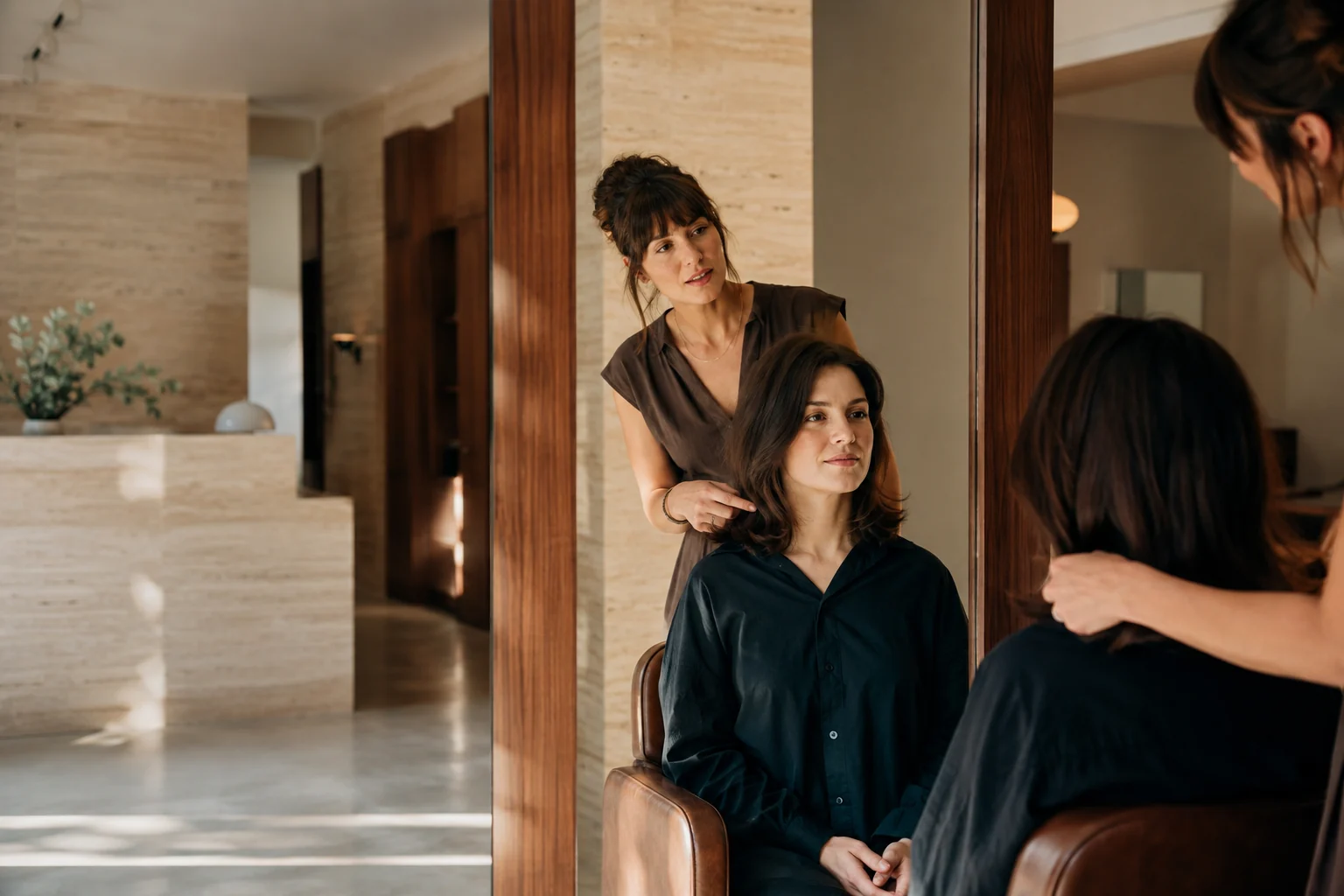
Should you wash hair before a haircut? Start with the service
If the salon has not given instructions, arrive with hair that is clean enough to show its real movement, fully dry and free from heavy oils, gels, dry shampoo and strong hold. That does not mean it must be washed an hour before the appointment. Hair washed the previous day is usually a clear working canvas when the scalp feels comfortable and the lengths still behave normally. The goal is not ceremonial freshness; it is an honest view of density, growth patterns, shrinkage, damage and the way the hair separates.
The service can change that default. A wet cut with a booked shampoo gives the stylist a clean reset in the salon. A dry cut, curl-by-curl service, fringe correction or first consultation may depend on seeing the hair in its normal dry state before water changes it. A clipper cut benefits from clean, dry hair that lifts consistently. Follow the salon’s written preparation first, because the person performing the service knows the method, products and timing. Generic advice comes second.
Best default: clean enough to assess, dry enough to behave naturally, and light enough on product that the hair can move.
Ask whether shampoo is included—and when it happens
“Shampoo included” is not a complete answer. Some stylists assess the dry hair, shampoo it, cut wet and refine dry. Others shampoo first, while dry-cut specialists may do most of the design before any rinse. Ask where the consultation sits in the sequence. If the stylist needs to see a cowlick, curl grouping, flat crown or uneven perimeter before washing, arriving with wet hair in a bun removes useful evidence even when a shampoo service appears on the booking.
Send one short message if the booking page is silent: name the service, your texture and whether you use styling product. Ask if they prefer freshly washed, day-old, normally styled or completely product-free hair. This is especially useful for a new stylist, a corrective cut or a major change. Do not apologize for asking. Preparation is part of the technical brief, just like final length and maintenance. Record the answer so the next visit starts with the same reliable baseline.
- Is the cut mainly wet, dry or a combination?
- Should the natural pattern be visible before shampoo?
- Does the booked service include cleansing and drying?
- Which products, if any, are acceptable on arrival?
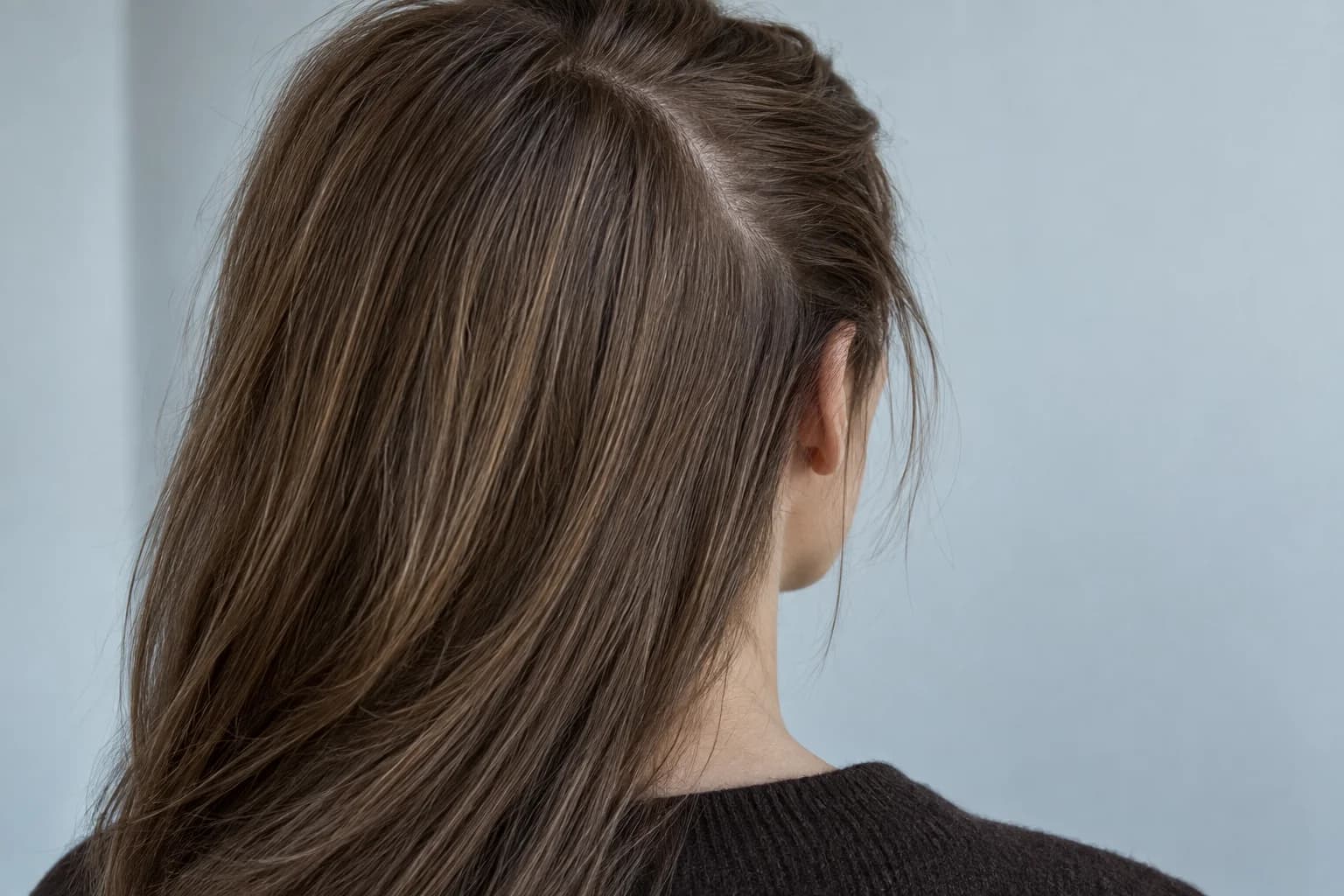
Wash before a dry cut only if the hair can dry naturally in time
A dry cut is judged in the state in which the hair sits. Wash early enough for the roots, interior and nape to become completely dry without being stretched into a tight ponytail or flattened under a hat. Damp roots can cling together and disguise density; partly wet waves can lengthen temporarily; a high-heat blowout can smooth away the bends and cowlicks the stylist needs to map. “Clean and dry” is more useful than “just washed” when the service is designed around visible behavior.
Use the simplest version of your ordinary routine unless the salon says otherwise. If you usually air-dry, air-dry. If a small amount of leave-in is necessary to prevent tangling, ask whether it is acceptable and use the minimum that preserves the pattern. Avoid root powders, waxes, edge products, heavy serums and sprays that glue sections together. They can make the surface look controlled while concealing the natural distribution of weight underneath.
Prepare curls and coils for the way they will be cut
Curly and coily appointments vary more than a single internet rule suggests. A curl-by-curl dry cut often requires clean, fully dry, detangled hair worn down with its usual part and minimal product. Other specialists want the hair washed and conditioned, then left without styling product so they can see maximum shrinkage and individual pattern. A wet curly cut may use a different preparation entirely. The salon’s method matters because water, tension and product can each change the visible length and grouping.
Do not arrive with the hair twisted, braided, stretched, slicked back or compressed overnight unless that is specifically requested. Those states can leave temporary bends and obscure where the curls settle on an ordinary day. Detangle gently in the way appropriate for your texture; the American Academy of Dermatology notes that conditioner can improve manageability and that wet hair should be handled carefully. If detangling takes significant time or causes breakage, tell the stylist instead of forcing the hair into an artificial “perfect” state.
Bring clean, dry hair to a clipper or barber cut
Short hair is not exempt from preparation. Dense pomade, wax, fiber and dry shampoo can bind strands into a shape that resists the comb and clipper guard. Sweat and oil can also make very short sections sit differently at the scalp. Unless the barber gives another instruction or includes a pre-cut wash, arrive with clean, dry hair and little or no styling product. The barber can then see crown direction, recession, whorls, head shape and the true amount of length available on top.
If you are coming from work or the gym, ask whether the shop can shampoo first and allow enough appointment time. Do not soak the hair in a restroom moments before the service; a damp crown can alter how the guard feeds and how the finished blend looks once dry. Bring a photograph of your normal styled result instead. It tells the barber how you wear the cut while your actual hair remains available for a clean technical assessment.
Remove buildup without over-washing the night before
The most useful wash removes excess oil and product without creating a new problem. Concentrate shampoo on the scalp, rinse thoroughly and condition according to your hair type rather than scrubbing the lengths. The American Academy of Dermatology recommends washing based on how quickly hair becomes dirty or oily and applying shampoo mainly to the scalp. Cleveland Clinic similarly emphasizes that wash frequency varies with texture, oil, activity and products. Neither source supports one universal schedule for every person.
Skip an unfamiliar clarifying shampoo, scalp scrub or intensive mask immediately before the appointment. A strong cleanser may leave dry hair rough; a rich mask may make fine hair unusually flat; an irritated scalp can make cutting uncomfortable. Use products your hair already tolerates. If there is visible flaking, soreness, open skin or sudden hair loss, a haircut-preparation trick is not the solution. Mention the concern to the salon and seek qualified medical advice when needed.

Keep enough reality for an accurate consultation
Arriving “presentable” should not mean disguising the problem you want solved. If the fringe splits after two hours, the crown collapses on day two or one side expands in humidity, show photographs taken when it happens. You can still arrive clean and comfortable. The photographs preserve evidence that a fresh wash may temporarily erase. Explain the normal wash interval, drying method, products, exercise routine and whether you sleep with the hair tied or covered.
For a first visit, wear the part you use most and avoid a special occasion blowout unless that is your everyday finish. Bring one image of the current hair from the front, side and back if the shape is hard to see in person. Then state the problem as behavior: “This section flips when it reaches my shoulder,” or “The top loses definition before the sides.” Behavior gives the stylist something to design around; “my hair is difficult” does not.
Use a five-minute appointment-morning checklist
Before leaving, confirm that the hair is dry, comfortably detangled and not held in a shape that will leave dents. Pack the references, note your maximum length loss and wear a neckline that exposes the current perimeter. Avoid a bulky hood, tight cap or high collar if possible. If the weather forces you to cover the hair, arrive early enough to let it settle. Bring the products you rely on only when you want the stylist to review them, not because every bottle belongs at the chair.
Finally, repeat the preparation instruction during the consultation: “I washed yesterday, used a small amount of leave-in and let it air-dry.” That gives the stylist context for what they see. Ask whether the next visit should be prepared differently. A good haircut begins before the first section is taken, but the preparation does not need to be elaborate. Cleanliness, honest texture, clear communication and the salon’s method are the four variables that matter.
- Hair fully dry unless instructed otherwise
- Minimal product and no temporary dents
- Normal part and ordinary texture visible
- References plus a clear maximum length loss
- Preparation confirmed at the consultation

Three terms that make this conversation clearer.
You do not need to prescribe technique. Use these words to describe the visible structure, name the behavior you want, and ask what your stylist would adapt.
Consultation brief
A short, usable description of the result you want and the reality it must support. The strongest brief combines one structural change, one non-negotiable boundary, your normal styling routine, and a question that invites the stylist to adapt the plan.
SAY IT IN THE CHAIR“I want to change this, keep this boundary, and make sure the result still works when I style it this way.”Open full definition
Baseline
The lower edge or foundation of a haircut, especially visible in bobs and other compact shapes. A strong baseline can make the ends read as fuller and more graphic; a softer or broken baseline can make the outline feel lighter and less exact.
SAY IT IN THE CHAIR“I want the bottom line to feel complete, but not so sharp that the grow-out looks abrupt.”Open full definition
Maintenance window
The period during which a haircut still performs the job it was designed to do before a particular detail needs reshaping. The true window is set by the first meaningful change—often a fringe, nape, perimeter, crown, or loss of internal balance.
SAY IT IN THE CHAIR“Which detail will stop working first, and what is a realistic return window for that part?”Open full definition
Turn this guide into a decision.
Three honest answers are more useful than ten additional reference photos. Your responses stay on this page and can be changed at any time.
- 01Can you state one clear priority for this appointment?
A useful priority is specific enough to protect when the reference needs adaptation.
- 02Have you named the boundary you do not want traded away?
Examples: tie-back length, full ends, an open forehead, dry length, or support for natural texture.
- 03Does the plan fit your real styling and maintenance rhythm?
Count ordinary mornings, fallback styles, trim frequency, and the way the shape is likely to grow.
The short answers.
Is it rude to go to a haircut with dirty hair?
You do not need a same-hour wash, but avoid arriving with strong odor, heavy oil, sweat or layers of product. Day-old hair can be perfectly workable when it remains clean enough to assess. Follow the salon’s instructions if they differ.
Should I wash my hair before a dry haircut?
Usually yes, but wash early enough for the hair to become completely dry in its natural pattern. Avoid a smoothing blowout, tight style or heavy product unless the stylist specifically requests it.
Should curly hair be washed before a haircut?
It depends on the cutting method. Many dry curl specialists request clean, dry, detangled hair worn down with minimal product, while wet-cut methods may ask for something else. Confirm directly with the salon.
Can I put product in my hair before a haircut?
A small amount of familiar leave-in or light styler may be acceptable, especially when it preserves curl definition. Heavy oils, waxes, root powders and strong-hold products can hide movement and should usually be avoided.
What if the salon already includes shampoo?
Still ask whether the stylist wants to assess your dry hair first. Arrive comfortable and reasonably clean, then let the salon perform the booked cleanse rather than washing again immediately beforehand without a reason.
How this guide was built.
HairChapter separates haircut structure from styling, trend names, and medical claims. Our recommendations are decision tools, not universal rules: a stylist should adapt the direction to your starting length, density, pattern, condition, growth habits, and normal routine.
We do not claim that a photograph or AI preview can predict a finished service. Sudden shedding, patchy loss, scalp pain, persistent irritation, or an unexplained change in density belongs with a qualified medical professional—not a haircut guide.
Sources for health-related statements
- American Academy of Dermatology — Tips for healthy hair Hair-type-aware washing, scalp cleansing, conditioning and gentle detangling.
- Cleveland Clinic — How often should you wash your hair? Why wash frequency depends on scalp oil, texture, routine and product use.