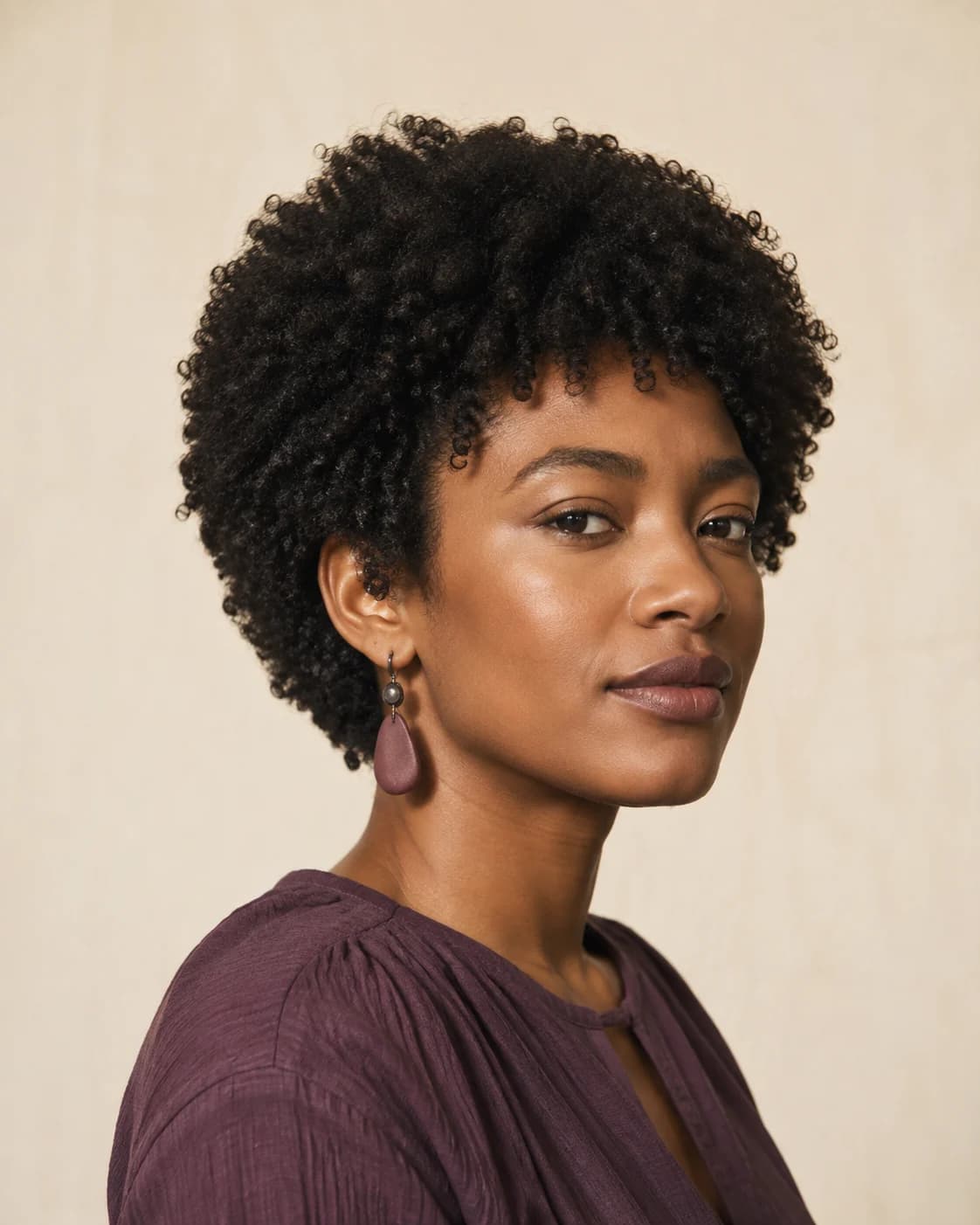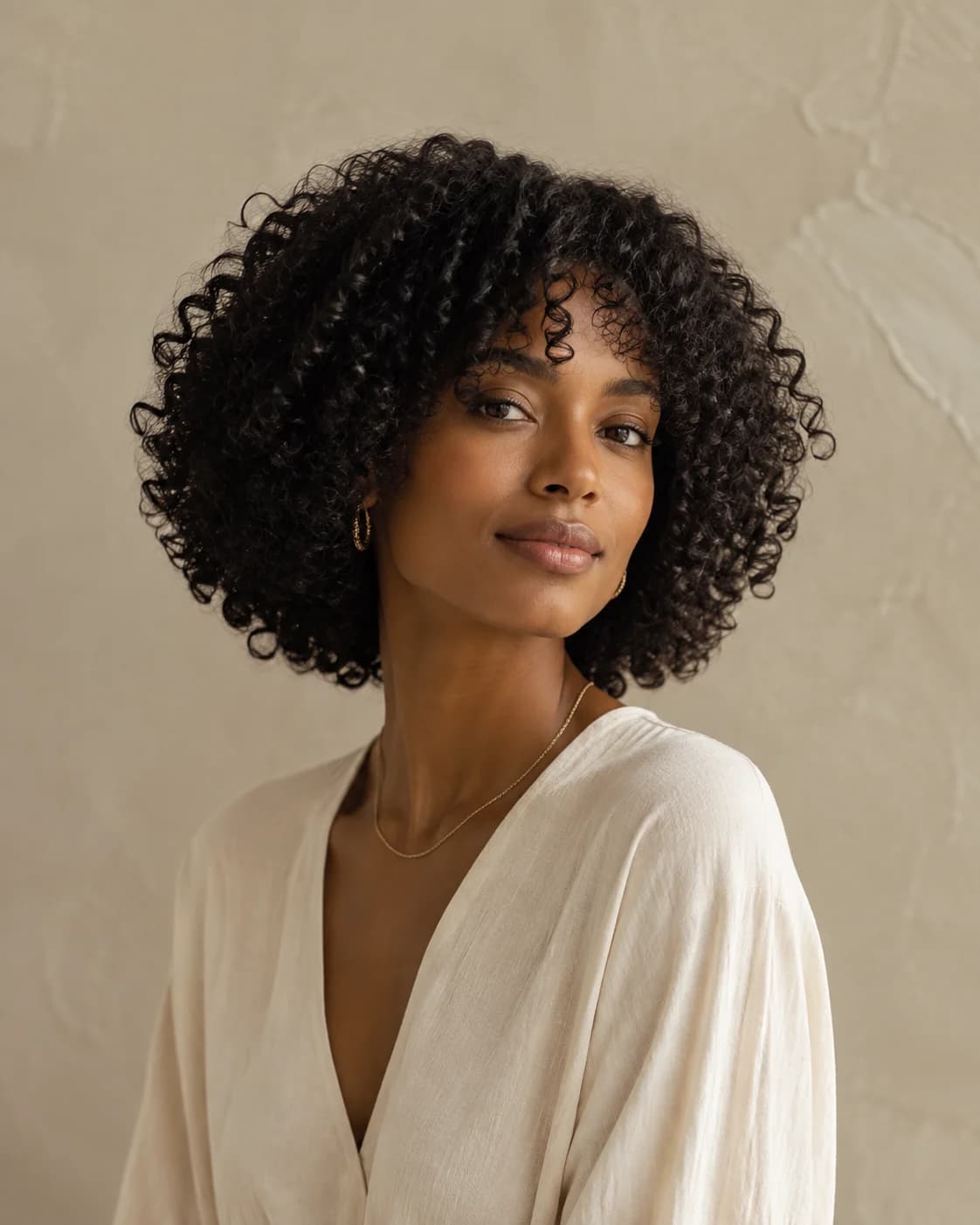
MID-LENGTH / LOW UPKEEP
The curly lob
A shoulder-aware silhouette built around spring and expansion. The plan should be agreed in the dry state you wear most often, not only at stretched length.
- Length
- Mid-length
- Texture read
- Curly / Coily
- Upkeep
- Low
Updated 06 Sep 2026 · Haircut guidance, not a universal suitability rule · Hair Muse relationship disclosed
How we publishTHE EDITORIAL READ
See what the finished photograph can hide.
The curly lob is defined in its dry state. Equal wet lengths can spring into an uneven-looking silhouette, while deliberately varied lengths can create visual balance. The design should follow the curl groups that actually appear on your head.
Shoulder placement remains important, but curls may meet that point differently across wash days. Instead of asking for a rigid line, agree on the overall dry outline, the amount of side width, and the shortest curl you are comfortable seeing around the face or crown.
THE CUT IN FOUR LINES
Read the architecture.
- 01 / Silhouette
- Balanced with controlled width
- 02 / Perimeter
- Texture-led rather than ruler-straight
- 03 / Movement
- Built by curl grouping and spring
- 04 / Pressure point
- Shrinkage differences, crown lift, and shorter sections that spring beyond the intended outline.
THE ROUTINE TEST
How the look lives after the salon finish.
Use the timeline as a planning lens, then adapt it to your wash rhythm, weather, styling method, and the way your own hair changes between appointments.
Set the baseline once.
Apply and dry products in the method you can realistically repeat. The cut should create a useful silhouette without requiring every curl to match the salon result.
Correct the changed zones.
Crown, front, and nape may flatten or expand at different rates. Refresh only what disrupts the outline rather than soaking the entire shape by default.
Photograph the balance.
Track where width and weight move as the curls lengthen. The most useful rebooking clue is the first lost proportion, not a universal number of weeks.
MAKE THE IDEA YOURS
Adapt the direction without losing its point.
A reference is useful when you know which structural idea should survive and which detail can change for your texture, density, routine, or comfort level.
Protect the shortest dry point.
Keep extra length in the groups that spring most strongly and confirm face-framing placement only after seeing those sections dry.
Remove weight by zone.
Describe where bulk builds rather than asking for thinning throughout. Preserve the outside silhouette while creating room inside it.
Set the cut from your fallback.
If you stretch, tie, clip, or protect the hair regularly, establish the minimum lengths those styles need before placing shorter layers.
THE FINAL CHECK
Is this the right trade-off?
- Choose it when
- You want a readable mid-length silhouette that respects curl spring and still leaves room for several styling and tie-back options.
- Reconsider when
- You need a perfectly fixed edge across every wash day or prefer a long shape with less visible width around the shoulders.
SAY IT IN THE CHAIR“Agree the dry silhouette with me first, then show where the shortest curl group will sit.”