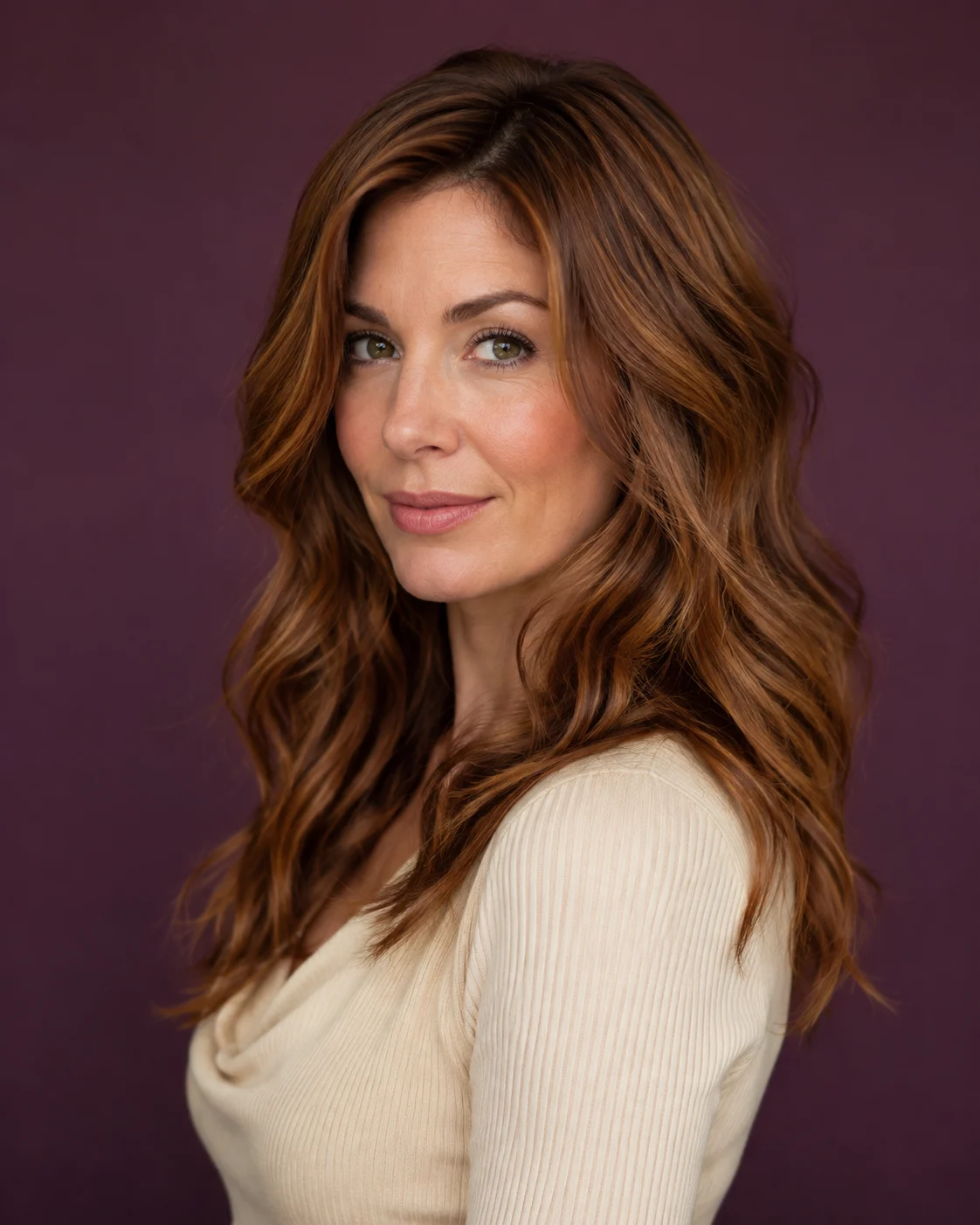
Haircuts for long faces begin with your preferred outline
Haircuts for long faces are more useful when the question is what you want to emphasise, rather than how to hide your features. You might enjoy a wider frame beside your cheeks, prefer a quiet crown, or love the vertical line of long straight hair. None of those preferences needs a face-shape test to become valid. Start with one visible change you actually want and one boundary you want to keep. That gives a stylist something more useful than a list of forbidden haircuts.
Look at your current hair in its ordinary dry finish. Is the widest point beside your temples, at your jaw, near your shoulders or nowhere in particular? Does the top rise because of the cut, your natural growth or styling? Describe what you see without scoring your face. A useful goal might be a little more presence beside the cheekbones while keeping the forehead open. Another might be a shorter outline with enough side length to tuck back. Those are different requests, even within the same search category.
Place the fullness before deciding on the total length
Width is a position, not simply a request for more volume everywhere. Ask where the proposed shape would be widest when you wear it normally. A jaw-length outline, fuller sides around the ears and movement beginning below the shoulders do not frame the face in the same way. The University of Kentucky’s educational guide uses length and width as styling variables and also points readers toward texture and lifestyle. Treat that as a discussion model, not proof that one face must be made to resemble another.
For a compact bob, discuss whether the ends remain present beside the jaw or fall away into a narrower lower edge. For longer hair, ask whether the front sections would actually sit beside your face or mostly join the length below it. Do not request lots of short layers merely because a reference looks wide. Some of that width may come from a styled wave. The stylist should explain what belongs to the cut, what depends on your own texture and what would require repeated styling.
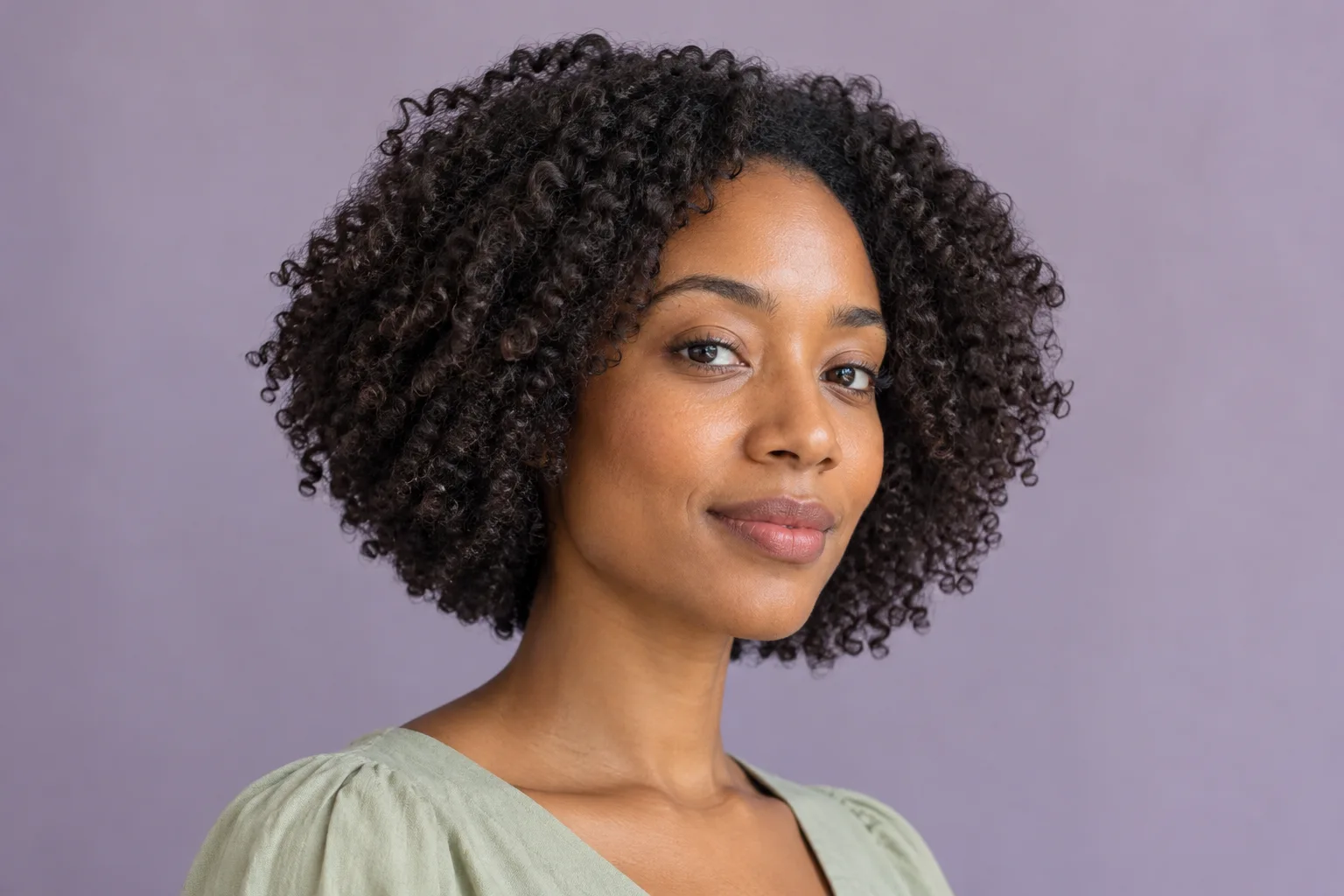
Keep long hair or a short cut if that is your preference
You do not have to abandon long hair because a chart calls your face oblong. If you like a sleek vertical line, keeping it can be the whole decision. If you want a different frame while preserving length, compare a modest change near the front with changing the entire perimeter. Ask how much end density remains and whether shorter pieces can still be gathered. The compromise should be explicit: more movement near the face may mean less length in the pieces you rely on for tying back.
Short hair is equally a personal choice. Instead of assuming that a pixie or a close side will look wrong, describe whether you like an exposed ear, a longer temple or visible crown lift. A short cut can deliberately emphasise length or sharpness if you enjoy that effect. Bring a side view as well as a front view, because a flattering frontal reference can conceal a nape or side you would not choose. The name of your face shape should never stand in for that approval.
Compare one meaningful variable on the same photo
An optional Hair Muse comparison is useful after you can name the difference you want to explore. Start with a clear, current photo at a comfortable, level camera angle, with even light and the hairline visible. Avoid a close wide-angle selfie or a beauty filter that changes your features. Explore a small number of broad directions, such as a compact shoulder-length outline and a fuller shorter outline. Keep colour and finish as similar as the available previews allow; do not assume an exact matching preset or separate side-volume control exists.
HairChapter and Hair Muse share a publisher. Hair Muse is free to download; some functions or usage may require in-app purchases. Use the visible App Store invitation if comparing on your own photo would make the decision clearer. It is a planning aid, not a face-shape classifier or measurement tool. Ask which overall frame you prefer, rather than which picture makes your face look more acceptable. If an output changes unrelated details, do not attribute the whole difference to the haircut. A normal reference photograph remains a valid alternative.


Decide about a fringe independently of face shape
A fringe changes the amount of visible forehead, but that does not make one compulsory. Ask whether you actually want hair resting near your brows, what you will do on active days and whether you want an easy way to move it aside. A broad full fringe, a split fringe and an open forehead are different daily experiences. Compare the amount of coverage, not just whether a reference is labelled flattering. If you already dislike hair touching your face, a shape chart is a poor reason to choose it.
Have the dry front assessed before discussing a specific fringe line. Growth direction, texture, density and your normal finish can change how it sits. Ask how the proposed front joins the sides and which pieces become the shortest. You may prefer longer framing with no forehead coverage, or you may enjoy a definite fringe because you like its character. Keep the remaining haircut in the discussion as well. Do not let a fringe added to one preview silently become permission for shorter sides, thinner ends or a different overall length.
Check the outline without a special salon finish
Describe your ordinary styling rather than promising a new routine to make a reference work. If you air-dry, ask where the side fullness is likely to sit in that finish. If you usually smooth your hair, ask whether the proposed width depends on a wave you would have to create. With coils or curls, discuss the actual dry outline rather than translating a straight-haired photograph into a guaranteed result. Density matters too: a wider reference should not become an automatic instruction to remove material from your own ends.
Consider what happens when you tuck a side, wear glasses or gather the hair for work. A shape you love loose may read differently in those positions, and that is useful information rather than a failure. Ask which detail would change first as the cut grows and what kind of reshaping would restore it. There is no fixed appointment interval for everyone searching this topic. Choose the maintenance that makes sense for your texture, preferred finish, time and willingness to keep returning for a particular front or side detail.

Turn a favourite preview into a specific question
Choose a small shortlist instead of collecting every attractive picture. For each direction, write what you like, what you do not want and what remains uncertain. A useful note might say fuller beside the jaw, unchanged back length, unsure whether the width needs heat styling. That separates the visible preference from the practical unknown. Take the original current photo too, so the stylist can see your starting point without the imagined cut. Ask what would need adapting rather than requesting an exact reproduction of the image.
When using Hair Muse, keep its limits attached to the shortlist. A generated preview cannot verify density, dry movement, growth, salon feasibility or exact fit, and it does not establish an ideal facial ratio. If you can save a useful result, bring it with your own notes; otherwise use a reference you can explain clearly. The important output is the question you can ask in person. You can also decide to keep your present haircut after comparing. A comparison does not create an obligation to make the change.
Agree the side shape, shortest piece and fallback
Before cutting, ask the stylist to show the intended widest area, the shortest front piece and the final perimeter. Check that your non-negotiable length has not disappeared while discussing proportions. Agree what should happen if your real texture cannot produce the chosen width without more daily work than you want. Possible alternatives include a smaller front adjustment, a different length or keeping the existing shape. Each should be explained as a new choice rather than an automatic correction to your features.
Leave with a routine you are willing to repeat and a way to describe any later problem. If the sides feel too narrow after washing, explain that visible change instead of deciding your face is unsuitable for the haircut. A professional can assess whether the issue concerns styling, the cut or expectations that need revisiting. Judge the outcome by comfort, the outline you chose and the routine it supports. The purpose of this search is to make a haircut decision that belongs to you, not to pass a geometry test.
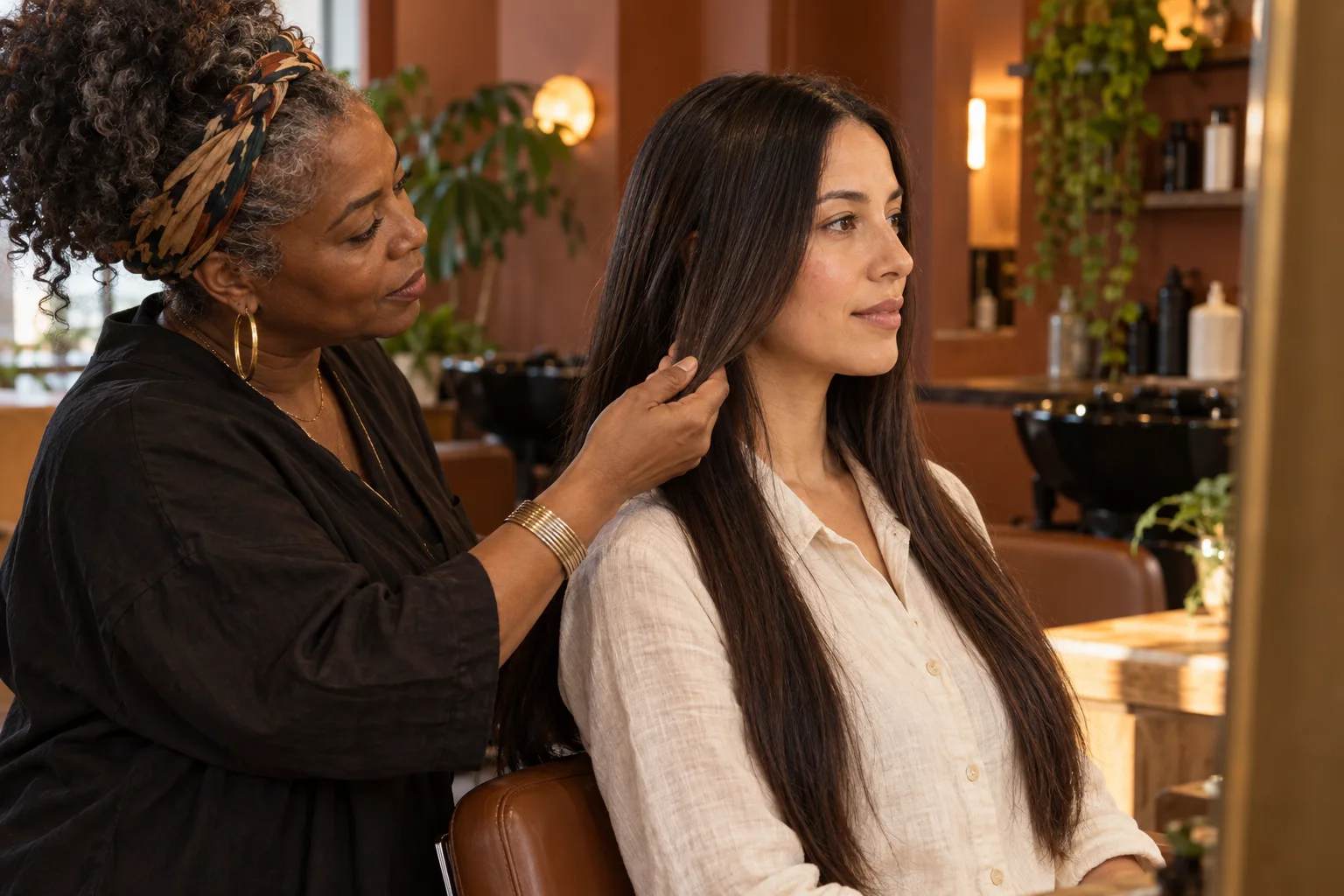
Three terms that make this conversation clearer.
You do not need to prescribe technique. Use these words to describe the visible structure, name the behavior you want, and ask what your stylist would adapt.
Perimeter
The outside boundary of the haircut: the line you read around the bottom, sides, and overall edge. A compact perimeter usually feels fuller and more controlled, while a broken or highly layered perimeter can feel lighter, softer, or more textured.
SAY IT IN THE CHAIR“I like the movement, but I want the outside edge to remain substantial when the hair is straight or air-dried.”Open full definition
Layer map
A plain-language way to describe where the shortest layers begin, how quickly they connect to longer sections, and where movement or volume is intended to appear. Two haircuts with the same overall length can feel completely different because their layer maps differ.
SAY IT IN THE CHAIR“Show me the shortest layer, where it connects, and how much weight remains beneath it.”Open full definition
Silhouette
The complete outside shape a haircut creates when viewed as a whole: compact, rounded, triangular, elongated, wide, narrow, or deliberately irregular. It is often the most reliable feature to compare before discussing small details or a polished finish.
SAY IT IN THE CHAIR“I want this overall shape, but I am open to changing the internal technique for my hair.”Open full definition
Turn this guide into a decision.
Three honest answers are more useful than ten additional reference photos. Your responses stay on this page and can be changed at any time.
- 01Can you point to the exact structural detail you want from this cut?
Name the shortest point, outside line, layer map, or placement of volume.
- 02Have you named the boundary you do not want traded away?
Examples: tie-back length, full ends, an open forehead, dry length, or support for natural texture.
- 03Does the plan fit your real styling and maintenance rhythm?
Count ordinary mornings, fallback styles, trim frequency, and the way the shape is likely to grow.
The short answers.
What is the best haircut for a long face?
There is no single best cut. Choose whether you want side fullness, forehead coverage, a quieter crown or a deliberately longer outline. Then assess the direction against your texture, preferred length and routine. A face-shape label alone cannot select the haircut you will enjoy.
Can I keep long straight hair with a long face?
Yes. You may like its vertical line and do not need to disguise your proportions. If you want a different frame, discuss the front and sides separately before giving up overall length. Ask what depends on styling and what the cut itself would change.
Do long faces always need bangs?
No. A fringe is a choice about coverage, touch, growth direction and maintenance. An open forehead is equally valid. If you want framing without a fringe, ask where longer front pieces would sit and whether they still move away from your face.
Should I remove all volume from the top?
Only if you prefer that outline and the change suits your real hair. Crown height can be intentional. Discuss where you want the widest point and how the shape behaves without special styling, rather than following a universal instruction to flatten it.
Can a preview tell me which face shape I have?
A hairstyle preview should not be treated as a measurement or diagnosis of your proportions. Use it to compare broad preferences on a consistent photo. A stylist still needs to assess your actual hair, and a generated image cannot guarantee behaviour, feasibility or the result.
How this guide was built.
HairChapter separates haircut structure from styling, trend names, and medical claims. Our recommendations are decision tools, not universal rules: a stylist should adapt the direction to your starting length, density, pattern, condition, growth habits, and normal routine.
We do not claim that a photograph or AI preview can predict a finished service. Sudden shedding, patchy loss, scalp pain, persistent irritation, or an unexplained change in density belongs with a qualified medical professional—not a haircut guide.
Context for visual proportions, not compulsory beauty rules
- University of Kentucky Extension — Face Shape and Hair Care An older educational model describes hair width and length as styling variables and recommends considering texture and lifestyle with a stylist. Its categorical face ideals, fixed ratios and prohibitions are not adopted.