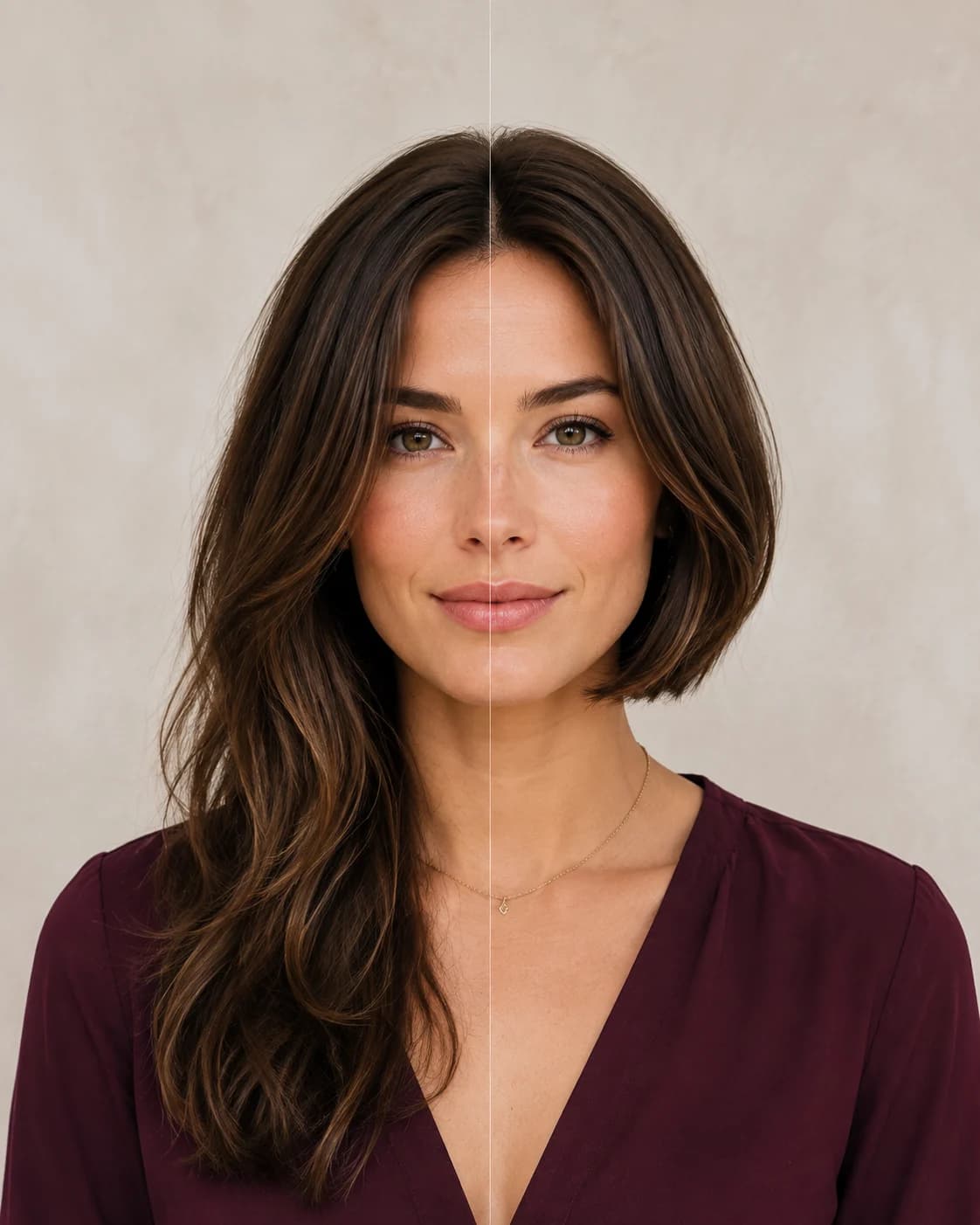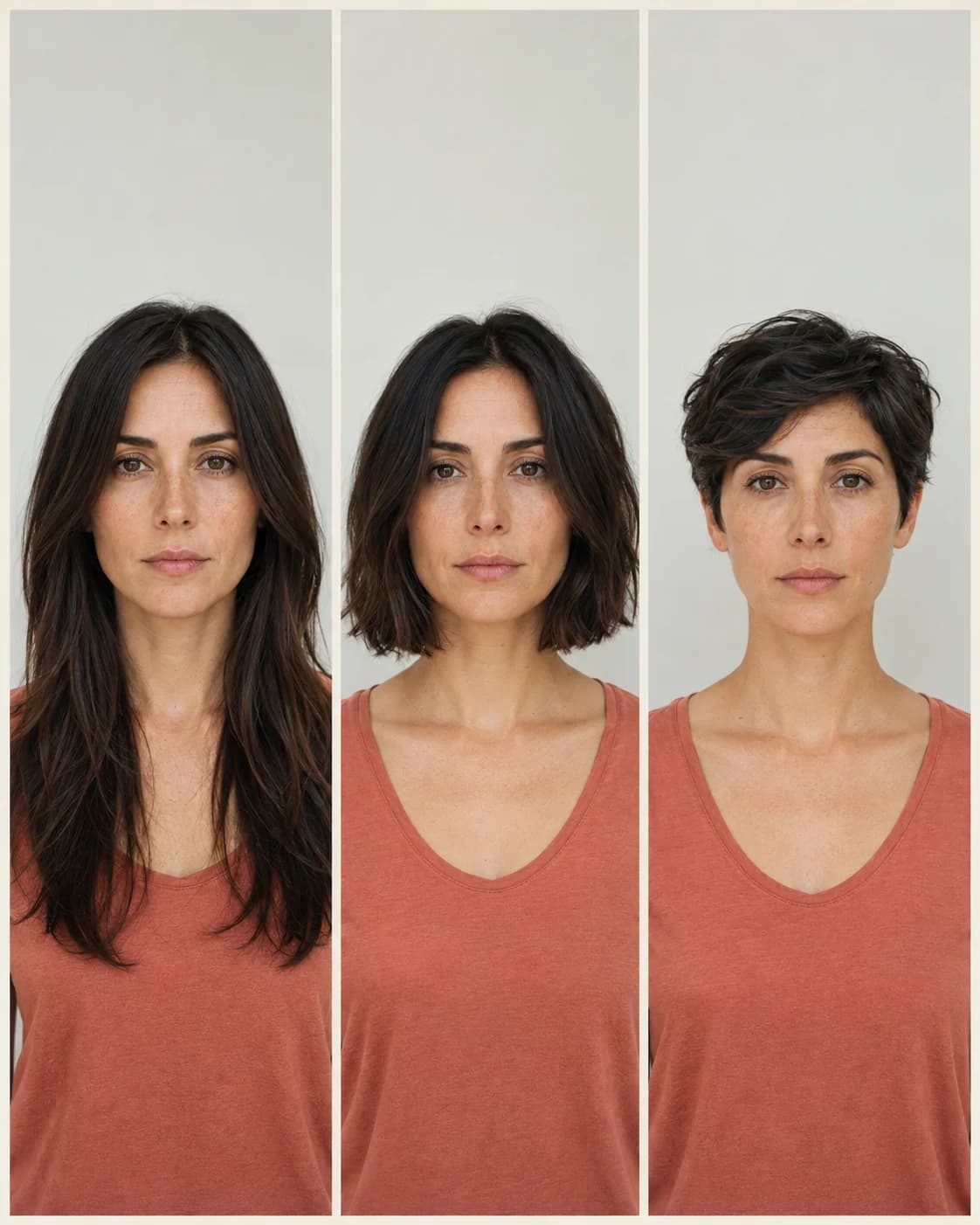
Hair color try-on: compare color families first
Use a hair color try-on to compare broad directions first: darker or lighter, warm or cool, subtle or strong contrast. Generated images and screens cannot reliably reproduce an exact salon shade, so treat a digital swatch as a visual reference rather than a color formula.
Notice the relationship between hair, skin, eyes, brows, and your usual clothing. The goal is not to obey a seasonal palette rule; it is to identify which direction creates the mood and contrast you enjoy.
Keep the source photo neutral
Use soft daylight and avoid colored room light, heavy filters, or extreme exposure. Include the hairline, full lengths, and shoulders. A warm sunset image can make every color look warmer, while a cool screen or shadow can push the opposite impression.
Compare results on the same device and brightness. If possible, return to them in neutral daylight. The relative difference between options is more trustworthy than treating one rendered shade as a formula.
Separate depth, tone, and placement
A preview may change several things at once: the overall depth, warm or cool tone, highlight placement, root contrast, and shine. Identify which part creates your reaction. You may want the dimensional placement of one image but the deeper base of another.
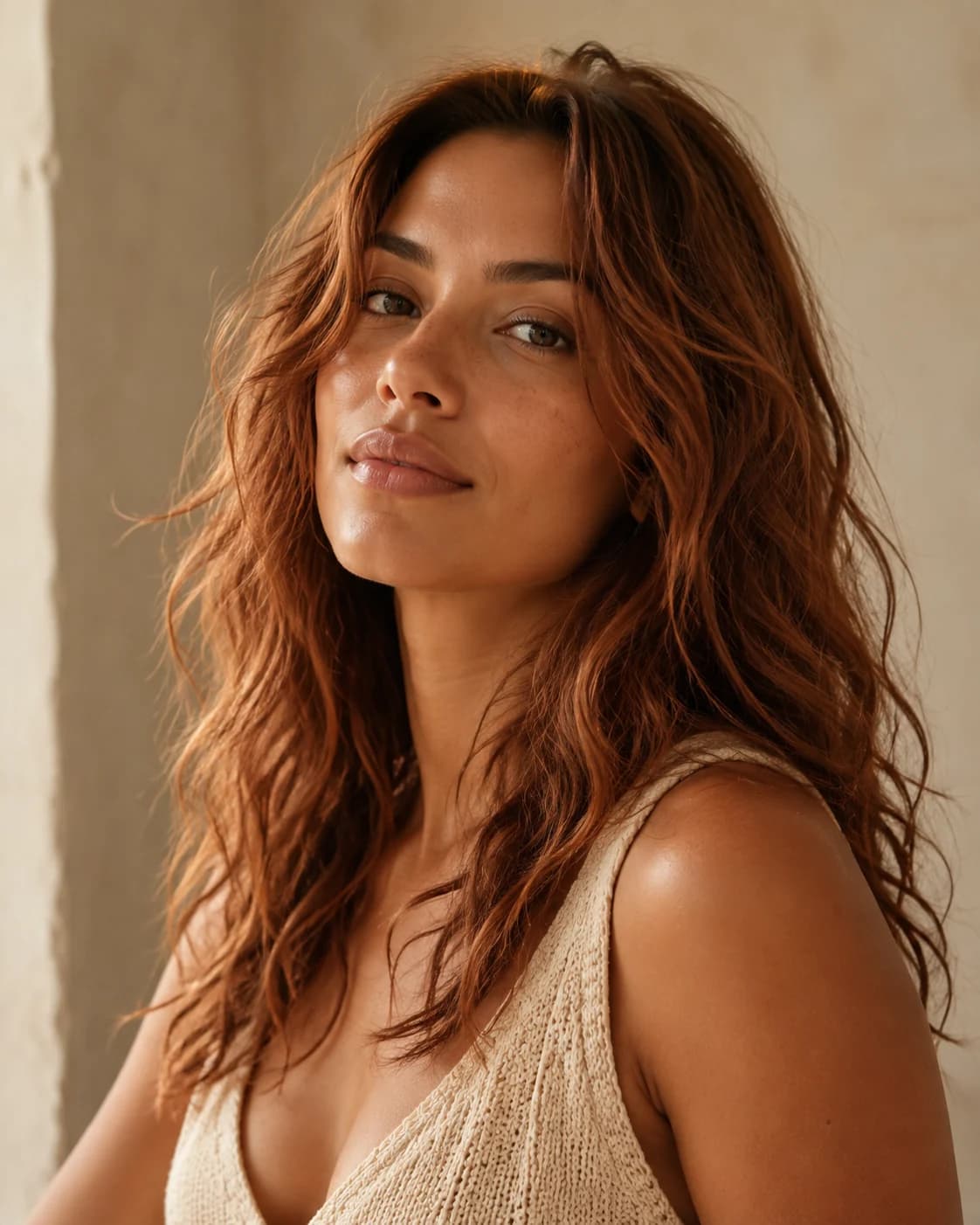
Describe visible relationships rather than naming a product shade: brighter around the face, softer contrast at the root, warm copper rather than red-violet, or dimension through the mid-lengths without very light ends.
Useful note: “I like the medium depth and warm direction, but I want less contrast around the root.”
Do not mistake a preview for a service plan
A photo cannot fully communicate your previous color, product buildup, porosity, condition, sensitivity, or how the hair will respond during a chemical service. The displayed result may require lightening, multiple appointments, a different placement, or may not be advisable for the current condition.
Bring the preview to a qualified colorist and disclose the color history accurately. Ask about the route, maintenance, home care, and what can be achieved safely in the first appointment. A responsible plan may prioritize hair condition over matching the brightest version immediately.
Calculate the maintenance before choosing contrast
Strong root contrast, very light pieces, vivid tones, and large shifts away from the natural base often become noticeable sooner as the hair grows or fades. Softer dimensional changes may provide a wider maintenance window. Ask what will change after several washes and several weeks.
Include toning, root appointments, color-safe care, heat habits, and future removal in the decision. A beautiful direction is only a good fit when you understand the calendar and are comfortable sustaining—or gracefully growing out—the result.
Build a useful color consultation set
Save the original photo, one preferred preview, one lower-maintenance alternative, and two real-world references with similar placement. Label what each image contributes. Avoid presenting a virtual result as an exact formula or guarantee.
Ask the colorist to show where your current level sits, what would need to change, and which visible parts of the preview are most realistic. The final brief should describe a color family, contrast, placement, service path, and maintenance plan.
Three terms that make this conversation clearer.
You do not need to prescribe technique. Use these words to describe the visible structure, name the behavior you want, and ask what your stylist would adapt.
Baseline
The lower edge or foundation of a haircut, especially visible in bobs and other compact shapes. A strong baseline can make the ends read as fuller and more graphic; a softer or broken baseline can make the outline feel lighter and less exact.
SAY IT IN THE CHAIR“I want the bottom line to feel complete, but not so sharp that the grow-out looks abrupt.”Open full definition
Silhouette
The complete outside shape a haircut creates when viewed as a whole: compact, rounded, triangular, elongated, wide, narrow, or deliberately irregular. It is often the most reliable feature to compare before discussing small details or a polished finish.
SAY IT IN THE CHAIR“I want this overall shape, but I am open to changing the internal technique for my hair.”Open full definition
Consultation brief
A short, usable description of the result you want and the reality it must support. The strongest brief combines one structural change, one non-negotiable boundary, your normal styling routine, and a question that invites the stylist to adapt the plan.
SAY IT IN THE CHAIR“I want to change this, keep this boundary, and make sure the result still works when I style it this way.”Open full definition
Turn this guide into a decision.
Three honest answers are more useful than ten additional reference photos. Your responses stay on this page and can be changed at any time.
- 01Have you compared one major visual change at a time?
Keep the source photo, crop, angle, and face fixed while comparing length, fringe, shape, or color.
- 02Have you named the boundary you do not want traded away?
Examples: tie-back length, full ends, an open forehead, dry length, or support for natural texture.
- 03Does the plan fit your real styling and maintenance rhythm?
Count ordinary mornings, fallback styles, trim frequency, and the way the shape is likely to grow.
The short answers.
Can a virtual try-on predict my exact salon hair color?
No. It can compare color direction and contrast, but screens and generated images cannot account fully for your starting level, color history, condition, light, and salon formulation.
What should I tell my colorist about a virtual preview?
Explain which depth, warmth or coolness, contrast, and placement you like. Share your full color history and ask what route is realistic and maintainable from your current hair.
How this guide was built.
HairChapter separates haircut structure from styling, trend names, and medical claims. Our recommendations are decision tools, not universal rules: a stylist should adapt the direction to your starting length, density, pattern, condition, growth habits, and normal routine.
We do not claim that a photograph or AI preview can predict a finished service. Sudden shedding, patchy loss, scalp pain, persistent irritation, or an unexplained change in density belongs with a qualified medical professional—not a haircut guide.