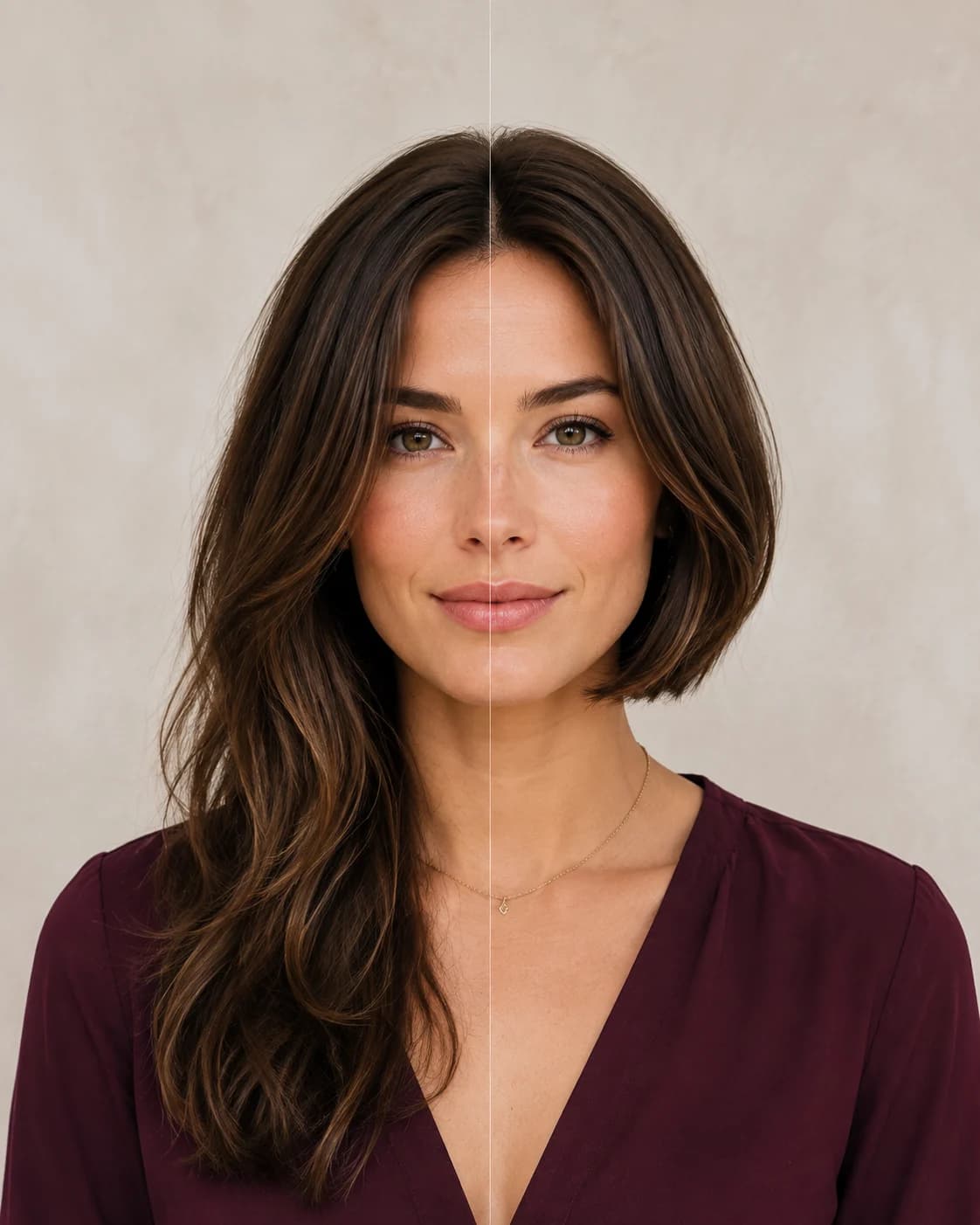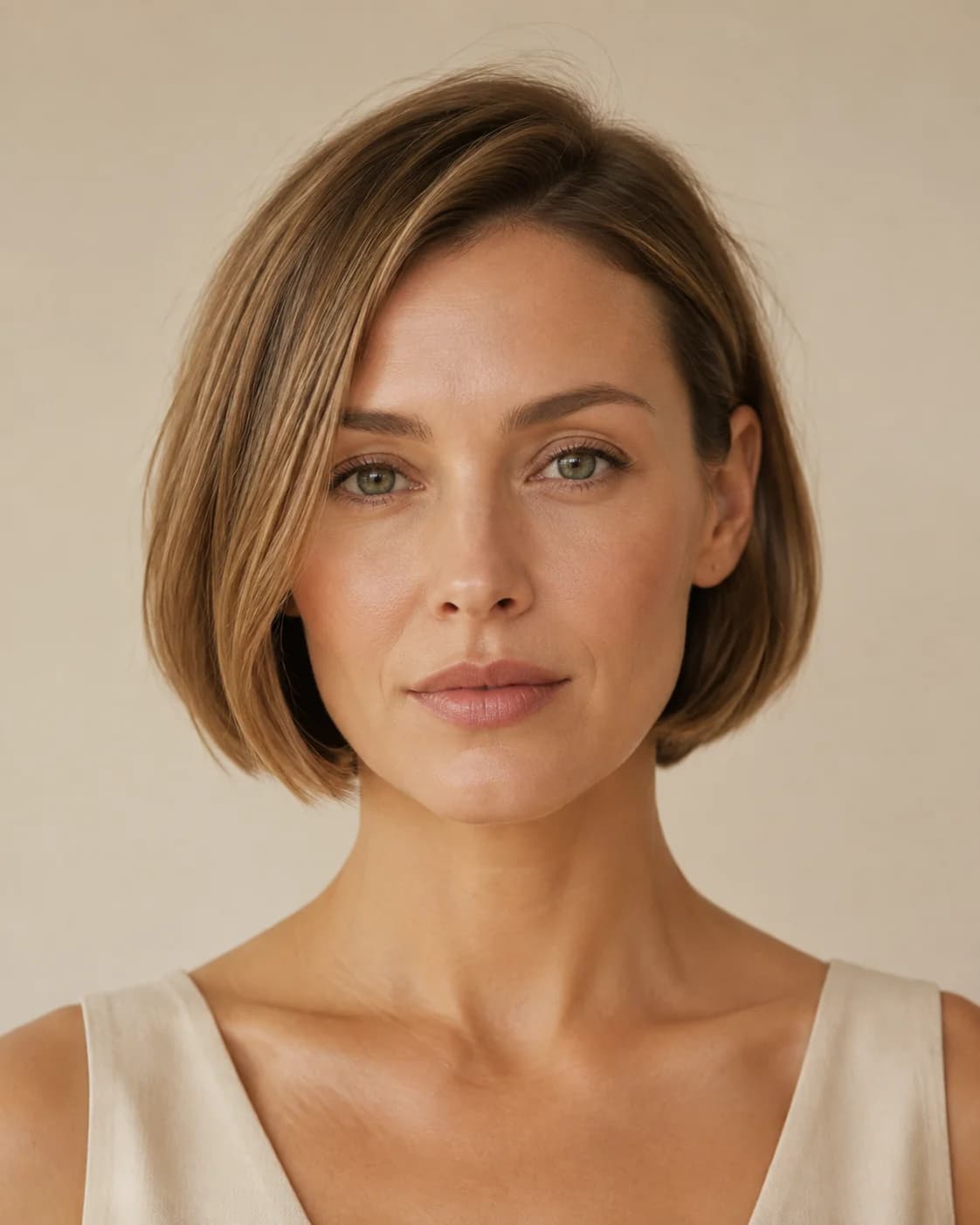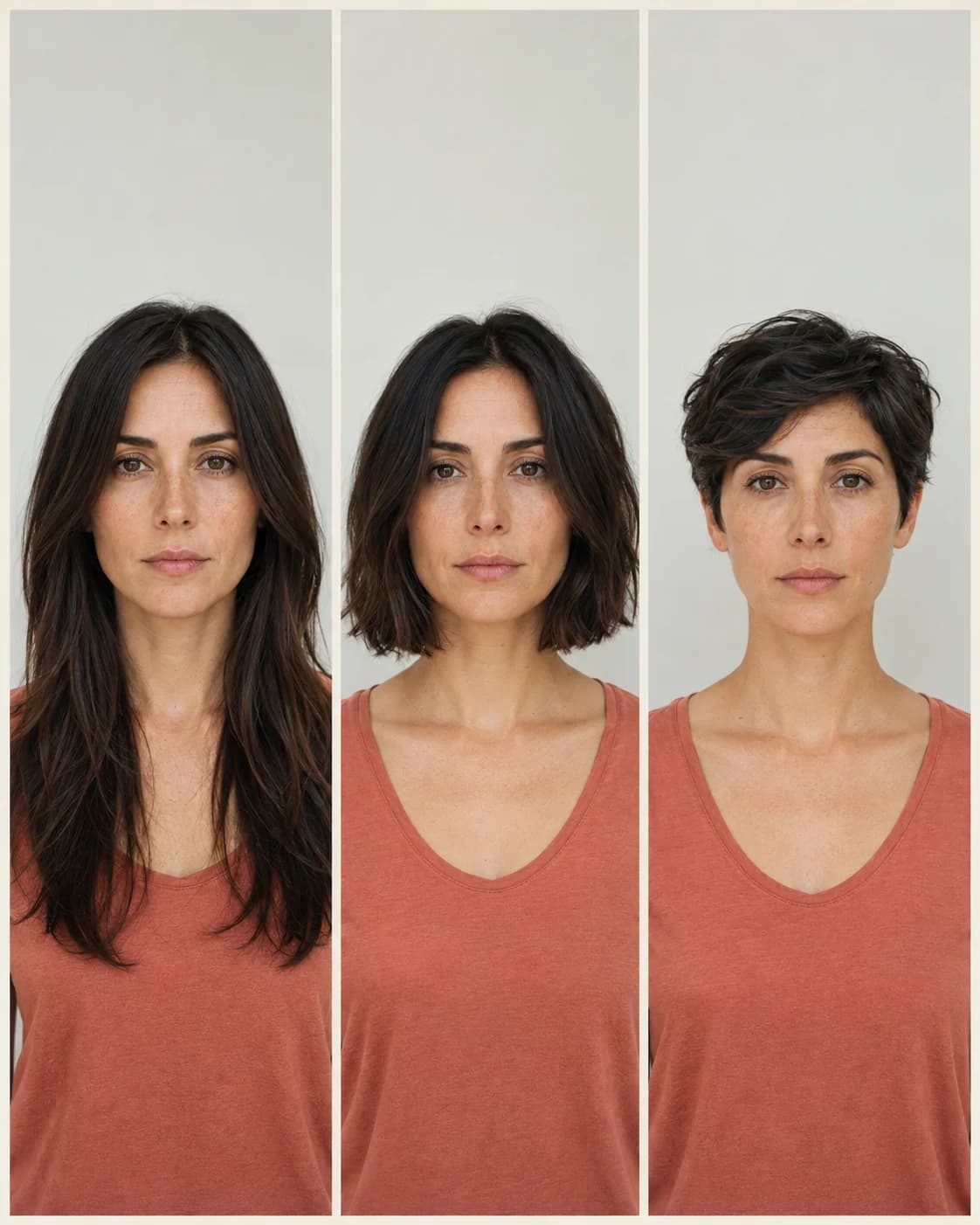
Create a fair comparison set
Use the same source photo, crop, scale, and screen brightness for every option. Do not compare one style on a professional photo with another on a casual selfie. Changes in expression, lighting, makeup, and camera angle can influence the decision more than the haircut.
Limit the first set to three distinct directions. If two results differ only in small styling details, keep the clearer one. The goal is to compare choices, not collect outputs.
Read the silhouette before the details
Blur your eyes or view each image small enough that individual strands disappear. Notice the overall length, width, crown height, forehead openness, and the relationship between head, neck, and shoulders. This is the part of the preview that carries the main haircut decision.
Ask whether the shape feels balanced to you from a normal viewing distance. Do not let an attractive curl finish or glossy color distract from a perimeter or volume placement you would not choose on its own.
Score the real-life fit
Give each version a simple score from one to five for identity, daily effort, tie-back or fallback options, salon frequency, and reversibility. Add one sentence explaining the lowest score. The explanation is usually more useful than the total.
A high-impact option may still be right when you willingly accept its maintenance. The scorecard is not designed to make every decision conservative; it makes the trade-off visible before you commit.
- Feels recognizably like me
- Fits my ordinary styling time
- Works with my fallback styles
- Matches my salon schedule
- Acceptable if I change my mind

Run the overnight test
Save the shortlist and stop looking at it for a day. Return without scrolling through new inspiration first. Novelty often fades, while a direction that fits your identity tends to remain interesting after the initial transformation effect has passed.
View the options at different moments: morning, work context, and evening. Imagine ordinary clothing rather than the styling in the photo. If one version only works inside the mood of the generated image, note that limitation.
Ask for specific outside feedback
Instead of asking “Which one looks best?”, ask a trusted person which feels most like you, which appears easiest to wear naturally, or what difference they notice first. Specific questions produce information; a popularity vote produces noise.
Keep your own first reaction recorded before asking. Friends may prefer familiarity or novelty for their own reasons. Their feedback should help you see the options, not overrule the routine and identity you are choosing for.
Translate the winner into a haircut brief
Write down the winning length, outline, shortest piece, volume area, and finish. Mark any generated detail you do not expect the stylist to copy. Bring the original image and runner-up so the stylist can understand both your ambition and comfort boundary.
End the consultation with measurements and behavior: where the dry perimeter lands, what must tie back, where layers begin, and what you will do at home. The preview has completed its job when it becomes a clear, adaptable brief.
Final sentence: “I choose this for the silhouette; please adapt the texture, density, and maintenance to my real hair.”
Three terms that make this conversation clearer.
You do not need to prescribe technique. Use these words to describe the visible structure, name the behavior you want, and ask what your stylist would adapt.
Baseline
The lower edge or foundation of a haircut, especially visible in bobs and other compact shapes. A strong baseline can make the ends read as fuller and more graphic; a softer or broken baseline can make the outline feel lighter and less exact.
SAY IT IN THE CHAIR“I want the bottom line to feel complete, but not so sharp that the grow-out looks abrupt.”Open full definition
Silhouette
The complete outside shape a haircut creates when viewed as a whole: compact, rounded, triangular, elongated, wide, narrow, or deliberately irregular. It is often the most reliable feature to compare before discussing small details or a polished finish.
SAY IT IN THE CHAIR“I want this overall shape, but I am open to changing the internal technique for my hair.”Open full definition
Consultation brief
A short, usable description of the result you want and the reality it must support. The strongest brief combines one structural change, one non-negotiable boundary, your normal styling routine, and a question that invites the stylist to adapt the plan.
SAY IT IN THE CHAIR“I want to change this, keep this boundary, and make sure the result still works when I style it this way.”Open full definition
Turn this guide into a decision.
Three honest answers are more useful than ten additional reference photos. Your responses stay on this page and can be changed at any time.
- 01Have you compared one major visual change at a time?
Keep the source photo, crop, angle, and face fixed while comparing length, fringe, shape, or color.
- 02Have you named the boundary you do not want traded away?
Examples: tie-back length, full ends, an open forehead, dry length, or support for natural texture.
- 03Does the plan fit your real styling and maintenance rhythm?
Count ordinary mornings, fallback styles, trim frequency, and the way the shape is likely to grow.
The short answers.
How many hairstyle previews should I compare?
Start with three meaningfully different directions. A small set makes the trade-offs easier to see and reduces the pull of tiny generated variations.
Should I ask friends to choose my haircut preview?
Ask for specific observations, but record your own reaction first. You are choosing the maintenance, comfort, and identity of the result—not only the most popular image.
How this guide was built.
HairChapter separates haircut structure from styling, trend names, and medical claims. Our recommendations are decision tools, not universal rules: a stylist should adapt the direction to your starting length, density, pattern, condition, growth habits, and normal routine.
We do not claim that a photograph or AI preview can predict a finished service. Sudden shedding, patchy loss, scalp pain, persistent irritation, or an unexplained change in density belongs with a qualified medical professional—not a haircut guide.