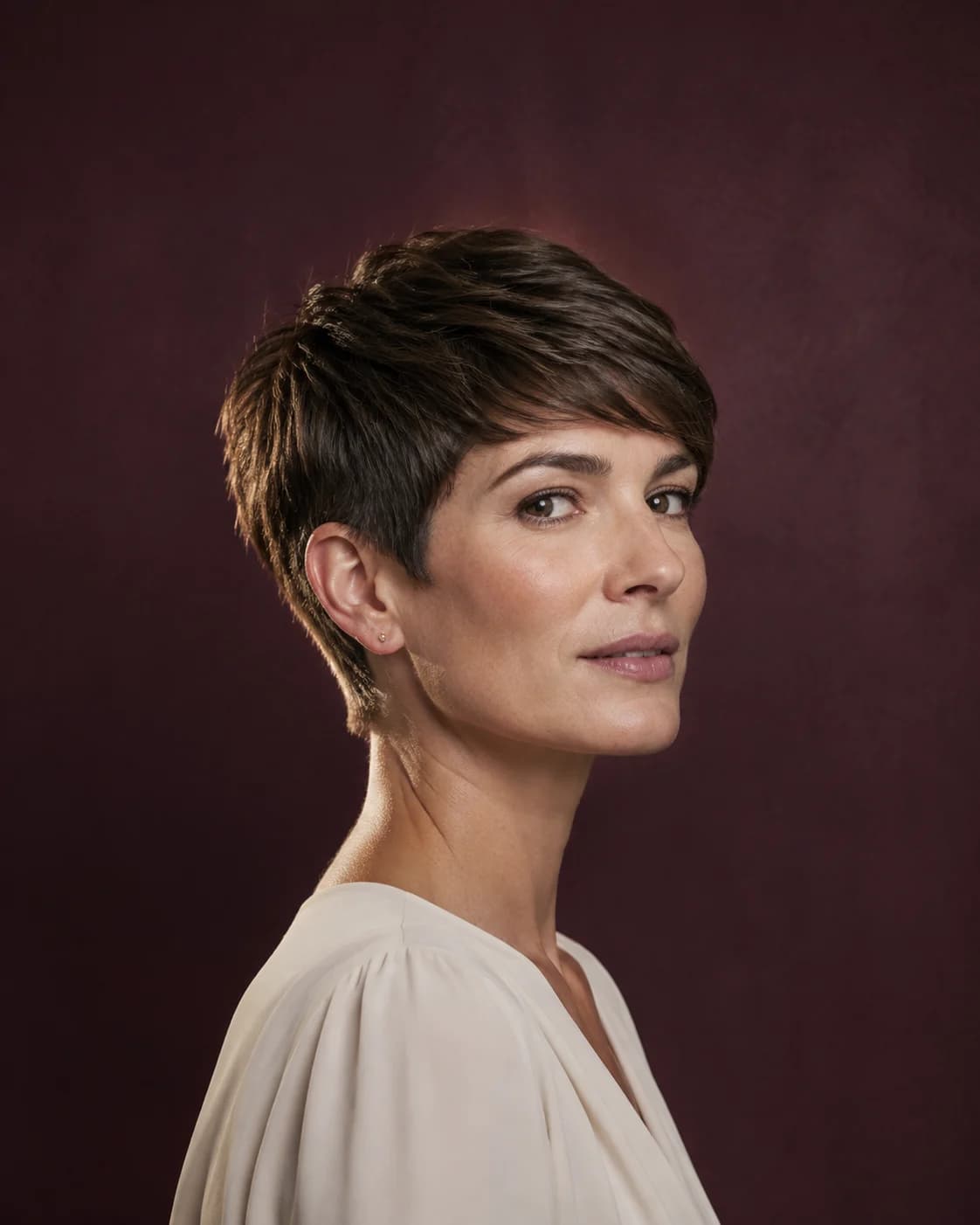
Choose the bridge shape before the final length
A long destination can feel too remote to guide today’s decisions. Choose the next recognizable silhouette first: a soft long pixie, a bixie with ear coverage, an ear-length crop, or a compact jaw bob. Decide which feature should lead—the fringe, crown, side length, or perimeter. This bridge shape becomes the test for every maintenance visit.
Take baseline photos of the crown, both ears, nape, and fringe. Note growth patterns and which zones already have useful length. Many pixies are intentionally longer on top, so waiting for every section to become equal is not the goal. The task is to redistribute the visual balance while preserving the areas that need time.
Understand the first pressure points
The nape may look long before the sides cover the ear. Weight can collect above the ears while the crown loses its original lift. The fringe may become the most flexible section, or it may fall into the eyes before it can sweep. These changes happen at different moments and should not all trigger the same correction.
Name the most visible imbalance and ask for the smallest response. A nape cleanup can restore intention without shortening the top; careful weight adjustment around the sides can improve the silhouette without exposing the ear again. Ask what will remain untouched. If the answer is simply “even everything up,” clarify how that serves the bridge shape.
Let the top wait for the perimeter
In many pixie grow-outs, the top and fringe must stop being the star while the side and back length catch up. Styling can redirect that longer top: flatter, side-swept, softly separated, or tucked when possible. Removing a large amount from the top may make today neater but can postpone the moment when the shape reads as a bixie or bob.
This does not mean avoiding all interior adjustment. Dense hair may need carefully placed weight control, while fine hair may need the perimeter protected. The correct choice depends on what your hair does when dry. Ask the stylist to distinguish bulk that blocks the silhouette from fullness that the next haircut will need.

Build a low-friction styling kit
The transition is easier when the routine changes with the shape. Use parting, root direction, and a small amount of flexible product to organize the outline rather than forcing the hair to imitate the original pixie. A narrow headband, small clips, or a soft tuck can support difficult side sections. Choose low-tension options and stop if a style causes pain or repeated breakage.
Ask a stylist to demonstrate one routine on your natural texture and one faster fallback. Photograph the finished front, side, and back rather than only the polished front view. The back often reveals whether the current shape is deliberately compact, becoming rounded, or building toward a perimeter.
Use milestone appointments, not automatic resets
Book when a named part of the shape needs help: the nape overwhelms the sides, the ear area needs a cleaner connection, or the emerging perimeter needs to read as one line. Before the service, say which landmark comes next—ear coverage, chin length, or a jaw perimeter—and which zone must keep every useful millimeter.
Bring one reference for the current bridge shape and one for the next. Ask how the cut will look after your own wash and what will become awkward first. When the sides finally cover the ear or the back begins to form a bob line, record the milestone. Progress becomes easier to trust when it is attached to a visible new capability rather than a generic promise about time.
- Bridge silhouette
- Areas that must remain untouched
- Current pressure point
- Natural-texture styling plan
- Next physical landmark
Three terms that make this conversation clearer.
You do not need to prescribe technique. Use these words to describe the visible structure, name the behavior you want, and ask what your stylist would adapt.
Maintenance window
The period during which a haircut still performs the job it was designed to do before a particular detail needs reshaping. The true window is set by the first meaningful change—often a fringe, nape, perimeter, crown, or loss of internal balance.
SAY IT IN THE CHAIR“Which detail will stop working first, and what is a realistic return window for that part?”Open full definition
Baseline
The lower edge or foundation of a haircut, especially visible in bobs and other compact shapes. A strong baseline can make the ends read as fuller and more graphic; a softer or broken baseline can make the outline feel lighter and less exact.
SAY IT IN THE CHAIR“I want the bottom line to feel complete, but not so sharp that the grow-out looks abrupt.”Open full definition
Consultation brief
A short, usable description of the result you want and the reality it must support. The strongest brief combines one structural change, one non-negotiable boundary, your normal styling routine, and a question that invites the stylist to adapt the plan.
SAY IT IN THE CHAIR“I want to change this, keep this boundary, and make sure the result still works when I style it this way.”Open full definition
Turn this guide into a decision.
Three honest answers are more useful than ten additional reference photos. Your responses stay on this page and can be changed at any time.
- 01Can you name the next visible milestone instead of only saying “longer”?
Choose a tuck, tie-back, connection point, or silhouette—and identify which length must be protected to reach it.
- 02Have you named the boundary you do not want traded away?
Examples: tie-back length, full ends, an open forehead, dry length, or support for natural texture.
- 03Does the plan fit your real styling and maintenance rhythm?
Count ordinary mornings, fallback styles, trim frequency, and the way the shape is likely to grow.
The short answers.
How often should I trim a pixie while growing it out?
Use shape milestones rather than a fixed schedule. Book when a specific pressure point needs professional help, and agree which areas will keep growing before anything is cut.
What is the awkward stage after a pixie?
It is usually a changing proportion rather than one universal stage: the nape, ear area, crown, and fringe stop balancing at different times. Choose a bridge silhouette and solve only the zone preventing it from reading clearly.
How this guide was built.
HairChapter separates haircut structure from styling, trend names, and medical claims. Our recommendations are decision tools, not universal rules: a stylist should adapt the direction to your starting length, density, pattern, condition, growth habits, and normal routine.
We do not claim that a photograph or AI preview can predict a finished service. Sudden shedding, patchy loss, scalp pain, persistent irritation, or an unexplained change in density belongs with a qualified medical professional—not a haircut guide.