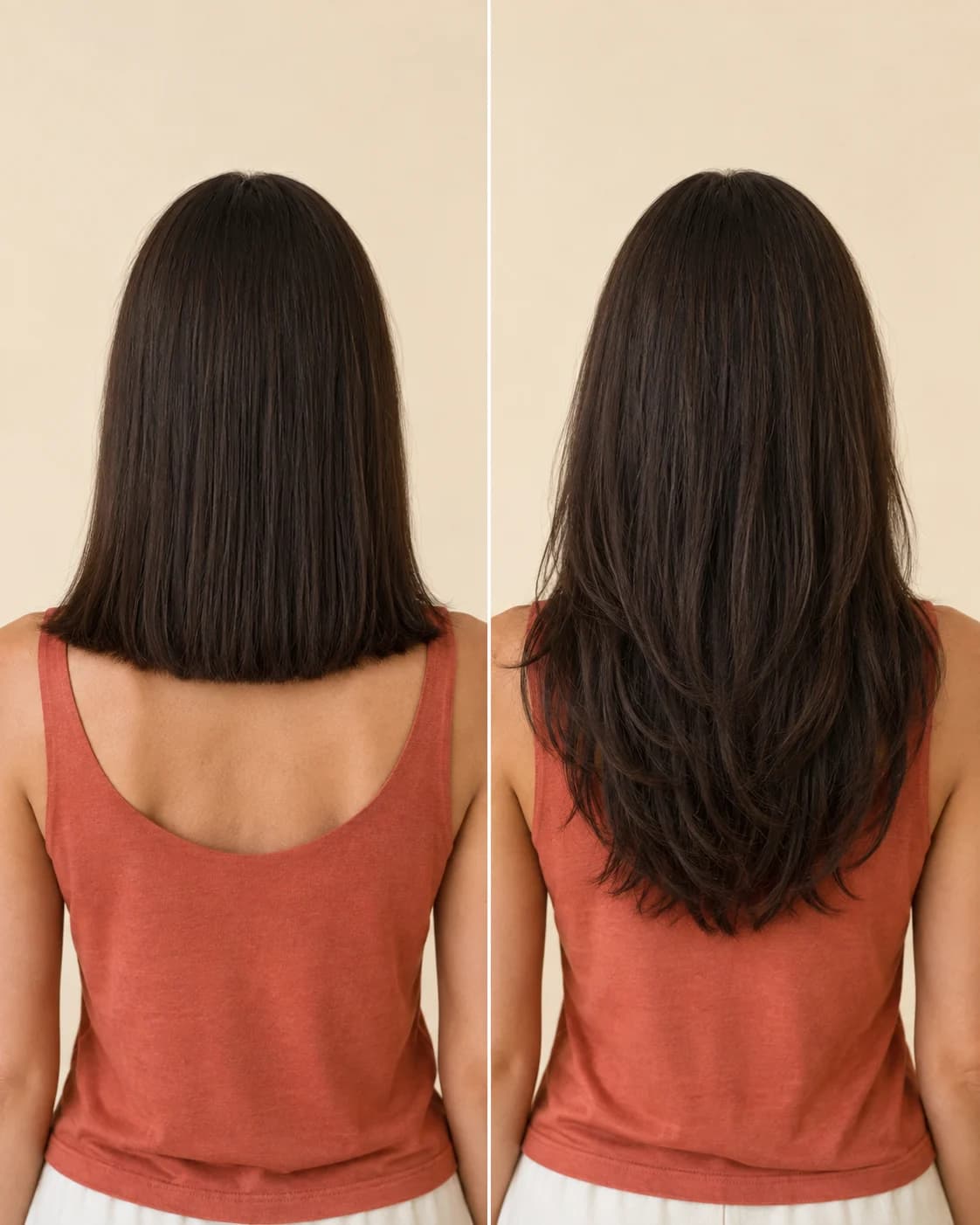
What long layers do
Long layers keep the shortest sections closer to the overall length. They can release movement while preserving a fuller outline, which often makes them a comfortable first step for someone attached to length.
Because the differences between sections are smaller, long layers tend to blend easily and can be more forgiving during grow-out. The tradeoff is that they may create less lift at the crown than shorter layers.
What short layers do
Shorter layers create a larger distance between the top sections and the perimeter. That can add visible shape, lift, and texture. It can also reduce weight and change how easily the hair ties back.
On curly or wavy hair, shorter layers may encourage shape and spring. On straight hair, they may need styling to show the intended movement. Placement matters more than a universal rule.
Density changes the answer
Fine or lower-density hair can lose the appearance of fullness when too much hair is removed from the perimeter. Dense hair may benefit from internal weight reduction, but visible short layers are only one way to achieve it.
Ask your stylist to explain what will happen to the ends, not only the crown. A layer plan should balance movement with the amount of visual weight you want to keep.
Useful question: “Where will the shortest layer sit, and how much density will remain at the perimeter?”

Choose by desired contrast
Choose long layers when you want a subtle shift, easier grow-out, and a stronger outline. Consider shorter layers when you want the haircut itself to create visible shape and you are comfortable with a more specific silhouette.
Preview both proportions before deciding. The comparison is more informative than choosing from two unrelated inspiration photos.
Separate surface layers from internal shaping
Visible layers change the outline and create obvious differences in length. Internal shaping removes or redirects weight beneath the surface while allowing the outside to remain calmer. Two haircuts can therefore look similarly long from the front but feel very different in movement, drying time, and fullness through the sides.
If you want less bulk without a highly layered appearance, ask whether internal work can address the heavy area. If you want the layers themselves to be visible, show where you expect separation at the crown, cheekbones, shoulders, and ends. The technique should follow the visual goal, not the other way around.
Check the cut in motion and tied back
Layer placement becomes clearer when the hair moves. In the consultation, lift the front pieces, gather the hair into your usual ponytail or clip, and identify any sections that must stay contained. Short crown layers may fall out even when the perimeter remains long; long layers usually preserve more of the tie-back behavior.
Consider the grow-out route as well. A small difference between layers can merge quietly, while a dramatic difference may keep a recognizable shape for longer and take more time to return to one length. Neither route is wrong, but it should be part of the choice.
Reference test: can you point to the shortest visible layer, the strongest line at the bottom, and the place where movement begins?
Three terms that make this conversation clearer.
You do not need to prescribe technique. Use these words to describe the visible structure, name the behavior you want, and ask what your stylist would adapt.
Crown layers
Shorter sections placed around the upper back and top of the head to influence lift, movement, or roundness. Their effect depends strongly on density, pattern, growth direction, and styling; shortening the crown can also create expansion rather than controlled volume.
SAY IT IN THE CHAIR“Where would the shortest crown layer sit dry, and what will it do without a blowout?”Open full definition
Layer map
A plain-language way to describe where the shortest layers begin, how quickly they connect to longer sections, and where movement or volume is intended to appear. Two haircuts with the same overall length can feel completely different because their layer maps differ.
SAY IT IN THE CHAIR“Show me the shortest layer, where it connects, and how much weight remains beneath it.”Open full definition
Long layers
Layers that preserve a smaller difference between the shortest and longest sections or begin lower in the haircut. They can add movement while protecting more perimeter weight and tie-back flexibility, although the visible effect may be subtle without styling.
SAY IT IN THE CHAIR“I want movement without a large gap between the shortest layer and the perimeter.”Open full definition
Turn this guide into a decision.
Three honest answers are more useful than ten additional reference photos. Your responses stay on this page and can be changed at any time.
- 01Can you point to the exact structural detail you want from this cut?
Name the shortest point, outside line, layer map, or placement of volume.
- 02Have you named the boundary you do not want traded away?
Examples: tie-back length, full ends, an open forehead, dry length, or support for natural texture.
- 03Does the plan fit your real styling and maintenance rhythm?
Count ordinary mornings, fallback styles, trim frequency, and the way the shape is likely to grow.
The short answers.
Do short layers make hair look thicker?
They can create lift and visible shape, but they also remove weight. Whether hair looks fuller depends on density, texture, placement, and how much perimeter is preserved.
Which layers are easier to grow out?
Long, blended layers usually create a smaller difference between sections and can feel more seamless during grow-out.
How this guide was built.
HairChapter separates haircut structure from styling, trend names, and medical claims. Our recommendations are decision tools, not universal rules: a stylist should adapt the direction to your starting length, density, pattern, condition, growth habits, and normal routine.
We do not claim that a photograph or AI preview can predict a finished service. Sudden shedding, patchy loss, scalp pain, persistent irritation, or an unexplained change in density belongs with a qualified medical professional—not a haircut guide.