
Define the maintenance you want to remove
Low-maintenance can mean little product, no blow-dryer, fewer appointments, an easy hat day, or a shape that still works after sleep. Decide which task you want to reduce. A close fade may simplify the morning while increasing the barber calendar; a longer scissor cut may reverse that balance.
Describe an ordinary morning and the longest interval you realistically want between appointments. Those two facts give the barber a better brief than asking for something easy without defining the kind of work you want to avoid.
Let the sides grow without losing the plan
Very short sides create clean contrast, but new growth becomes visible quickly around the temples, ears, and lower outline. A softer taper or scissor transition may remain readable for longer because the change between lengths is less abrupt.
Ask where the transition should begin and what it will look like several weeks later. If you dislike bulk above the ears, that area may set the real schedule even when the nape and top remain manageable.
Calendar test: choose the version you would still feel comfortable wearing one week after your ideal return date.
Keep enough top length for the fallback
A short top may need almost no styling, but growth patterns can make it stand, split, or change direction. A slightly longer top provides more control and options, while asking for product, drying, or reshaping when it becomes heavy. There is no universal easiest length.
Name your fallback: air-dried forward, pushed back, side-parted, textured with fingers, or left alone. The cut should make that version coherent rather than depend on the most polished finish shown in the reference.
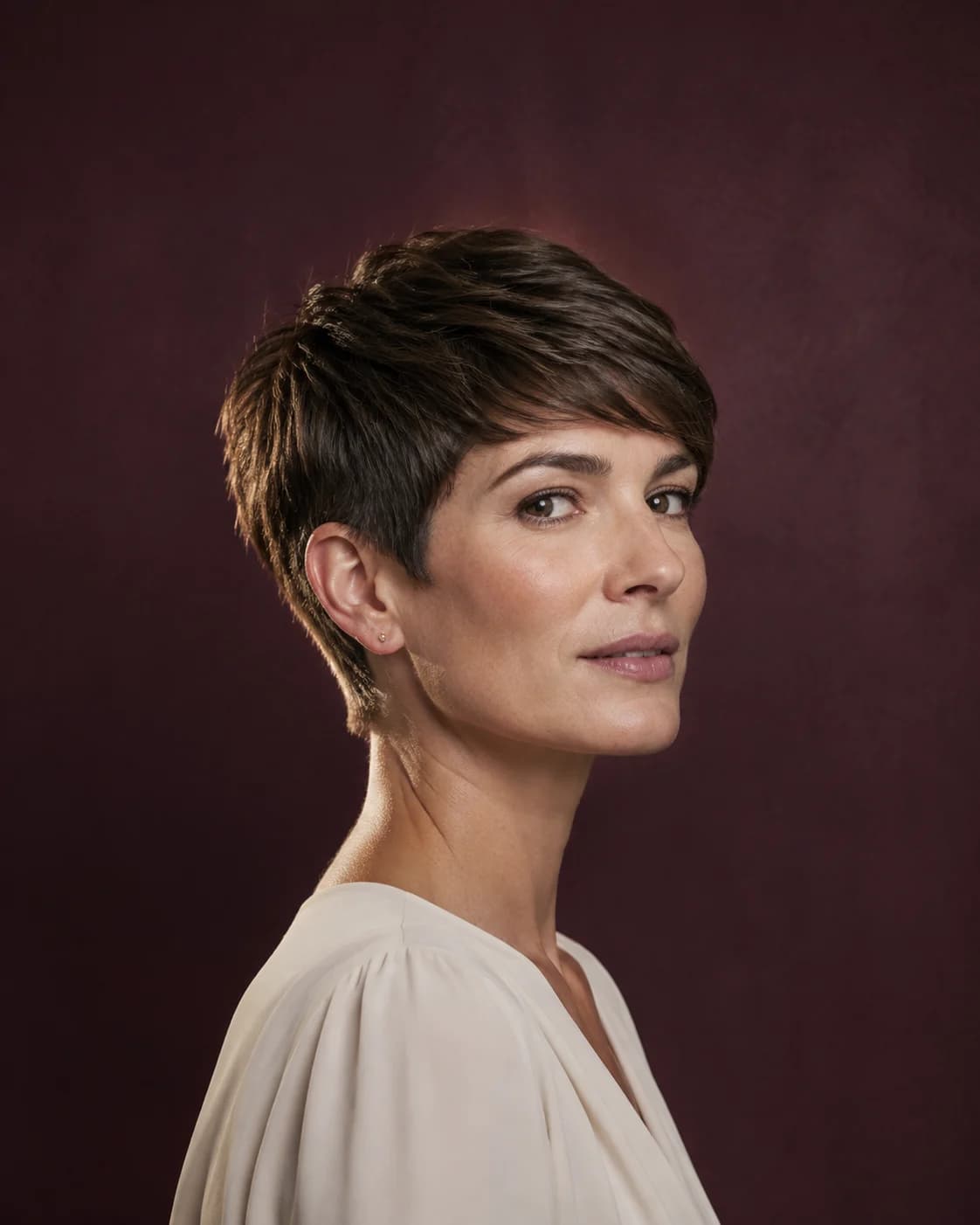
Use texture instead of fighting it daily
Show how the hair bends, curls, expands, or lies flat without product. The same short-back-and-sides description behaves differently with a strong crown, dense waves, fine straight hair, or coils. A useful shape works with the direction already present.
Ask what product category supports the cut and how much is actually needed. If the answer depends on several tools and a precise technique you will not repeat, choose a quieter version of the shape or preserve more length where control matters.
Make the outline deliberate, not overdesigned
The neckline, sideburns, temple area, and hairline influence how fresh a short cut appears. Very sharp detailing creates an immediate polished effect but can also make natural growth feel untidy sooner. A softer outline may trade first-day precision for a calmer grow-out.
Discuss natural versus defined edges and whether you maintain any area between visits. Avoid assuming the cleanest reference is automatically the lowest-effort option. The strongest choice matches the level of contrast to the appointment schedule you can keep.
Use one complete barber sentence
Connect the top, sides, outline, finish, and return schedule in one brief. For example: “Keep enough length on top to wear it forward without heat, use a soft transition around the sides, leave the neckline natural, and plan the shape for six weeks.”
Bring front, side, and back views when possible. Point out what you like in each rather than expecting one photograph to explain the entire cut. Ask the barber what should change for your growth patterns before agreeing on the shortest areas.
Three terms that make this conversation clearer.
You do not need to prescribe technique. Use these words to describe the visible structure, name the behavior you want, and ask what your stylist would adapt.
Silhouette
The complete outside shape a haircut creates when viewed as a whole: compact, rounded, triangular, elongated, wide, narrow, or deliberately irregular. It is often the most reliable feature to compare before discussing small details or a polished finish.
SAY IT IN THE CHAIR“I want this overall shape, but I am open to changing the internal technique for my hair.”Open full definition
Growth pattern
The direction hair naturally leaves the scalp and moves through areas such as the front hairline, crown, nape, and around the ears. Cowlicks, whorls, and directional changes can alter how short sections lift, split, or settle.
SAY IT IN THE CHAIR“Can we look at the front and crown dry before choosing the shortest length?”Open full definition
Internal weight
The mass and density held inside the visible outline of a haircut. Thoughtful internal removal can make dense hair move or sit closer without automatically weakening the perimeter; poor placement can create short pieces, expansion, or transparent ends.
SAY IT IN THE CHAIR“Where will you remove weight, and which parts of the outline will stay visually solid?”Open full definition
Turn this guide into a decision.
Three honest answers are more useful than ten additional reference photos. Your responses stay on this page and can be changed at any time.
- 01Can you separate the top, transition, sides, and outline in your request?
A haircut name alone rarely explains how those four zones should connect or grow out.
- 02Have you named the boundary you do not want traded away?
Examples: tie-back length, full ends, an open forehead, dry length, or support for natural texture.
- 03Does the plan fit your real styling and maintenance rhythm?
Count ordinary mornings, fallback styles, trim frequency, and the way the shape is likely to grow.
The short answers.
What men’s haircut grows out most cleanly?
Softer transitions and natural outlines often show growth less abruptly than very close, high-contrast work, but texture, crown behavior, and preferred shape still matter.
Is a buzz cut always low-maintenance?
It can require almost no daily styling, but keeping a precise length and outline may mean frequent clipping. Daily effort and appointment frequency are separate costs.
How this guide was built.
HairChapter separates haircut structure from styling, trend names, and medical claims. Our recommendations are decision tools, not universal rules: a stylist should adapt the direction to your starting length, density, pattern, condition, growth habits, and normal routine.
We do not claim that a photograph or AI preview can predict a finished service. Sudden shedding, patchy loss, scalp pain, persistent irritation, or an unexplained change in density belongs with a qualified medical professional—not a haircut guide.