
A mullet haircut needs a side and back decision
A mullet haircut keeps a deliberate contrast between shorter areas toward the front or sides and a longer back. That broad idea is not a complete cutting brief. The neck section might be modest, broad and full, or longer and more separated. The sides may cover part of the ear or leave it open. Before choosing an elaborate finish, ask which relationship you actually like. Look at a genuine profile and rear view of the same reference when available. A front portrait may hide almost all the detail that made you choose the haircut in the first place.
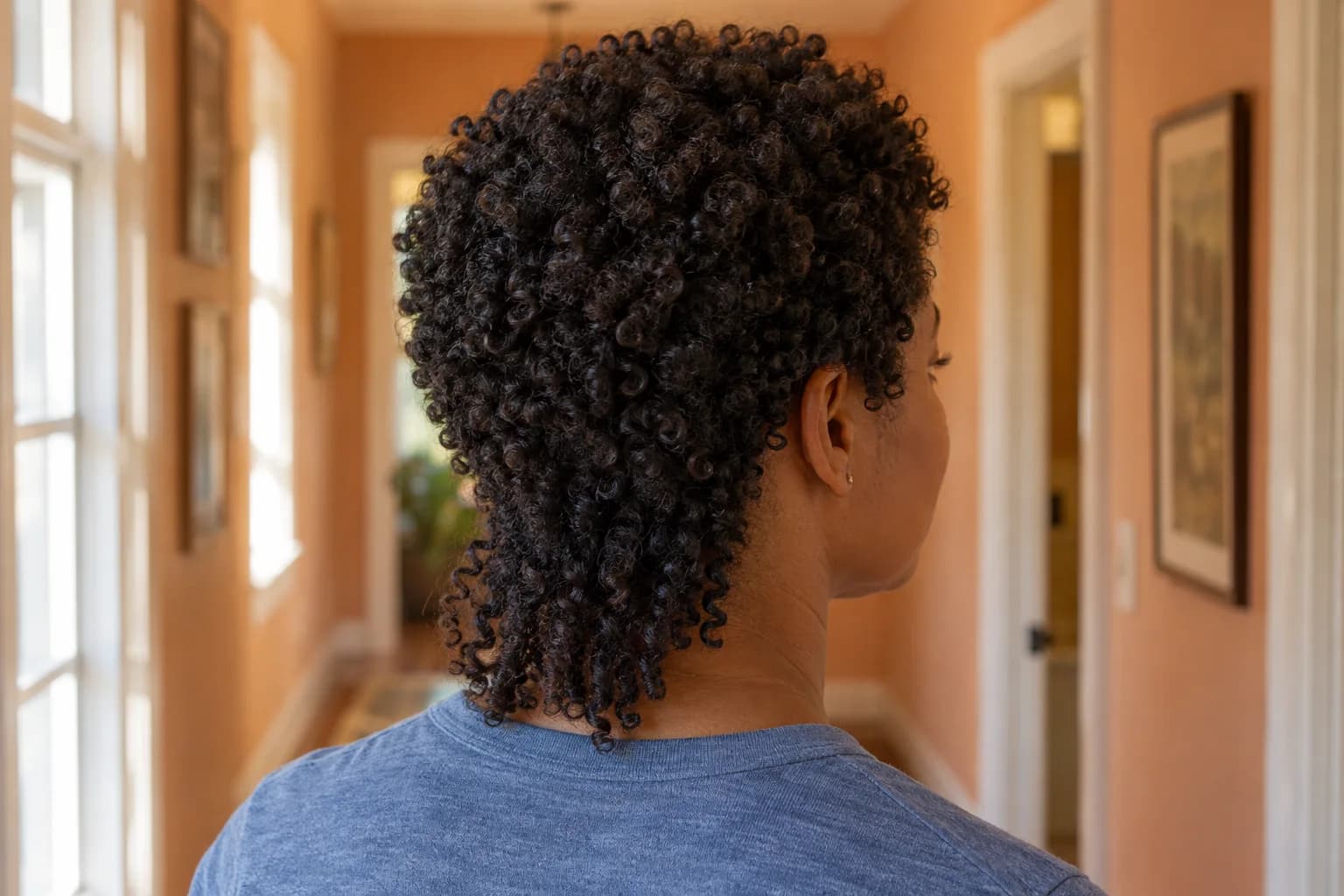
Make the back the first practical question: where should it rest when your head is held normally, and how much width should remain behind each ear? Show those boundaries on your own hair before anything is shortened. A photograph can express a preference, but it cannot establish that your starting lengths support the same outline today. If the nape is currently short, discuss a developing shape rather than expecting the salon to create missing length. If you already have long hair, identify what must remain while the front and sides change. The name alone does not protect any section.
Separate nape length from nape width
Two mullets with the same longest point can look very different from behind. One may retain a wider lower section; another may narrow strongly into a tail. Decide whether you like the whole back outline or only its length. Ask the professional to show where the shorter side stops and the retained back begins. This is especially important if you dislike a thin lower section but have brought a reference with a narrow finish. Saying keep the back long does not explain how much hair you want left across it or how gradually the sides should join it.
Check the proposed endpoint with your usual shirt collar, work neckline or jacket. Move your head normally and notice where you already feel contact. You are not testing the finished haircut perfectly; you are identifying a real requirement. Hair that rests against a collar may move differently from a photographed shape arranged away from clothing. Do not assume a particular neck length guarantees that the ends will lie inward, stay separated or avoid every contact point. Explain which behavior would bother you, then ask what outline offers a realistic compromise. Shortening everything is not the only possible response to that discussion.

Choose ear coverage without automatically choosing a fade
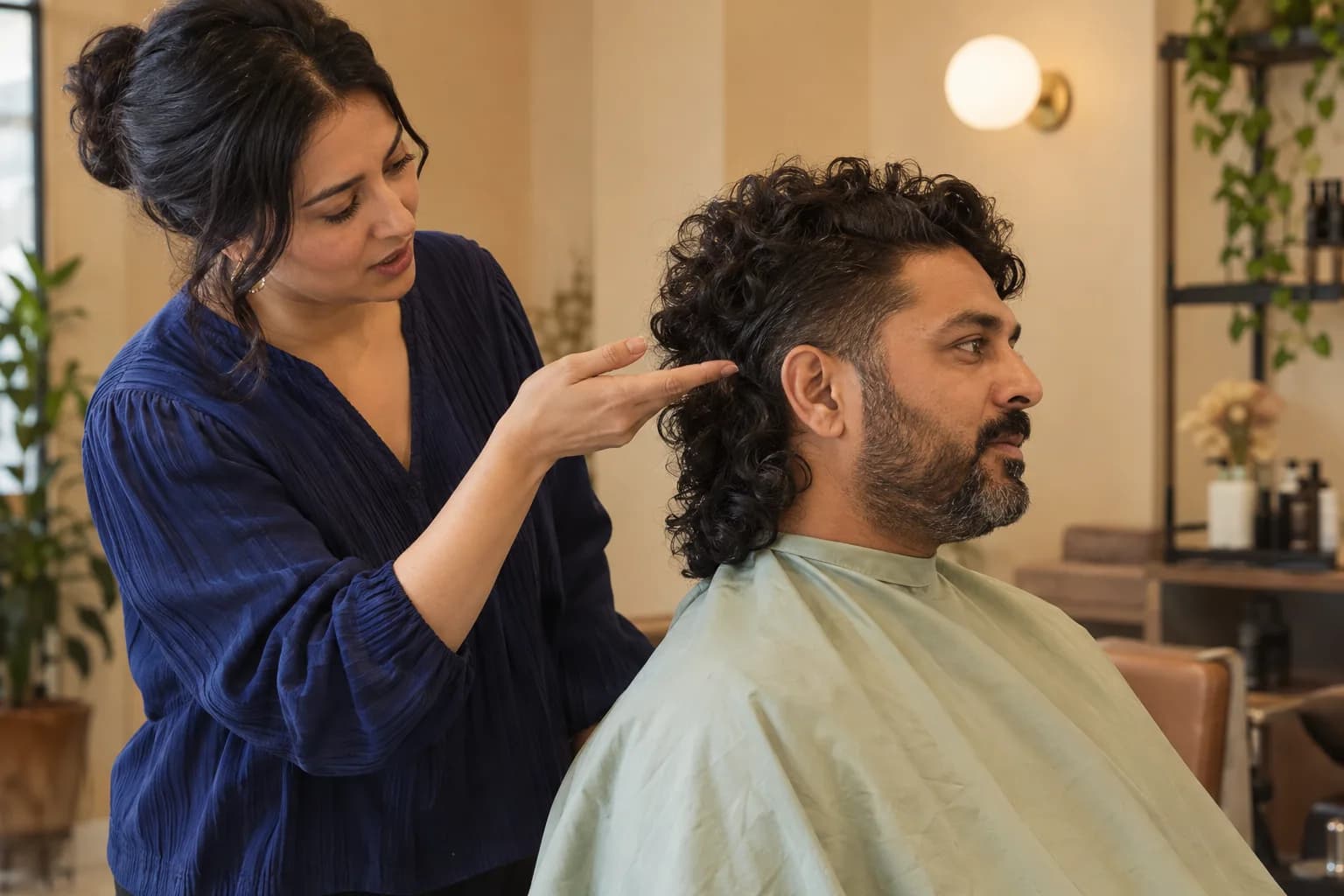
A close-looking side is one option, not the definition of a mullet. You can discuss visible scissor-cut length, a softer opening around the ear or a deliberately closer area. Agree the highest point and shortest finish separately. If you want visible hair rather than exposed skin, say that directly. A reference labeled subtle may still have a very close base. The part immediately behind the ear also matters: taking that area too short can change the apparent width of the retained nape even when its longest point stays untouched. Ask to see that boundary from profile before cutting.
Keep the top and fringe in the same conversation without allowing them to become an unplanned second transformation. Do you want the front forward, swept aside or mostly off the forehead? How much crown movement are you willing to style? JATAI's professional example by Charli Boell uses deliberate fringe and crown choices within one interpretation of a modern mullet. It is evidence of an individual design, not a reason to prescribe its tool or method for your own hair. Ask which retained pieces are needed for the direction you actually wear. A neat side should not silently authorize a much shorter crown.
Read the shape in the texture you intend to wear
Straight hair can make the side-to-back step easy to see, while waves, curls and coils can change how the lower section spreads or rests. None of those textures automatically requires shaved sides or a narrow tail. Show the professional your ordinary dry hair before it is pulled flat or arranged into a different finish. Explain whether you normally air-dry, use a dryer or reshape particular sections. The useful question is how this proposed outline translates to your real routine, not whether your hair can be made to resemble a heavily styled reference for one photograph.
Ask how the dry nape endpoint and retained crown will be assessed. A stretched curl does not show its resting length, and a photograph cannot calculate that difference reliably. Avoid using a universal centimeter allowance as your own cutting instruction. If the reference has a lifted top, find out what created the lift and whether you want to repeat that work. If the lower section looks very light, ask how much density it actually retains. A softer, fuller interpretation may fit your preferences better than reproducing every separated end. It can still be a deliberate front-to-back contrast rather than an imitation of another person's finish.

Use a preview for contrast, not for an invented back view
If you are undecided about the visible change around the face, Hair Muse can be an optional comparison tool. Start with one clear, evenly lit portrait and explore a small selection of available styles with more or less visible side fullness. Keep color and broad front direction as stable as possible. Do not assume a particular mullet variation, side-view editor or measured nape length is available. Save only a few useful directions and write what each tests. The comparison is most useful when it answers whether you enjoy the stronger contrast, not when it replaces every unanswered salon question.
HairChapter and Hair Muse share a publisher. The app is free to download; some functions or usage may require in-app purchases. Official App Store invitations on this page are optional. A preview cannot guarantee real hair behavior, density, precise fit, chemical color results, barber feasibility or the finished haircut. A frontal image is particularly weak evidence for the nape. Pair the selected preference with a real profile and back reference, plus an unedited current photograph. Never let a convincing digital back shape become permission to remove actual length that you have not discussed. The professional assessment still defines the cutting plan.
Keep a mullet distinct from a shag or wolf reference
A shag or wolf image may share layers and a longer lower section without expressing the same side-to-nape priority. If you collect several references, mark the feature you want from each instead of handing over an unnamed mixture. You might like the softer crown of one and the fuller neck section of another, while rejecting the close side of a third. Tell the stylist which detail leads. The goal is not to win an argument about labels; it is to avoid receiving short crown layers when your original wish was simply an open ear and a retained back.
Choose a small number of boundaries you can inspect at the final review. Those might be visible side coverage, a broad nape, a front length that stays out of the eyes and a crown that does not require daily lifting. Ask whether the starting hair can support all of them together. If not, discuss the compromise before the scissors or clippers are involved. You may choose less contrast now or allow more time for the back to develop. Calling the result a softer mullet does not resolve a conflict by itself. The actual lengths and connection are what make the plan understandable.

Decide whether the next visit maintains contrast or grows it out
The next appointment should have a goal beyond tidy it up. Keeping the mullet may mean controlling the sides while preserving the nape. Growing away from it may mean allowing the sides to gain length, even while the overall shape looks less sharply separated. These are different directions. Ask which section is likely to bother you first and whether a limited cleanup would help without resetting the area you are trying to grow. There is no single reliable return interval for everyone. Your preferred edge, texture, routine and tolerance for a softer outline all influence that decision.
If you later want a more connected shape, identify the section that needs to catch up. Removing the longer back can reduce the contrast sooner, but it gives up the length you chose to retain. Leaving that back intact preserves it while the sides develop, without guaranteeing an even-looking transition at every stage. A saved Hair Muse comparison can help explain the future silhouette you prefer, not predict growth or supply missing side length. Do not keep taking the sides shorter out of habit while saying you want the haircut to become more uniform. Make the maintenance instruction match the destination.
Leave with a repeatable request, not only a styled photograph
Write a short brief covering the nape endpoint, retained width, side coverage and front direction. Add the styling you actually do and one limit you do not want traded away. Ask the professional to show any adaptation on your own head before cutting. At the final review, look at the front, both profiles and the back with your head held normally. Let the top relax rather than assessing only the most arranged finish. Put on the collar or accessory you discussed when practical. The aim is to recognize the agreed shape in ordinary conditions, not demand a perfectly fixed silhouette.
If something feels wrong, name the area and behavior before accepting more removal. A too-narrow-looking back, a fringe that falls differently and an unwanted close side are not the same correction. Ask what can be changed now without crossing a protected boundary and what needs time. Keep clear photographs and the agreed note for your next visit. They make it easier to preserve what worked instead of repeating the whole consultation from a trend name. A considered mullet decision ends with a back outline you understand, sides you consented to and a maintenance plan that supports the version you actually want.
Three terms that make this conversation clearer.
You do not need to prescribe technique. Use these words to describe the visible structure, name the behavior you want, and ask what your stylist would adapt.
Perimeter
The outside boundary of the haircut: the line you read around the bottom, sides, and overall edge. A compact perimeter usually feels fuller and more controlled, while a broken or highly layered perimeter can feel lighter, softer, or more textured.
SAY IT IN THE CHAIR“I like the movement, but I want the outside edge to remain substantial when the hair is straight or air-dried.”Open full definition
Layer map
A plain-language way to describe where the shortest layers begin, how quickly they connect to longer sections, and where movement or volume is intended to appear. Two haircuts with the same overall length can feel completely different because their layer maps differ.
SAY IT IN THE CHAIR“Show me the shortest layer, where it connects, and how much weight remains beneath it.”Open full definition
Silhouette
The complete outside shape a haircut creates when viewed as a whole: compact, rounded, triangular, elongated, wide, narrow, or deliberately irregular. It is often the most reliable feature to compare before discussing small details or a polished finish.
SAY IT IN THE CHAIR“I want this overall shape, but I am open to changing the internal technique for my hair.”Open full definition
Turn this guide into a decision.
Three honest answers are more useful than ten additional reference photos. Your responses stay on this page and can be changed at any time.
- 01Can you point to the exact structural detail you want from this cut?
Name the shortest point, outside line, layer map, or placement of volume.
- 02Have you named the boundary you do not want traded away?
Examples: tie-back length, full ends, an open forehead, dry length, or support for natural texture.
- 03Does the plan fit your real styling and maintenance rhythm?
Count ordinary mornings, fallback styles, trim frequency, and the way the shape is likely to grow.
The short answers.
Does a mullet need a skin fade?
No. Discuss the amount of ear coverage and the shortest side finish independently. A scissor-shaped side can create contrast with a longer back. Ask to see the boundary behind the ear before it is shortened.
How long should the nape be?
There is no universal length. Choose a dry endpoint, retained width and relationship to your normal collar with the professional. Your starting hair and texture determine what can actually be shaped today.
Can a mullet work with curls or coils?
Discuss the shape in the texture you intend to wear. Ask how the resting nape length and crown will be checked rather than relying on stretched hair or a smooth reference. No texture guarantees the photographed finish.
Can I grow out the sides without cutting the back?
You can discuss preserving the nape while the shorter sides develop. The transition may remain uneven for a while. Make that goal explicit so routine cleanups do not keep resetting the side length.
Can a preview choose my nape length?
No. Use it for a broad visible preference, not a measurement or a reliable back view. Bring real side and back references and agree the actual length, width and cutting limits in the salon.
How this guide was built.
HairChapter separates haircut structure from styling, trend names, and medical claims. Our recommendations are decision tools, not universal rules: a stylist should adapt the direction to your starting length, density, pattern, condition, growth habits, and normal routine.
We do not claim that a photograph or AI preview can predict a finished service. Sudden shedding, patchy loss, scalp pain, persistent irritation, or an unexplained change in density belongs with a qualified medical professional—not a haircut guide.
One professional example, not one compulsory technique
- JATAI Academy — Charli Boell on a modern mullet An original professional example with deliberate fringe, crown and texture choices. Tool promotion, cutting instructions and styling results are not adopted as universal advice.