Balayage vs highlights: name the result before the technique
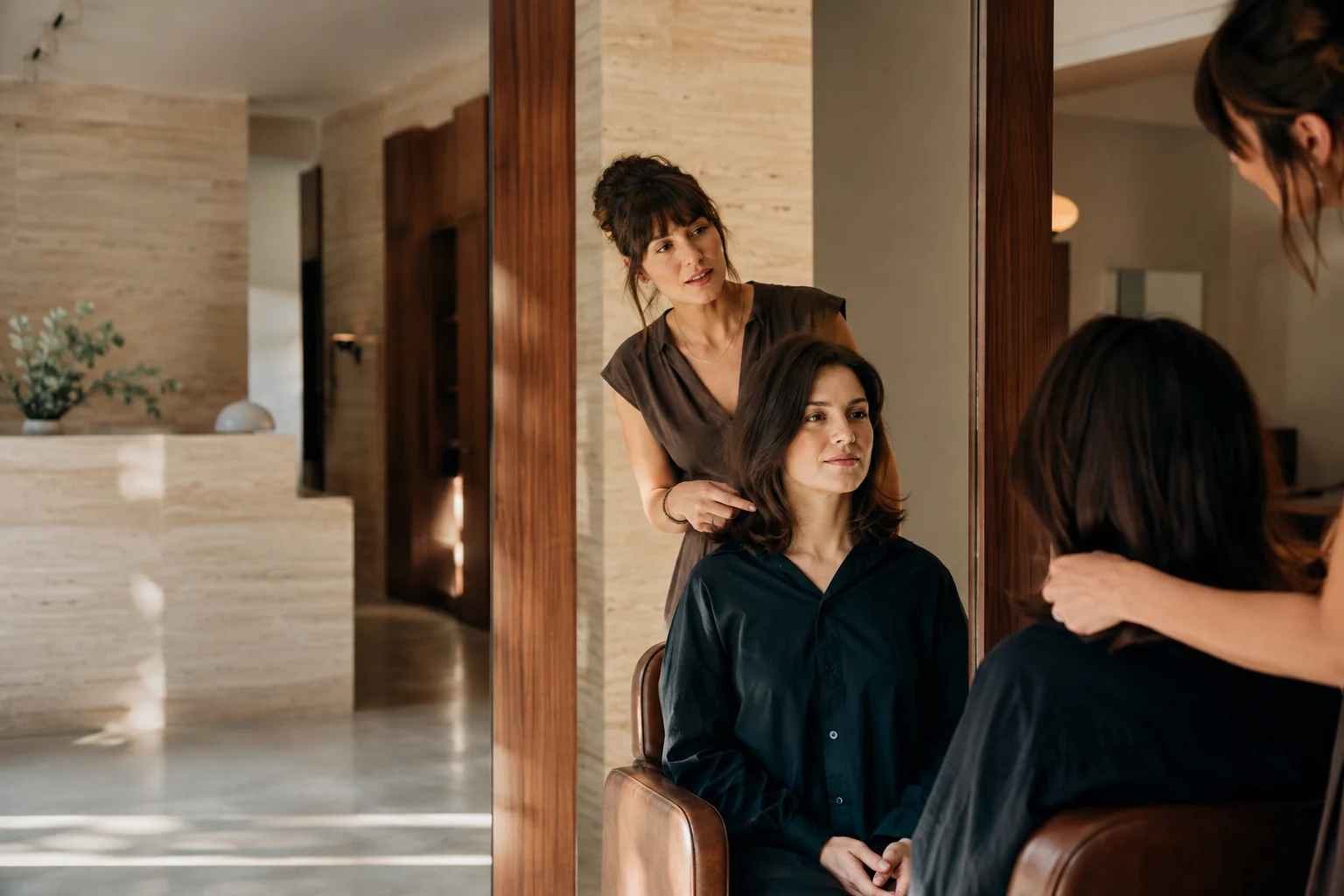
Balayage vs highlights is not a contest between a modern service and an outdated one. Balayage describes freehand placement; highlights is a broader description of lighter pieces, and a booking menu may use it to mean traditional foil work. Wella explains the freehand terminology, while L’Oréal Professionnel describes foilyage, which combines freehand placement with foil. That is enough reason not to reject a proposal simply because you see foil. Ask what the colorist intends to create on your hair. The visible pattern matters more to your daily choice than the tools used to produce it.
Start with one sentence describing the change: brighter beside the face, more light through the lower lengths, or a lighter impression close to the part. Add the part you want to retain, such as your existing darker upper area. A photograph can contain all three changes even when you only want one. Point to the exact region you like and name something you do not want copied. You can appreciate the blonde ends in a picture while preferring a less bright front. That distinction prevents an appealing reference from becoming permission for a larger transformation.
Choose how much contrast you want at the part
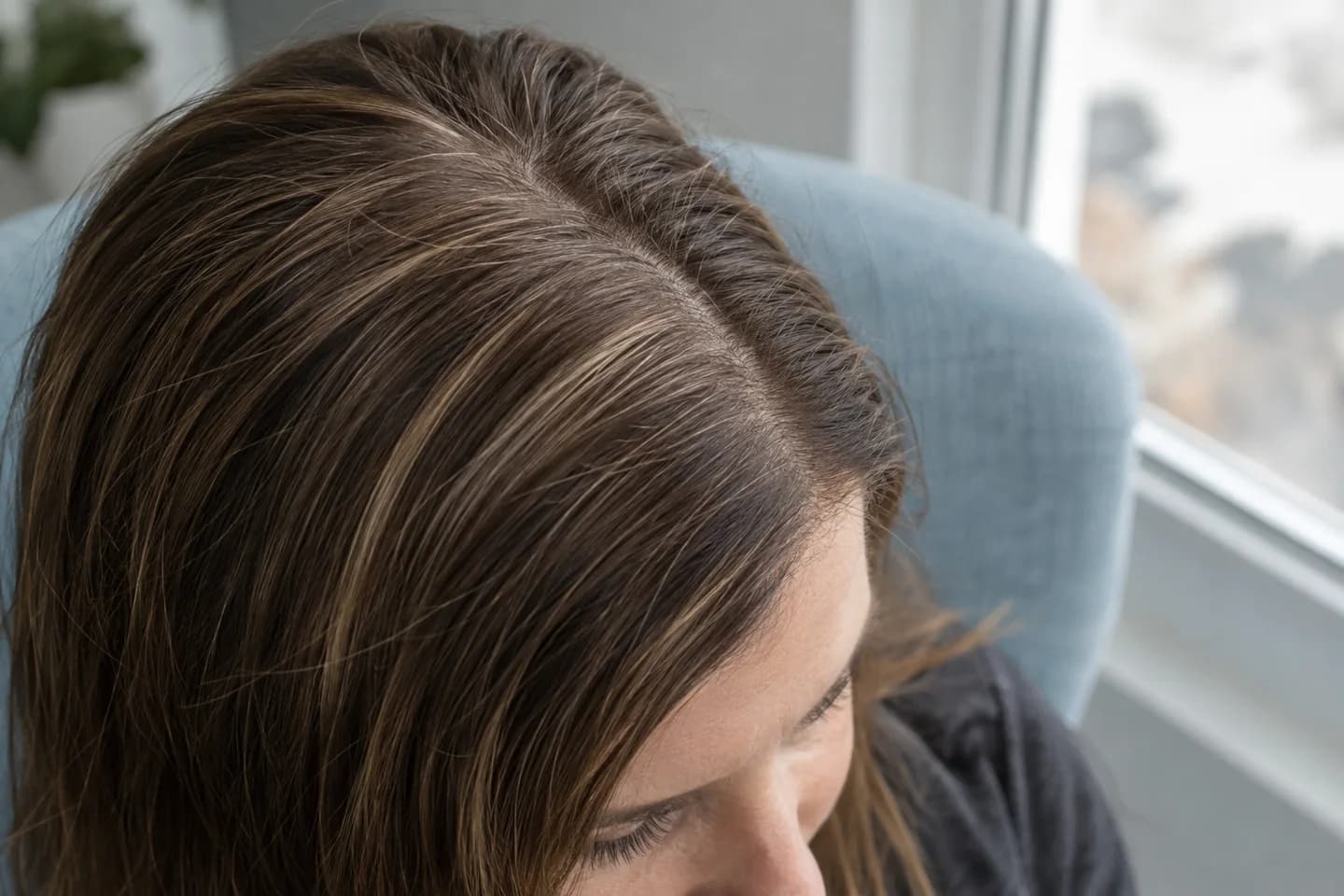
Look at your hair with its usual part in even daylight. Is your priority a bright upper surface immediately after the appointment, or keeping your natural depth visible near the scalp? Those are useful starting preferences, not rigid rules for a technique. Ask the colorist to show where lighter sections would begin and how much darker hair would remain between them. A dense set of fine pieces and a smaller number of broader ribbons can produce different impressions even when their light shade is similar. Do not use the word subtle as the only instruction.
Consider the upper contrast you are willing to see as new hair appears. Bring a reference with a visible part, not just curled ends photographed from behind. If you dislike a defined difference near the scalp, make that a specific boundary. If you want brightness high around the face, acknowledge that this area may need its own review. Neither preference makes you a high-maintenance or low-maintenance person. You are deciding which change you will notice first. Ask how the proposed placement addresses that preference rather than relying on a promise that one service always grows out invisibly.
Separate the front pieces from the rest of the lengths
The brightest front section can dominate a color even when relatively little hair is changed elsewhere. Decide whether you want a clear face-framing ribbon, a quieter scattering of strands or no extra front emphasis. Show the preference with your hair loose and in your usual part. Then move it behind the ear or into your normal tie-back. A piece that looks discreet when tucked away can become prominent across your cheek when loose. These are different views of the same placement, not evidence that the technique has changed.
Specify how far the brightness should continue through the sides and back. A front-focused service may not create the lighter impression you want when wearing a ponytail; a wider change may be more than you intended. Ask which regions are included in the appointment and which remain untreated. Do not assume partial and full describe identical coverage in every salon. If the reference contains a very light outer frame and dark interior, say whether you want that contrast. The colorist can translate the brief into a suitable service without you prescribing a sectioning pattern or chemical formula.
Check the pattern on your usual texture and final length
A smooth, straight finish makes the spacing between light and dark sections easy to inspect. Waves and curls present different parts of each section as they turn. Bring a recent photograph in the texture you normally wear, especially if your inspiration is a carefully waved salon finish. Ask what would be visible without that styling. The objective is not to demand that every curl receives a stripe. It is to agree whether you prefer quiet dimension, clearly separated pieces or a broadly lighter appearance in your own everyday arrangement.
Tell the team about a planned length change before placement is agreed. If the ends that carry most of a reference’s brightness will be cut away, its color balance is not your finished plan. Similarly, a newly shortened front changes where a face-framing piece ends. Confirm the dry outline that stays and ask how the color would relate to it. You do not need to choose a shorter haircut to qualify for color, or keep extra length just to preserve a technique. Make the haircut and placement decisions compatible instead of treating the inspiration photograph as a fixed package.


Use a preview to narrow a color preference, not book a formula
Once the real placement boundaries are clear, an optional Hair Muse comparison can help with a broader visual question: do you prefer your overall impression deeper, warmer or lighter? Use a clear, evenly lit portrait with the head upright. Compare a few available options, keeping the cut and finish similar where possible. Describe the single preference that remains consistent. Do not assume the app offers your exact balayage design, foil pattern or a control that changes only one front section. If placement cannot be held comparable, use real reference photographs for that part of the decision.
HairChapter and Hair Muse share a publisher. Hair Muse is free to download; some uses or features may require in-app purchases. The official App Store invitations on this page are optional. A preview does not predict chemical lift, tone on previously colored hair, real curl behavior, feasibility or a salon result. It cannot diagnose strand condition or tell the colorist which formula to apply. Keep your unchanged photograph and the reference with your notes alongside any saved preview. You are bringing a visual preference to a consultation, not proof that an exact shade can be achieved in one appointment.
Ask about maintenance as separate appointments and costs
Ask what the next visit would actually do. Refreshing the tone of existing lighter lengths, revisiting upper placement and changing the whole pattern are not the same service. Request a realistic estimate for the initial appointment and possible follow-up options at that salon. A softer upper transition can be a useful preference without making every later visit unnecessary. Equally, wanting lighter strands near the part does not mean agreeing to the same full service every time. Name the outcome you would want maintained and ask which smaller changes, if any, could preserve it.
Explain your practical limits: how often you can attend, how much appointment time you can spare and which at-home steps you will genuinely repeat. Ask for a simple care plan matched to the proposed service, not a shopping list assembled from a technique name. Follow professional and product directions; do not add improvised toning or lightening to correct a preview mismatch. Decide which visible change would prompt a review: upper contrast, unwanted tonal shift or a pattern that no longer suits your cut. There is no universal calendar that establishes your next appointment before your individual plan exists.
Keep hair history and permission separate from inspiration
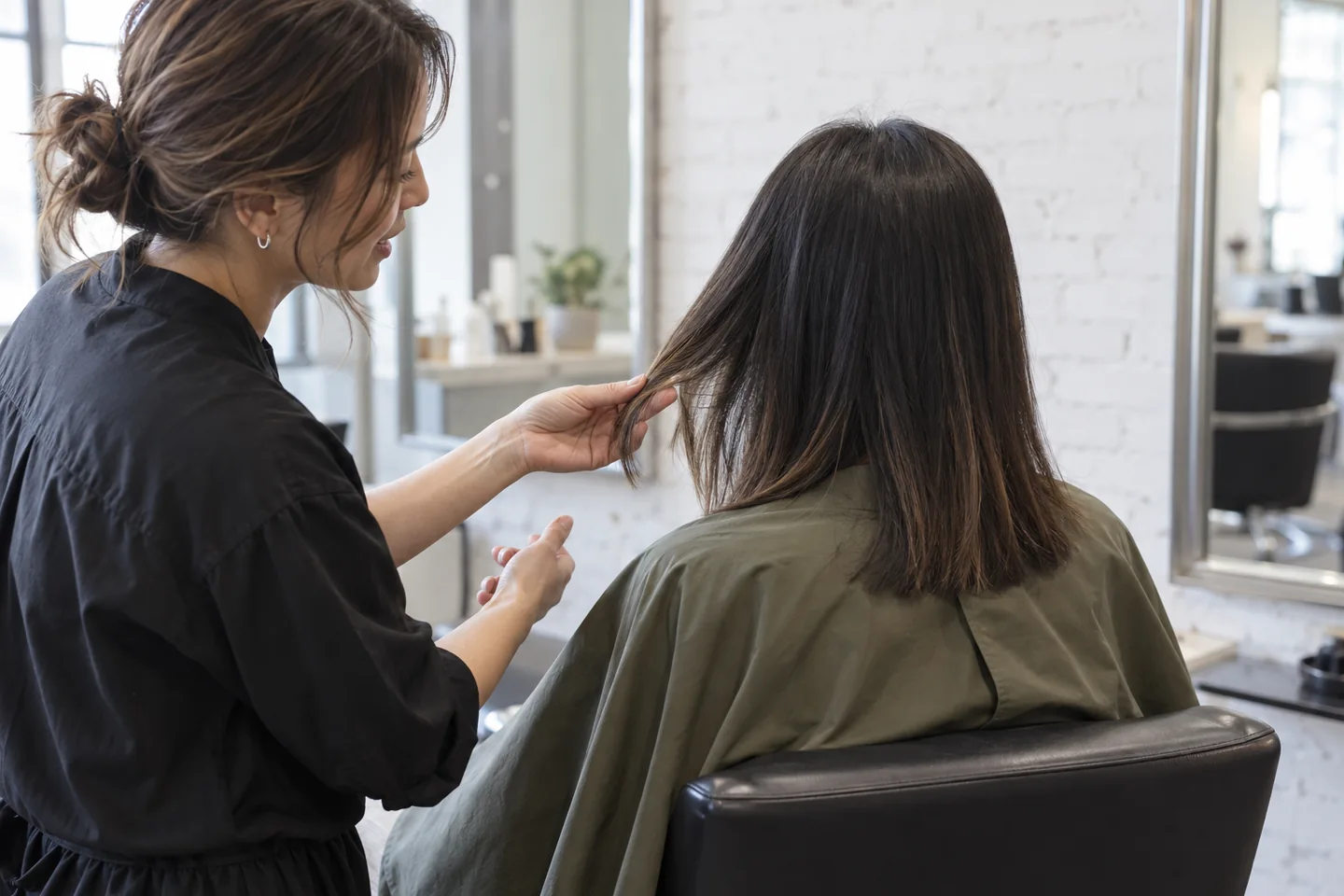
Tell the colorist about previous salon color, home dye, lightening and other chemical services, including areas that were treated differently. An attractive reference does not establish what your current hair can support. Ask for the assessment and any testing appropriate to the proposed service, following the salon’s and product’s instructions. Be open to a smaller first change, a different tone or postponing the service if the professional advises it. HairChapter does not supply application steps or processing times. Neither a freehand label nor foil use is a safety guarantee.
Before work begins, agree which areas may change and which must retain their existing depth. Ask what happens if the initial plan needs adjusting: should the team stop and discuss a different direction rather than add brighter front pieces automatically? A color appointment should not silently include an all-over base change or extra length removal. If you are unsure, book a consultation rather than selecting the cheapest menu item and expecting it to cover an undefined transformation. A clear boundary gives the professional useful information while leaving technical judgments with the person assessing your actual hair.
Leave with a short placement brief you can use again
Summarize the agreement in ordinary language: keep this upper depth, place the most visible light here, retain these darker sections and stop the front brightness at this dry length. Add the normal part and finish you showed. Ask the colorist to explain the proposed service and the difference between the first appointment and later maintenance. Check the finished hair from the front, sides and back in neutral light, not only under a spotlight. If you routinely gather it, look at that view too before deciding whether the placement matches the discussion.
After a few ordinary washes and styling days, note what you like and what needs clarification. Use specific observations, such as too much brightness near the part or a front piece that stands out more than expected. Changing light and phone filters can alter your impression, so compare photographs taken under similar conditions. Do not chase an exact screen shade through repeated self-correction. A useful balayage-versus-highlights decision ends with a placement you understand, limits you agreed to and a maintenance purpose you can describe. The technique name becomes supporting vocabulary rather than the entire brief.

Three terms that make this conversation clearer.
You do not need to prescribe technique. Use these words to describe the visible structure, name the behavior you want, and ask what your stylist would adapt.
Consultation brief
A short, usable description of the result you want and the reality it must support. The strongest brief combines one structural change, one non-negotiable boundary, your normal styling routine, and a question that invites the stylist to adapt the plan.
SAY IT IN THE CHAIR“I want to change this, keep this boundary, and make sure the result still works when I style it this way.”Open full definition
Baseline
The lower edge or foundation of a haircut, especially visible in bobs and other compact shapes. A strong baseline can make the ends read as fuller and more graphic; a softer or broken baseline can make the outline feel lighter and less exact.
SAY IT IN THE CHAIR“I want the bottom line to feel complete, but not so sharp that the grow-out looks abrupt.”Open full definition
Maintenance window
The period during which a haircut still performs the job it was designed to do before a particular detail needs reshaping. The true window is set by the first meaningful change—often a fringe, nape, perimeter, crown, or loss of internal balance.
SAY IT IN THE CHAIR“Which detail will stop working first, and what is a realistic return window for that part?”Open full definition
Turn this guide into a decision.
Three honest answers are more useful than ten additional reference photos. Your responses stay on this page and can be changed at any time.
- 01Can you state one clear priority for this appointment?
A useful priority is specific enough to protect when the reference needs adaptation.
- 02Have you named the boundary you do not want traded away?
Examples: tie-back length, full ends, an open forehead, dry length, or support for natural texture.
- 03Does the plan fit your real styling and maintenance rhythm?
Count ordinary mornings, fallback styles, trim frequency, and the way the shape is likely to grow.
The short answers.
Is balayage a type of highlights?
It can be described as a way of placing lighter pieces freehand. Salons may use highlights on the booking menu to mean traditional foil work. Describe the result you want and ask what the service includes; the names alone do not specify the upper transition, spacing or coverage.
Does seeing foil mean it is not balayage?
No. Foilyage combines freehand placement with foil. Ask why the colorist proposes that approach and what visible pattern is planned. Do not try to identify the final design, possible lift or maintenance commitment solely from a tool used during the appointment.
Which option needs fewer salon visits?
That depends on the placement, desired tone and what you want refreshed. Ask separately about upper contrast, tone maintenance and larger pattern changes. A quieter upper boundary is not a promise of zero care, and there is no universal appointment interval for either label.
Can I choose this on straight or curly hair?
Use your normal dry finish in the consultation. Straight hair shows spacing differently from turning curl groups. A reference with styled waves does not show how the same idea will read on your hair. Ask for a plan based on your texture, existing color and intended cut.
Can Hair Muse show my exact salon color?
No. It can support an optional broad visual preference among available looks, not predict chemical results or reproduce a precise strand map. Keep real photographs and clear placement boundaries, and confirm feasibility with the colorist before booking the service.
How this guide was built.
HairChapter separates haircut structure from styling, trend names, and medical claims. Our recommendations are decision tools, not universal rules: a stylist should adapt the direction to your starting length, density, pattern, condition, growth habits, and normal routine.
We do not claim that a photograph or AI preview can predict a finished service. Sudden shedding, patchy loss, scalp pain, persistent irritation, or an unexplained change in density belongs with a qualified medical professional—not a haircut guide.
Professional terminology, not outcome promises
- Wella Professionals — complete balayage guide Freehand application and placement vocabulary only. Universal suitability, product claims and fixed refresh intervals are not adopted.
- L’Oréal Professionnel Spain — foilyage Freehand placement and foil isolation can be combined. The presence of foil alone does not establish the final pattern.