
Cut or color hair first? Use the size of the change
The shortest useful answer is this: cut first when you are removing substantial length, changing the silhouette, adding a fringe or rebuilding the layer map. The colorist then works on the hair that will actually remain and can place lightness, depth and face framing around the finished proportions. Color first can be more practical when the haircut is a dusting or maintenance trim, the existing shape is staying intact and the main job is root coverage, a gloss or a straightforward all-over color.
That is a decision framework, not a universal rule. Salons organize services differently, and a stylist may make a rough dry cut before color and refine the line afterward. What matters is that the haircut and color are planned as one result. Ask who owns the final decision, when the shape will be established and whether the color placement depends on pieces that may be shortened or removed.
Simple rule: if the haircut changes the map, establish the map before placing detailed color.
Answer four questions before choosing the order
First, how much length is leaving? A half-inch trim does not change the canvas like a long-to-bob transformation. Second, is the color uniform or placement-led? Root coverage and a single-process refresh rely less on the final layer map than balayage, ribbons, face-framing brightness or a deliberate light-and-dark pattern. Third, what is the current condition? Porous, brittle or repeatedly lightened areas may change which services are sensible at all. Fourth, are both services happening with one team on one day?
Write the answers in ordinary language rather than trying to prescribe technique. “I want to lose eight inches, add cheekbone framing and keep the color dimensional around the face” gives the professionals enough information to sequence the work. “I need gray coverage and only want the dry ends cleaned up” points to a different plan. If separate specialists are involved, ask them to coordinate before either appointment rather than carrying two independent briefs between chairs.
- Amount of length removed
- Whether the silhouette or layers change
- Uniform color versus placement-led color
- Hair history, condition and service timing
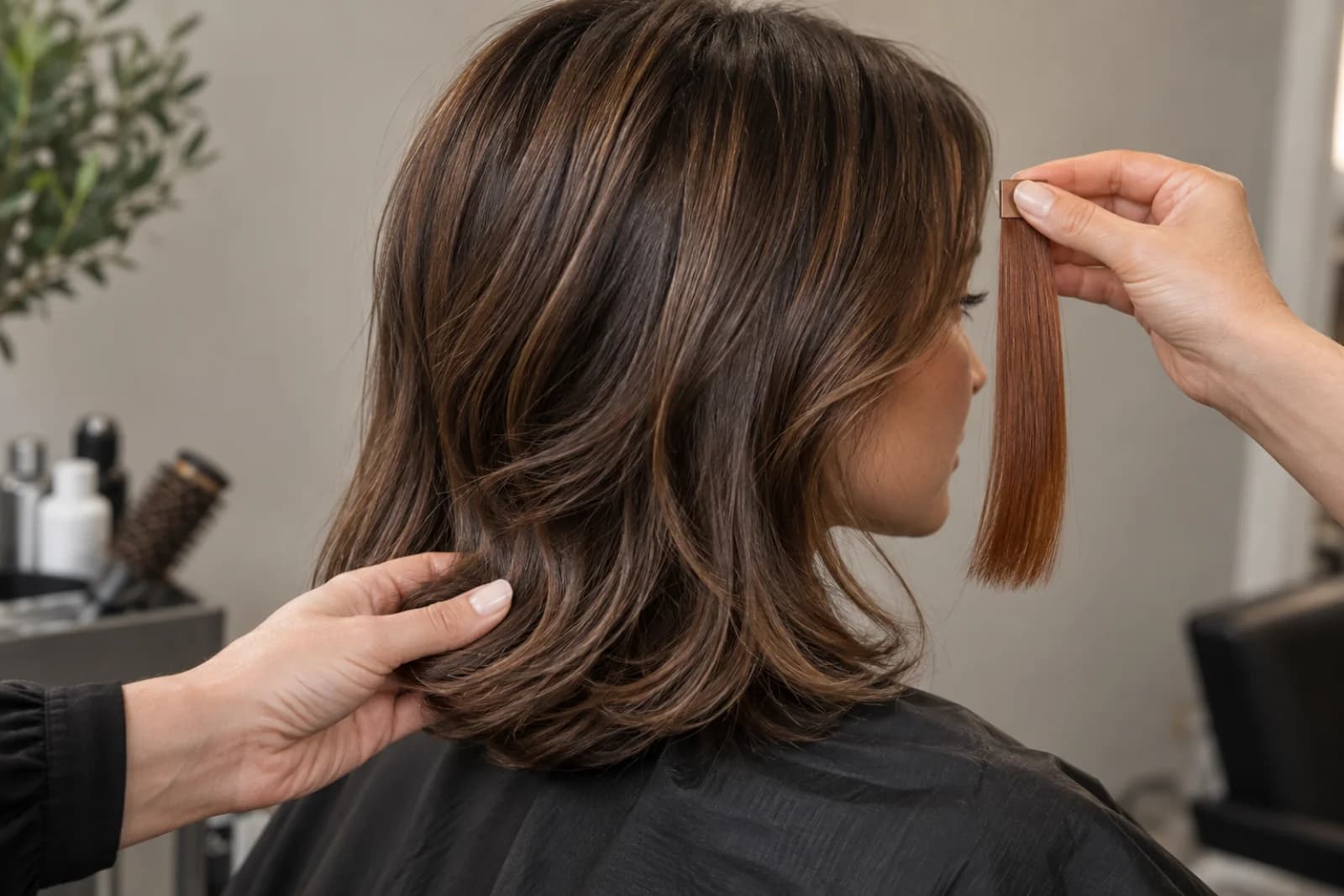
Cut first for a major shape change or precise color placement
A major cut can remove the very ends a colorist would otherwise lighten, deepen or blend. It also changes where layers swing, where a fringe opens and which pieces frame the face. Establishing the new shape first prevents time and product being spent on hair that will disappear. More importantly, it lets placement respond to the finished perimeter rather than to a temporary outline that no longer exists after the cut.
This is especially relevant for hand-painted or dimensional work. A bright face frame on long hair may sit too low after the front is shortened; highlight ribbons designed around one layer map can look interrupted after a strong reshape. “Cut first” may still mean a rough cut followed by color and a precise finishing cut. The team should decide how much structure must be visible before painting and what should wait until the hair has been processed, rinsed and dried.
Color first for maintenance when the haircut stays stable
If the haircut remains essentially the same, color first can be efficient. Root coverage, a tonal refresh or an all-over color can be applied on the familiar sectioning pattern, then the cut can clean the perimeter and refine dry ends after the color is rinsed. The stylist also sees the finished tone and dimension while making the last adjustments. A modest trim rarely changes where a broad, uniform color service needs to sit.
Do not turn “color first” into permission to ignore the cut. Confirm the maximum amount to remove before color begins, particularly if the ends are lighter, fragile or part of the desired dimension. If you are unsure whether the service counts as maintenance, describe the visible difference you expect afterward. Keeping the same length while adding a heavy fringe or large new layers is not a small shape change, even if the perimeter moves very little.

Plan same-day cut and color as one appointment, not two errands
A coordinated same-day service often has several stages: consultation on dry hair, a rough shape decision, color placement, processing and rinse, then a refined cut and finish. Another salon may complete the color first and cut afterward because the requested trim is small. Both can be sensible. The warning sign is not a particular order; it is starting without agreement about the final length, the placement priority and who will reassess the hair between stages.
Allow enough time for the full plan and disclose every recent chemical service, home color, lightener, smoothing treatment and difficult reaction. A color correction, a dramatic cut plus major lightening, or hair that feels fragile may be safer and easier to judge over separate visits. Separation is not a failure of planning. It can create a checkpoint where the team evaluates condition, tone and shape before adding another irreversible change.
Before the cape goes on, confirm the sequence, final length, color priority, finishing step and fallback if the hair responds differently than expected.
Let texture, density and shrinkage change the plan
Straight hair can reveal small changes in a blunt perimeter and in the spacing of highlight ribbons. Wavy and curly hair change the visible landing point as they dry, so a color placement mapped on stretched or wet hair may read differently in the normal finish. Coily hair can have substantial shrinkage and delicate areas that deserve an assessment in the state in which the haircut will usually be worn. Density affects how much dimension is visible at the surface and how much is hidden inside.
Bring a photograph of your hair air-dried or styled in your usual routine, even if you arrive with a different finish. Ask the stylist to explain where the shortest dry piece will land and which color sections will remain visible when the texture returns. The goal is not to demand one technique for a texture category. It is to make the final everyday state part of the sequencing decision instead of letting the blowout become the only reference.
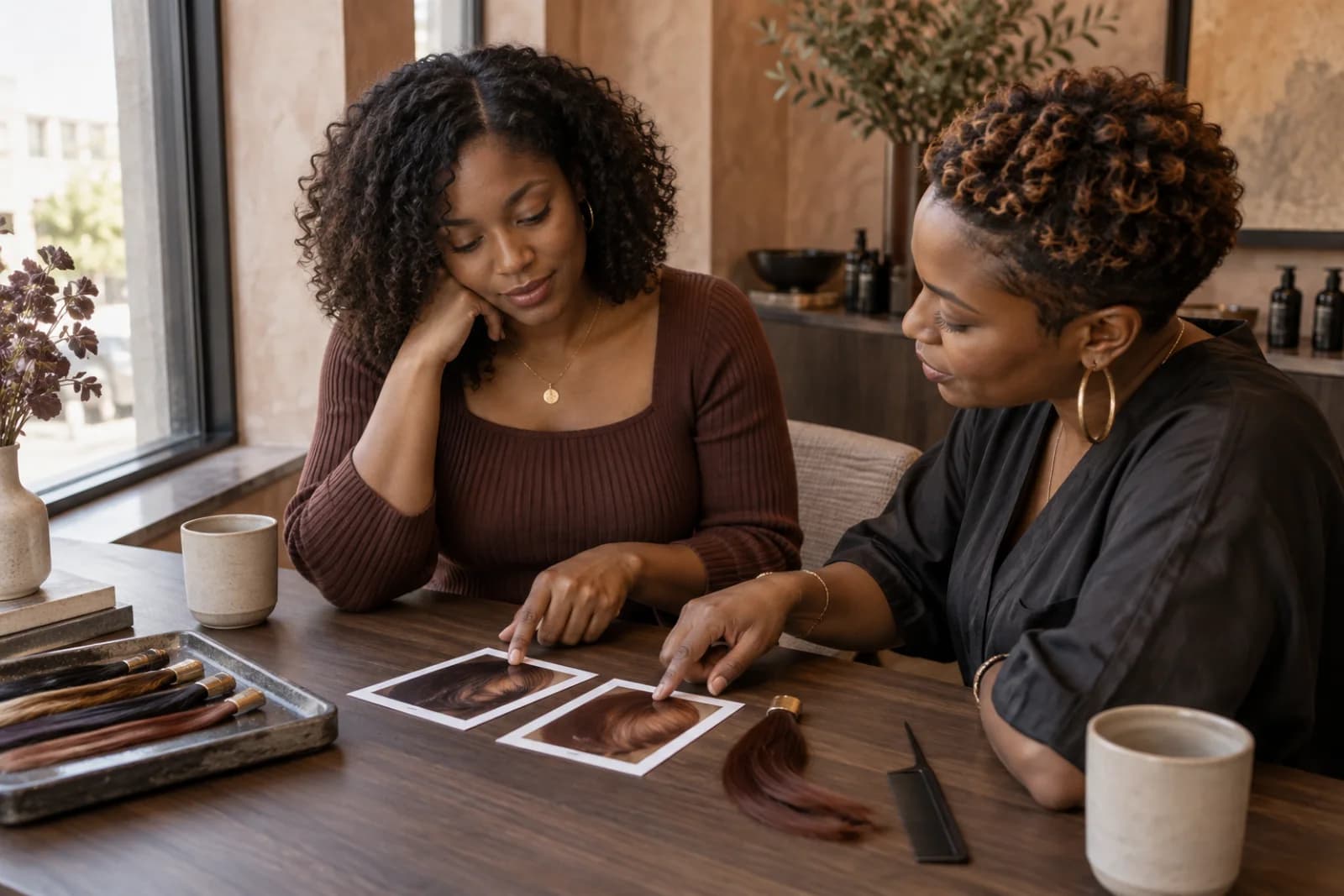
Treat hair condition and dye safety as separate gates
The question “cut or color first?” assumes that both services are appropriate. If the hair is snapping, unusually elastic when wet, rough after repeated lightening or affected by an irritated scalp, sequencing alone does not solve the risk. Ask for an in-person assessment and be prepared to scale back, postpone or change the color plan. A trim can remove compromised ends, but it cannot make every remaining section ready for another chemical service.
Follow the product and salon safety instructions rather than advice from a generic timeline. The U.S. Food and Drug Administration advises following package cautions, performing the instructed skin test each time and stopping when a reaction occurs. The American Academy of Dermatology notes that coloring can leave hair dry and brittle and advises seeking medical guidance for signs of an allergic response. Those safety decisions sit above aesthetic scheduling.
Preview shape and color as two variables before combining them
A visual preview is most useful when it separates decisions. First compare the haircut while keeping the color family stable: current length versus bob, open forehead versus fringe, one-length versus layered. Then keep the preferred shape fixed and compare broad color directions such as deeper, warmer, cooler or more dimensional. Changing cut, color, lighting and styling all at once produces a dramatic picture but little reliable information about which decision you actually prefer.
Hair Muse can help build this controlled shortlist on one clear photo. It is free to download, with some usage levels or features available through in-app purchases. The preview is a planning aid, not a prediction of lift, porosity, curl response, salon feasibility or the exact finished result. Save two or three directions, label what each one tests and take them to the consultation as questions rather than instructions.

Use this cut-and-color consultation script
Start with the desired result and your boundary: “I want to move from long hair to a collarbone shape and add soft brightness around the face, but I do not want a high-maintenance root line.” Add the current facts: natural texture, ordinary finish, previous color, products used at home and the amount of length you are willing to lose. Then ask the ordering question: “Would you establish the shape first, color first, or rough-cut and refine afterward—and why?”
Finish by defining the check before the irreversible step. Ask where the shortest piece and perimeter will land dry, where the brightest color will begin, what may require a separate visit and what the lower-commitment fallback would be. Photograph the agreed dry outline or write a short note. A strong plan does not require you to understand every technique; it requires the professionals and the client to be describing the same final relationship between shape, color and routine.
- Desired shape and color relationship
- Maximum length loss
- Previous color and chemical history
- Normal texture and styling routine
- Agreed order and lower-commitment fallback
Three terms that make this conversation clearer.
You do not need to prescribe technique. Use these words to describe the visible structure, name the behavior you want, and ask what your stylist would adapt.
Consultation brief
A short, usable description of the result you want and the reality it must support. The strongest brief combines one structural change, one non-negotiable boundary, your normal styling routine, and a question that invites the stylist to adapt the plan.
SAY IT IN THE CHAIR“I want to change this, keep this boundary, and make sure the result still works when I style it this way.”Open full definition
Baseline
The lower edge or foundation of a haircut, especially visible in bobs and other compact shapes. A strong baseline can make the ends read as fuller and more graphic; a softer or broken baseline can make the outline feel lighter and less exact.
SAY IT IN THE CHAIR“I want the bottom line to feel complete, but not so sharp that the grow-out looks abrupt.”Open full definition
Maintenance window
The period during which a haircut still performs the job it was designed to do before a particular detail needs reshaping. The true window is set by the first meaningful change—often a fringe, nape, perimeter, crown, or loss of internal balance.
SAY IT IN THE CHAIR“Which detail will stop working first, and what is a realistic return window for that part?”Open full definition
Turn this guide into a decision.
Three honest answers are more useful than ten additional reference photos. Your responses stay on this page and can be changed at any time.
- 01Can you state one clear priority for this appointment?
A useful priority is specific enough to protect when the reference needs adaptation.
- 02Have you named the boundary you do not want traded away?
Examples: tie-back length, full ends, an open forehead, dry length, or support for natural texture.
- 03Does the plan fit your real styling and maintenance rhythm?
Count ordinary mornings, fallback styles, trim frequency, and the way the shape is likely to grow.
The short answers.
Should I cut or color hair first for balayage?
For a major shape change, establishing the new cut or at least the rough shape first usually gives the colorist a more useful canvas for hand-painted placement. A small maintenance trim may happen after color. Let the professionals coordinate the exact sequence for your starting point.
Can I cut and color my hair on the same day?
Often yes, when the salon has booked enough time and the services are compatible with the condition of your hair. Color corrections, major lightening or fragile hair may benefit from separate visits and reassessment.
Should I color first if I only need a trim?
Color first is often practical when the shape is stable and the cut is only a dusting or perimeter cleanup. Confirm the maximum amount to be removed before color so placement and fragile ends are planned together.
Does cutting hair first make color safer?
Not automatically. Removing compromised ends can change the canvas, but safety depends on the product, hair and scalp condition, chemical history and professional assessment. Follow product instructions and do not continue after a reaction.
How should I explain the plan to two different specialists?
Share the same photos and written priorities with both, including final length, color placement, previous chemical services and appointment dates. Ask them to agree on sequence before the first service rather than asking the second person to repair an uncoordinated plan.
How this guide was built.
HairChapter separates haircut structure from styling, trend names, and medical claims. Our recommendations are decision tools, not universal rules: a stylist should adapt the direction to your starting length, density, pattern, condition, growth habits, and normal routine.
We do not claim that a photograph or AI preview can predict a finished service. Sudden shedding, patchy loss, scalp pain, persistent irritation, or an unexplained change in density belongs with a qualified medical professional—not a haircut guide.
Sources for health-related statements
- U.S. FDA — Hair dyes: safety questions and precautions Manufacturer directions, skin testing and basic dye safety.
- American Academy of Dermatology — Coloring and perming tips Dermatologist guidance on chemical services, dryness, brittleness and reactions.