
What makes a butterfly cut recognizable
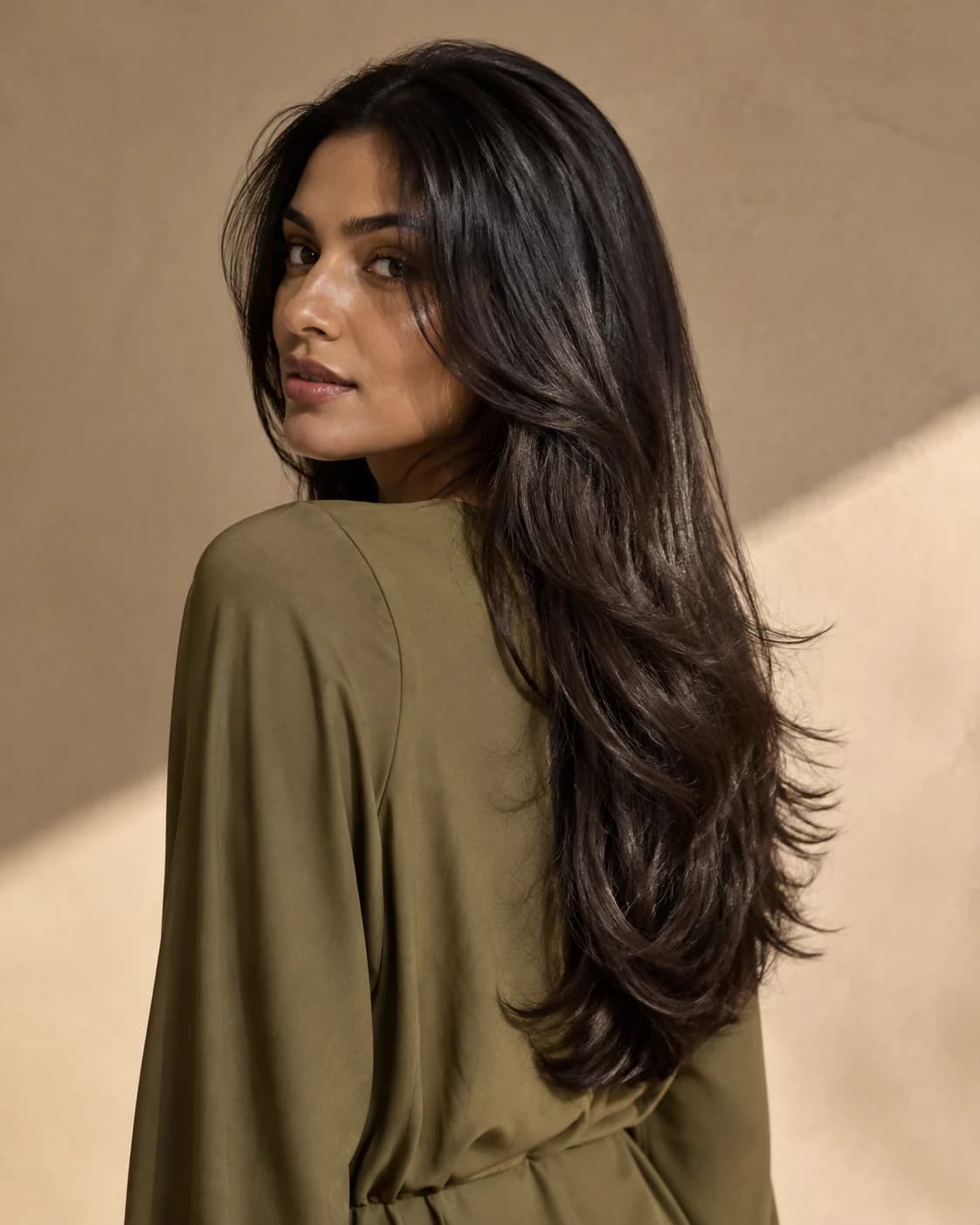
The shape combines shorter, sweeping pieces around the face with longer layers through the rest of the hair. The visual goal is separation and movement while preserving an overall long silhouette.
References often show a round-brush or roller finish. Without that styling, the layers may look softer and less dramatically winged.
Who needs the most adaptation
Fine or lower-density hair may need fewer layers to protect the ends. Curly hair needs a shrinkage-aware version. Very straight hair may need more styling to reveal the separated shape.
Instead of requesting the same diagram, identify the face-framing length and amount of movement you want. Your stylist can preserve the idea while changing the technique.
Ask where the shortest front piece will land when dry and how much hair will remain in the perimeter.
Decide whether the styling fits
If you enjoy a blowout, rollers, or a large brush, the cut gives those techniques plenty to work with. If you air-dry, ask to see how the layers will settle without a polished finish.
Preview the front framing and total length first. Then bring one styled and one natural-looking reference to the consultation.
Protect the lower outline
The butterfly effect depends on contrast between shorter sweeping pieces and a visibly long foundation. If too much density is removed through the bottom, the result can read as tapered rather than full and winged. Study the reference below the shoulders: are the ends compact, feathered, or hidden by curls and styling?
Tell the stylist whether preserving an abundant lower outline matters more than creating dramatic separation at the top. Fine or lower-density hair may need a smaller distance between the layer levels. Dense hair may allow more movement while still retaining a complete perimeter.
Build more than one finish
Ask how the cut behaves with a smooth blowout, loose air-dried texture, and a quick tied-back style. A roller or round-brush finish can emphasize the “wings,” but the layer map should still look deliberate when the ends are straighter. If only one finish feels successful, decide whether you genuinely enjoy maintaining it.
Learn a lower-heat method where possible and avoid treating daily high heat as a requirement of the cut. Large rollers, strategic blow-drying, or working with natural bend may create enough separation for everyday wear. The styled reference can remain the special version rather than the minimum acceptable result.
Ask to see the layer structure before the final curls are brushed out. That reveals what belongs to the cut and what belongs to the finish.
Three terms that make this conversation clearer.
You do not need to prescribe technique. Use these words to describe the visible structure, name the behavior you want, and ask what your stylist would adapt.
Butterfly cut
A long layered shape known for shorter sweeping pieces around the face and longer layers through the foundation. Its dramatic winged separation is often amplified by a blowout or rollers, so compare the underlying perimeter and layer map separately from the finish.
SAY IT IN THE CHAIR“How much of this movement will come from the cut, and how much will I need to create with styling?”Open full definition
Perimeter
The outside boundary of the haircut: the line you read around the bottom, sides, and overall edge. A compact perimeter usually feels fuller and more controlled, while a broken or highly layered perimeter can feel lighter, softer, or more textured.
SAY IT IN THE CHAIR“I like the movement, but I want the outside edge to remain substantial when the hair is straight or air-dried.”Open full definition
Layer map
A plain-language way to describe where the shortest layers begin, how quickly they connect to longer sections, and where movement or volume is intended to appear. Two haircuts with the same overall length can feel completely different because their layer maps differ.
SAY IT IN THE CHAIR“Show me the shortest layer, where it connects, and how much weight remains beneath it.”Open full definition
Turn this guide into a decision.
Three honest answers are more useful than ten additional reference photos. Your responses stay on this page and can be changed at any time.
- 01Can you point to the exact structural detail you want from this cut?
Name the shortest point, outside line, layer map, or placement of volume.
- 02Have you named the boundary you do not want traded away?
Examples: tie-back length, full ends, an open forehead, dry length, or support for natural texture.
- 03Does the plan fit your real styling and maintenance rhythm?
Count ordinary mornings, fallback styles, trim frequency, and the way the shape is likely to grow.
The short answers.
Is a butterfly haircut high-maintenance?
The cut can grow out softly, but recreating the dramatic reference finish may require blow-drying, rollers, or heat styling.
Can fine hair get a butterfly cut?
Yes, with adaptation. Fewer or longer layers may preserve fullness while keeping the face-framing idea.
How this guide was built.
HairChapter separates haircut structure from styling, trend names, and medical claims. Our recommendations are decision tools, not universal rules: a stylist should adapt the direction to your starting length, density, pattern, condition, growth habits, and normal routine.
We do not claim that a photograph or AI preview can predict a finished service. Sudden shedding, patchy loss, scalp pain, persistent irritation, or an unexplained change in density belongs with a qualified medical professional—not a haircut guide.
Sources for health-related statements
- American Academy of Dermatology — Hair styling without damage Repeated heat and hair-shaft damage