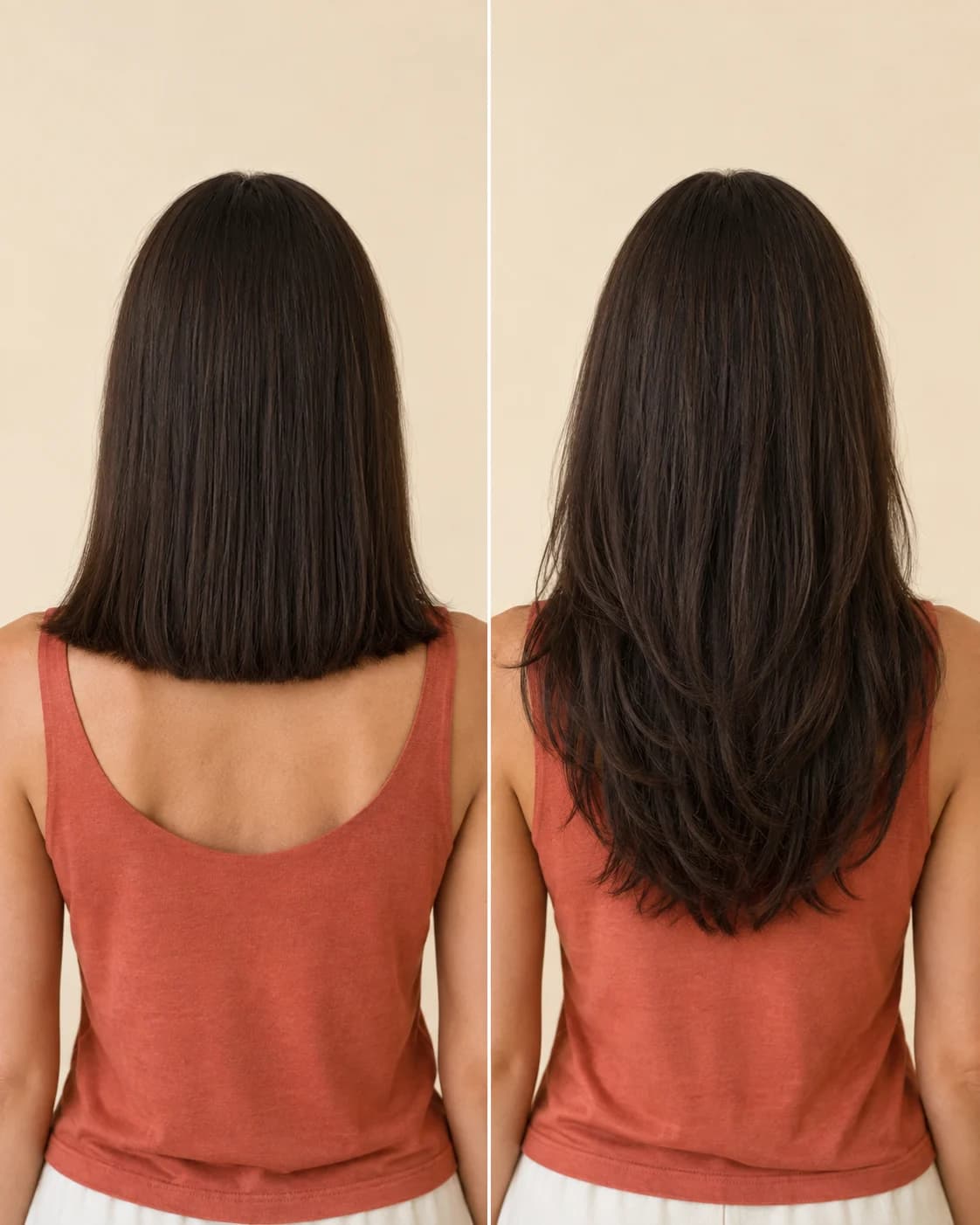
Haircuts for fine hair: check strand thickness and density
Choosing haircuts for fine hair starts with separating strand thickness from density. Fine hair has a small strand diameter; low-density hair has fewer strands in a given area. You can have fine hair that is dense or coarse hair that is sparse. Your stylist needs both details before deciding how much to layer.
If the perimeter already looks sparse, protecting visual weight at the ends may matter more than adding many layers. If the hair is fine but dense, internal shaping can create movement without automatically making it look thin.
Why a clear perimeter can help
A bob, lob, or collarbone cut with a relatively solid outline can make the ends read as one intentional line. That does not mean the haircut must be completely blunt; subtle internal movement or a light face frame can keep it from feeling static.
The key is controlling where density is removed. Ask to see how much hair will remain in the lowest few inches before agreeing to dramatic layering.
Add movement strategically
Long layers, a restrained face frame, or gentle graduation can add shape without creating a visibly thin perimeter. Very short layers can create lift, but they may also expose scalp or separation depending on density and styling.
Bring a reference that shows a similar natural texture and overall amount of hair. A beautiful cut on very dense hair may not translate through the same technique.
Ask your stylist: “Can we create movement through the top while keeping the bottom line looking full?”
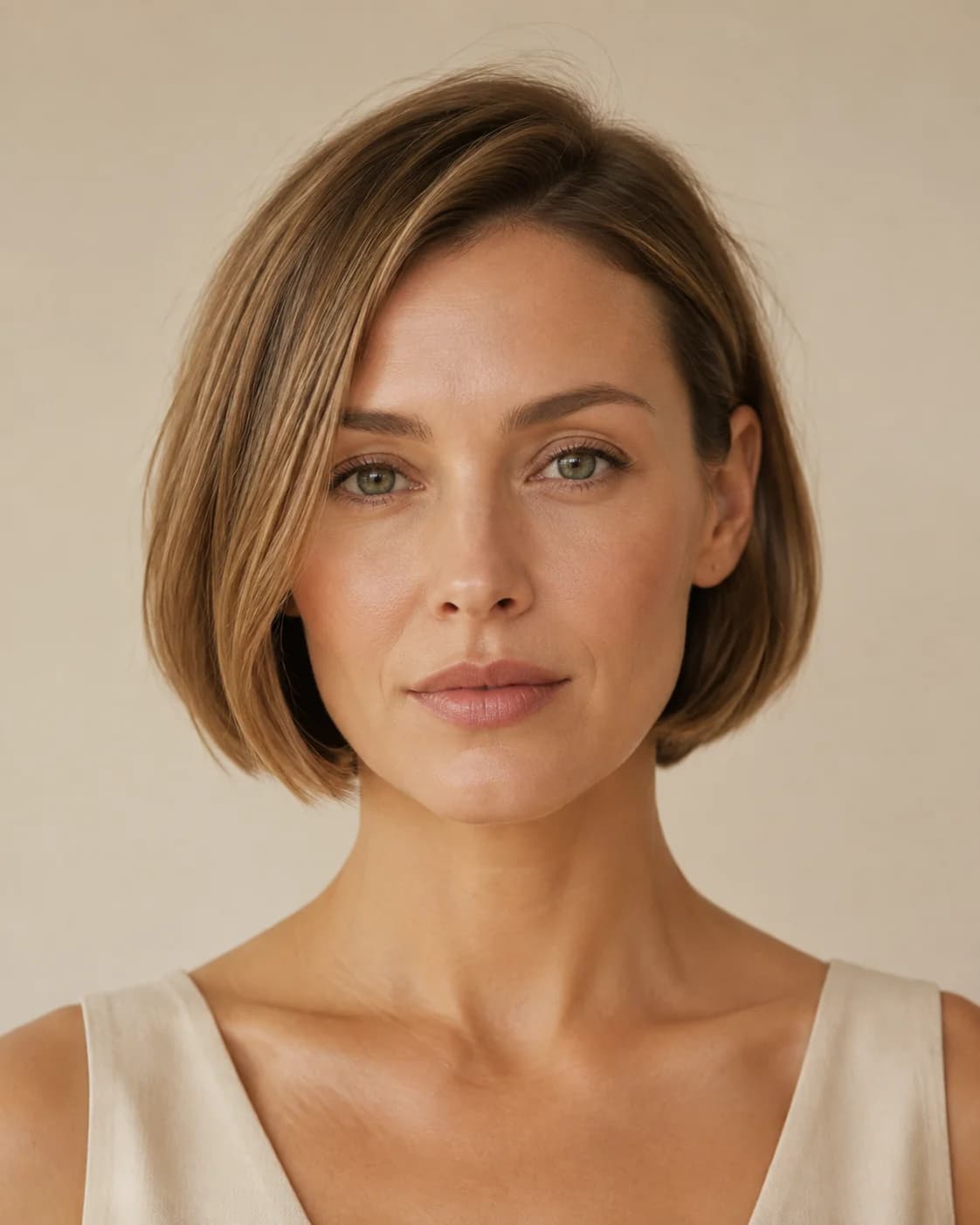
Preview length before detail
First compare the large silhouette: chin, collarbone, or longer. A shorter length may make the perimeter appear stronger because the oldest, most tapered ends are removed. Then compare subtle versus visible layering.
Use the preview as a proportion test, and let your stylist decide the technique that protects your real density.
Include condition and breakage in the plan
The oldest lengths have had the most exposure to washing, friction, heat, sunlight, and chemical services. If the ends are splitting, transparent, or breaking at different points, a stronger perimeter may require removing more length than the reference suggests. Ask the stylist to distinguish low density from damaged or tapered ends before deciding where the new line should sit.
Cutting does not increase growth at the scalp, but removing compromised ends can change how full and even the perimeter looks. If thinning feels sudden, patchy, or unexplained, treat that as a hair or scalp concern and seek a qualified medical professional rather than trying to solve it with a haircut.
Avoid judging fullness from a styled photo alone
Waves, root lift, extensions, dark clothing, and a carefully chosen camera angle can make an outline appear denser. Look for references that show the ends against a light, plain background and include at least one straighter or less styled view. That makes the perimeter easier to read.
During the finish, ask to see the cut before large waves are added. The goal is not to avoid styling; it is to confirm that the underlying line supports the look. Then learn which lightweight product or drying step creates movement without collapsing the root or separating the ends more than you want.
Quality check: evaluate the perimeter first, then add the finish. Volume should enhance the shape rather than hide it.
Three terms that make this conversation clearer.
You do not need to prescribe technique. Use these words to describe the visible structure, name the behavior you want, and ask what your stylist would adapt.
Density
The amount of hair growing across an area of the scalp, not the thickness of each individual strand. Density can vary across the same head and changes how much visual weight a perimeter, fringe, or layer plan can retain after hair is removed.
SAY IT IN THE CHAIR“Which areas have enough density for this layer plan, and where should we protect visual fullness?”Open full definition
Strand thickness
The diameter of an individual hair strand, commonly described as fine, medium, or coarse. It is different from density: someone can have many fine strands or fewer coarse strands, and the two facts can lead to different decisions about layers and perimeter weight.
SAY IT IN THE CHAIR“Can we separate my strand thickness from my overall density before choosing how much weight to remove?”Open full definition
Shrinkage
The difference between stretched or wet length and the position hair takes when dry in its usual pattern. Shrinkage is not uniform across every section, so a useful haircut plan considers the dry silhouette and the shortest springing areas rather than one overall number.
SAY IT IN THE CHAIR“Please choose the shortest pieces from their dry position and account for the sections that spring the most.”Open full definition
Turn this guide into a decision.
Three honest answers are more useful than ten additional reference photos. Your responses stay on this page and can be changed at any time.
- 01Can you describe what your hair does after your normal wash and dry?
Include pattern, shrinkage, density, expansion, and the finish you wear most often.
- 02Have you named the boundary you do not want traded away?
Examples: tie-back length, full ends, an open forehead, dry length, or support for natural texture.
- 03Does the plan fit your real styling and maintenance rhythm?
Count ordinary mornings, fallback styles, trim frequency, and the way the shape is likely to grow.
The short answers.
Is a blunt cut always best for fine hair?
No. A stronger perimeter can create a fuller appearance, but subtle layers or graduation may add useful shape. The right balance depends on density, texture, and styling.
Can fine hair have layers?
Yes. Layer length, placement, and the amount of hair removed matter. Ask for a plan that creates movement while preserving the visual weight you want at the ends.
How this guide was built.
HairChapter separates haircut structure from styling, trend names, and medical claims. Our recommendations are decision tools, not universal rules: a stylist should adapt the direction to your starting length, density, pattern, condition, growth habits, and normal routine.
We do not claim that a photograph or AI preview can predict a finished service. Sudden shedding, patchy loss, scalp pain, persistent irritation, or an unexplained change in density belongs with a qualified medical professional—not a haircut guide.
Sources for health-related statements
- American Academy of Dermatology — Hair styling without damage Heat, handling, and breakage guidance
- NCBI/PMC — On Hair Care Physicochemistry Hair-shaft weathering and older ends