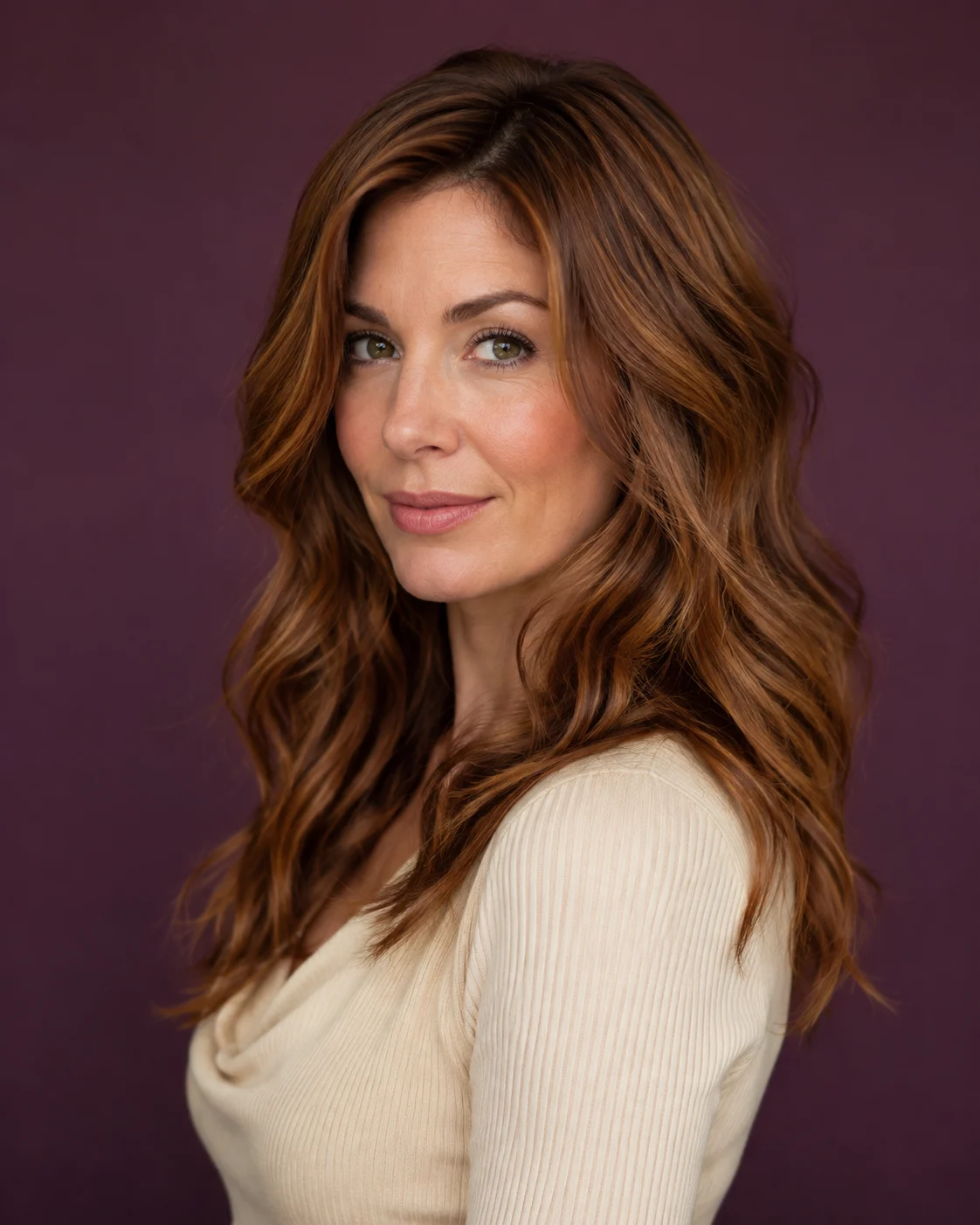
Curly bangs need a range of coverage, not a fixed line
Curly bangs work best as a decision about the front of your actual haircut, rather than a straight fringe translated into curls. Start by deciding what you want to see: a few curl groups over the forehead, a fuller rounded front or an opening through the middle. These are different amounts of coverage, not stages on a scale from timid to brave. A shorter reference can be appealing while still putting hair where you would find it distracting. Name the daily experience you want before choosing a picture.
Look at the front without stretching the curls or arranging every strand into place. Which groups already fall forward, and which tend to open? Sphaira discusses shrinkage and observing the dry fall when planning a curly fringe; the useful principle here is to assess the hair in a recognizable dry state. That does not mean one cutting method is mandatory for everybody. Ask your stylist how they will check the final dry outline and explain which parts of your usual finish you do not want changed.
Observe your own front before choosing a shorter one
Take a current front photo after your ordinary drying routine and another on a later ordinary day. Use similar lighting and a relaxed head position. The goal is not to classify every curl or calculate a shrinkage percentage. It is to notice whether the front falls together, separates or stays off the forehead. Keep the less polished photograph if it shows a problem you regularly encounter. Your consultation needs evidence of the hair you live with, not only the version you carefully arrange for a camera.
Describe where you would be comfortable seeing the shortest dry curls and where you would not. A finger pointing to an area above the brows can communicate a preference; it is not an instruction to cut at that point while wet or stretched. Ask the professional to explain a conservative starting proposal and what would remain available for adjustment. Do not borrow a fixed extra length from someone else’s tutorial. Their curl grouping, density and finish do not establish your cutting allowance.
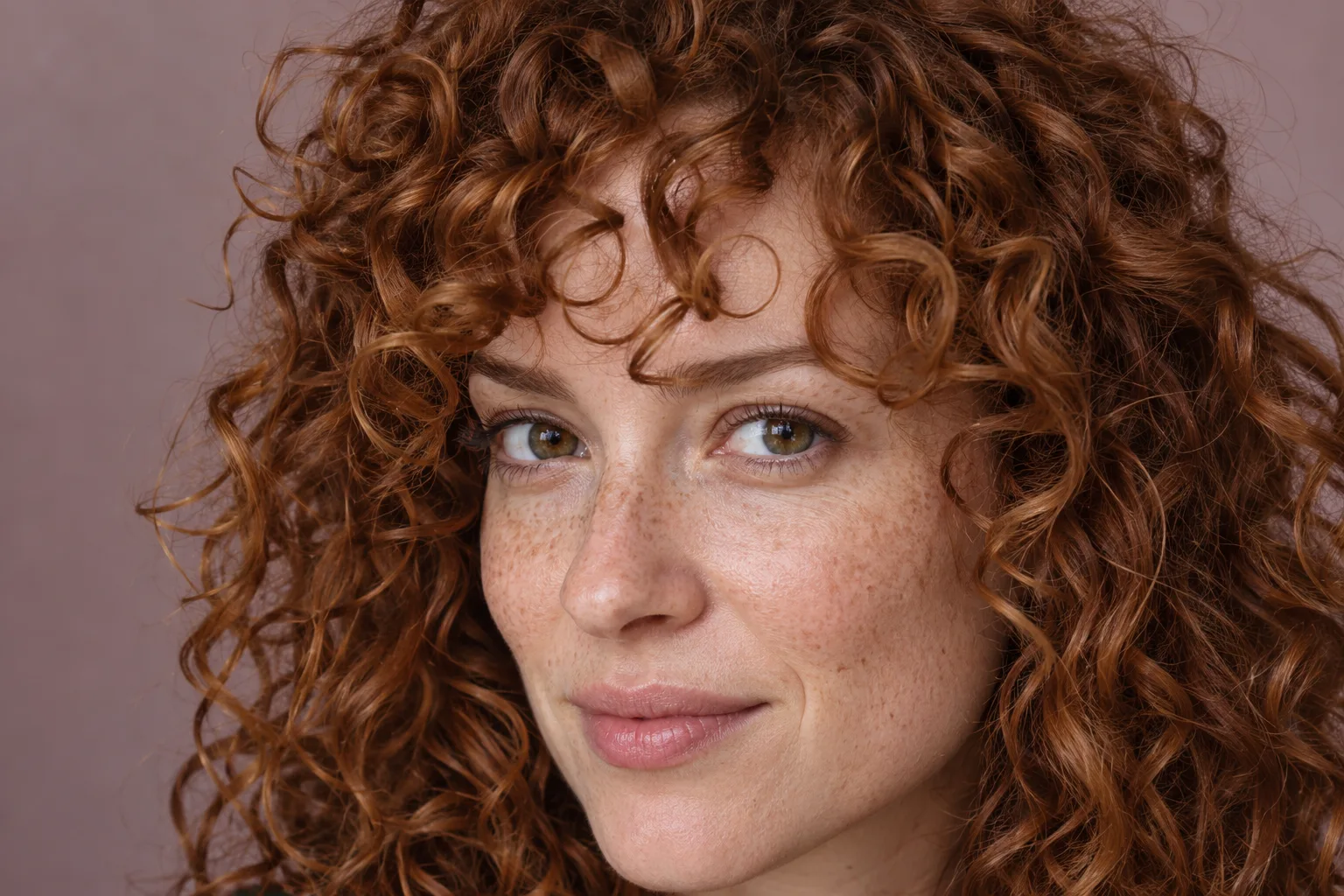
Choose fullness and the temple connection separately
A fringe can look longer because fewer curls cross the forehead, or heavier because a broader front section has been brought forward. Ask which hair would become part of the fringe before approving its apparent length. If you like a light opening, explain that you are not asking for a compact block across the whole front. If you like fullness, discuss what that means from the side as well as in a front-facing photograph. The stylist should assess the section in the real hair.
Then look at the temple connection. Longer outer curls may help the front join the sides, but the transition should be chosen for your overall haircut rather than copied from a straight-haired reference. Decide what must remain long enough to tuck, clip or sweep aside. Keeping that option can matter more than achieving an exact photograph on the first day. You do not have to shorten the entire head or add an extensive layered shape just to explore a fringe; ask what the smallest coherent change would be.
Compare the broad forehead shape on one clear photo
If you cannot imagine the coverage, Hair Muse offers an optional own-photo planning step. Start with a clear current image in ordinary light, showing your real front and side outline without a beauty filter. Explore the available hairstyle previews for a broad contrast between a more open and a more covered forehead. A specific curly-bangs preset or separate fringe-length control may not be available. If the preview replaces your recognizable texture with something substantially different, set it aside rather than treating it as a useful comparison.
Keep the question narrow: do I prefer a more open front or more coverage? Do not choose because one output has shinier hair or a different color. Retain a small shortlist using whatever save or share options are actually available to you, then note the feature you prefer in plain words. HairChapter and Hair Muse share a publisher. Hair Muse is free to download; some functions or usage may require in-app purchases. The early App Store invitation is optional, and you can make the same consultation brief without an app.


Reject attractive previews that invent your curl behavior
Put the original photograph beside the preferred broad outline. Check whether the preview has changed the apparent hairline, density, curl size or head shape. Those changes can make the fringe seem plausible for reasons unrelated to the cut. A generated image cannot measure shrinkage, map individual curl groups, establish section depth or show what will happen after sleeping. It is not evidence that your front will stay at the same height. Ask the stylist to interpret your preference, not reproduce invented strands.
Translate the comparison into one request and one limit. For example: I like the softer forehead coverage, but I want the outer front long enough to move away. Bring a texture-relevant real reference as well, ideally with a readable side view. If the two images suggest incompatible shapes, say which feature matters most. This keeps the conversation grounded when a polished preview is persuasive. Choosing not to use an inaccurate output is a successful planning decision, not a reason to generate endlessly until one looks convincing.
Plan a normal morning and a move-it-away option
Tell the stylist what you actually do between washes and which parts of your routine you are willing to repeat around the forehead. Do not promise a daily elaborate finish to justify a reference you otherwise love. Ask for a demonstration in the finish you intend to wear, including what to leave alone rather than continually rearranging. If you already use styling products, explain which ones and how much work they involve. This is a conversation about a repeatable routine, not a reason to buy a new collection.
Test a comfortable way to clear the front with an accessory you already use, without pulling tightly. A soft sweep or loose clip may be enough for some activities; for others, you may prefer a longer proposal. Think about work, exercise, glasses and the moments when you look down. You need not pretend that hair near your face will never bother you. If the shortest proposed pieces would be impossible to move as you prefer, agree that trade-off before they are cut, not at the end of the appointment.
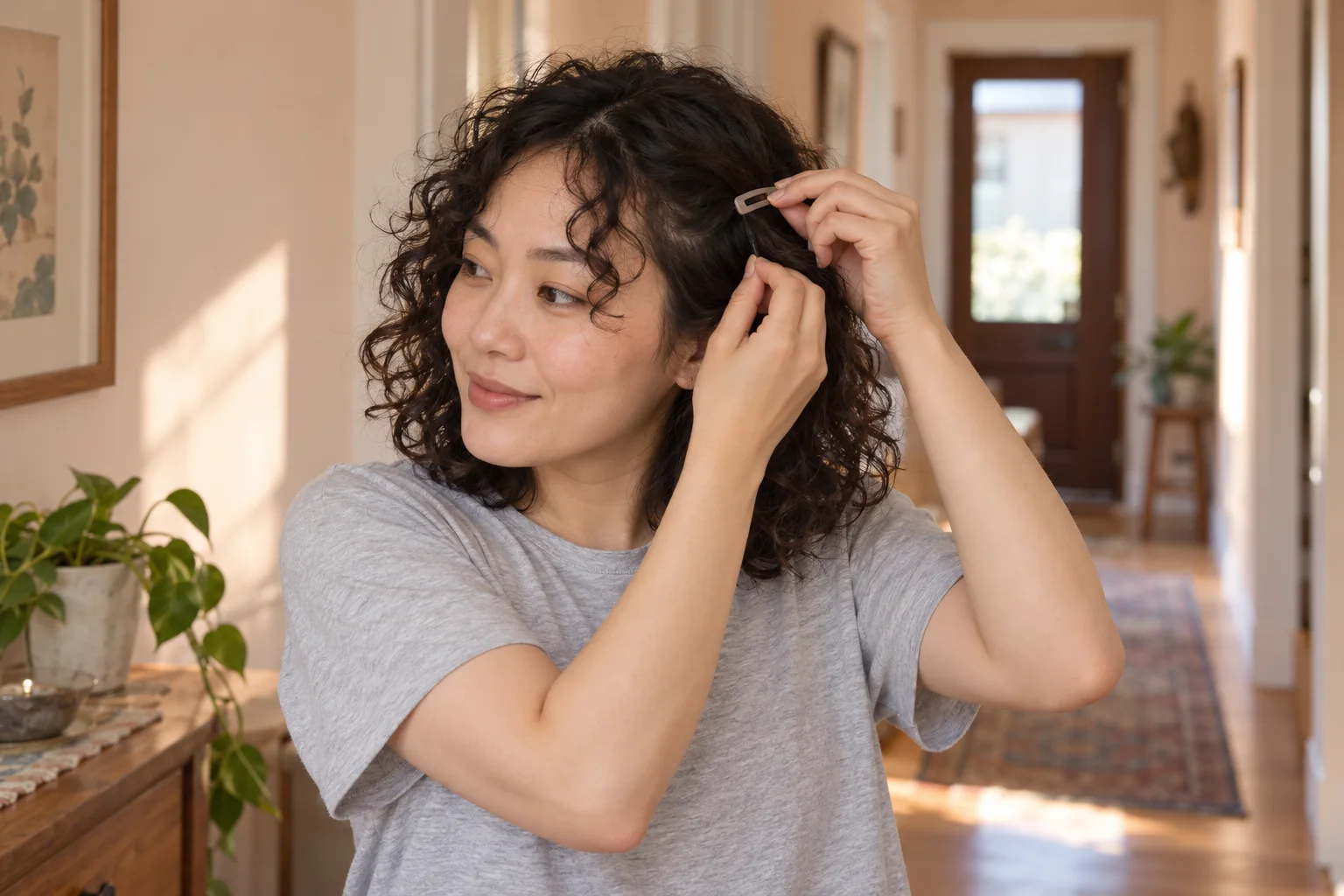
Separate a fringe refresh from another full haircut
Ask what a later maintenance visit would actually include. You may want the front reassessed while preserving the side lengths and the overall perimeter. Do not accept an automatic full reshaping every time one curl begins to interrupt your view. Equally, repeatedly shortening only the center may not support the shape you originally agreed. Let the stylist explain what they would review and use your own dry fall as the trigger for a conversation, rather than a universal appointment interval.
Hair Muse can help you revisit the broad amount of coverage if your preference changes, but it cannot predict when a trim will be needed or how the fringe will grow out. Keep ordinary photographs and a short note about what felt inconvenient. If you decide to grow the front longer, say which lengths should be left untouched at the next visit. Temporary asymmetry or a more open front may be an acceptable compromise. A change of direction does not require immediately cutting the rest shorter to make everything match.
Leave the consultation with three agreed boundaries
Before cutting starts, repeat the dry coverage you want, the outer lengths you want preserved and the everyday finish you are prepared to maintain. Ask the professional to confirm any proposal that goes beyond those boundaries. A helpful brief is specific without pretending to be technical: a soft curly front, clear eyes, longer edges that I can move aside. Avoid handing over a folder of unrelated fringes and expecting the word curly to settle the differences. Select the ordinary version first, then discuss occasional styling.
If uncertainty remains, ask whether a longer first step would let you evaluate the front before committing further. The professional may explain that a different approach better supports your hair; listen to the reason and decide without pressure. This guide is not a DIY cutting tutorial. Neither a reference nor an app establishes feasibility, exact fit, chemical color results or the final salon outcome. The successful result of planning is an agreed decision with honest limits, including the option to postpone the fringe rather than approve a shape you cannot describe.

Three terms that make this conversation clearer.
You do not need to prescribe technique. Use these words to describe the visible structure, name the behavior you want, and ask what your stylist would adapt.
Fringe / bangs
Hair intentionally sectioned and cut to live around the forehead, brows, eyes, or upper face. Fringe and bangs refer broadly to the same idea; regional language differs, while section width, density, dry length, and growth patterns determine the real behavior.
SAY IT IN THE CHAIR“Please show me how much hair will enter the fringe and where the shortest point will sit when dry.”Open full definition
Growth pattern
The direction hair naturally leaves the scalp and moves through areas such as the front hairline, crown, nape, and around the ears. Cowlicks, whorls, and directional changes can alter how short sections lift, split, or settle.
SAY IT IN THE CHAIR“Can we look at the front and crown dry before choosing the shortest length?”Open full definition
Face-framing layers
Shorter pieces concentrated around the front of a haircut to create movement or emphasis near the face. The first dry landing point, section width, part, and connection into the remaining length determine whether the frame feels subtle, dramatic, or fringe-like.
SAY IT IN THE CHAIR“Keep the shortest piece at this point and enough length for every front section to tuck back.”Open full definition
Turn this guide into a decision.
Three honest answers are more useful than ten additional reference photos. Your responses stay on this page and can be changed at any time.
- 01Do you know the shortest dry point you are comfortable wearing?
Decide where the center and outer corners may land before discussing the fringe name.
- 02Have you named the boundary you do not want traded away?
Examples: tie-back length, full ends, an open forehead, dry length, or support for natural texture.
- 03Does the plan fit your real styling and maintenance rhythm?
Count ordinary mornings, fallback styles, trim frequency, and the way the shape is likely to grow.
The short answers.
Can I choose curly bangs from a straight fringe photograph?
Use it only to identify the amount of forehead coverage you like. It does not show your dry curl edge or daily handling. Add a reference closer to your own texture and ask the stylist which parts of the first image can sensibly inform your plan.
How much extra length should I leave for shrinkage?
There is no universal allowance to copy. Show the professional your ordinary dry front and ask how they will assess the shortest curls and check the finished outline. A photo or curl label cannot calculate a safe cutting length for you.
Will I have to straighten the fringe every day?
Do not agree to a plan that depends on straightening if that is not how you want to wear it. Explain your usual finish and ask for a proposal designed around that choice. A smooth reference does not make heat styling an automatic requirement.
Can an app show the exact fringe I will get?
No. A preview can clarify broad visual preferences but cannot establish curl shrinkage, sectioning, real behavior, exact fit, chemical results or salon feasibility. If it invents a different texture or hairline, it is not a reliable reference for the fringe decision.
What if I want to grow the bangs out later?
Ask which front and side lengths should be preserved, and agree a comfortable way to move the front aside. Review the real outline at later visits instead of automatically trimming it back to the original shape. No image can guarantee a grow-out timetable.
How this guide was built.
HairChapter separates haircut structure from styling, trend names, and medical claims. Our recommendations are decision tools, not universal rules: a stylist should adapt the direction to your starting length, density, pattern, condition, growth habits, and normal routine.
We do not claim that a photograph or AI preview can predict a finished service. Sudden shedding, patchy loss, scalp pain, persistent irritation, or an unexplained change in density belongs with a qualified medical professional—not a haircut guide.
Professional context for seeing the real curl
- Sphaira — assessing a curly fringe before cutting (Portuguese) The salon discusses shrinkage and observing the dry fall. Used only for that principle, not aesthetic promises, face-shape rules or universal maintenance intervals.