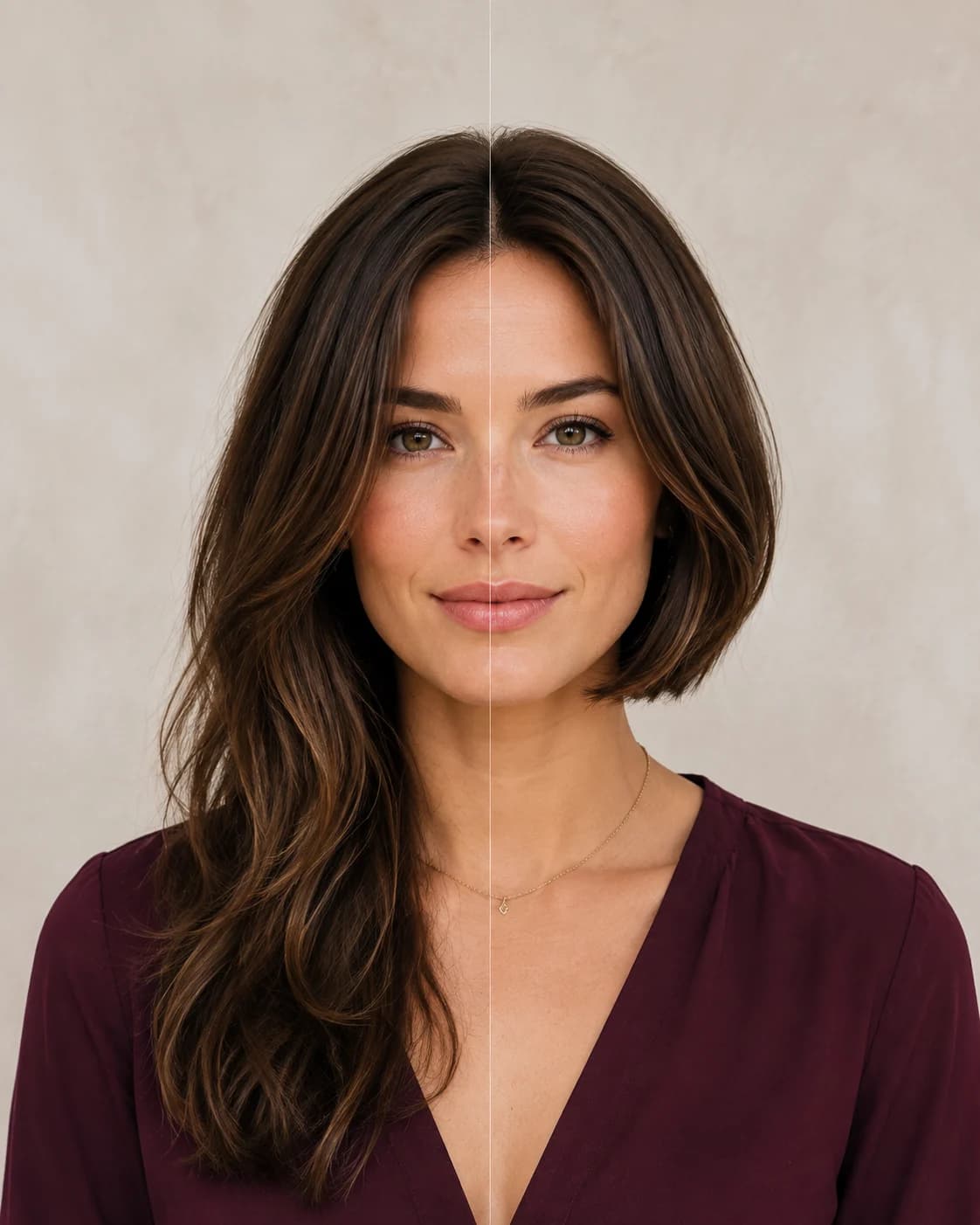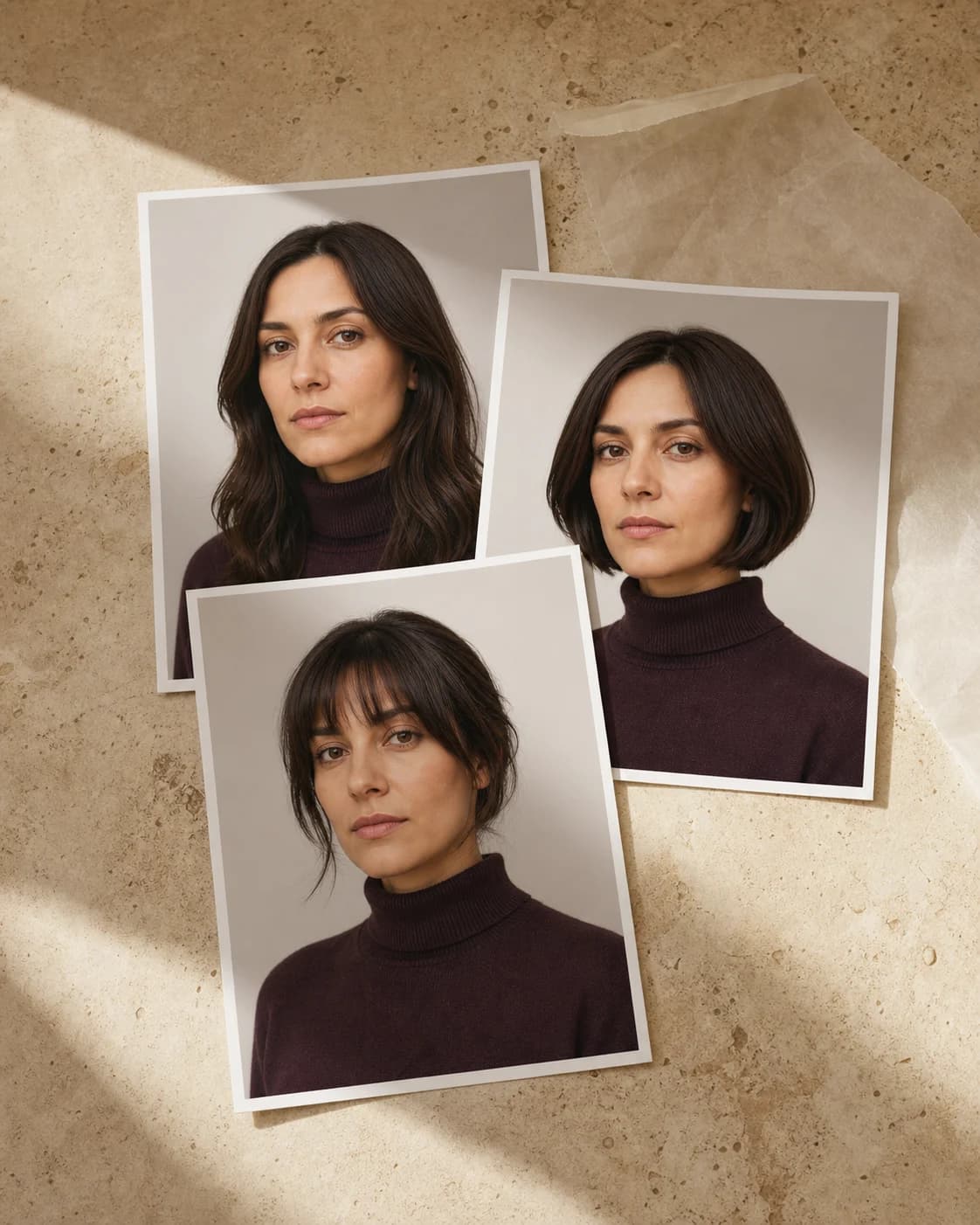
What a strong preview can help you see
A hairstyle preview can make broad visual comparisons easier: long versus short, open forehead versus fringe, rounded versus elongated silhouette, compact versus voluminous shape, or warmer versus cooler color direction. Keeping your face constant removes one source of uncertainty from inspiration browsing.
It can also reveal preference. You may discover that the idea you save on other people feels too severe, too soft, or simply unlike you when placed around your own features. That emotional information is valuable even when the generated hair is not technically exact.
What it cannot measure from one image
A single photo does not fully reveal density across the scalp, strand behavior, elasticity, damage, chemical history, shrinkage, cowlick strength, or how the hair responds in different weather. Those factors influence whether a style is achievable and how it behaves between appointments.
The preview may display an idealized amount of volume, a cleaner hairline, more uniform curl grouping, or a color result that would require several services. Treat those details as visualization, not measurement.
Accurate question: “Do I like this direction?” Inaccurate question: “Will every strand look exactly like this?”
Accuracy changes with the question
“Would I enjoy a shorter silhouette?” is a broad question a preview can support. “Will this exact fringe separate around my cowlick after an air-dry?” requires physical information the image cannot supply. The narrower and more technical the prediction, the more professional assessment matters.
Use previews for proportion, mood, and comparison. Use a stylist for sectioning, weight removal, achievable length, service sequence, and maintenance. These are complementary roles, not competing answers.

Look for artifacts before trusting your reaction
Check whether the hairline has shifted, an ear or earring has changed, the neck and shoulders look altered, or the generated hair hides the true landing point. Notice whether lighting, makeup, skin tone, or face shape changed with the hairstyle. Those differences can influence preference unfairly.
Compare several results at the same size and return to the original photo between them. If a version changes more than the hair, exclude it from the final decision set even if it looks striking.
Improve the comparison rather than chasing perfection
Use a clear source image and generate a small set of meaningfully different options. Change one major variable at a time and write down what each version is testing. Repeating the process until one image looks flawless can encourage attachment to generated details that are not part of the real plan.
A better target is a stable shortlist: one preferred direction, one safer alternative, and the unchanged original. Together they support a grounded conversation about change and commitment.
Take the preview into a real consultation
Tell the stylist which visible element matters most: the jaw-length perimeter, the amount of forehead, the crown height, the softness of the frame, or the color family. Ask them to ignore incidental polish and assess what your starting hair can support.
The final plan may be a staged route rather than a literal copy. That is not a failure of the preview. Its job was to clarify the destination and help you participate in the trade-offs required to move toward it.
Three terms that make this conversation clearer.
You do not need to prescribe technique. Use these words to describe the visible structure, name the behavior you want, and ask what your stylist would adapt.
Baseline
The lower edge or foundation of a haircut, especially visible in bobs and other compact shapes. A strong baseline can make the ends read as fuller and more graphic; a softer or broken baseline can make the outline feel lighter and less exact.
SAY IT IN THE CHAIR“I want the bottom line to feel complete, but not so sharp that the grow-out looks abrupt.”Open full definition
Silhouette
The complete outside shape a haircut creates when viewed as a whole: compact, rounded, triangular, elongated, wide, narrow, or deliberately irregular. It is often the most reliable feature to compare before discussing small details or a polished finish.
SAY IT IN THE CHAIR“I want this overall shape, but I am open to changing the internal technique for my hair.”Open full definition
Consultation brief
A short, usable description of the result you want and the reality it must support. The strongest brief combines one structural change, one non-negotiable boundary, your normal styling routine, and a question that invites the stylist to adapt the plan.
SAY IT IN THE CHAIR“I want to change this, keep this boundary, and make sure the result still works when I style it this way.”Open full definition
Turn this guide into a decision.
Three honest answers are more useful than ten additional reference photos. Your responses stay on this page and can be changed at any time.
- 01Have you compared one major visual change at a time?
Keep the source photo, crop, angle, and face fixed while comparing length, fringe, shape, or color.
- 02Have you named the boundary you do not want traded away?
Examples: tie-back length, full ends, an open forehead, dry length, or support for natural texture.
- 03Does the plan fit your real styling and maintenance rhythm?
Count ordinary mornings, fallback styles, trim frequency, and the way the shape is likely to grow.
The short answers.
Do AI hairstyle previews show exactly how a haircut will look?
No. They can visualize broad proportion and style direction, but they cannot fully predict how your density, texture, growth patterns, condition, and a stylist’s technique will affect the real result.
What should I look at in an AI hair preview?
Focus on length, silhouette, forehead openness, volume placement, and overall identity. Treat individual strands, perfect texture, and technical feasibility as questions for the consultation.
How this guide was built.
HairChapter separates haircut structure from styling, trend names, and medical claims. Our recommendations are decision tools, not universal rules: a stylist should adapt the direction to your starting length, density, pattern, condition, growth habits, and normal routine.
We do not claim that a photograph or AI preview can predict a finished service. Sudden shedding, patchy loss, scalp pain, persistent irritation, or an unexplained change in density belongs with a qualified medical professional—not a haircut guide.