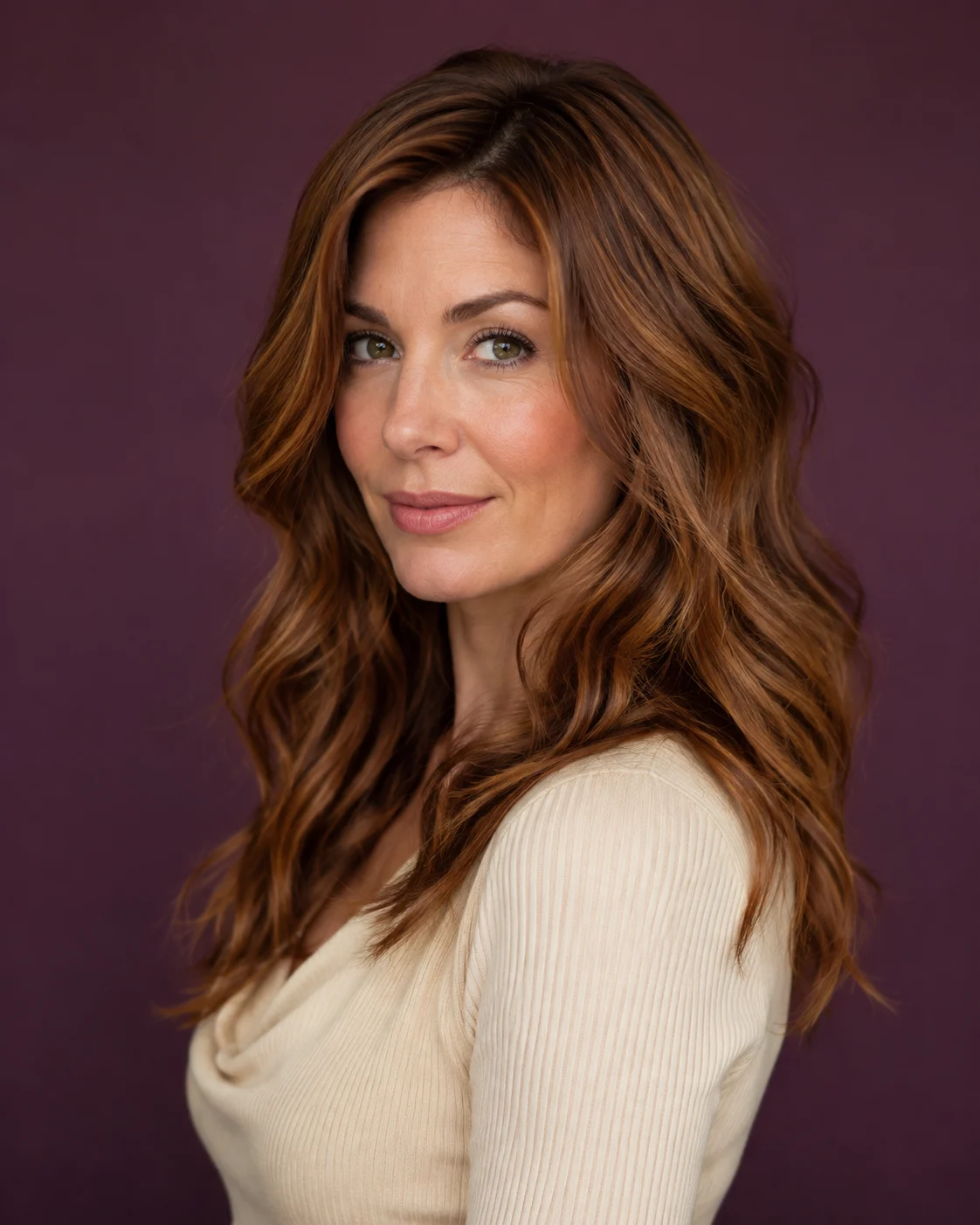
A hair donation haircut starts with two outcomes
A hair donation haircut needs a plan for the length you give and a separate plan for the hair you keep. Start by choosing an organisation that is currently accepting your type of donation. Then ask a stylist whether the usable bundle and your preferred finished haircut can coexist. If they cannot, waiting or changing the haircut is a real choice. A generous intention does not require agreeing to a shorter style than you want to live with.
Bring one clear view of your preferred remaining shape, plus a less dramatic alternative. Name the shortest length you would accept at the front, sides and back. A ponytail cut is not automatically the finished haircut: the contour may still need shaping afterward. Discuss that finishing allowance before the bundle is removed, rather than discovering at the mirror that keeping everything even means losing more length than you expected.
Choose the recipient before choosing a number
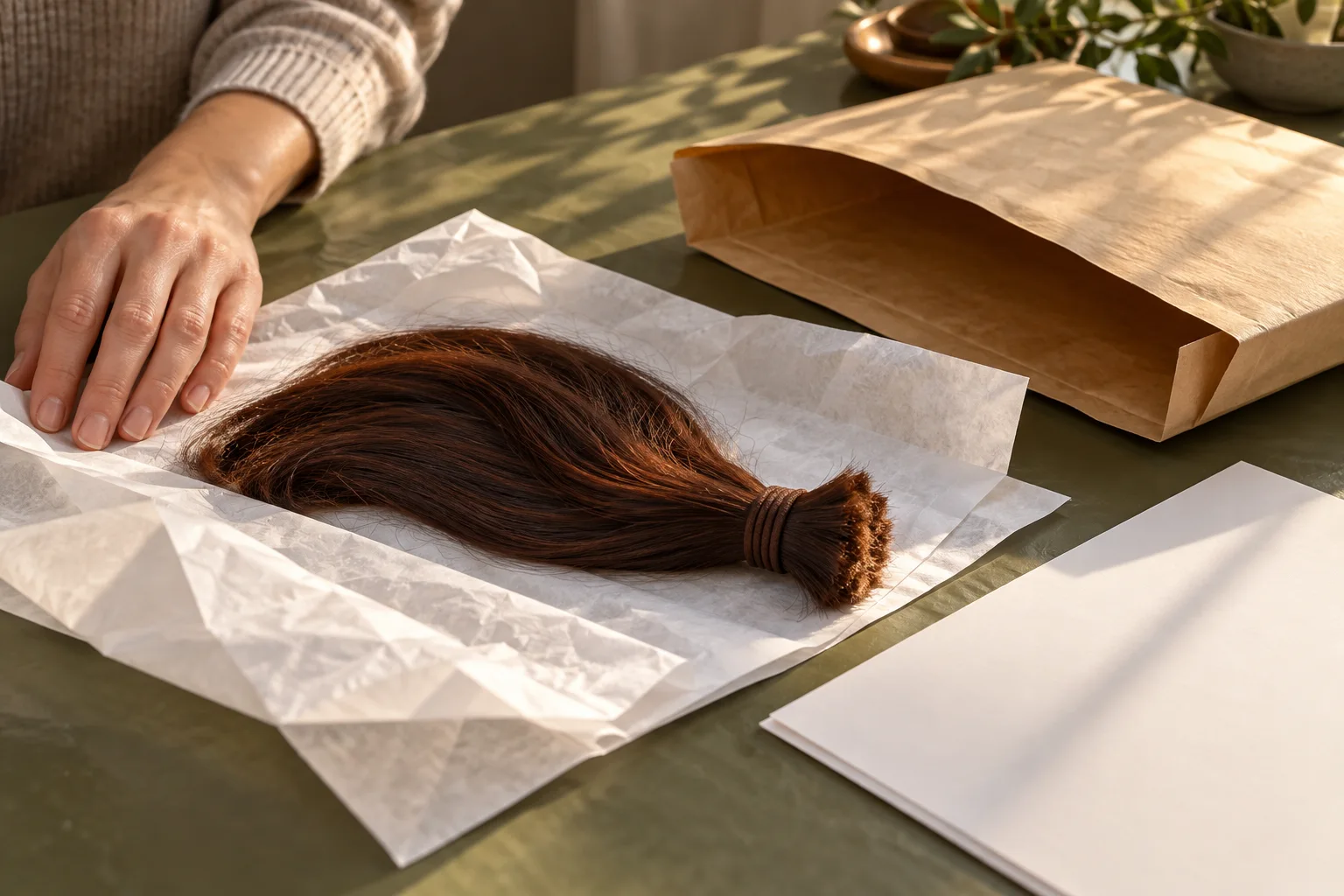
Read the chosen recipient’s own current instructions rather than a general social post. Check accepted length, colour and treatment history, texture, condition, preparation, paperwork and dispatch. Little Princess Trust publishes its own preparation and posting guidance, including dry hair, secured bundles and a donation form. Those instructions belong to that recipient. Do not combine one organisation’s length rule with another organisation’s packaging advice and assume the resulting bundle will be accepted.
If an older downloaded guide conflicts with a current page, ask the recipient which applies before cutting. Tell it honestly about colour, bleach, smoothing or other treatments; the stylist may help describe the history, but cannot promise another organisation’s acceptance. Also read what happens to donated hair. Different organisations use different collection and funding models. You should understand the destination without assuming your individual ponytail becomes one identifiable wig or guarantees a particular outcome.

Protect the shortest finished length you want
Choose your everyday boundary before looking at how impressive the donation could be. Do you still need to gather your hair, tuck the front behind your ears or keep the nape covered? Show these priorities on your real hair. A collarbone reference, a chin-length bob and a cropped nape are different commitments even when the same amount might be donated from different starting lengths. Ask the stylist to show the likely finished contour from the back as well as the front.
Keep a small range of acceptable outcomes rather than a vague request to leave as much as possible. For example, you might welcome a compact bob but decline a shorter layered shape. If the donation target would cross that boundary, decide before the cut whether to postpone, choose another eligible recipient or make a different change. Do not treat the chair, a booked appointment or someone else’s excitement as a reason to approve a result you would otherwise refuse.
Have usable length assessed on the actual hair
The longest tip is not a reliable description of the whole bundle. Existing layers, a tapered outline or shorter front pieces can mean that some strands end much earlier. Ask which sections could meet the selected recipient’s criteria without sacrificing the haircut you want. Do not assume every part must be included. The professional should interpret the actual hair and the recipient’s directions, rather than following a dramatic single-ponytail video because it looks simple.
For curls and waves, distinguish the measurement method requested by the recipient from the dry shape you will wear afterward. Neither a stretched measurement nor a photograph establishes where the new ends will sit on you. Ask for an in-person assessment in your usual texture and explain any styling you do not want to add. This guide does not prescribe a universal measurement, sectioning pattern or cutting method; those details need to suit the recipient and the person in the chair.

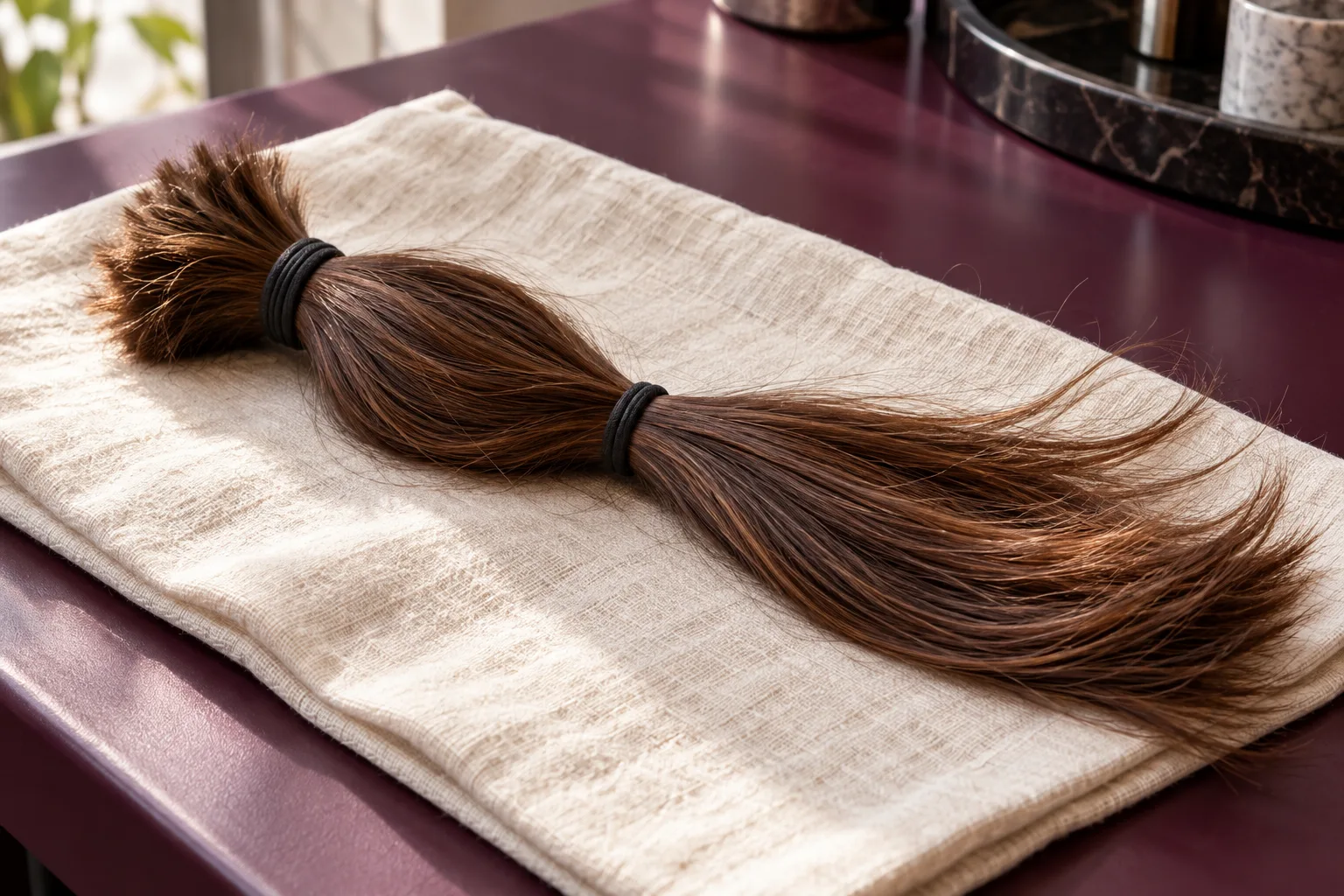
Decide how much daily styling you are choosing
Describe an ordinary morning before agreeing to the shorter outline. Hair that previously stayed in a quick bun may need a different way of staying away from your face. Ask whether the proposed shape depends on a polished blow-dry, frequent reshaping or a finish you rarely use. Consider your neckline, glasses and work routine. A shorter haircut can be exactly what you want, but shorter does not automatically mean less work or the same routine with fewer centimetres.
For optional broad length exploration, Hair Muse can help you express a preference between overall silhouettes before the salon discussion. It cannot measure a usable donation, verify eligibility or calculate a cutting line. HairChapter and Hair Muse share a publisher. Hair Muse is free to download; some functions or usage may require in-app purchases. Use the App Store invitation only if a visual comparison would help you; a printed reference and a clear conversation can also do the job.
Book the donation and the finished haircut together
Tell the salon about the donation when booking, including the chosen recipient and your remaining-length priorities. Ask whether it handles that recipient’s process, whether a consultation is needed first and whether finishing the new cut is included. Being a participating salon does not automatically establish a free haircut, free postage or a particular service. Confirm the actual arrangement directly so the appointment allows time for both the collection and the haircut you plan to leave with.
Ask how to arrive and who is responsible for preparation, forms, photographs and dispatch. Follow the current recipient instructions for washing, drying and any products rather than improvising a last-minute routine. Agree who will keep the bundle after cutting and who will send it. Keep contact and address information on the official source rather than copying a mailing address from an old article. This is appointment planning, not an instruction to cut your own ponytail at home.

Keep permission to pause at the consultation
Before the first cut, have the stylist show the donation proposal and the finished shape again. Say what should happen if the eligible length is shorter than expected or the final contour would need to go above your agreed boundary. The options might be to wait, change the recipient after checking its rules, or book a different haircut without a donation. Your agreement should remain specific even if someone is recording the occasion or has already announced a big change.
Hair Muse can help you revisit the broad shorter shape if you are uncertain, but an attractive preview is not evidence that the donation plan is feasible. It does not predict real texture, growth, salon results or exact fit. Decide any photographs and sharing separately from the haircut itself. You can choose a quiet appointment, decline publication of your image and still make a donation. The personal meaning of the change does not have to become a public performance.
Finish the handoff and plan the next ordinary day
Before leaving, check the real finished shape in the way you intend to wear it. Ask how to move the front aside and which simple routine is appropriate for the actual cut. If it feels unfamiliar, identify what is different before requesting another large change. Keep a picture of the agreed contour for a future appointment. Ask when to seek a reshaping discussion based on how the cut behaves, without assuming a fixed universal maintenance or regrowth timetable.
For the donation, check that the person handling dispatch has the current recipient instructions and the necessary form. Do not seal or send damp hair, and do not assume that a photograph of a bundle confirms its eligibility or arrival. Use the recipient’s own instructions for packaging and any acknowledgement process. You can then separate the two completed tasks: the donation has a named destination, and your haircut has a chosen shape, daily routine and clear plan for any later adjustment.
Three terms that make this conversation clearer.
You do not need to prescribe technique. Use these words to describe the visible structure, name the behavior you want, and ask what your stylist would adapt.
Consultation brief
A short, usable description of the result you want and the reality it must support. The strongest brief combines one structural change, one non-negotiable boundary, your normal styling routine, and a question that invites the stylist to adapt the plan.
SAY IT IN THE CHAIR“I want to change this, keep this boundary, and make sure the result still works when I style it this way.”Open full definition
Baseline
The lower edge or foundation of a haircut, especially visible in bobs and other compact shapes. A strong baseline can make the ends read as fuller and more graphic; a softer or broken baseline can make the outline feel lighter and less exact.
SAY IT IN THE CHAIR“I want the bottom line to feel complete, but not so sharp that the grow-out looks abrupt.”Open full definition
Maintenance window
The period during which a haircut still performs the job it was designed to do before a particular detail needs reshaping. The true window is set by the first meaningful change—often a fringe, nape, perimeter, crown, or loss of internal balance.
SAY IT IN THE CHAIR“Which detail will stop working first, and what is a realistic return window for that part?”Open full definition
Turn this guide into a decision.
Three honest answers are more useful than ten additional reference photos. Your responses stay on this page and can be changed at any time.
- 01Can you state one clear priority for this appointment?
A useful priority is specific enough to protect when the reference needs adaptation.
- 02Have you named the boundary you do not want traded away?
Examples: tie-back length, full ends, an open forehead, dry length, or support for natural texture.
- 03Does the plan fit your real styling and maintenance rhythm?
Count ordinary mornings, fallback styles, trim frequency, and the way the shape is likely to grow.
The short answers.
How long does hair need to be for donation?
There is no single rule for every recipient. Check the organisation’s current instructions before booking and ask how usable bundle length is measured. Your stylist should also allow for the haircut you keep and any finishing work. Do not subtract a headline number from your total length and assume the result.
Can I donate layered or curly hair?
Ask the chosen recipient about your actual hair. Layers can leave shorter strands within a long outline, while curls raise separate questions about measurement and the dry finished shape. A stylist can assess the cut, but the recipient decides its own acceptance rules.
Does donating hair mean I must get a bob?
No particular haircut follows automatically from a donation. The starting length, usable sections, recipient criteria and remaining length all matter. Agree a shape you genuinely want; if both goals cannot be met together, postponing the donation is a reasonable decision.
Is a donation haircut always free?
Confirm directly with the salon. Participation in a collection scheme does not itself tell you what the appointment, finishing cut or postage includes. Ask before booking rather than relying on an old promotion or another donor’s experience.
Can an app check whether my hair is eligible?
A hairstyle preview cannot verify treatment history, usable bundle measurements or current recipient rules. Use official instructions and an in-person haircut assessment. A visual tool can help express a broad style preference, but it cannot approve the donation or guarantee the finished result.
How this guide was built.
HairChapter separates haircut structure from styling, trend names, and medical claims. Our recommendations are decision tools, not universal rules: a stylist should adapt the direction to your starting length, density, pattern, condition, growth habits, and normal routine.
We do not claim that a photograph or AI preview can predict a finished service. Sudden shedding, patchy loss, scalp pain, persistent irritation, or an unexplained change in density belongs with a qualified medical professional—not a haircut guide.
Recipient instructions to check before booking
- Little Princess Trust — current hair donation instructions Recipient-specific preparation, bundle handling and dispatch guidance. Check its current detailed rules directly; these are not universal acceptance criteria.