
A haircut before a wedding needs a sequence, not one magic date
A haircut before a wedding should be timed around the size of the change and the hairstyle you need to test. Establish a major new shape early enough to wear it normally and rehearse the event styling on that shape. For a familiar maintenance trim, agree what can be removed without changing the tested arrangement. There is no single number of days that answers both situations. A new fringe, a first short cut and a tiny refresh of a familiar outline do not create the same uncertainty. Start by naming the change, not by copying someone else’s wedding countdown.
Wella Professionals treats early practice and discussion of accessories, clothing and venue as part of wedding hair planning. That is useful context, not a guarantee that a particular schedule works for everyone. Your cutting stylist and event stylist may be different people, with different appointment availability. Ask them to agree the order before booking the final cut. A rehearsal on long hair followed by a substantially shorter haircut is not a rehearsal of the final shape. If you are doing your own styling, the same principle applies: practice on hair close to the length and texture you will actually have.
Separate keeping the shape from changing its construction
Describe the appointment as maintenance or a redesign, then confirm what those words mean to the professional. Maintenance might preserve the part, front lengths, layer pattern and bottom outline while removing an agreed small amount. A redesign changes one or more of those relationships. Cutting a new face frame or thinning the ends can affect an event style even if the longest back length barely changes. Do not let “just tidy it” authorize several adjustments you did not discuss. Ask which sections will be touched and which will remain as they were at the rehearsal.
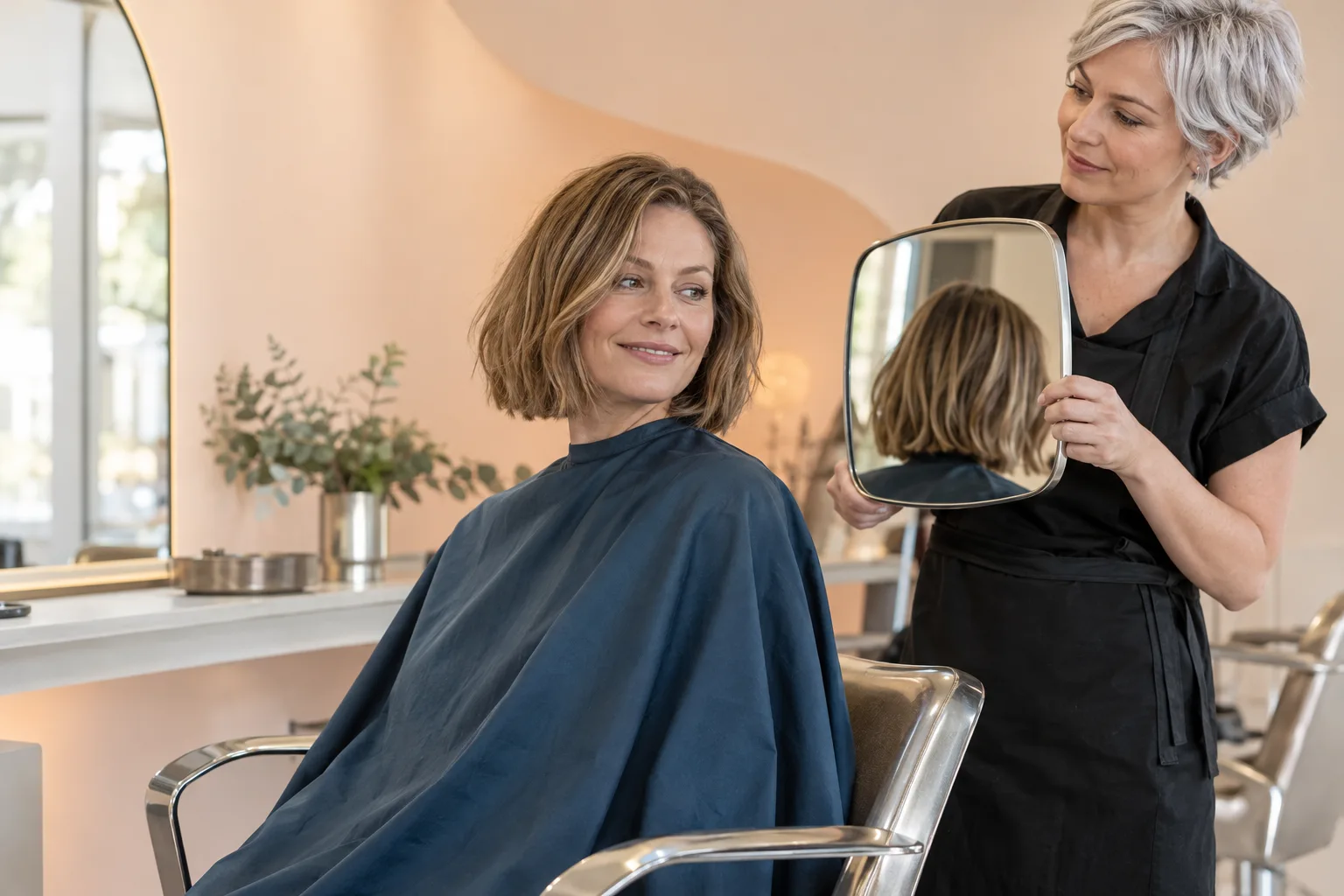
Make the distinction concrete with a current dry photograph and the trial photographs. Point to an end that must reach a fastening, a front section you want left out, and any short pieces you already know how to manage. If the stylist thinks a change would help, ask whether it alters the tested hairstyle or only the everyday outline. You can then decide whether another rehearsal is needed. It is reasonable to choose a smaller intervention when time is limited. That choice is about protecting a plan, not claiming that every pre-wedding haircut is a mistake.
Protect the lengths that fasten, tuck or frame your face
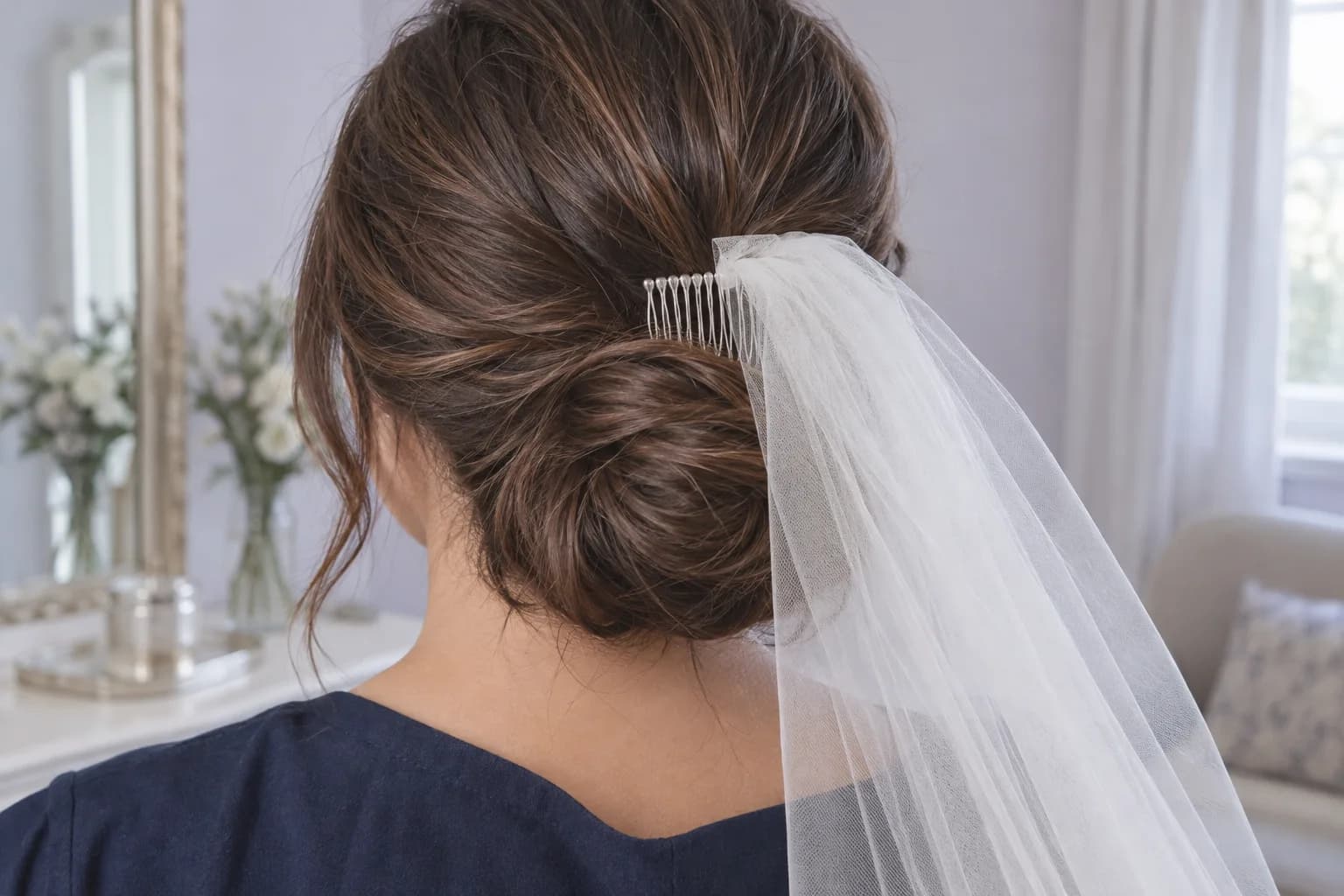
For a bun, twist, braid or half-up arrangement, overall length is only one requirement. Front pieces may need to reach the back; shorter layers may have to join a fastening; the nape may need enough hair for a particular anchor. Ask the event stylist to identify those sections on your own head. A long-looking reference does not reveal every pin or added support. Bring the actual veil, comb or clip when available, rather than guessing from a picture. The trial should establish the intended location and comfort of the fastening, not simply whether the accessory looks attractive.
Record the protected sections in ordinary language for the cutting appointment. For example, the side pieces must still reach the low fastening, while the agreed front strand stays outside it. Have the stylist show the maximum proposed removal before cutting. Avoid assigning yourself a universal minimum number of centimeters for an updo: the arrangement, texture and method matter. If an accessory has not arrived, say that the fastening is still untested. Keeping more length can preserve options, but it cannot certify that every style will work. A simpler alternative is useful when the preferred arrangement remains uncertain.
Make the trial answer practical questions, not only create a photo
A useful rehearsal checks the proposed shape with your normal part, the texture you intend to wear and the actual accessories. Look at the front, sides and back. Sit, turn your head, look down and notice whether a loose section repeatedly reaches your eyes or catches on a neckline. If possible, observe the style later under ordinary conditions and tell the stylist what changed. That does not predict the wedding weather or guarantee all-day hold. It provides better information than a single image taken immediately after the final pin. Ask how any necessary adjustment would be made on the day.
For waves and curls, do not assume a smooth trial answers questions about a naturally textured finish. Explain which texture you want and what preparation you are willing to repeat. Ask for washing and preparation instructions from the person doing the styling; do not combine conflicting online rules. Photograph the result without smoothing every strand into place before each shot. Note one change at a time: less height, fewer loose front pieces, or a different accessory position. A precise correction is easier to evaluate than an instruction to make everything look more romantic. Keep the accepted version identifiable.

Book the final trim around what the rehearsal established
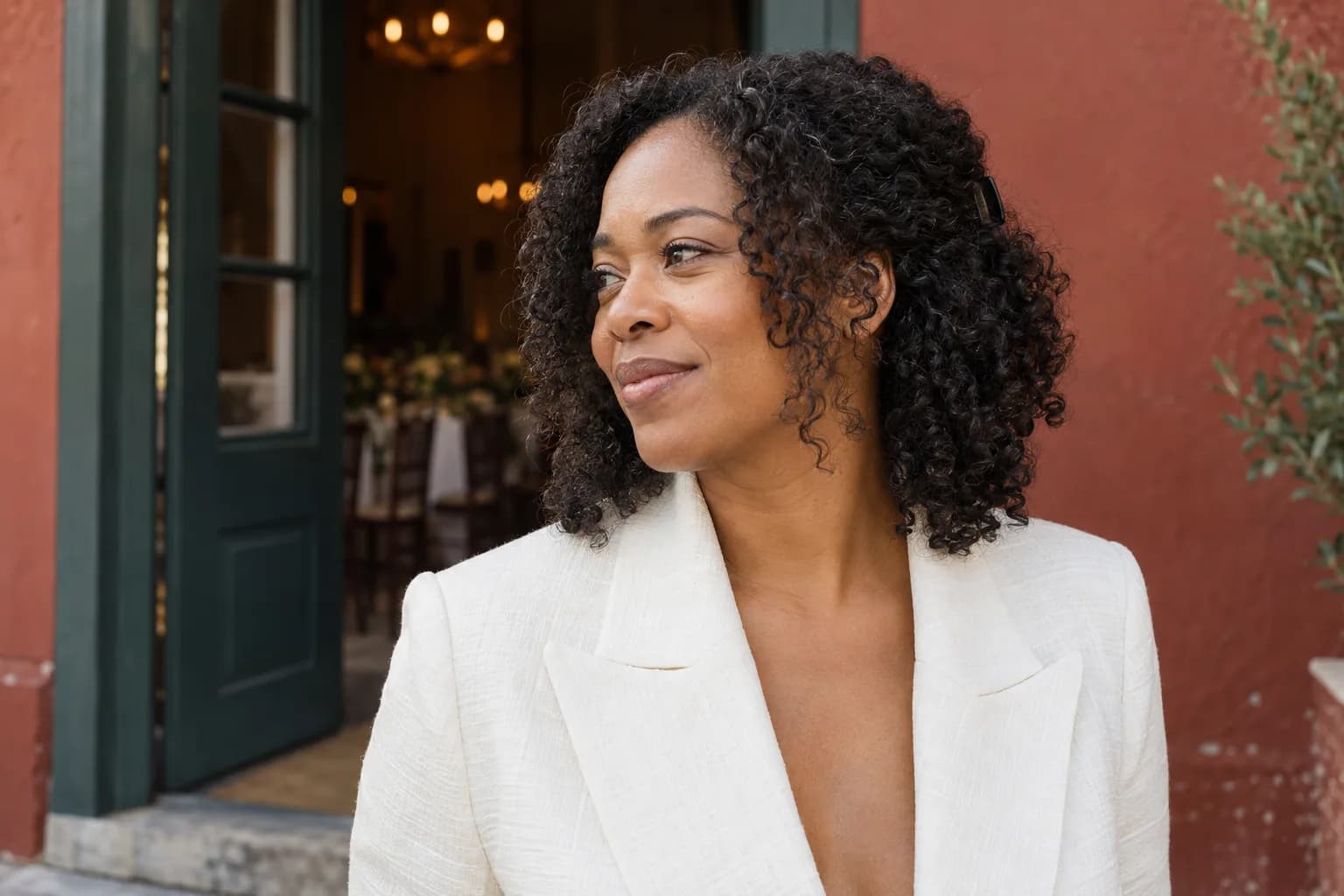
Once the shape is accepted, discuss whether another cut is needed at all. If it is, book a maintenance appointment whose scope is already clear. Ask the cutting stylist how your familiar shape usually looks immediately after a trim and after your ordinary washes. Use that experience to choose an interval with room for a review, rather than treating a published week count as a rule. Include travel, salon opening days and the availability of both professionals. A theoretically ideal date is not useful if nobody can assess an unexpected difference before you leave for the venue.
Send the final haircut plan to the event stylist when someone else will do the styling. Mention the intended maximum removal and the sections being protected. If they identify a conflict, resolve it before the scissors are involved. A small change after a trial is not automatically forbidden, but a change to fastening length, fringe width or layers deserves a new discussion. Do not rely on rapid growth to restore a section in time. If appointments are close together, preserving the established shape may be preferable to chasing a slightly different reference. The wedding date should narrow decisions, not encourage hurried cutting.
Short hair and a new fringe need their own plan
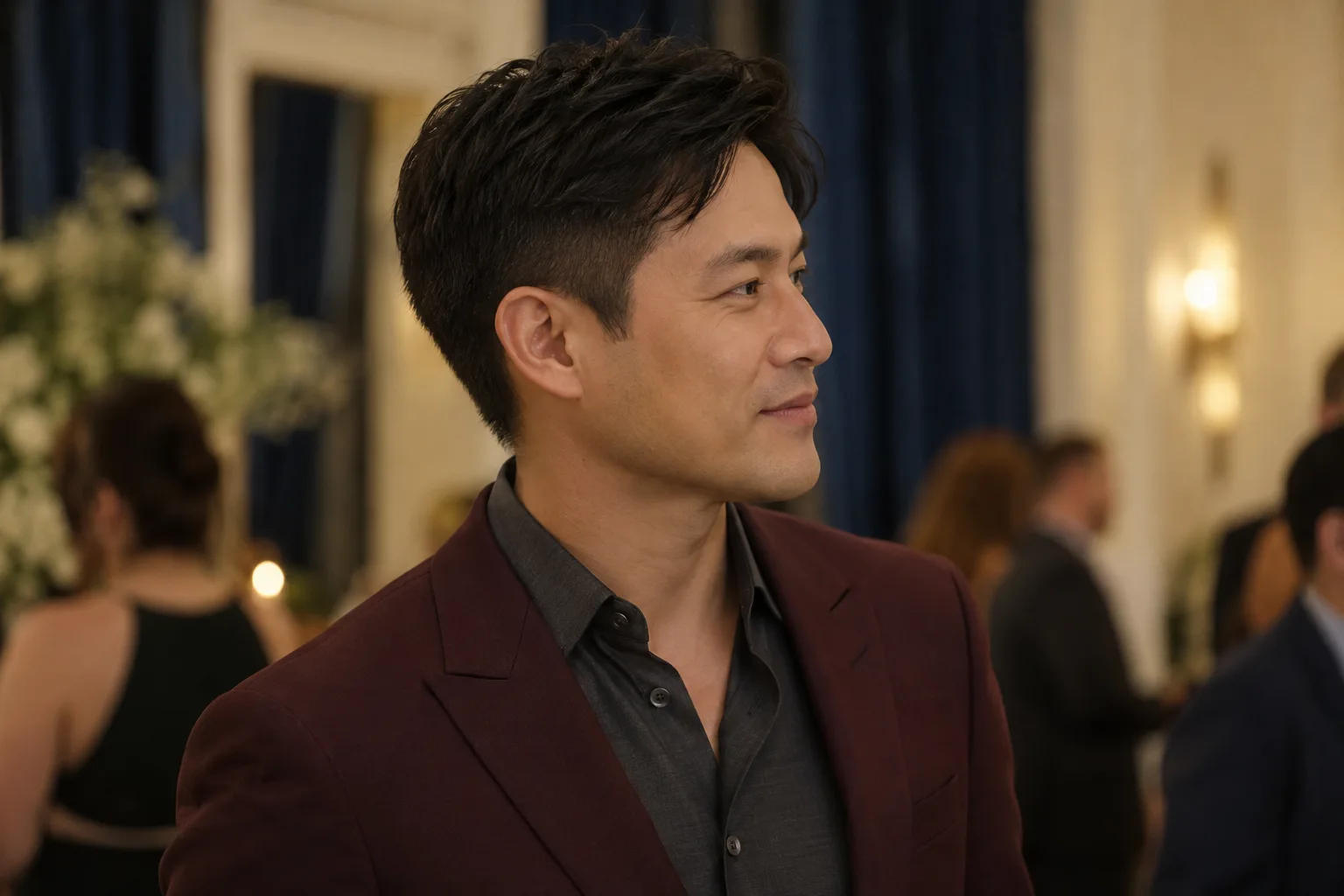
With a familiar pixie, crop or short men’s cut, the important issue may be the outline you prefer at the event: freshly defined, slightly softened, or styled differently without a new cut. Use photographs from your own previous appointments to show that preference. They are more informative than another person’s number of days since cutting. Agree the side and nape finish, retained top length and any part you want kept. You do not have to grow longer hair just because it is a wedding. A deliberate familiar short shape can be the complete plan.
A first-time fringe or major shortening is different. You may need to learn how the new front sits, how it behaves after washing and what happens when you want it out of your face. Make that decision before the final rehearsal if possible. If the event is very near, consider whether temporary styling or an accessory answers the visual wish without creating new short pieces. This is not a promise that accessories replace every haircut. It is a way to separate a change you genuinely want afterward from a last-minute response to photographs, outfits or other people’s expectations.
Use an optional preview only for the visible cut preference
If you are undecided between keeping a familiar length and making a genuine haircut change, Hair Muse can be an optional visual comparison before the plan is settled. Use one evenly lit portrait and a small selection of available styles. Keep the original visible and describe the difference you prefer: a shorter outline or more openness around the face, for example. Do not assume an available hairstyle includes your wedding updo or accessory. The useful output is a preference to discuss, not a pinning diagram, a measurement of fastening length or proof that the proposed haircut is feasible.
HairChapter and Hair Muse share a publisher. Hair Muse is free to download; some uses or features may require in-app purchases. The official App Store invitation here is optional. Previews cannot guarantee actual hair behavior, chemical color results, exact fit, salon outcomes or an accessory’s hold. If you have already accepted a real trial, there is no need to introduce more simulated alternatives. Later, return to a saved Hair Muse comparison only if it clarifies the specific cut preference being discussed with the stylist. It must not overrule the lengths and attachments established on your actual hair.
Finish with one shared brief and a manageable fallback
Write a short brief containing the event date, the accepted styling arrangement, the protected sections and the permitted trim. Attach current dry photos and front, side and back trial images. Identify who is cutting, who is styling and who will confirm a change. For self-styling, write down the practiced steps and the real time they took instead of borrowing an optimistic online estimate. Keep the actual accessory with the plan. A fallback might be a simpler half-up arrangement or leaving the hair down in a familiar finish; it should be something you have tried, not another untested inspiration.
At the cutting appointment, review the dry outline and relevant front lengths before agreeing further removal. Ask what changed and share that information with the event stylist. If the result differs from the plan, explain the specific difference promptly rather than trying several corrective cuts yourself. There may be a styling adjustment that does not require more shortening. After the wedding, you can revisit any bigger haircut wish without the same deadline. The best preparation is not maximum intervention. It is a hairstyle you recognize, a cut whose limits are understood and enough coordination that everyone is working toward the same tested version.
Three terms that make this conversation clearer.
You do not need to prescribe technique. Use these words to describe the visible structure, name the behavior you want, and ask what your stylist would adapt.
Consultation brief
A short, usable description of the result you want and the reality it must support. The strongest brief combines one structural change, one non-negotiable boundary, your normal styling routine, and a question that invites the stylist to adapt the plan.
SAY IT IN THE CHAIR“I want to change this, keep this boundary, and make sure the result still works when I style it this way.”Open full definition
Baseline
The lower edge or foundation of a haircut, especially visible in bobs and other compact shapes. A strong baseline can make the ends read as fuller and more graphic; a softer or broken baseline can make the outline feel lighter and less exact.
SAY IT IN THE CHAIR“I want the bottom line to feel complete, but not so sharp that the grow-out looks abrupt.”Open full definition
Maintenance window
The period during which a haircut still performs the job it was designed to do before a particular detail needs reshaping. The true window is set by the first meaningful change—often a fringe, nape, perimeter, crown, or loss of internal balance.
SAY IT IN THE CHAIR“Which detail will stop working first, and what is a realistic return window for that part?”Open full definition
Turn this guide into a decision.
Three honest answers are more useful than ten additional reference photos. Your responses stay on this page and can be changed at any time.
- 01Can you state one clear priority for this appointment?
A useful priority is specific enough to protect when the reference needs adaptation.
- 02Have you named the boundary you do not want traded away?
Examples: tie-back length, full ends, an open forehead, dry length, or support for natural texture.
- 03Does the plan fit your real styling and maintenance rhythm?
Count ordinary mornings, fallback styles, trim frequency, and the way the shape is likely to grow.
The short answers.
How many weeks before a wedding should I cut my hair?
There is no universal interval. A major new shape needs time for ordinary wear and a real styling rehearsal. A familiar trim can be scheduled around your own maintenance pattern, protected lengths and the availability of a final review.
Should the haircut happen before the hair trial?
A substantial change should normally be established before the trial that approves the final hairstyle. If the trial happens first, tell both stylists what you intend to cut and ask which sections the accepted arrangement needs.
Can I trim my hair after the bridal trial?
Possibly, if the trim preserves the sections and shape used in the trial. Agree the maximum removal and check whether layers, front lengths or fastening points would change. A changed construction may need another rehearsal.
Do I need long hair for a wedding hairstyle?
No. A familiar short cut can be worn deliberately, with or without an accessory. Choose an arrangement that works on your actual length instead of growing hair only to meet a reference photograph.
Can an app replace a wedding hair trial?
No. A preview may help describe a visible haircut preference, but it cannot test pins, veil attachment, comfort, real texture or hold. Those questions require practical styling on your own hair.
How this guide was built.
HairChapter separates haircut structure from styling, trend names, and medical claims. Our recommendations are decision tools, not universal rules: a stylist should adapt the direction to your starting length, density, pattern, condition, growth habits, and normal routine.
We do not claim that a photograph or AI preview can predict a finished service. Sudden shedding, patchy loss, scalp pain, persistent irritation, or an unexplained change in density belongs with a qualified medical professional—not a haircut guide.
A professional planning reference
- Wella Professionals — wedding hair planning Early hairstyle practice and consideration of accessories, dress details and venue. Product recommendations, fixed appointment intervals and promises of hold are not adopted.