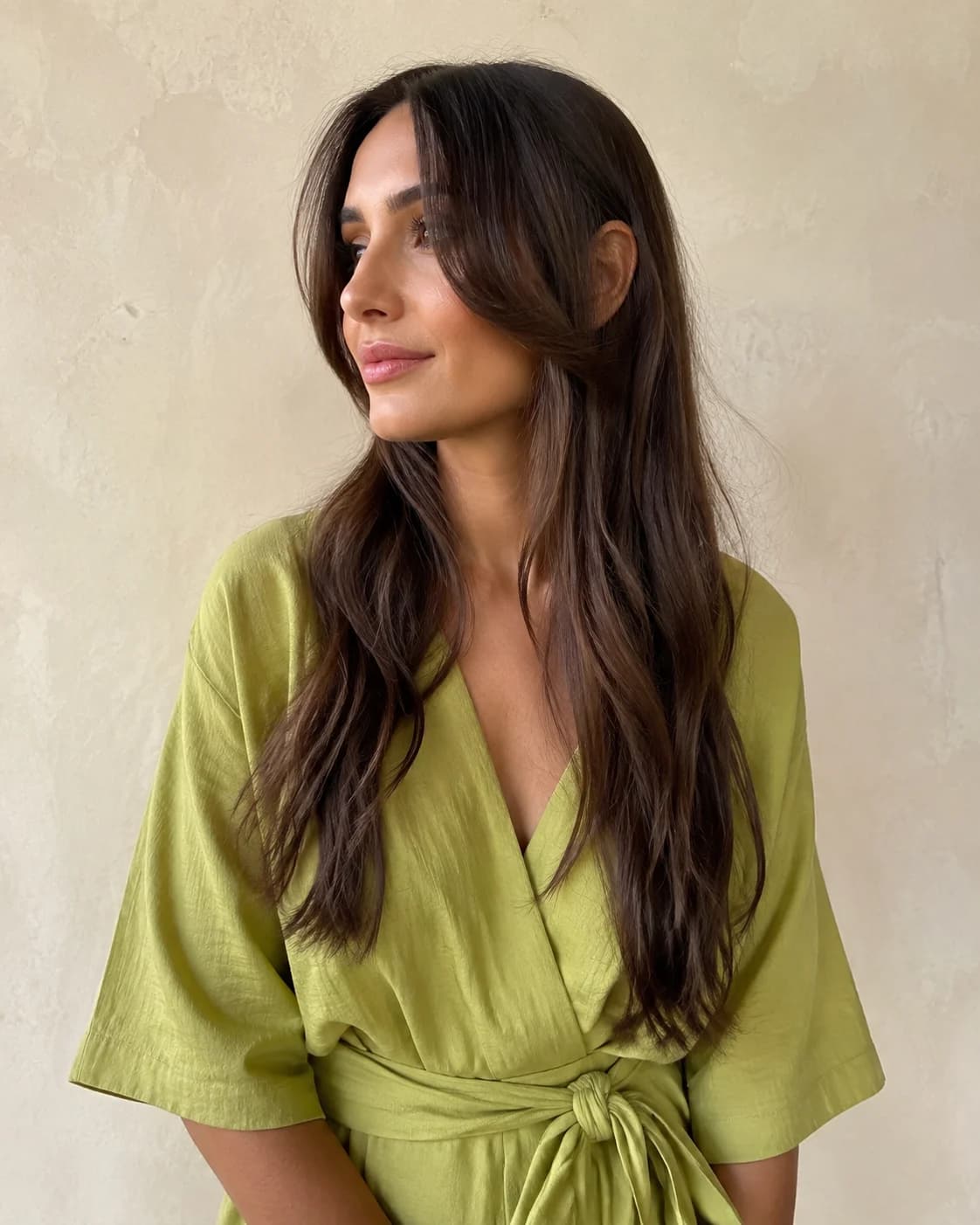
Haircuts for round faces start with a preference, not a prohibition
The phrase “haircuts for round faces” often leads to lists that prescribe height at the crown, long front pieces and no cheek-level volume. Those shapes can be attractive if you want a longer visual line. They are not a test your face has to pass. A round face may look striking with a compact blunt bob, a full fringe, a soft shag or an open pixie. The meaningful question is which proportion you enjoy seeing and whether the cut still works when your hair dries without professional styling.
Begin with a photograph taken straight on in ordinary light, then another from the side. Look at the entire head and shoulders, not a cropped face. Decide whether you want to emphasize your cheeks, open the forehead, create a stronger lower edge or keep movement around the face. Write one desired effect and one thing you will not maintain. This separates aesthetic preference from the constant online promise that one “flattering” silhouette can correct everyone. There is no need to correct a face shape to deserve a good haircut.
Choose the effect first: open, graphic, soft, compact or airy. Then test the cut against your actual hair.
Read the three lines that change the outline
The first line is the perimeter: the place where the longest hair ends. A jaw-level bob creates a compact shape near the cheeks; a collarbone cut carries the eye lower and may allow a tie-back. The second is the shortest front piece. It can stop at the brow, cheekbone, jaw or below, and each landing point changes how much of the face is framed. The third is the position of volume. Height near the crown, width beside the cheeks and fullness at the ends are different designs even when the haircut has the same name.
Test these lines on dry hair because wet length can mislead, especially with waves and curls. Ask a stylist to point to the proposed shortest piece and outer edge before cutting. Consider what happens when the hair is tucked behind the ear, parted differently or lifted by wind. If a reference has a face similar to yours but completely different density or curl pattern, borrow its line rather than expecting the full result. A haircut is a physical arrangement of hair, not a face-shape sticker placed on a photograph.
- Where the longest edge lands
- Where the shortest face-framing piece lands
- Where height or width appears
- What remains when the hair is dry and unstyled

Pick length by useful options, from pixie to long layers
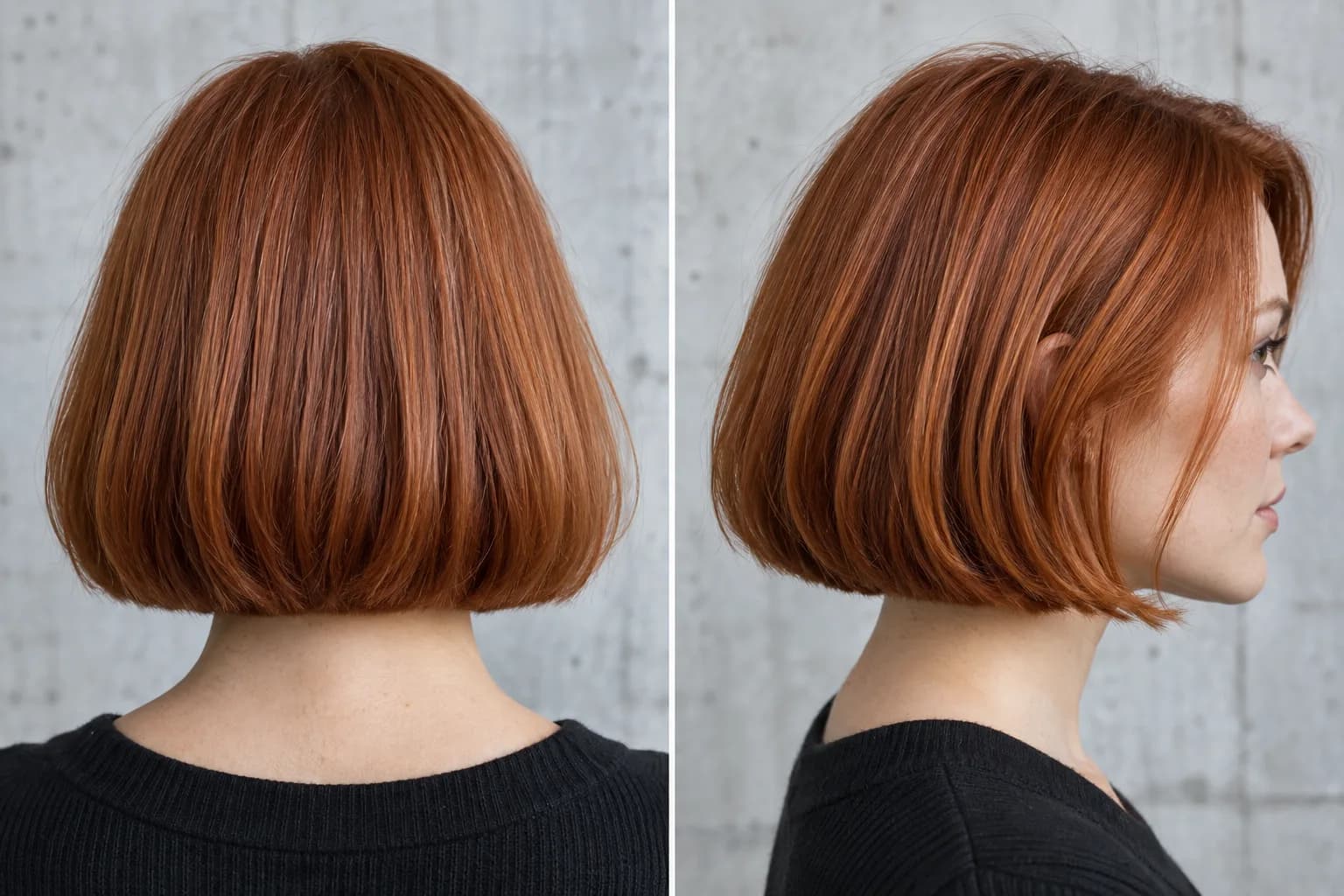
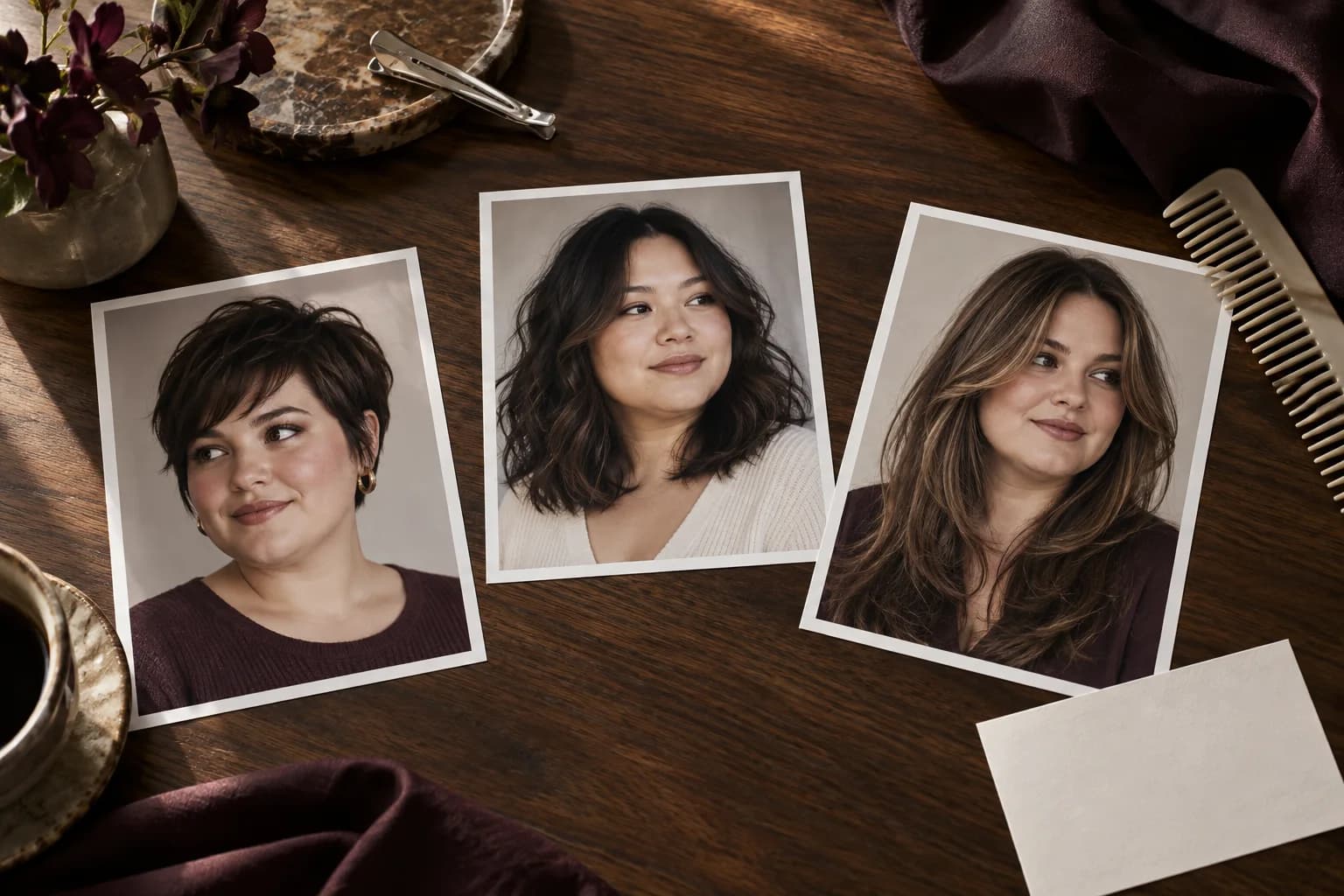
Short hair can work beautifully on a round face. A pixie with visible ears opens the sides, while a longer top or side-swept fringe gives the front a direction. A short cut is an upkeep choice: the nape, ears and fringe can change quickly as they grow. A chin bob creates a deliberate horizontal line and can celebrate cheek fullness rather than hide it. A lob below the jaw offers a different landing point, a softer exit from a short cut and more freedom to tuck or tie back.
Long hair is not automatically more flattering. If the length hangs heavily and the front has no connection to the rest of the cut, it may feel static. Soft face-framing layers can create movement while keeping a substantial perimeter, provided the shortest piece has a useful destination when you air-dry. Thick hair may need internal weight removed; fine hair can lose its fuller-looking edge if too many layers are cut. Ask which choice gives you the daily options you actually use: a fast wash, a clip, a ponytail or a quick reshaping at the front.
Choose bangs for a round face by movement and maintenance
Bangs alter the face’s open space more strongly than a few centimeters of length at the back. An open curtain fringe leaves a vertical gap and can move into longer framing pieces. A side fringe creates a diagonal line. A full straight fringe makes a more graphic horizontal statement; it is a valid choice if that is the effect you like. None is universally right or wrong for a round face. More useful questions are whether a cowlick shifts the fringe, whether the hair separates with oil, and how often you want it trimmed.
Wella Professionals shows several fringe constructions and notes that a curtain fringe can suit round faces, but the article is inspiration rather than a promise for your particular hair. Pin the front hair to approximate the width and dry length before committing. Look down, put on glasses if you wear them, and push the hair back. A fringe that looks good only when blown into place may be too expensive in daily time. Start longer if you are unsure; a stylist can shorten it after seeing how the dry front settles.
Let texture and density overrule a generic face-shape chart
Straight hair reveals a blunt perimeter and the exact width of a fringe. Wavy hair creates bends that can widen or narrow the outline depending on where the layers begin. Curly and coily hair often gains height and width as it dries; the dry shape, shrinkage and individual curl groups matter more than a length measured while wet. Dense hair may build a heavy cheek-level shelf if weight stays in one place. Fine hair may need a stronger baseline before any face-framing pieces are added.
The American Academy of Dermatology advises choosing care around your actual hair type and handling wet hair gently. Apply the same practical thinking to the cut: do not approve a shape that requires daily heat, strong tension or a product routine you do not want. Show the stylist your normal dry hair, including the least polished day. Ask where fullness will collect after the wash and whether the front can still be tucked. A face-shape chart cannot answer those questions because it does not know your strands.
Compare round-face haircut options one variable at a time
A controlled visual preview can clarify which outline you prefer before a cut becomes irreversible. Take a clear, evenly lit photo looking forward, with your normal part and hairline visible. Keep the source photo fixed. Compare a jaw bob with a collarbone cut while leaving color and styling similar. Then hold length steady and compare an open forehead with a curtain fringe. Finally compare the amount of side volume or the shortest face-framing piece. Three changes at once produce excitement but do not reveal which decision you liked.
Hair Muse can be useful for that shortlist. HairChapter and Hair Muse share a publisher, and the app is free to download; some uses or features may require in-app purchases. Treat each preview as a question to bring to a stylist, not as evidence that curls will shrink a certain way, a fringe will obey a cowlick or the salon can reproduce the picture exactly. Save two or three candidates, write one benefit and one concern for each, and ask your stylist to test those concerns on your real hair.

Build a reference set that explains the decision
Choose three references with different jobs: one for the overall silhouette, one for the front or fringe and one showing a texture close to yours. Do not mix a glossy blowout, a wet-look styling image and an air-dried cut without saying which finish you actually expect. Mark the visible details: “I like the complete lower edge,” “I want this opening around the eyes,” or “I need the shortest curl to fall below my cheek when dry.” The stylist can translate a visual preference into a feasible section and length plan.
Bring a negative reference too, but describe what fails rather than judging a person’s appearance. “I do not want this much side width” is actionable; “this face shape cannot wear a bob” is not. Tell the stylist how often you wash, whether you usually part in the center, and if you need to tie the front back. If you alternate between glasses and contacts, test the framing with both. The more specific the constraints, the more room there is for creative choices inside them.
Use a salon script and a reversible first step
Try this: “I want a shape that feels open around my face, but I do not want to lose the ability to tie it back. Could we look at the dry landing point of the front and the perimeter before deciding how much to remove?” Replace “open” with “graphic,” “soft” or “full” if those words fit you better. Name the limit in centimeters or a body landmark. Ask where the shape will gain width after washing and what will need the first maintenance trim.
If you are uncertain between a dramatic short cut and a long layered one, stage the decision. Start at the longer acceptable length, refine the front, then reassess with the hair dry. A short finish cannot be reversed the same day. Likewise, test a long curtain piece before making it a short straight fringe. The final choice is the one that makes you want to wear your own hair on an ordinary Tuesday. A round face is simply one visible part of that choice, not the instruction manual.
- Preferred visual effect
- Shortest acceptable dry length
- Real texture and density
- Daily styling limit
- A lower-commitment fallback
Three terms that make this conversation clearer.
You do not need to prescribe technique. Use these words to describe the visible structure, name the behavior you want, and ask what your stylist would adapt.
Perimeter
The outside boundary of the haircut: the line you read around the bottom, sides, and overall edge. A compact perimeter usually feels fuller and more controlled, while a broken or highly layered perimeter can feel lighter, softer, or more textured.
SAY IT IN THE CHAIR“I like the movement, but I want the outside edge to remain substantial when the hair is straight or air-dried.”Open full definition
Layer map
A plain-language way to describe where the shortest layers begin, how quickly they connect to longer sections, and where movement or volume is intended to appear. Two haircuts with the same overall length can feel completely different because their layer maps differ.
SAY IT IN THE CHAIR“Show me the shortest layer, where it connects, and how much weight remains beneath it.”Open full definition
Silhouette
The complete outside shape a haircut creates when viewed as a whole: compact, rounded, triangular, elongated, wide, narrow, or deliberately irregular. It is often the most reliable feature to compare before discussing small details or a polished finish.
SAY IT IN THE CHAIR“I want this overall shape, but I am open to changing the internal technique for my hair.”Open full definition
Turn this guide into a decision.
Three honest answers are more useful than ten additional reference photos. Your responses stay on this page and can be changed at any time.
- 01Can you point to the exact structural detail you want from this cut?
Name the shortest point, outside line, layer map, or placement of volume.
- 02Have you named the boundary you do not want traded away?
Examples: tie-back length, full ends, an open forehead, dry length, or support for natural texture.
- 03Does the plan fit your real styling and maintenance rhythm?
Count ordinary mornings, fallback styles, trim frequency, and the way the shape is likely to grow.
The short answers.
What is the best haircut for a round face?
There is no single best cut. A pixie, bob, lob or longer layered shape can all work. Choose the perimeter, front landing point and volume placement you like, then check that your texture and routine support them.
Can a round face wear a short bob?
Yes. A chin bob can make a strong, compact line; a longer bob changes where the line lands. Check the dry perimeter, density and how the ends behave near the cheek or jaw.
Are bangs a bad idea for a round face?
No. Curtain, side and full fringes create different visual effects. The practical test is where the fringe lands dry, how it moves with your growth pattern and how much styling you accept.
Do layers make a round face look wider?
Layers can add width, height or movement depending on their starting point and your texture. Ask your stylist where the shortest layer will expand once your hair is dry; do not judge from a generic rule.
Can an app tell me exactly how the haircut will look?
No. A visual preview can help compare broad outlines on one photo, but it cannot predict shrinkage, density, growth patterns, cutting technique or an exact salon result.
How this guide was built.
HairChapter separates haircut structure from styling, trend names, and medical claims. Our recommendations are decision tools, not universal rules: a stylist should adapt the direction to your starting length, density, pattern, condition, growth habits, and normal routine.
We do not claim that a photograph or AI preview can predict a finished service. Sudden shedding, patchy loss, scalp pain, persistent irritation, or an unexplained change in density belongs with a qualified medical professional—not a haircut guide.
Sources for health-related statements
- Wella Professionals — 13 types of bangs for every face shape Professional examples of fringe shapes and the distinction between a fringe type and a face-shape rule.
- American Academy of Dermatology — Tips for healthy hair Why texture-specific care and gentle styling should inform the haircut you can maintain.