
A hidden undercut needs a specific job
A hidden undercut removes a section underneath longer hair, often low at the nape. It can be worth considering when unwanted bulk is concentrated there and you are comfortable with the section being visible when the hair lifts. It is a weaker choice if your priority is a substantial ponytail, completely interchangeable updos or an easy return to equal lengths. Start by locating the problem, not selecting a shaved pattern. Is the back difficult to manage, does the outline feel too heavy, or do you simply enjoy the contrast when your hair is up?
Those are different reasons, and none requires pretending the haircut is invisible in every situation. You can want the design for its own sake. If you want a practical change, name the task it should improve and the feature you refuse to lose. Keeping long upper hair protects the overall length, but the removed section still has to grow back. Treat that commitment as part of the choice rather than a small detail to consider after the clippers have started.
Hidden describes where the short hair sits. It does not promise permanent concealment.
Distinguish a short panel from ordinary weight removal
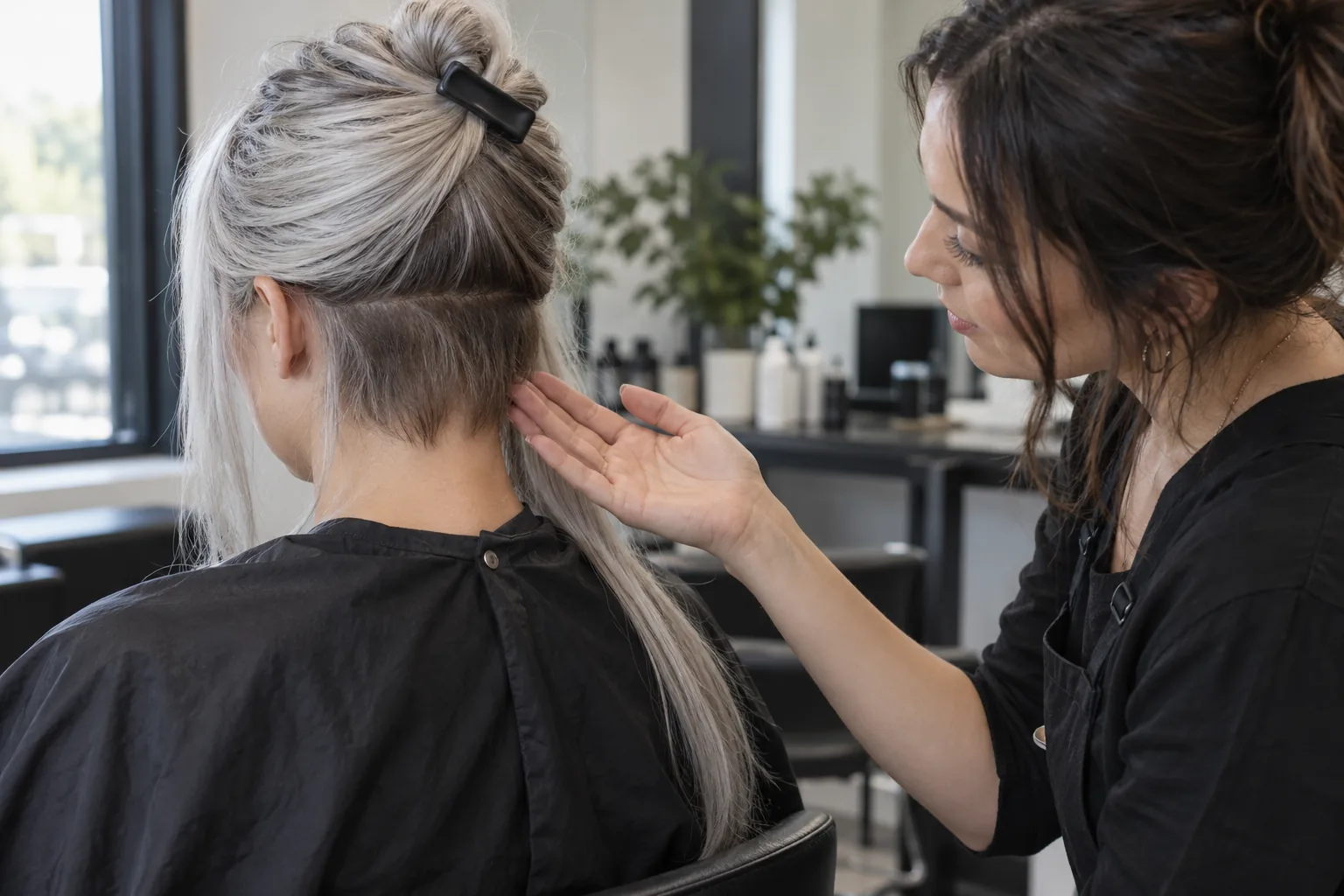
The word undercut can describe quite different structures. A closely clipped nape panel is not the same as shorter supporting layers underneath a bob, a soft taper or internal texturising through the lengths. Ask your stylist to show which meaning applies to your reference. In ARC Scissors’ first-hand demonstration, Jack Mead uses a concealed nape section to remove weight from one dense bob. That is an example of a tailored decision, not a template for every thick-haired person or permission to copy the same height.
Mark the proposed top boundary with a comb and look at it before approving any cutting. Confirm where it stops at each side, how much coverage remains above it and whether the outline includes the hair behind the ears. Do not choose only a clipper number: the size and location of the section change the result as much as its shortness. A small, low area can be extended at a later appointment; a large area cannot be restored during the same visit. Ask for a pause before any expansion.
- Which exact section will become short?
- How high and wide will it be?
- What upper and side hair must stay intact?
- Will we pause and reassess before making it larger?
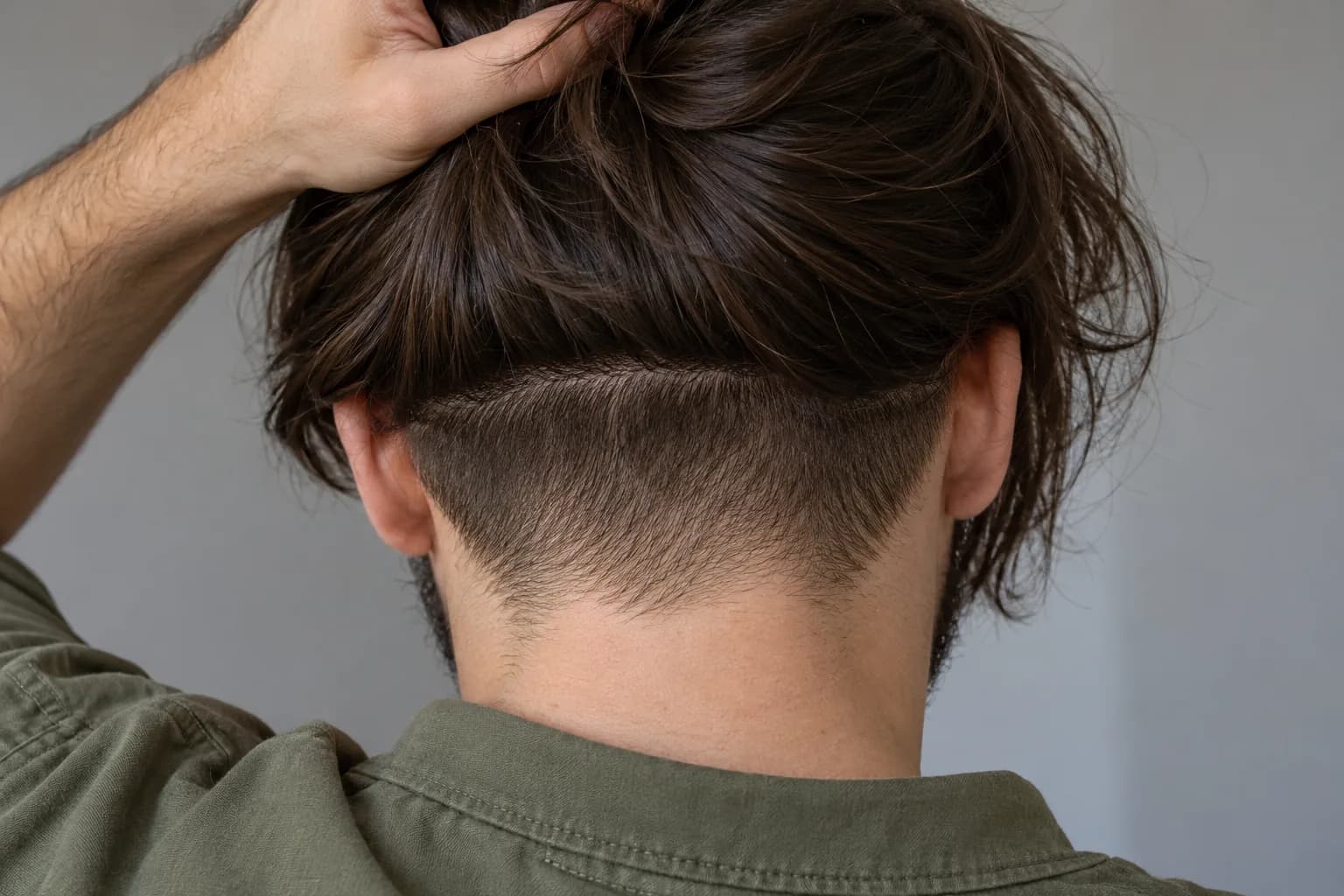
Check density where the covering hair comes from
Coarse strands and high density are not interchangeable. Hair can feel substantial because the individual strands are thick while still having a relatively sparse covering layer. Conversely, fine strands can be densely packed. Lift and release the proposed covering hair gently, then observe it in the finish you normally wear. The useful question is whether enough hair remains to create the outline you want, not whether you have ever been told you have thick hair. Look at the lower perimeter as well as the crown.
With a bob, the underside may contribute to a firm edge even if you rarely see it separately. With long hair, it may contribute noticeably to the bundle you gather. Removing it can change those qualities. Modern Salon’s interview with barber Michael Kelley stresses proportion when choosing the short area. For your consultation, translate that into a clear priority: retain a substantial edge, reduce a particular pocket of bulk, or deliberately expose the nape. If the goals conflict, ask which compromise is smallest rather than approving all three at once.
Test coverage in the styles you actually use
Before cutting, have the stylist separate the proposed panel and let the remaining hair fall normally over it. This is a coverage rehearsal, not an exact simulation of the finished cut. Look straight ahead, turn both ways, tip your head down and move the covering lengths with your hands away. A panel that appears concealed when everything is combed carefully into place may show through a natural separation or a change of direction. Decide whether occasional visibility would bother you before it becomes part of the haircut.
Repeat the discussion for a low ponytail, high ponytail, bun and half-up style if you use them. The short section may be intentionally exposed, and the remaining bundle may feel smaller. Try your usual part rather than an unusually deep sweep that borrows coverage from one side. Clothing also matters: a collar can move the upper hair, while an open neckline leaves the short edge on display. None of these outcomes is automatically a fault. The acceptance test is whether the real ways you wear your hair still suit you.


Keep visual preference separate from feasibility
A reference with lifted hair shows the shape of a panel, but usually tells you little about everyday coverage. Collect one image of the exposed area and one of the overall hair worn down. Explain which detail you like in each: a low boundary, a restrained contrast, a substantial back edge or a particular long silhouette. Avoid asking the stylist to reproduce an entire stranger’s head. The haircut needs to work with your own covering density, growth direction and normal texture, which a polished photograph cannot establish.
If you are also unsure about the longer silhouette, Hair Muse can help you compare an overall length or shape on your photo. HairChapter and Hair Muse share a publisher. The app is free to download; some uses or features may require in-app purchases. Keep that preview as a conversation aid, not proof that a concealed panel will stay hidden or feel lighter. It cannot assess real coverage, actual bulk, salon feasibility or the grow-out. A back-of-head consultation remains necessary even when you like the preview.
Give waves and curls a separate dry check
Do not judge coverage from stretched curls or wet hair alone. The upper layer can sit higher once dry, and neighbouring curl groups may separate rather than form one continuous curtain. Bring the everyday finish to the consultation or ask how the stylist will assess it before making the panel. Release the hair and look from behind and each side. The covering shape needs to remain useful without a daily requirement to pull the curls down or smooth them into a different texture.
Also discuss what the removed underside currently contributes. It might support the lower outline, gather into a tie-back or behave differently from the crown. If the nape curls are looser, cutting them out changes the mix of patterns rather than making the whole head uniform. If they are tighter, removing them does not guarantee that the upper layers will settle flatter. These are questions for an individual assessment. Where coverage remains uncertain, retaining more hair is a practical first choice, not a failure to commit to a bold style.

Budget for the short edge as well as the long hair
A hidden section can need attention before the longer outline needs a trim. Decide what you want to maintain: a very crisp boundary, a softer clipped finish or simply a short area underneath. Those expectations create different maintenance demands. Ask who will refresh it, what that appointment includes and how you will decide it is due. There is no useful universal interval here. Your preferred neatness and the way the growing section behaves matter more than a timetable copied from another person’s haircut.
Agree that refresh appointments will follow the original boundary unless you explicitly approve a change. Small upward adjustments repeated over several visits can create a much larger panel than you intended. Keep an ordinary rear photograph of the first finished section as a record, without treating the image as a cutting guide. If upkeep feels inconvenient, discuss letting the short area soften rather than enlarging it or attempting an unseen correction yourself. The nape is difficult to assess in a mirror, especially where the long hair overlaps it.
Choose the way back before the first cut
Growing out a nape undercut does not mean the whole haircut has to become short. You can protect the longer upper hair while the panel gains length. The intermediate stage may nevertheless need a different part, a gentler way of gathering the hair or occasional adjustments to how the two areas meet. Ask whether you are willing to see short pieces in an updo during that period. If you would immediately want to shave them again, that tells you something useful about the commitment you are choosing.
When you decide to grow it, say so before every appointment and distinguish the growing panel from the perimeter that may still need maintenance. Do not ask to “tidy everything” without explaining which area must be left alone. Choose visible milestones rather than a promised completion date: the short pieces lie comfortably, tuck into your preferred style or begin to join the longer outline. Finish with one decision. Proceed with an agreed small area, try a less disconnected form of weight removal, or keep the hair intact until coverage and upkeep feel clear.
Three terms that make this conversation clearer.
You do not need to prescribe technique. Use these words to describe the visible structure, name the behavior you want, and ask what your stylist would adapt.
Perimeter
The outside boundary of the haircut: the line you read around the bottom, sides, and overall edge. A compact perimeter usually feels fuller and more controlled, while a broken or highly layered perimeter can feel lighter, softer, or more textured.
SAY IT IN THE CHAIR“I like the movement, but I want the outside edge to remain substantial when the hair is straight or air-dried.”Open full definition
Layer map
A plain-language way to describe where the shortest layers begin, how quickly they connect to longer sections, and where movement or volume is intended to appear. Two haircuts with the same overall length can feel completely different because their layer maps differ.
SAY IT IN THE CHAIR“Show me the shortest layer, where it connects, and how much weight remains beneath it.”Open full definition
Silhouette
The complete outside shape a haircut creates when viewed as a whole: compact, rounded, triangular, elongated, wide, narrow, or deliberately irregular. It is often the most reliable feature to compare before discussing small details or a polished finish.
SAY IT IN THE CHAIR“I want this overall shape, but I am open to changing the internal technique for my hair.”Open full definition
Turn this guide into a decision.
Three honest answers are more useful than ten additional reference photos. Your responses stay on this page and can be changed at any time.
- 01Can you point to the exact structural detail you want from this cut?
Name the shortest point, outside line, layer map, or placement of volume.
- 02Have you named the boundary you do not want traded away?
Examples: tie-back length, full ends, an open forehead, dry length, or support for natural texture.
- 03Does the plan fit your real styling and maintenance rhythm?
Count ordinary mornings, fallback styles, trim frequency, and the way the shape is likely to grow.
The short answers.
Will a hidden undercut always stay invisible?
No. Turning, a changing part, separated curls and tied-up styles can reveal the panel. Discuss how much visibility you welcome and check the covering hair in ordinary movement before cutting. Concealment in one carefully arranged picture is not a daily guarantee.
Is it a good choice for all thick hair?
Not automatically. Find the actual bulk problem and assess the density of the hair that will remain above the panel. A thick strand does not necessarily mean dense coverage. Consider the back edge and ponytail you want to keep as well as the hair you want removed.
Can I keep long hair while growing it out?
Yes, the upper length can stay long while the short section grows. The two areas will not immediately become one continuous length. Ask for a transition plan that protects the growing panel and describe which updos or exposed short pieces you can comfortably live with.
How often does the nape need refreshing?
Set that with the person maintaining your cut. A sharp edge and a softer short panel have different needs, and the long outline may not need trimming at the same time. Book around a specific change you want corrected rather than an assumed universal number of weeks.
What should I ask before the clippers start?
Ask to see the upper and side boundaries, the remaining coverage and the intended shortness. Confirm the section must not expand without your approval. Then discuss upkeep and the way back to length. These decisions are more useful than naming a clipper guard alone.
How this guide was built.
HairChapter separates haircut structure from styling, trend names, and medical claims. Our recommendations are decision tools, not universal rules: a stylist should adapt the direction to your starting length, density, pattern, condition, growth habits, and normal routine.
We do not claim that a photograph or AI preview can predict a finished service. Sudden shedding, patchy loss, scalp pain, persistent irritation, or an unexplained change in density belongs with a qualified medical professional—not a haircut guide.
Professional sources and context
- ARC Scissors — a stylist’s hidden-undercut demonstration One professional example of targeted nape weight removal; not a universal panel size.
- Modern Salon — placement and proportion A barber interview on keeping the short area proportionate to the complete haircut.