
Money piece highlights are a front-placement decision
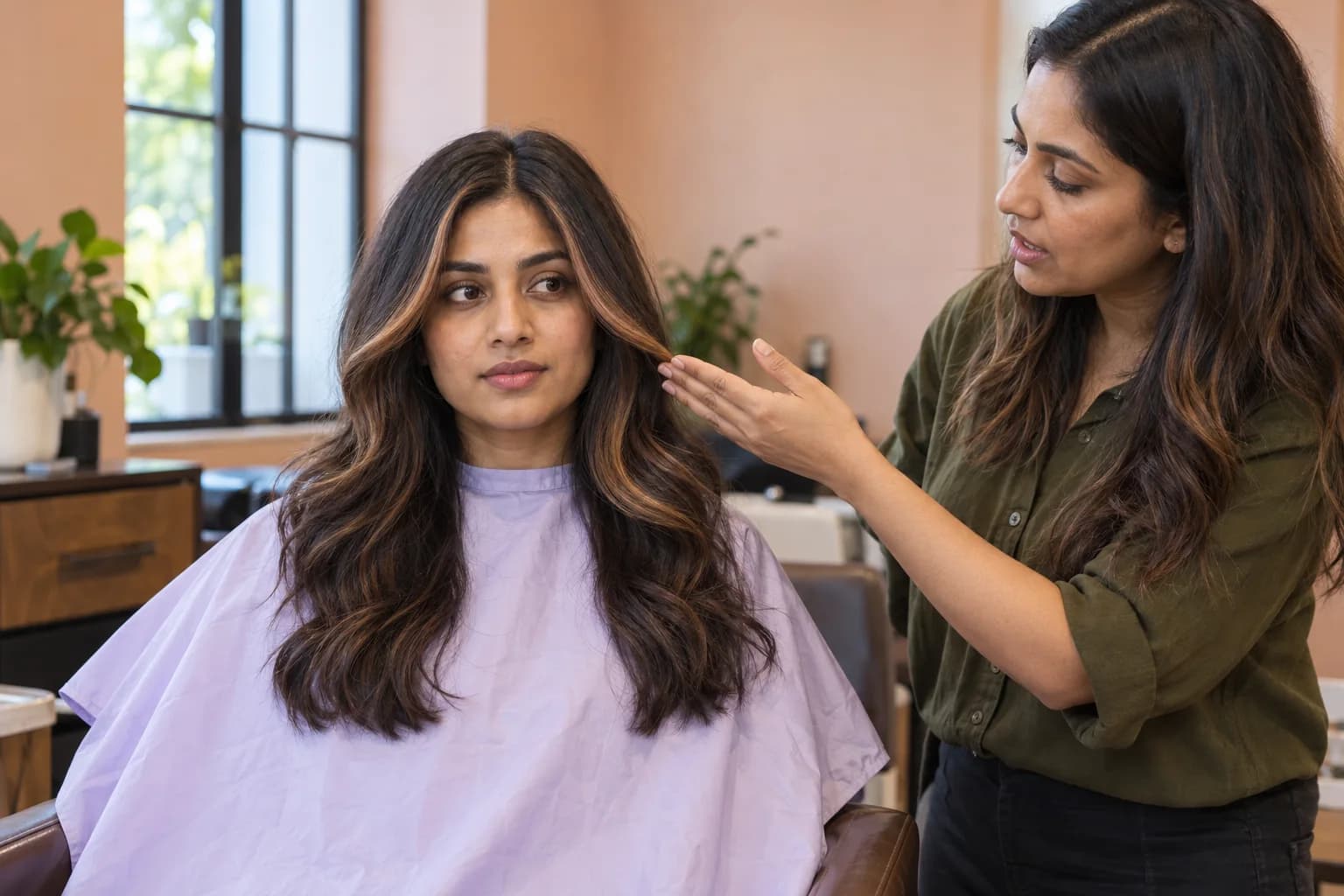
Money piece highlights place noticeably lighter or contrasting color near the face while the hair behind provides a different background. The useful question is not whether this is a fashionable name. It is how much of that front area you want to notice. Revlon Professional describes the effect as a distinct front section that can take different forms. That definition does not settle width, starting point or maintenance for your own hair. Choose between a quiet suggestion of brightness and an obvious ribbon first; avoid treating both as the same request merely because a picture carries the same caption.
Separate the front change from the rest of the head. You might want your existing dark lengths untouched, or you might already have lighter pieces elsewhere. Say which is true. A request for front brightness should not silently expand into an all-over transformation. Cover the front pieces in a reference and check whether you still like the background color. If not, you are considering more than one service. Write the two decisions separately so the professional can explain their relationship, assess the starting point and offer a smaller alternative if the full idea is not practical.
Find the visible width in your ordinary part
A narrow colored section may look substantial when it falls forward, yet nearly disappear when tucked. A wide ribbon can become the main visual feature even if the rest of the hair stays unchanged. Ask the colorist to show the proposed area on your actual dry hair before discussing a technique name. Indicate which pieces you consider the front and which should remain part of the darker background. Do not prescribe a universal centimeter measurement from a photograph: head position, density and the way your hair separates change what that measurement would show.
Wear your usual part at the consultation. Then demonstrate a second position you genuinely use, such as sweeping the hair aside or putting it behind your ears. You do not need perfect symmetry if your everyday arrangement is not symmetrical. You do need to understand how the placement behaves on both sides. If you have shorter face-framing layers, point them out because the colored area may follow those pieces rather than one long ribbon. Decide whether that is welcome. A color reference cannot quietly authorize shortening the front to imitate the way someone else’s brighter strands move.

Choose the root relationship, not just the lightest end
Look near the part and temples rather than judging only the bright ends. Do you want a clear light section beginning close to the root, a gentler transition or a less conspicuous start? Ask the colorist what each would look like on the existing base. A blended-looking reference may still have a visible front root contrast. Conversely, a softer start does not promise that regrowth will be invisible. Explain which future change would bother you: a darker line, a shifting front ribbon or a tone that feels different from the first appointment. Those are separate maintenance questions.
Width and brightness are also separate. You can prefer a broader but less contrasting frame, or a thinner one that stands out strongly. Choose the relationship you like before asking for an exact blonde name. Lighting can make caramel appear pale or a warmer shade look almost neutral. Bring a small set of references and explain the contrast rather than expecting a screen to certify a shade. If you are also considering brightness through the whole head, pause and compare that larger plan separately. A money piece is a placement focus, not a universal replacement for every highlighting service.
Read the front in curls, layers and a tied-back style
On straight hair the colored section may read as a continuous ribbon. With waves or curls it can appear as several moving groups, and the brightest pieces may face different directions. Show your everyday dry finish instead of pulling the front straight to make it match an image. Ask which groups will carry the color and how they are likely to sit when you stop arranging them. A stylist can discuss an interpretation, but nobody should promise that each curl will repeat a fixed position. Decide whether a broken, moving frame appeals to you as much as a smooth one.
Now gather the hair as you normally do for work or exercise. Look at the temples, the area above the ears and the beginning of the ponytail. You may see more color near the hairline or less around the cheeks. That is not necessarily a problem; it is information missing from the loose portrait. If you regularly alternate between a bun and loose hair, both versions belong in the brief. Also mention a planned fringe or major layer change. Agree the final front shape before placing brightness around an outline that may disappear at the next haircut.


Use a preview to compare contrast, not paint a technical plan
If the choice is how much visible lightness you enjoy around your face, Hair Muse can be an optional planning aid. Start with one clear, evenly lit portrait and compare a few available color or hairstyle directions. Keep the cut and other variables as stable as the available options allow. Do not assume the app includes a precise money-piece editor, a strand-width control or every named salon pattern. Save only the comparisons that clarify a preference. A broad lighter-front impression may help you explain your taste, but it cannot specify which real sections should be processed.
HairChapter and Hair Muse share a publisher. Hair Muse is free to download; some functions or usage may require in-app purchases. The official App Store invitation near the beginning is optional. A preview cannot guarantee real hair behavior, exact fit, chemical color results, salon feasibility or the final outcome. It does not evaluate your color history or the condition of the front hair. Bring the untouched current photograph alongside any saved comparison and state what it helped you choose. Keep genuine placement references for the part, temples and tied-back view. You can make the same decision without using an app.
Let the professional assess the starting point before promising a shade
Tell the colorist about previous salon color, home color, lightening, straightening and other relevant services, including approximate dates if known. Explain what is uncertain instead of guessing. The front sections may have a different history from newer growth. The fact that the requested area is small does not establish what process is appropriate or what result can be achieved in one visit. Ask the salon how it assesses the hair and what preparation or checks it requires for the proposed service. Follow its instructions and the applicable product directions; this editorial is not a chemical application guide.
If the desired contrast is not appropriate today, ask for a different visual target rather than demanding a stronger process. A quieter frame, a different tone, a later appointment or no color change may be the reasonable outcome of that discussion. Do not interpret a convincing generated image as evidence that the professional should override their assessment. Ask what can realistically be offered and what remains uncertain. Avoid choosing a fixed processing time, developer strength or formula from an online example. Your useful contribution is an honest history, a visible preference and permission boundaries, not a recipe.

Plan tone, roots and future blending as different decisions
Before booking, ask what maintaining this particular front placement involves. Refreshing a tone, addressing new growth and changing the width are not the same task. Find out which change you are likely to notice first and what the salon would reassess at that stage. Do not assume a small area makes every future visit quick or inexpensive. Ask for the scope and an estimate for your own plan, including any care recommendations, rather than borrowing a generic price or interval. You can prefer less contrast if the upkeep you are offered does not fit your routine.
Discuss the exit route too. If you later dislike the front ribbon, blending it back is another color decision, not simply undoing a switch. Ask how the salon would approach a softer future direction without promising an exact return to the starting color. Note what the first visit actually achieved and what was postponed. If a saved Hair Muse comparison helped you choose a quieter alternative, keep it as a preference reference rather than a corrective formula. Buy no extra system solely to preserve a look you already know you do not want to maintain. Reconsidering the placement is a legitimate option.
Leave with a front-color brief you can verify
A useful brief identifies the area, contrast, root relationship and background you want to preserve. For example: “Keep the main lengths dark. I want a modest warm frame, visible when loose but not a strong stripe when tied. Please show the section and explain the root upkeep before starting.” Substitute your own preferences; the point is not to copy those exact choices. Add your part, usual finish, hair history and any upcoming cut. Ask the professional to explain a proposed adaptation before it changes the scope. You are approving an understandable result direction, not just a fashionable service label.
At the finish, look in ordinary light with your normal part. Check the front loose, gently tucked and gathered back, without repeatedly forcing each strand into the salon arrangement. Ask which difference is expected from your natural texture and which concern needs discussion. Confirm the agreed next step rather than immediately requesting more brightness because the first view feels unfamiliar. Save an unfiltered record if you want a useful reference for the next consultation. The successful decision is not maximum contrast in the smallest area. It is a front frame you chose knowingly, with a realistic account of its limits and future care.
Three terms that make this conversation clearer.
You do not need to prescribe technique. Use these words to describe the visible structure, name the behavior you want, and ask what your stylist would adapt.
Perimeter
The outside boundary of the haircut: the line you read around the bottom, sides, and overall edge. A compact perimeter usually feels fuller and more controlled, while a broken or highly layered perimeter can feel lighter, softer, or more textured.
SAY IT IN THE CHAIR“I like the movement, but I want the outside edge to remain substantial when the hair is straight or air-dried.”Open full definition
Layer map
A plain-language way to describe where the shortest layers begin, how quickly they connect to longer sections, and where movement or volume is intended to appear. Two haircuts with the same overall length can feel completely different because their layer maps differ.
SAY IT IN THE CHAIR“Show me the shortest layer, where it connects, and how much weight remains beneath it.”Open full definition
Silhouette
The complete outside shape a haircut creates when viewed as a whole: compact, rounded, triangular, elongated, wide, narrow, or deliberately irregular. It is often the most reliable feature to compare before discussing small details or a polished finish.
SAY IT IN THE CHAIR“I want this overall shape, but I am open to changing the internal technique for my hair.”Open full definition
Turn this guide into a decision.
Three honest answers are more useful than ten additional reference photos. Your responses stay on this page and can be changed at any time.
- 01Can you point to the exact structural detail you want from this cut?
Name the shortest point, outside line, layer map, or placement of volume.
- 02Have you named the boundary you do not want traded away?
Examples: tie-back length, full ends, an open forehead, dry length, or support for natural texture.
- 03Does the plan fit your real styling and maintenance rhythm?
Count ordinary mornings, fallback styles, trim frequency, and the way the shape is likely to grow.
The short answers.
Are money piece highlights always two thick blonde stripes?
No. Describe visible width, contrast and starting point separately. A fine warmer frame and a broad bright ribbon communicate different preferences. Show what you mean on your own hair rather than relying on a single service name.
Can I keep the rest of my hair dark?
Make that an explicit preservation boundary. Ask whether the proposed front placement can be planned independently on your current hair. A money-piece request does not automatically authorize lightening the rest of the lengths.
Will the placement look the same in a ponytail?
Not necessarily. Sweeping the front back changes which colored areas are exposed. Demonstrate the fastening you actually use and inspect the temples before choosing the visible scope.
Is this automatically easier to maintain than all-over highlights?
No. A smaller area may still create conspicuous root or tonal changes. Ask separately about tone refresh, new growth and a future softer direction. The right interval and scope depend on the actual plan.
Can a preview tell me which blonde is achievable?
No. Use it for a contrast preference, not a chemical forecast. The colorist must assess your actual hair and history. A convincing image cannot establish a formula, processing method, safe service or guaranteed salon result.
How this guide was built.
HairChapter separates haircut structure from styling, trend names, and medical claims. Our recommendations are decision tools, not universal rules: a stylist should adapt the direction to your starting length, density, pattern, condition, growth habits, and normal routine.
We do not claim that a photograph or AI preview can predict a finished service. Sudden shedding, patchy loss, scalp pain, persistent irritation, or an unexplained change in density belongs with a qualified medical professional—not a haircut guide.
Professional context, not a formula
- Revlon Professional — what money piece hair means Supports the definition of a contrasting lighter front section and variation in its expression. Product, cost, speed, universal suitability and low-maintenance claims are not adopted.