
Scissor cut vs clipper cut starts with what you keep
Scissor cut vs clipper cut is a useful question when you are deciding how short to go, but the best starting point is the hair that remains. Do you want the sides to overlap, lie close or expose the scalp? Should the nape look softly grown in or clearly outlined? Show those preferences before asking for a particular tool. Two people can request a scissor cut and leave with very different lengths, weight and finishing details.
Make three decisions before the appointment: your shortest acceptable side length, the amount of top length you need for styling, and the edge you would like around the ears. Treat these as separate choices. A longer top does not require skin-close sides, and a neat nape does not require a hard outline. If you like your existing haircut except for one area, name that area rather than approving a complete redesign. The barber can then explain a method that respects the boundaries you have set.
Understand what each tool name leaves unexplained
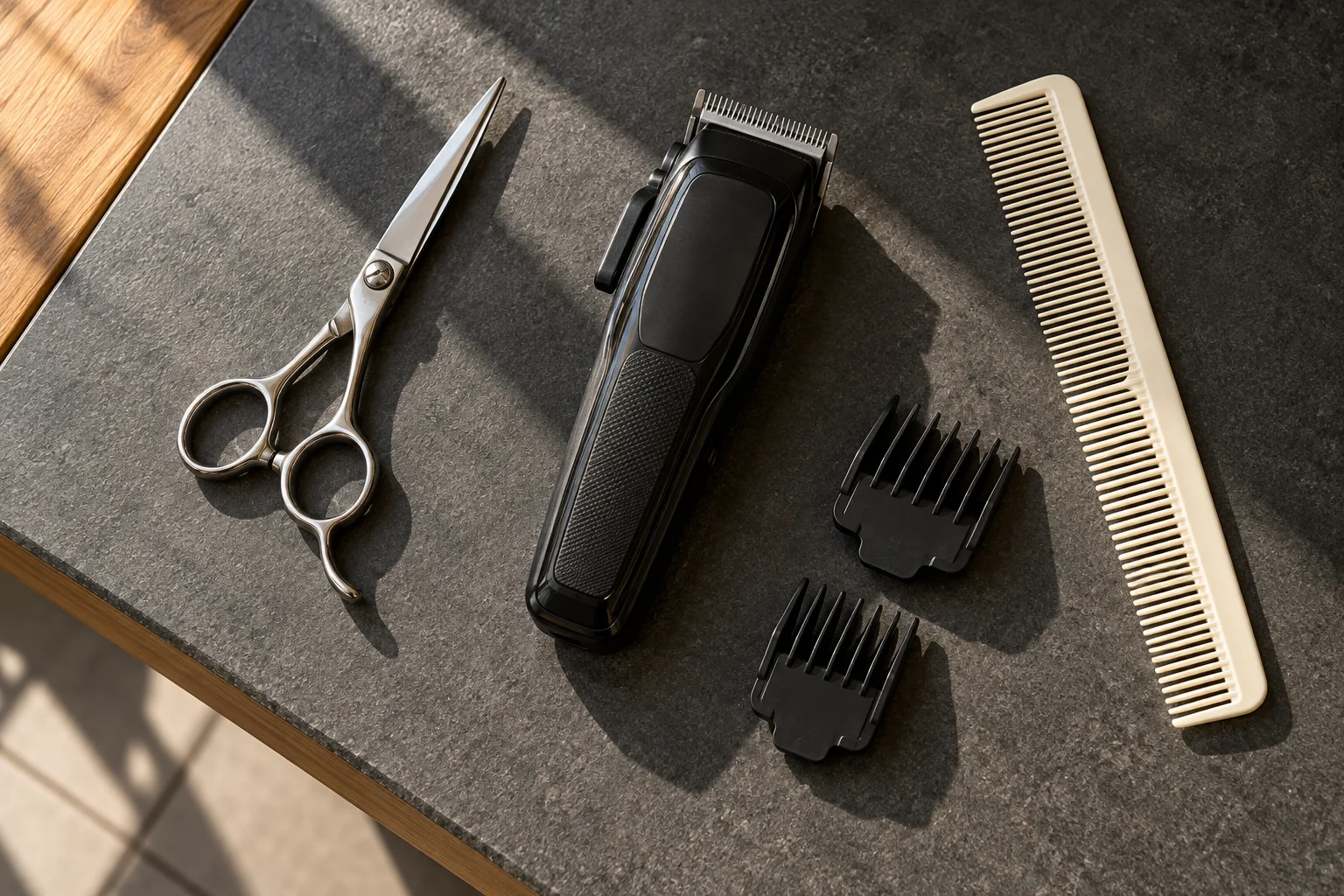
Scissors can shape sections and work over a comb; a clipper may work with an attachment or over a separate comb. Wahl’s own instructions distinguish these approaches. That limited technical point matters because a clipper cut is not automatically one identical length across the head. Equally, scissors are not a promise of loose movement or an invisible transition. Ask which areas the professional means when using either label, especially if the booking menu separates scissor work from other appointments.
Avoid judging craftsmanship by whether the tool is electric. The relevant question is how the chosen method will produce the coverage and connection you want on your hair. A mixed approach may be appropriate: one area kept longer, another made compact, then the relationship refined. You do not need to direct every hand movement. You do need an understandable explanation before length is removed. If you dislike the sound or sensation of clippers, say so when booking and ask what alternatives are practical for your preferred finish.
Choose side coverage and the transition separately
Look at the side of the head in your reference, not just the fringe. Identify whether the ear is fully exposed, partly covered or framed by a longer section. Then look higher up: does the side connect gradually with the top, or is there a visible change in length? These observations describe different parts of the haircut. Calling everything short gives the barber less information than saying you want an exposed ear while keeping a fuller upper side.
If you are unsure, ask to start with more coverage and assess it before going closer. Agree where the shortest area begins and how high it extends. A guard number by itself does not describe the whole shape, and a number remembered from another appointment may not communicate what you liked about it. Bring a photograph of your own previous result if available. Point out the particular transition you want repeated and any area you would prefer to leave fuller this time.
Discuss density and direction on your actual hair
Fine, dense, straight and coily hair can make the same reference look quite different. Ask the professional to inspect the sides, crown and natural direction before treating the photograph as a specification. If a side stands out when short, keeping some length may be worth discussing; if a longer section feels bulky, removing length is only one possible response. The important point is to identify the area and the effect you dislike rather than requesting that everything be thinned.
For curls and coils, show the dry shape you wear normally and explain any stretching or styling in the reference. For straight hair, show where it separates or falls forward without product. These details help the conversation, but they do not let anyone promise that a tool will change your natural growth direction. Keep the first change limited if you have little experience with shorter sides. You can assess a smaller adjustment before deciding whether a closer outline belongs in a later cut.


Use references to compare silhouettes, not tools
Choose one main reference and one fallback with more retained length. Explain what each contributes: perhaps the first has the ear outline you like, while the second keeps a comfortable amount around the temple. A photograph rarely proves which tool was used, so avoid presenting an image as evidence that scissors alone produced its movement. Styling, lighting and the person’s starting hair all affect what you see. The reference is a communication aid, not a reproducible recipe.
If you want another way to express the broad silhouette, Hair Muse offers optional hairstyle previews. HairChapter and Hair Muse share a publisher. The app is free to download; some uses or features may require in-app purchases. Compare broad length or side fullness on a consistent photo only where a suitable preview is available. It cannot identify the cutting tool from an image or guarantee hair behaviour, chemical colour results, feasibility, salon results or exact fit. An ordinary reference conversation is sufficient without an app.
Make the maintenance decision before the close edge
Think about what bothers you first as a haircut grows: hair touching the ear, a less defined nape, extra side width or a top that no longer sits as intended. Those are different maintenance triggers. A very crisp outline may stop looking freshly edged before the overall length becomes inconvenient. A softer outline may suit you longer visually, but it is not automatically easier to style. Choose the change you are willing to notice between visits rather than an abstract promise of low maintenance.
Describe your normal morning in practical terms. Say whether you wash and leave, use a dryer, wear a helmet or reset the front after a commute. Ask the barber to show the minimum routine for the proposed shape and which part relies on styling. Do not commit to a universal appointment interval based on scissors versus clippers. Agree a review point based on your own priorities, and check what a contour tidy includes before assuming it replaces a full haircut.

Turn the preference into a usable salon brief
A useful brief combines a positive request and a boundary: keep enough at the temple to overlap, leave the top long enough for my usual part, and do not take the nape to skin. Ask the barber to show the proposed shortest area before beginning. If you have a firm preference for scissors or want to avoid a specific sensation, include that explicitly. The professional can explain whether the desired finish is realistic within those choices and the appointment you have booked.
If a Hair Muse preview helped you choose a broad direction, show it beside an ordinary photograph and describe only the feature you want discussed. Do not ask the barber to reproduce an artificial strand pattern or interpret it as a tool recommendation. Then put the screen away and confirm the plan on your real hair. Before any additional shortening, agree which remaining length matters most. A clear pause point is especially useful when changing from covered sides to a much more exposed ear or nape.
Inspect the result and keep a useful record
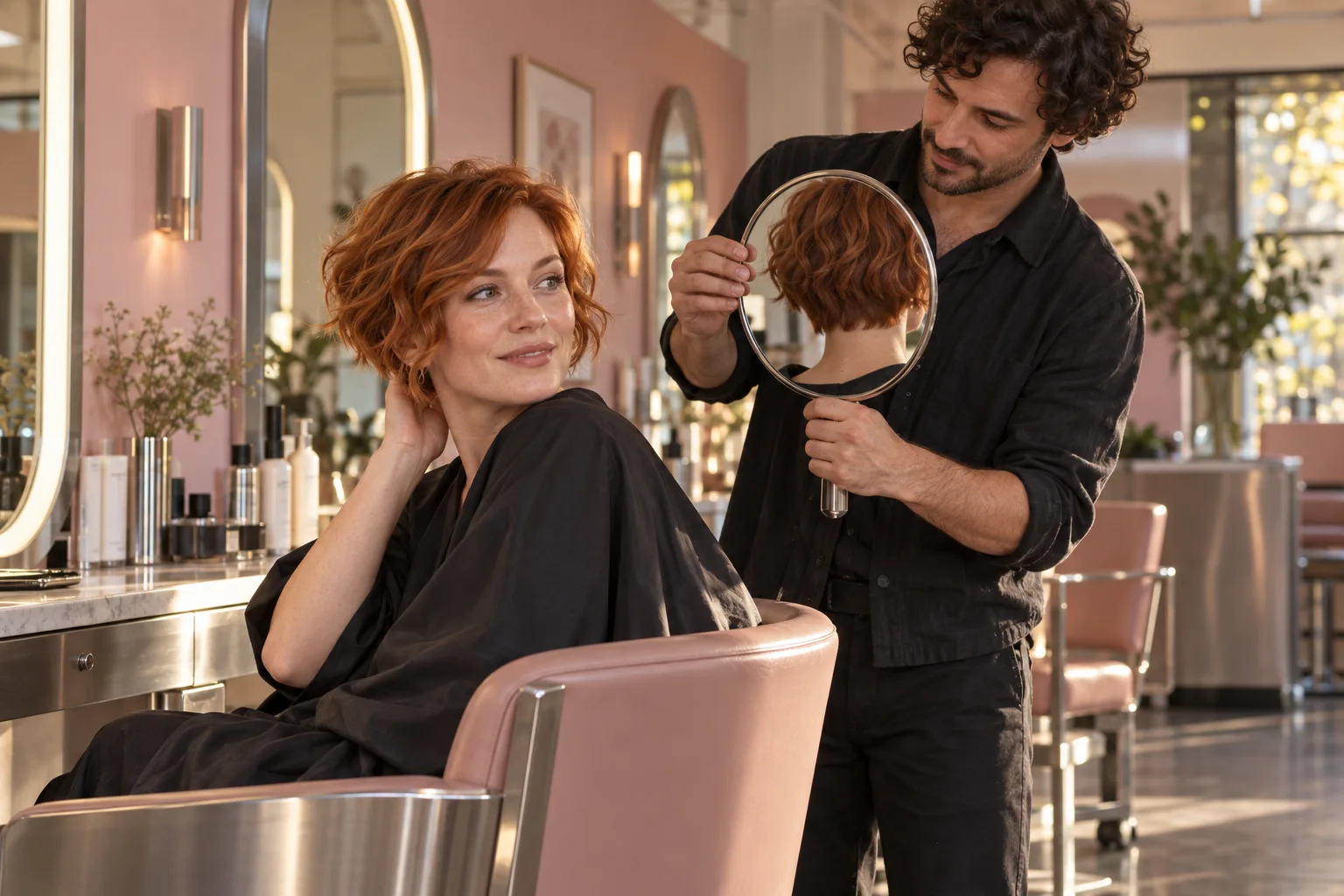
At the end, inspect both sides and the back with a mirror. Check the ear outline, the transition into the top and the shortest area against the agreement. Run through your usual part or front direction rather than judging only the salon styling. If something feels different from the brief, identify the exact area and ask what adjustment would involve. More cutting is not always the correction you want, especially when your concern is already a lack of retained length.
After the first normal wash, note what worked without the finishing products and what needed extra effort. Keep a simple photograph in ordinary light and a short description of the successful details. On the next visit, that record communicates more than asking for the same tool again. You can preserve the side coverage while changing the top, or keep the outline while softening a transition. Evaluate the haircut through its shape and your routine; let the tool choice follow the clearly agreed outcome.
Three terms that make this conversation clearer.
You do not need to prescribe technique. Use these words to describe the visible structure, name the behavior you want, and ask what your stylist would adapt.
Perimeter
The outside boundary of the haircut: the line you read around the bottom, sides, and overall edge. A compact perimeter usually feels fuller and more controlled, while a broken or highly layered perimeter can feel lighter, softer, or more textured.
SAY IT IN THE CHAIR“I like the movement, but I want the outside edge to remain substantial when the hair is straight or air-dried.”Open full definition
Layer map
A plain-language way to describe where the shortest layers begin, how quickly they connect to longer sections, and where movement or volume is intended to appear. Two haircuts with the same overall length can feel completely different because their layer maps differ.
SAY IT IN THE CHAIR“Show me the shortest layer, where it connects, and how much weight remains beneath it.”Open full definition
Silhouette
The complete outside shape a haircut creates when viewed as a whole: compact, rounded, triangular, elongated, wide, narrow, or deliberately irregular. It is often the most reliable feature to compare before discussing small details or a polished finish.
SAY IT IN THE CHAIR“I want this overall shape, but I am open to changing the internal technique for my hair.”Open full definition
Turn this guide into a decision.
Three honest answers are more useful than ten additional reference photos. Your responses stay on this page and can be changed at any time.
- 01Can you point to the exact structural detail you want from this cut?
Name the shortest point, outside line, layer map, or placement of volume.
- 02Have you named the boundary you do not want traded away?
Examples: tie-back length, full ends, an open forehead, dry length, or support for natural texture.
- 03Does the plan fit your real styling and maintenance rhythm?
Count ordinary mornings, fallback styles, trim frequency, and the way the shape is likely to grow.
The short answers.
Is a scissor cut always better than a clipper cut?
There is no universal winner. Start with your preferred length, side coverage, outline and styling routine. Ask the professional how each relevant area will be shaped. The tool name alone does not prove quality or tell you how the complete haircut will look.
Does a clipper cut mean a skin fade?
No. A clipper can be used in different ways, including with attachments or over a comb. A skin-close finish is a separate decision. Show where you want coverage retained and ask how high any shorter area would extend before agreeing to it.
Can I ask for scissors around the ears?
Yes, state your preference clearly, particularly if sound or sensation matters. Also describe whether you want the ear covered or exposed. Ask what result is practical with your hair and the chosen method rather than assuming the tool preference fully describes the outline.
Which method grows out more slowly?
Do not choose a cutting tool expecting it to slow growth. What you notice between visits depends on the starting shape, contrast, retained length and your preferences. Ask which part of the proposed cut will lose its intended outline first and plan maintenance around that.
Should I bring a guard number to the barber?
It can be useful context from a previous appointment, but it is incomplete by itself. Bring a clear photograph and explain the side coverage and transition you liked. Confirm the actual planned length rather than relying entirely on a remembered number or another person’s haircut.
How this guide was built.
HairChapter separates haircut structure from styling, trend names, and medical claims. Our recommendations are decision tools, not universal rules: a stylist should adapt the direction to your starting length, density, pattern, condition, growth habits, and normal routine.
We do not claim that a photograph or AI preview can predict a finished service. Sudden shedding, patchy loss, scalp pain, persistent irritation, or an unexplained change in density belongs with a qualified medical professional—not a haircut guide.
Technical background, not a result guarantee
- Wahl — hair clipper operating instructions Manufacturer instructions distinguish attachment combs from work over a separate comb. They do not establish that one tool produces a universally better haircut.