
Taper vs fade starts with the area, not a number
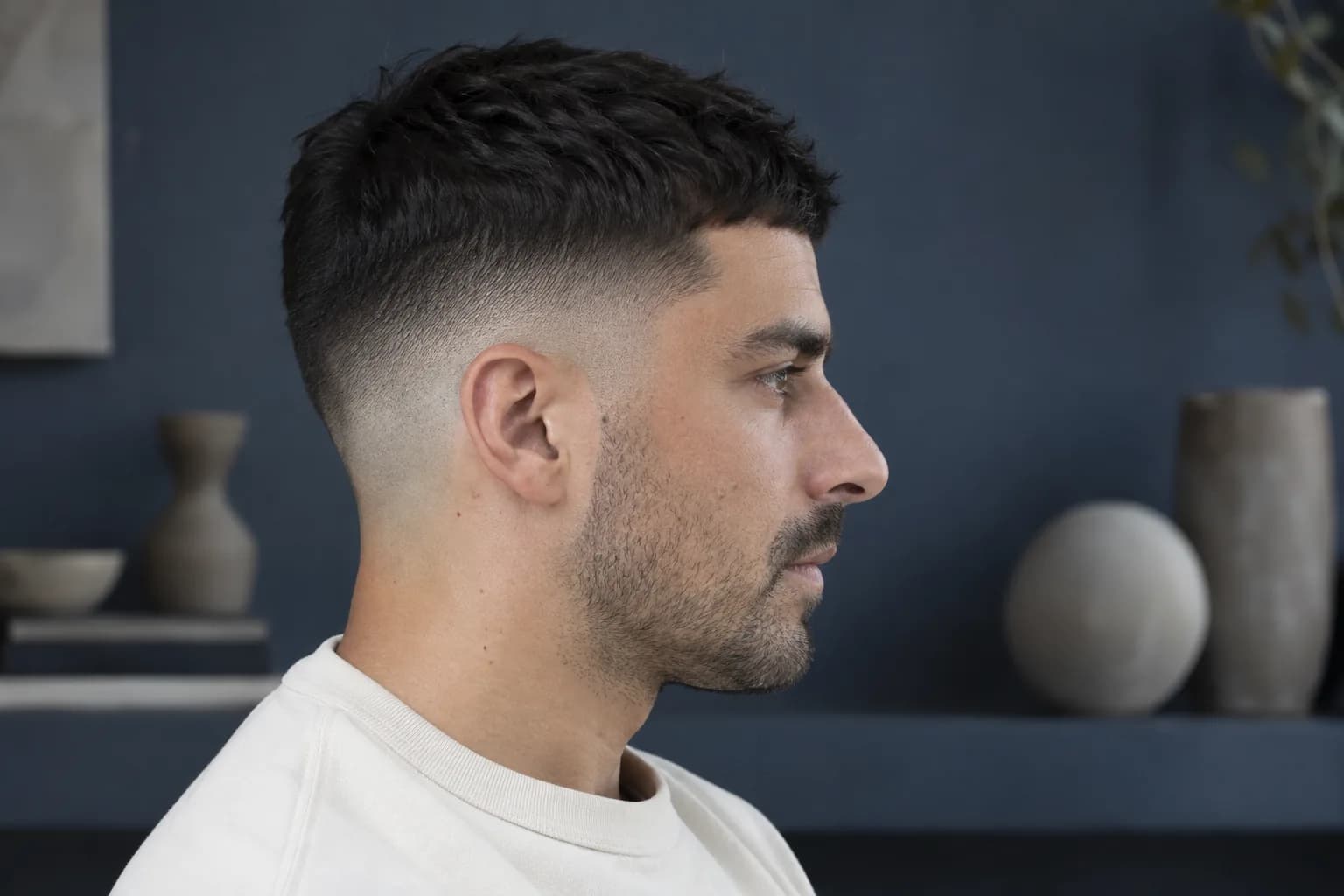
Taper vs fade is useful only if both you and the barber mean the same result. A localized taper usually concentrates the shortening near the sideburns and nape; a fade can carry a graduated short area around more of the sides and back. Moe’s Barbershop explains this difference in area. But names vary between shops, and “taper fade” can include a skin-close finish at a small edge. Do not use the label as permission to remove more hair than you intended. Point to the actual area you want changed before discussing the technique.
Separate a fade from a skin fade. A blended side does not have to end at bare skin, and a small temple taper can still be very close at its base. That means “taper is long, fade is shaved” is too crude to make a reliable request. You need an agreement about the shortest length as well as the shape. If a reference shows scalp, ask whether that is the chosen endpoint, the hair’s density or the lighting. A photograph can establish your preference, but it cannot measure the length left on your head.
Draw three boundaries before choosing low or high
First decide the area: just the temple and neckline edges, or a connected panel around the side and back? Next decide the height: where should the shortest area end and where should the blend meet the longer hair? Finally choose the base: visible short hair, a very close shadow or bare skin. Low, mid and high are relative descriptions, not the same measured position on every person. Point to a landmark on your own head and ask the barber to show the transition before cutting. The back may dip lower than the side, so check both.
Record what must remain untouched. You may want fullness above the ear, an intact curl at the temple or enough side length to tuck behind glasses. A small low taper can address an untidy edge without authorizing a wide close-cut panel. Conversely, if a broad, visibly lighter side is the point, say so rather than expecting a localized cleanup to create it. Start with a boundary you can inspect; reducing length is easier than restoring it during the appointment. Ask the barber what cannot be reproduced from the reference without crossing your limit.
Keep the top and the side connection in the same plan
Hold the top style steady while deciding the sides. A high, product-shaped top can make a close side look different from the same haircut worn forward and relaxed. Describe your usual direction, drying routine and finish. Then inspect the band where the sides meet the top: should it remain full, become softly connected or create an intentional contrast? Removing that band can change the whole silhouette even if no length comes off the front. If you are only asking for a cleaner lower edge, make clear that the top connection is not a separate transformation.
Texture matters at the retained boundary. Straight hair can show small changes in the outline; waves, curls and coils may move outward or separate when shorter pieces no longer carry the same weight. None of those textures automatically requires a taper or rules out a fade. Show dry hair without pulling it flat and explain how much natural movement you want to keep. Ask which side pieces are providing control now. The goal is not to make every texture behave like the smooth reference, but to agree on a shape that still reads when your own hair settles.
Make ordinary days part of the decision
Think about the situations in which you actually notice your sides: glasses over the ears, a helmet removed at work, a hat after the commute or an untidy nape in a shirt collar. Identify the problem instead of treating every longer piece as unwanted bulk. Put your glasses on during the consultation and check that the intended side weight does not depend on styling around the frames. If you wear a beard, discuss the sideburn connection separately. Cleaning the haircut does not automatically authorize raising a beard line or making the two areas equally close.
Morning effort and appointment effort are different budgets. A close side may take very little styling while its sharp contrast becomes less precise as hair returns. Retained side length may need arranging but feel acceptable through more visible change. Decide which inconvenience you would rather have; neither is a failure. Ask for the simplest realistic way to wear the top and sides together, including a day without your usual product. A tidy reference is not evidence of a maintenance-free haircut. Choose the finish you can live with when the first salon styling has gone.


Compare broad contrast on your photo, then verify the details
If the open side is difficult to imagine, use Hair Muse as an optional visual planning aid. Start with a clear, level portrait in even light, with the temple and ear area unobstructed. Compare a fuller side with a closer-looking option while keeping the top direction and color as similar as possible. Use available styles rather than assuming the app has your exact taper, guard length or fade height. Keep a small shortlist and note what you prefer: a quieter temple, less side width or more contrast. If both top and sides change, the comparison no longer isolates your original question.
HairChapter and Hair Muse share a publisher. Hair Muse is free to download; some uses or features may require in-app purchases. The official App Store invitations on this page are optional. Previews cannot guarantee measured transition height, an accurate nape view, real density, growth behavior, barber feasibility or a matching result. A frontal image is especially weak evidence for the back. Pair your saved preference with a genuine side or back reference, then let the barber inspect your hair. Use the preview to explain an impression, never as a map that overrides the cutting boundaries you agreed.
Turn the preference into one of three practical requests
For a quiet change, ask to tidy the lower edges while preserving most of the side panel. For more visible contrast, ask for a broader blend but specify how much hair should remain at the base. For a skin-close result, show the permitted area of exposure and the maximum height. These are starting briefs, not three rankings of better and worse haircuts. Adapt them to your actual head and preferences. The useful question is whether the barber can point out the same area that you are describing, including the part behind your ear.
A compromise is only helpful when it preserves the detail you care about. Choosing a low fade may reduce the height without preserving all the side weight. Choosing a localized taper may retain weight without avoiding every skin-close edge. If you dislike exposed skin, state that directly; do not hide it inside the word subtle. If you want a distinct side panel, do not simply ask for clean sides. When two references conflict, identify the feature from each rather than asking the barber to blend them into an undefined third style.

Distinguish keeping the fade from growing it out
Choose the change that will prompt another appointment: the lower shadow filling in, the temple losing definition, side width becoming inconvenient or the top no longer sitting with the sides. There is no single reliable interval for everyone. Take a normal-light photo when that point arrives so the next conversation has a concrete example. Ask whether a limited edge cleanup would help or would merely reset one small area while the larger shape stays wrong. Do not assume an edge service will maintain a broad fade, and do not assume every visit requires removing the same amount again.
If you want to move from a broad fade toward a fuller taper, the previously shortened side panel needs time to regain length. A new label cannot restore it immediately. Tell the barber which sections are now being grown and ask to avoid carrying the close blend farther upward during each cleanup. Some areas may look uneven while the connection changes; discuss the temporary shape you can accept. Do not chase every darker band by making the fade higher. Keeping a close look and rebuilding side weight are different goals, and your maintenance request should say which one comes first.
Confirm the boundary before the clippers, then check three views
Bring a short request covering area, height, base and retained top connection. For example: “Keep this side weight, shorten only these temple and nape edges, leave visible hair at the base and show me before going higher. I wear the top forward without a dryer and prefer a softer natural neckline.” Change the details to match your choice. Ask what the barber would adapt and why before the cutting starts. A tool or guard number can be part of that agreement, but it cannot replace a demonstrated boundary or explain the entire finished outline.
At the final check, inspect the front, both sides and the back with your head held normally. Look at the shortest base, the band above it, the nape and any beard connection. Relax the top rather than judging only a meticulously styled finish. If the sides feel too wide or too close, ask what can be adjusted without removing protected hair and what requires waiting. Save photographs and the agreed brief for the next visit. A good taper-or-fade decision ends with a repeatable shape and clear limits, not just a correctly pronounced haircut name.

Three terms that make this conversation clearer.
You do not need to prescribe technique. Use these words to describe the visible structure, name the behavior you want, and ask what your stylist would adapt.
Silhouette
The complete outside shape a haircut creates when viewed as a whole: compact, rounded, triangular, elongated, wide, narrow, or deliberately irregular. It is often the most reliable feature to compare before discussing small details or a polished finish.
SAY IT IN THE CHAIR“I want this overall shape, but I am open to changing the internal technique for my hair.”Open full definition
Growth pattern
The direction hair naturally leaves the scalp and moves through areas such as the front hairline, crown, nape, and around the ears. Cowlicks, whorls, and directional changes can alter how short sections lift, split, or settle.
SAY IT IN THE CHAIR“Can we look at the front and crown dry before choosing the shortest length?”Open full definition
Internal weight
The mass and density held inside the visible outline of a haircut. Thoughtful internal removal can make dense hair move or sit closer without automatically weakening the perimeter; poor placement can create short pieces, expansion, or transparent ends.
SAY IT IN THE CHAIR“Where will you remove weight, and which parts of the outline will stay visually solid?”Open full definition
Turn this guide into a decision.
Three honest answers are more useful than ten additional reference photos. Your responses stay on this page and can be changed at any time.
- 01Can you separate the top, transition, sides, and outline in your request?
A haircut name alone rarely explains how those four zones should connect or grow out.
- 02Have you named the boundary you do not want traded away?
Examples: tie-back length, full ends, an open forehead, dry length, or support for natural texture.
- 03Does the plan fit your real styling and maintenance rhythm?
Count ordinary mornings, fallback styles, trim frequency, and the way the shape is likely to grow.
The short answers.
Does a fade always mean bare skin?
No. A fade can end with visible short hair or a skin-close base. A skin fade specifically asks for that close endpoint. Agree on the shortest length and exposed area instead of relying on the word fade alone.
Can a taper fade go down to skin?
Yes, the name can describe a small skin-close temple or nape blend while more side length remains. Shops use the term differently. Show the area and say explicitly whether bare skin is acceptable.
Is a low fade the same as a low taper?
Not necessarily. Low describes placement; it does not tell you how much of the side panel changes. Compare the area behind the ear and at the back as well as the temple height.
Which option is easier with curly hair?
It depends on the curl shape you want to retain, how the side meets the top and which work you want to avoid. Inspect your dry texture and discuss the actual retained boundary. Neither label guarantees an easy routine.
Can I grow a fade into a taper at the next visit?
You can start the transition, but the shortened side panel cannot regain length during a haircut. Mark the sections you are growing and keep cleanup from repeatedly raising or widening the close area.
How this guide was built.
HairChapter separates haircut structure from styling, trend names, and medical claims. Our recommendations are decision tools, not universal rules: a stylist should adapt the direction to your starting length, density, pattern, condition, growth habits, and normal routine.
We do not claim that a photograph or AI preview can predict a finished service. Sudden shedding, patchy loss, scalp pain, persistent irritation, or an unexplained change in density belongs with a qualified medical professional—not a haircut guide.
Professional context
- Moe’s Barbershop — taper and fade terminology A working barber’s distinction between a localized edge treatment and a broader side blend. Its fixed appointment intervals and suitability claims are not used as rules here.
- Lyko — interview with hairstylist Sofia Holmer Norwegian professional context for the term taper fade. We do not adopt trend rankings, universal density advice or promised maintenance periods.