
A short hair perm begins with the outline you want
A short hair perm is not simply a curly version of the haircut you already have. It is a texture service whose visible result depends on the starting length, chosen movement and supporting cut. A bend, a loose wave and a more defined curl can occupy the space around the face differently. Start by deciding what you want to see when the hair is dry: an open ear, a soft jaw-level edge, a forward fringe or a taller top. A salon must then assess whether that direction is realistic on your actual hair.
Separate wanting movement from wanting less work. You might dislike a flat-looking top but still want a smooth fringe. You might want curls throughout but not extra width beside the cheeks. Neither preference is answered by the word perm alone. Write one main change and one preservation limit before looking at more photographs. If you primarily want a different haircut rather than different texture, discuss that first. A chemical service should not become the default answer to every disappointing morning.
Mark the front, ears and nape before losing length
Use a current photograph from the front, side and back, with your normal part and familiar finish. Point out where the front must remain comfortable, how much ear you want covered and whether you like hair touching the jaw or collar. These are visible landmarks, not instructions to stretch a curl to an exact ruler mark. Ask the stylist how the proposed movement may affect each one. Do not copy the stretched length in a photograph as though it guarantees the same dry landing point.
Short hair also has width. A compact bob with movement at the ends is a different request from a rounder shape with curl beside the temples. Look at the back as well as the face; a photograph may hide a closely cut nape or long upper layers. Agree which area can become more open and which must retain coverage. If you are uncertain about losing the lower edge, keep that question unresolved until the professional has explained the proposed cut and texture together.
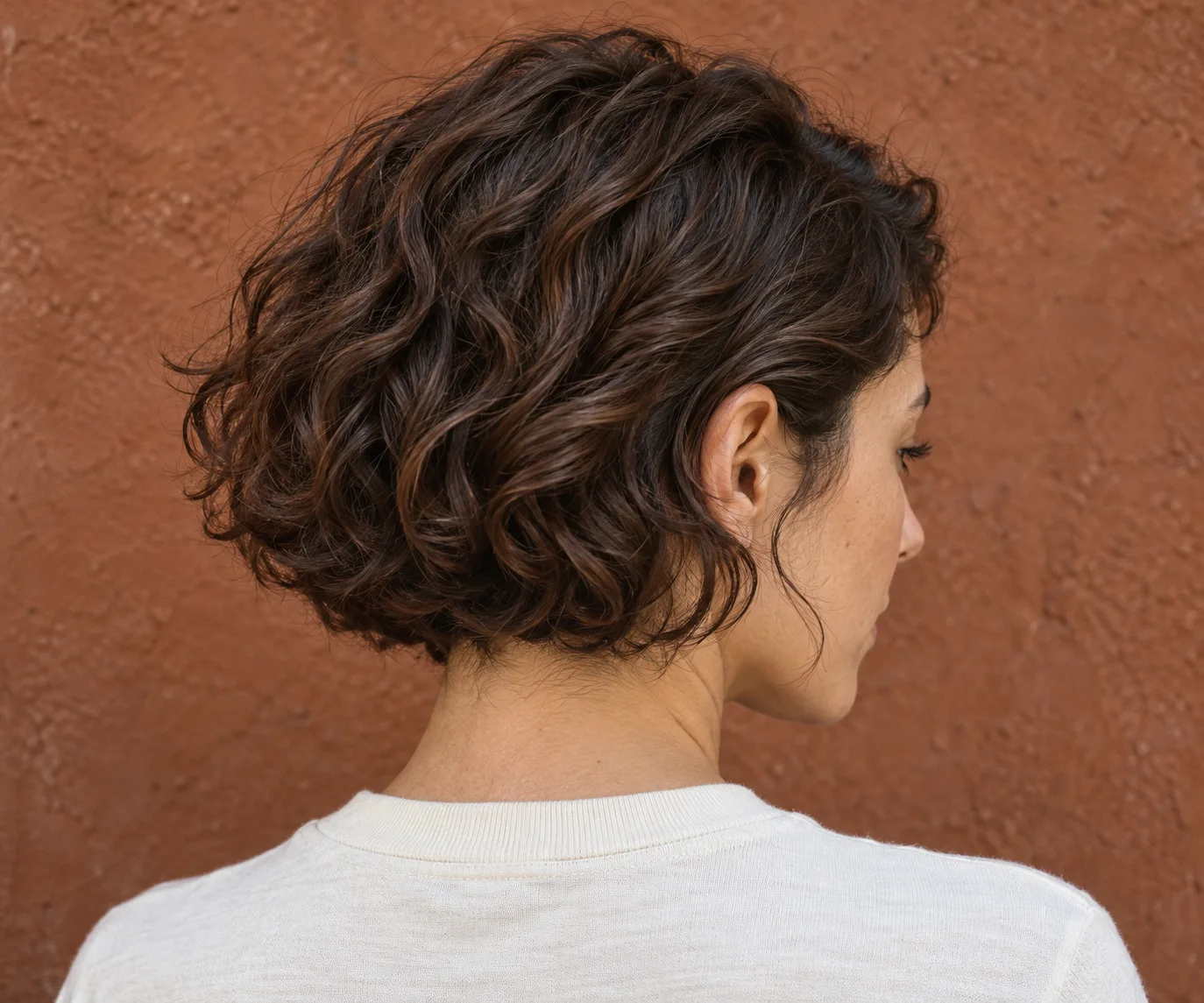
Describe the movement instead of ordering a rod size
Bring one reference for the overall shape and a second only if it explains a specific curl detail. Say whether you like broad bends, separate curls or the way the front turns away from the eye. Identify what you do not want too: a tightly curled fringe, exposed ears or a much rounder outline. You do not need to request a technical wrapping pattern. The professional should translate the visible preference into options and explain where the reference differs from your starting hair.
A curl photograph cannot reveal whether its texture is natural, temporarily styled or chemically created. It also cannot show the full drying routine. Ask what part of the reference is achievable and what would depend on styling after the service. There is no single minimum length that guarantees every curl on every short cut. Rather than trimming down to an online number before the appointment, let the salon inspect the available length. Growing a section first may be a more useful plan than forcing a different result now.
Coordinate the haircut with the texture appointment
Ask who will establish the shape and when it will be checked in the finished state. A major length change, an existing fringe and a close side section need different conversations. The answer is not automatically to cut everything first or to leave every cut until afterward. You need a shared plan for the hair that remains, the intended dry coverage and any final refinement. If two professionals are involved, ask them to coordinate before either removes length or starts the service.
Vanilla / Faking It Salon lists consultation, curl planning, finishing and aftercare within its shorter-hair perm service. Treat that as an example of stages worth asking about, not a universal package. Another salon may book cutting or drying separately. Confirm what your own appointment includes and whether a consultation can end without proceeding. A clear booking protects you from agreeing to an unexplained extra cut just because the texture service is already underway.

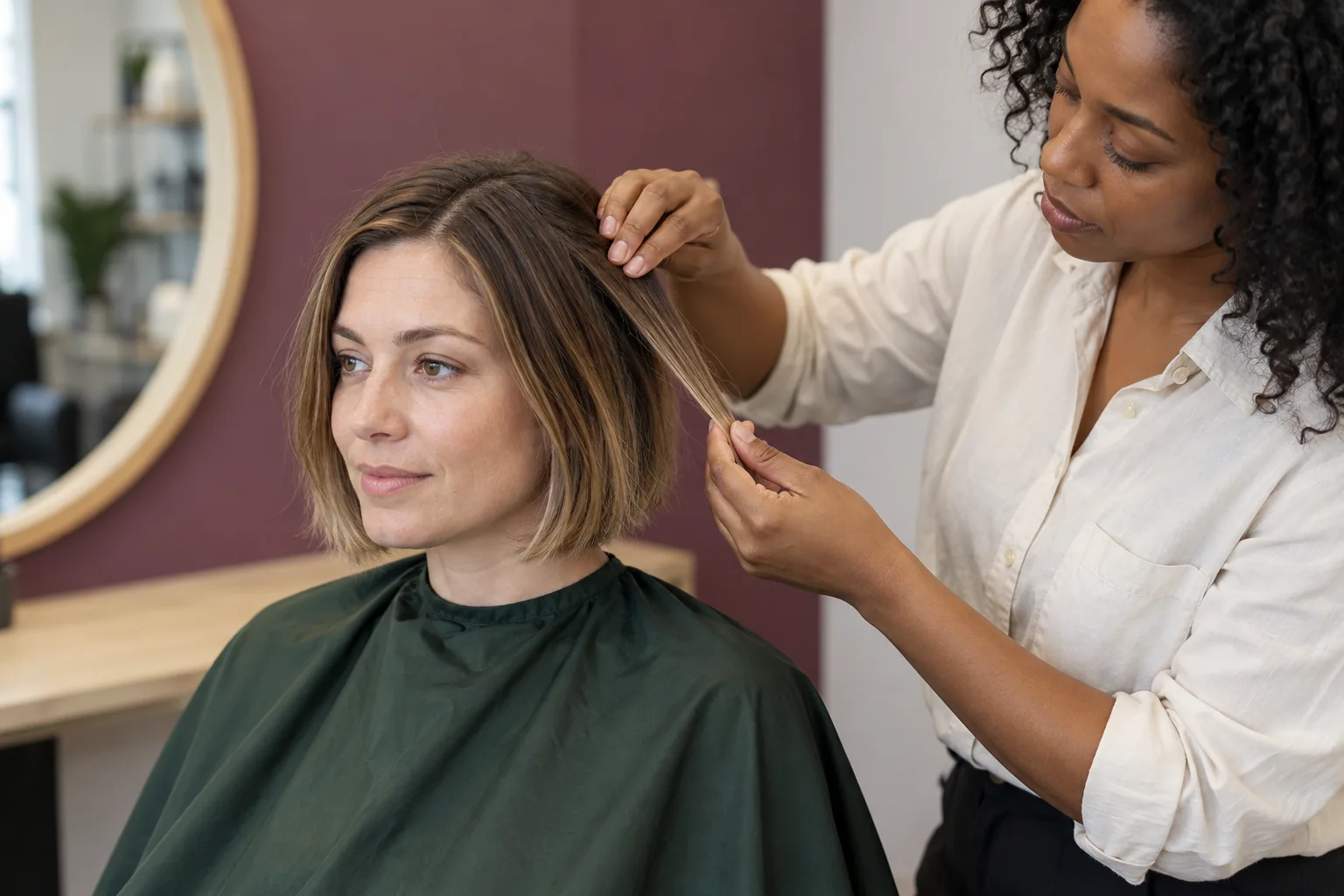
Make hair history an independent go-or-no-go decision
Tell the salon about previous color, lightening, straightening, smoothing and earlier perms, including home products and services you cannot identify exactly. Bring names or packaging photographs where possible. Distinguish the natural root from treated lengths; a recent short haircut does not prove that every remaining piece is untreated. If the history is uncertain, say so. The professional needs accurate information to decide what examination or manufacturer-directed testing is required, not a confident guess supplied to keep the appointment moving.
Do not assume a gentler-sounding service name makes your hair suitable, or that removing some ends resolves every concern. Ask for an in-person assessment and accept postponing or declining the treatment if the professional cannot support it. This guide cannot assess chemical compatibility or provide a safe formula. Do not improvise mixtures, timings or testing from online advice. Follow the salon's and manufacturer's instructions; questions about an uncomfortable scalp or a previous reaction belong in the consultation before an aesthetic decision is made.
Ask for a routine you can actually perform
Explain how you usually wash and dry your hair, how much time you spend and which tools you already use. Ask for a demonstration of the recommended finish, including how much handling it needs and whether the reference relies on deliberate drying. A shorter total length can still need careful arrangement at the front or sides. If a diffuser is proposed, ask how to use it appropriately with your own equipment. If you prefer air-drying, make that a starting requirement rather than revealing it after the service.
Get the service-specific instructions in writing, including when and how the salon wants you to wash and style afterward. Do not replace them with a universal internet waiting period. Keep the first permitted home routine simple enough to evaluate. Once the hair is fully dry, note the front position, side width and nape outline before changing several products. If something differs from the agreed plan, contact the salon with ordinary photographs and specific observations. Avoid trying to fix the situation with another chemical process or a rushed home haircut.

Plan for new growth as well as the first finished day
Ask how the salon expects the relationship between new growth and treated lengths to change. Your new hair will not become chemically curled merely because the lengths were permed. The visual transition depends on your starting texture and the remaining cut. Decide whether you want to maintain the texture or gradually return to your natural pattern. Those are different follow-up goals, and neither requires a promise that the result will look identical for a fixed number of months.
Separate a shape review from another texture treatment. You may want an edge tidied, the front rebalanced or the overall length preserved while you reassess. A trim is not automatically permission to repeat the perm over previously treated hair. Ask what information the next professional needs and keep a record of what was done. If you decide to grow it out, discuss intermediate shapes rather than assuming the whole bob must disappear at once. Patience is easier when you know which coverage you are protecting.
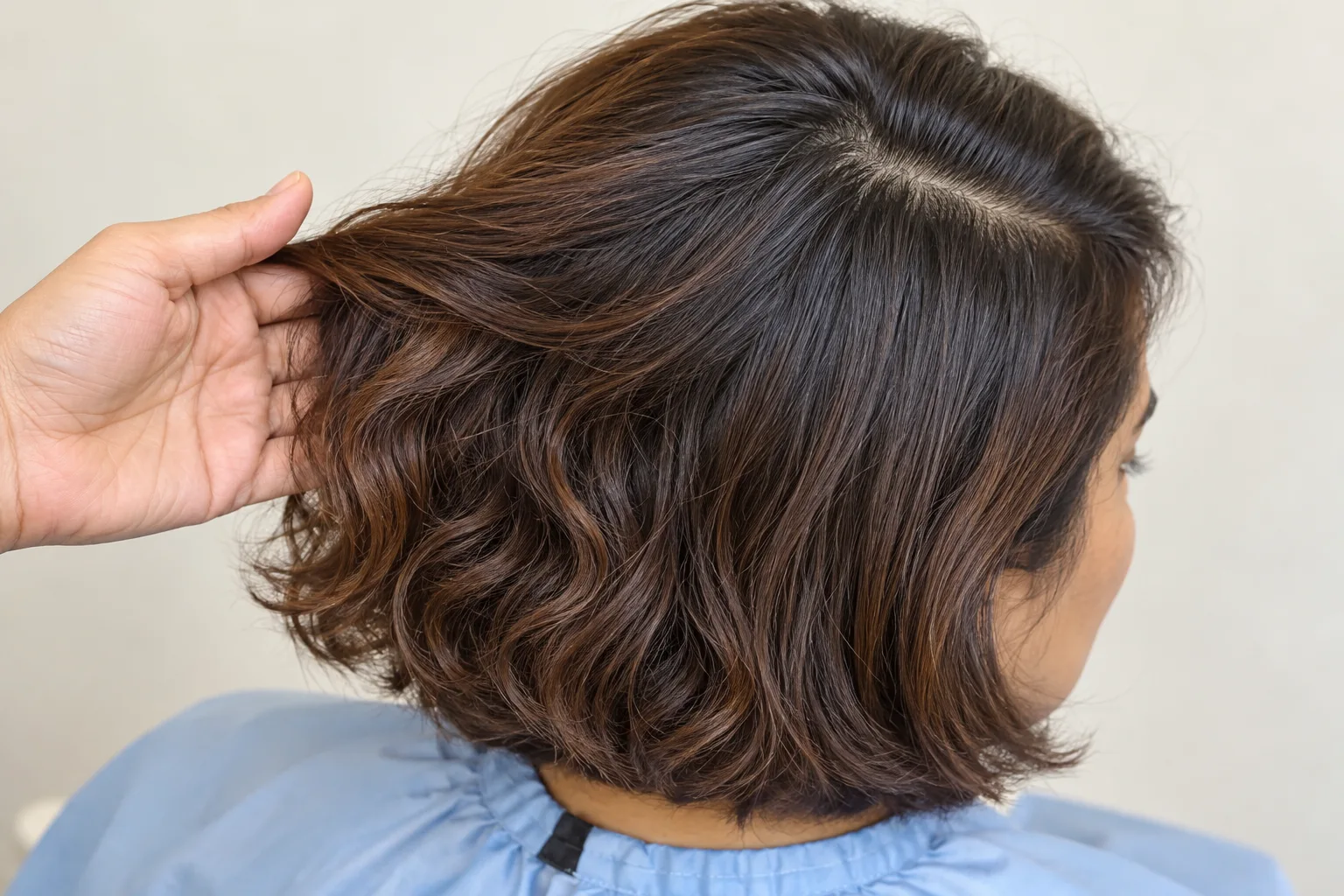
Optional previews can clarify shape, not chemical suitability
If you still cannot picture a short outline with more movement, Hair Muse offers optional visual comparisons from your own clear photograph using available styles. Keep the source image and broad color steady, and compare only a few different silhouettes. HairChapter and Hair Muse share a publisher. The app is free to download; some functions or usage may require in-app purchases. The official App Store invitation earlier in this article is optional. You can make a complete decision through photographs and a professional consultation without using an app.
A preview cannot choose a perm system, assess hair history, measure usable wrapping length or predict your curl response. It does not guarantee actual hair behavior, chemical color results, exact fit, salon feasibility or the finished result. An attractive curled picture is not evidence that a chemical service can reproduce it. Use the comparison to name a preference such as covered ears or less side width, then ask the professional which part is realistic. The images illustrating this article are generated examples, not a treatment test.
Leave the consultation with a specific next step
Summarize the plan in plain language: the movement you want, the coverage you will not give up, what assessment is needed and the routine you are willing to learn. Ask for the full appointment scope, estimate and proposed follow-up rather than borrowing another salon's duration or price. If the answer is to grow a section first, book a shape review instead of demanding an immediate perm. A decision to keep your present texture is a legitimate outcome, not an unsuccessful consultation.
If a Hair Muse comparison helped, bring the visual preference alongside an unedited current photograph and the real service history. Ask the stylist to repeat the proposed front, sides and back before starting. You should understand what is included, what could change the plan and when you can pause. The useful result is not a perfectly matched internet curl. It is an informed agreement about texture, short length and everyday work, with enough room to say no before an irreversible step.
Three terms that make this conversation clearer.
You do not need to prescribe technique. Use these words to describe the visible structure, name the behavior you want, and ask what your stylist would adapt.
Consultation brief
A short, usable description of the result you want and the reality it must support. The strongest brief combines one structural change, one non-negotiable boundary, your normal styling routine, and a question that invites the stylist to adapt the plan.
SAY IT IN THE CHAIR“I want to change this, keep this boundary, and make sure the result still works when I style it this way.”Open full definition
Baseline
The lower edge or foundation of a haircut, especially visible in bobs and other compact shapes. A strong baseline can make the ends read as fuller and more graphic; a softer or broken baseline can make the outline feel lighter and less exact.
SAY IT IN THE CHAIR“I want the bottom line to feel complete, but not so sharp that the grow-out looks abrupt.”Open full definition
Maintenance window
The period during which a haircut still performs the job it was designed to do before a particular detail needs reshaping. The true window is set by the first meaningful change—often a fringe, nape, perimeter, crown, or loss of internal balance.
SAY IT IN THE CHAIR“Which detail will stop working first, and what is a realistic return window for that part?”Open full definition
Turn this guide into a decision.
Three honest answers are more useful than ten additional reference photos. Your responses stay on this page and can be changed at any time.
- 01Can you state one clear priority for this appointment?
A useful priority is specific enough to protect when the reference needs adaptation.
- 02Have you named the boundary you do not want traded away?
Examples: tie-back length, full ends, an open forehead, dry length, or support for natural texture.
- 03Does the plan fit your real styling and maintenance rhythm?
Count ordinary mornings, fallback styles, trim frequency, and the way the shape is likely to grow.
The short answers.
Can very short hair always be permed?
No. The usable length, intended movement, existing cut and hair assessment matter together. Do not cut to a universal minimum from an online guide. Ask a professional whether the present length supports the specific plan or whether a section should grow first.
Will a loose perm leave my bob at the same length?
Do not assume so. A different bend or curl changes how the outline sits. Discuss the dry front, ear coverage, jaw edge and back separately. A picture or stretched measurement cannot guarantee those landing points.
Should I book the haircut before the perm?
Ask the salon to coordinate both services around the final shape. The appropriate sequence depends on the intended change and assessment. Confirm who checks the dry result and whether cutting and finishing are included in the booking.
Does a short perm mean no styling?
No. Ask for a realistic drying and care demonstration based on your actual mornings. Follow the service-specific instructions, and judge the outline after the permitted home routine rather than expecting every curl to match a salon photograph.
Can I choose the treatment from an app preview?
No. A preview is only a visual planning aid. Chemical suitability, the product system, testing requirements and likely limitations need an in-person professional assessment. Keep a real current photograph and an accurate service history central to that conversation.
How this guide was built.
HairChapter separates haircut structure from styling, trend names, and medical claims. Our recommendations are decision tools, not universal rules: a stylist should adapt the direction to your starting length, density, pattern, condition, growth habits, and normal routine.
We do not claim that a photograph or AI preview can predict a finished service. Sudden shedding, patchy loss, scalp pain, persistent irritation, or an unexplained change in density belongs with a qualified medical professional—not a haircut guide.
Professional context, not a treatment recipe
- Vanilla / Faking It Salon — consultation for shorter-hair perms The salon describes assessment, curl-pattern planning, finishing and aftercare as parts of its service. This supports asking about those stages, not adopting its prices, timing, suitability or maintenance promises.