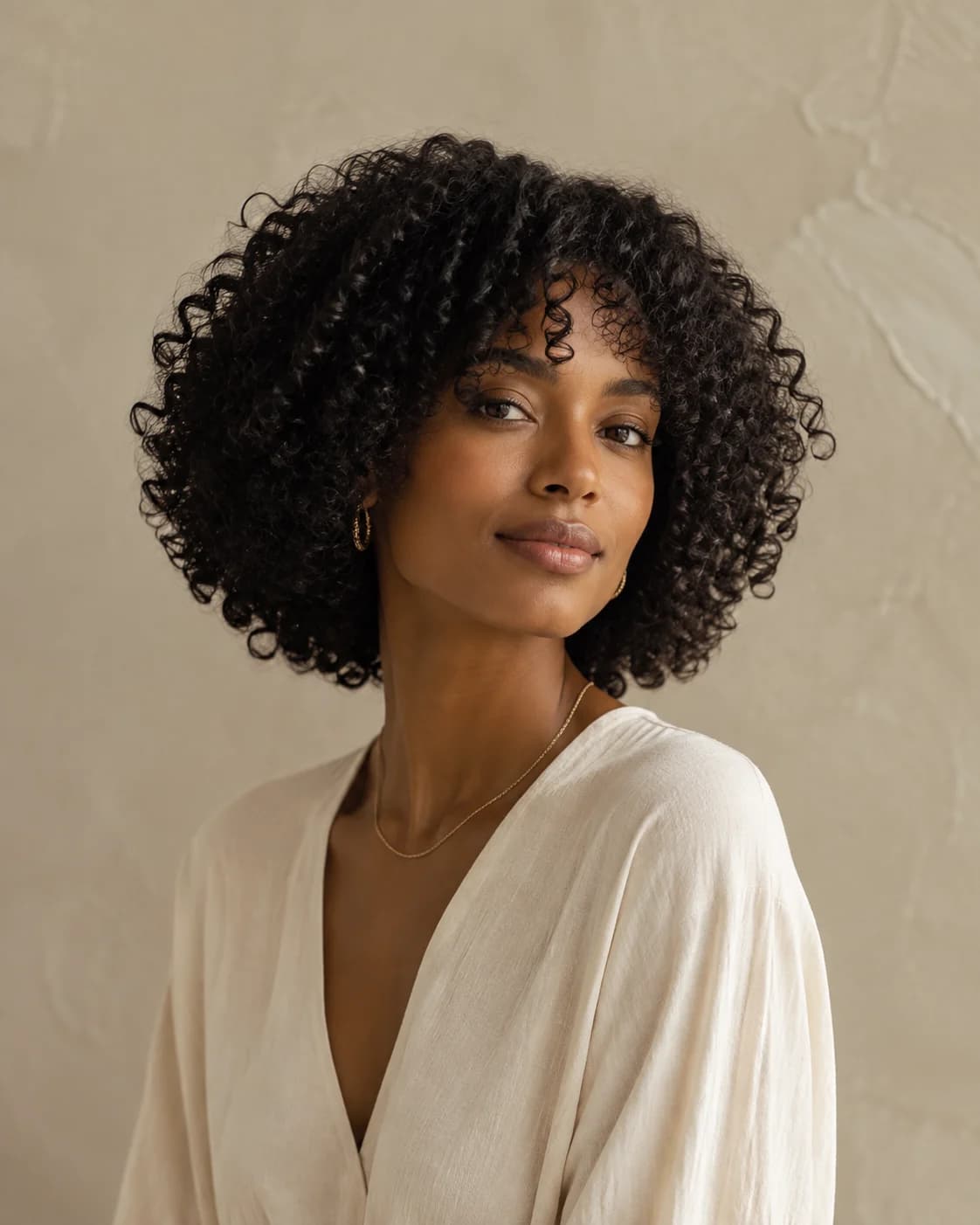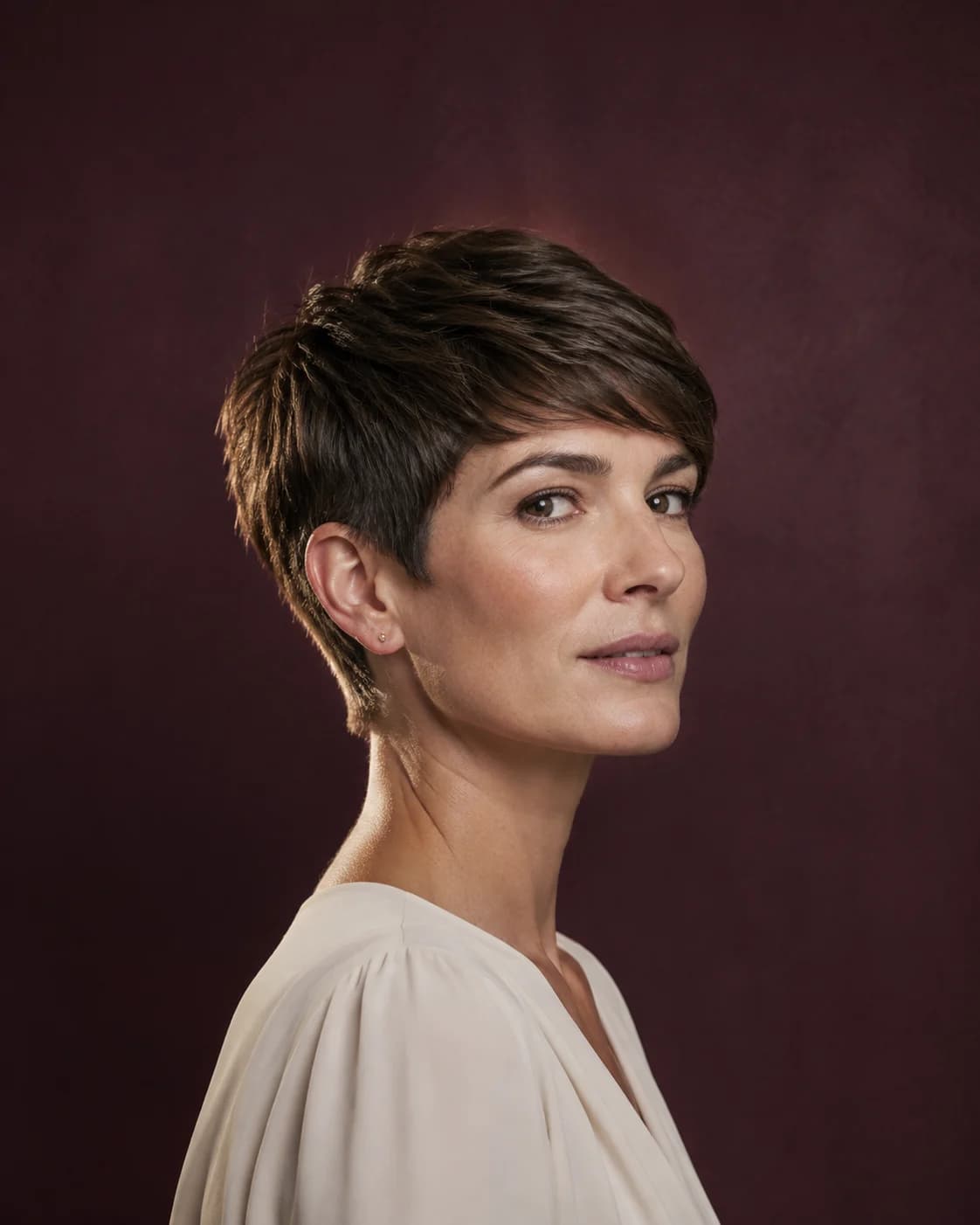
Curly bob or pixie: decide what stays visible
The useful difference between a curly bob or pixie is not courage. A bob leaves a continuous lower outline around the jaw or neck and enough hair to frame, tuck or sometimes pin. A pixie brings the outline close to the head at the sides and nape, with a shorter transition to the top. Both can be soft, bold, compact or airy. The decision turns on what you want to see when your curls have dried in their ordinary pattern, without a salon blowout holding them in place.
Start with three boundaries: the lowest acceptable dry front curl, how much ear you want visible and whether the back should form a rounded mass or a close neckline. If all three point toward coverage and flexibility, begin with a bob. If an open ear and neck are part of the desired image, explore a pixie with enough top length to keep your curl character. A bixie can sit between them, but the label alone is not a safe instruction; specify what remains long and what becomes short.
Do not ask whether curls “suit” short hair. Ask where your own dry curls must land and which parts of the head you want the cut to reveal.
Make a dry map before comparing references
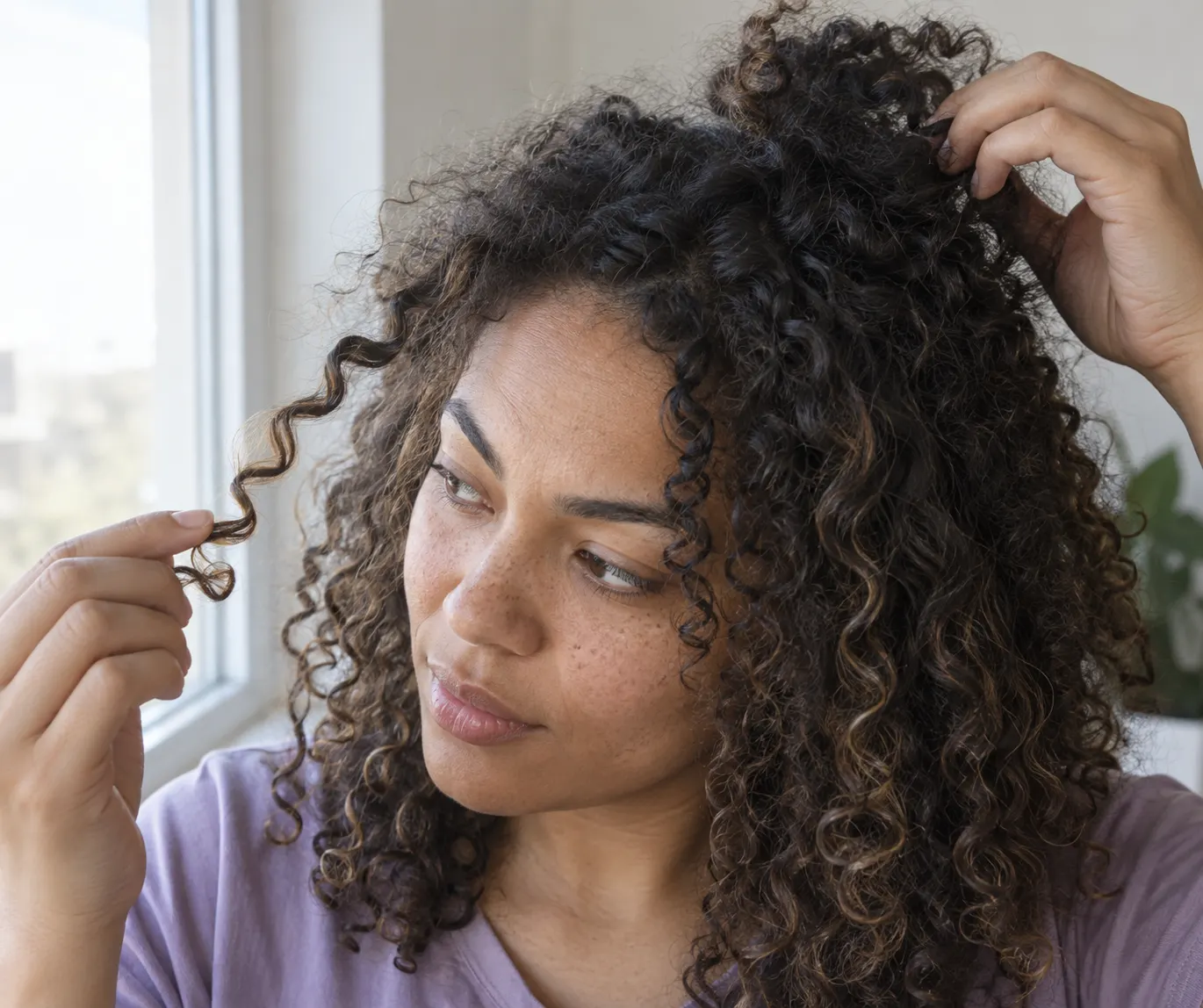
Photograph your hair from the front, both sides and behind after washing and drying it as you usually do. Note the point where the front curl lands without being pulled down, the width at the temples, the crown height and the direction of the nape. Your curls may not match one another: a front piece may loosen, the crown may shrink visibly and the back may sit closer to the head. Do not translate an internet photo into a centimetre measurement while the reference hair is stretched or styled differently from yours.
The Dutch hairdressers’ association lists both the bob and pixie among curly options, but a list cannot tell you how your hair will distribute weight. Look at references for specific architecture. Is the bob heavy at the bottom or layered into a rounder shape? Does the pixie keep curls at the forehead, expose the temple, or taper only at the nape? Bring a photo of the shape you like and a photo of your own dry hair. The stylist needs both to explain which pieces can be reproduced and which need an adaptation.
- Dry front landing point
- Temple and ear exposure
- Crown height and side width
- Nape direction and preferred back view
What a curly bob asks of the perimeter
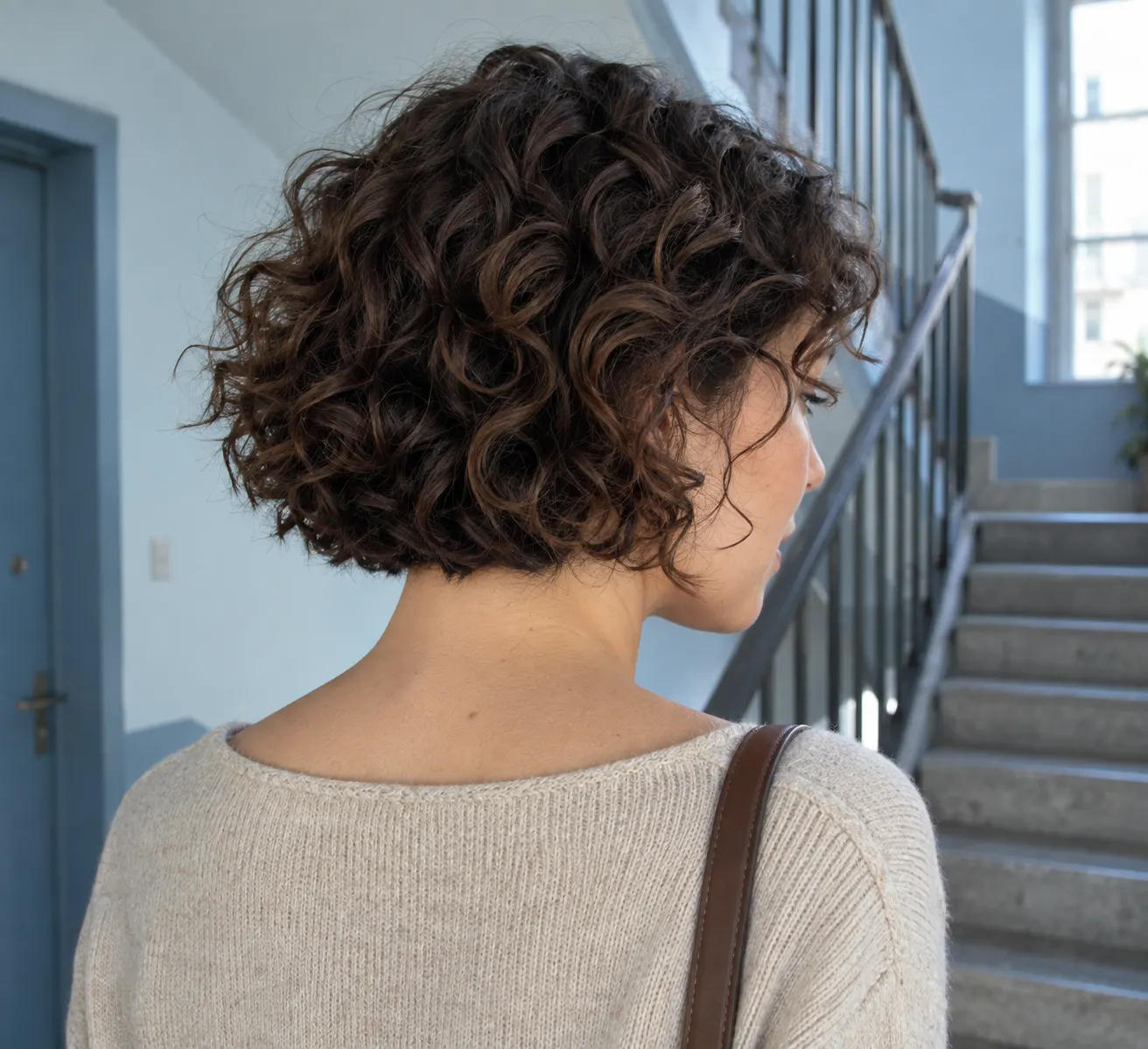
A curly bob has an edge you can read from across the room. That edge may sit at the jaw, lower neck or between, but it must be planned in the dry state you wear. If the front springs higher than the back, an apparently even wet cut can create an unexpected angle. If the sides are dense, a blunt lower line may widen into a triangle; the solution may be selective shaping, not automatically thinning every curl. Ask the stylist to show the perimeter and the shortest face-framing piece separately. They solve different problems.
A bob retains options: clips, a partial tuck and more material to reshape later. It also has trade-offs. Ends that touch a collar can kick outward; a compact line can require deliberate drying if you want it smooth; and a very short bob may be too short to tie back yet long enough to need a full curl routine. If your priority is reducing daily detangling time, do not assume a bob does that automatically. Test how much hair remains at the back and what you would do with it on a rushed morning.
What a curly pixie changes at the ears and nape
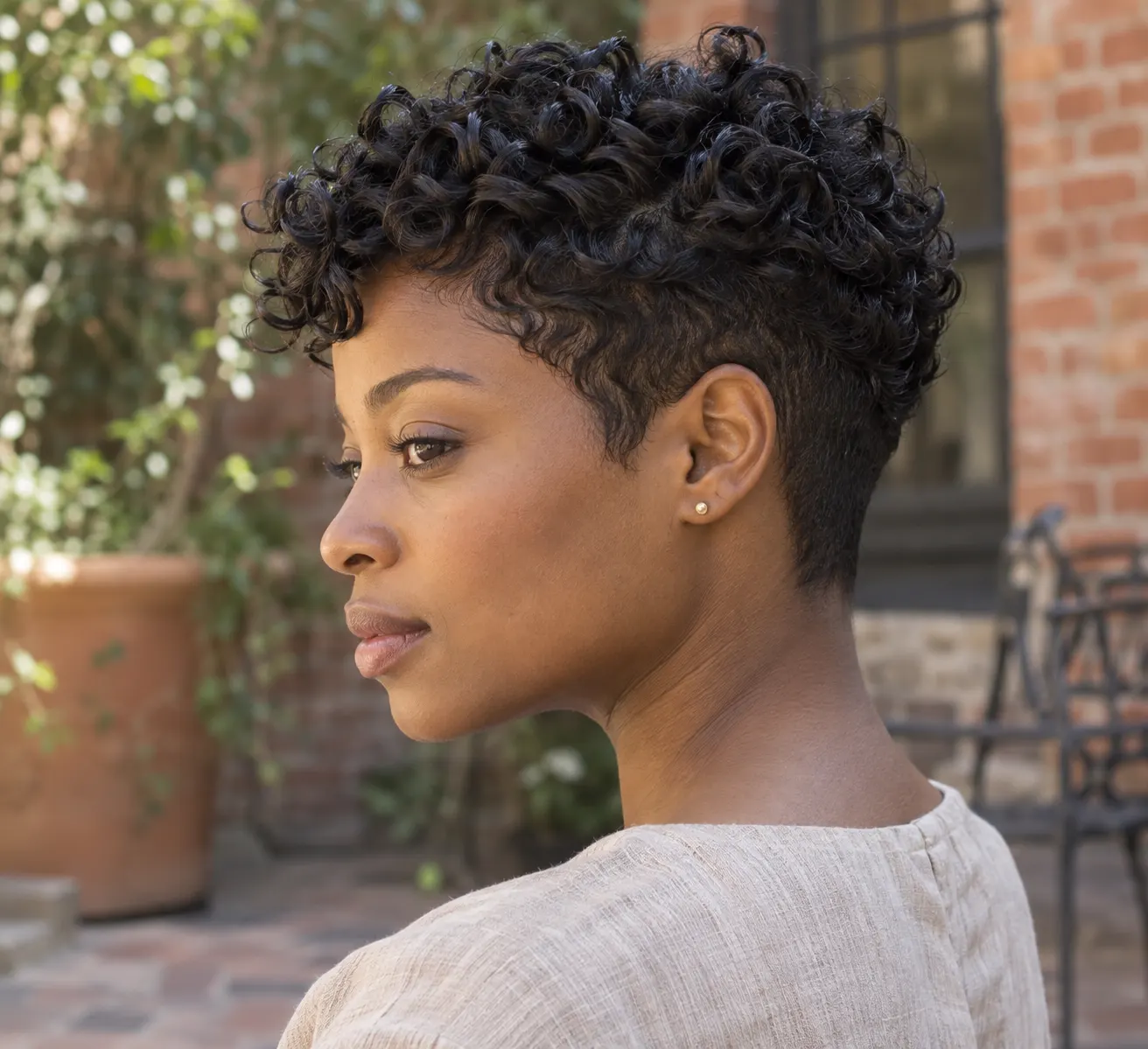
A pixie moves attention upward. You can leave more curl on top and keep soft pieces at the front while cutting the sides and nape close, or choose a more uniform short shape. The ear, jaw and neckline become visible rather than framed by a continuous curtain of hair. That can feel freeing if you like an open silhouette; it can also expose growth patterns and parts of the head a reference photograph carefully hides. Check the crown from above and the nape from behind before deciding how close to go.
Less total hair does not guarantee less effort. Short curls may dry faster, yet their direction, definition and side volume become more obvious as the shape grows. A sharp taper may need regular tidying; a softer pixie can tolerate more change but will not retain the identical outline indefinitely. Polish salon guidance distinguishes the bolder pixie from the more forgiving bob and intermediate bixie. Treat its visit intervals as examples, not a promise for your texture, budget or preferred level of precision.
Use a controlled preview for one shape decision
Once the real dry map is clear, a preview can answer a visual question: do you prefer a continuous jaw-level edge or an exposed ear and neck? Take a clear photo with the normal part and a neutral finish. In Hair Muse, compare a curly bob and a curly pixie using the same source photograph; keep the color and image angle steady. Save no more than two or three genuinely different candidates. Look at front width, cheek framing and visible ear rather than trying to judge individual curl springs in the simulated image.
HairChapter and Hair Muse have the same publisher. Hair Muse is free to download, while some use or features may require in-app purchases. The preview is a planning tool, not a simulation of actual shrinkage, density, cutting feasibility or your post-wash result. A pleasing picture can start a consultation, but the stylist must examine the real hair and agree on the dry length. If a generated pixie only works because it paints a perfect fringe over a strong cowlick, keep the broad silhouette and reject that unrealistic detail.
Let texture and density modify the short shape
A loose wave may lose its bend when cut very short; a tighter curl may spring into a compact cluster. Those are possibilities to check, not rules that assign a person to a haircut. Density is also separate from curl size: many fine strands can create a full-looking silhouette, while fewer thick strands may leave gaps if the perimeter is cut without regard to where the hair actually lands. Ask which areas carry the most weight and whether removing length will expand, compress or expose those areas in the finish you use.
If you alternate between natural and stretched styles, say which result matters most. One cut will not draw the same edge in both states. If the front is looser than the crown, avoid placing all measurements on the wet front or on one tight back curl. Ask for a conservative first length and a dry check before the shortest piece is finalized. The bob gives more room to adjust a lower edge later; a pixie gives less length to recover if the sides or fringe end up shorter than planned.
Compare maintenance and the route back to length
List what you do on a normal weekday: wash frequency, drying time, products you already use, headphones, glasses, hats and whether you tie your hair away from your face. A bob can offer a few more ways to rearrange a difficult hair day, but its wash-day routine may remain substantial. A pixie may shorten detangling and drying, yet keeping a crisp side or nape outline can mean more frequent visits. There is no universal maintenance winner; the answer depends on the particular design and how exact you need it to look.
The exit route matters if you are undecided. A jaw-length bob can move toward a lob with small shape corrections; a close pixie usually passes through several uneven top, side and nape lengths before it becomes a bob. That does not make the pixie a bad choice, but it raises the value of being sure about ear and nape exposure. Ask the stylist to describe the next two shapes as the cut grows, not a miraculous number of weeks. If the short-hair idea is new, trying a longer bob first preserves more choices without obliging you to stop there.
Bring a two-option brief to the salon
Use this script: “My curls usually dry like this. I am choosing between a bob whose front ends at my jaw and a pixie that opens the ears but keeps curl on top. I need the front no shorter than this dry point. Please show me the side and back plan before cutting.” Substitute your own boundaries. Add the amount of time you can spend styling and whether you need enough hair to tuck away. Show both references, then say which detail you value in each. A stylist can advise whether your density and growth pattern make the desired proportions realistic.
Agree to inspect the shape after drying in a finish close to yours. Turn your head, look at the back and move the front curls without a brush supporting them. If you cannot decide, ask which first cut leaves a credible path to the other. A bob-to-pixie sequence is possible; the reverse requires growing length. Finally, keep the preview in its proper role: Hair Muse can make the two silhouettes easier to discuss, but neither the image nor this article guarantees what your actual curls will do. The successful choice is the one whose compromises you knowingly accept.
- Preferred dry front length
- Ear and nape exposure
- Where weight should stay
- Maximum styling and salon upkeep
- Next acceptable grow-out shape

Three terms that make this conversation clearer.
You do not need to prescribe technique. Use these words to describe the visible structure, name the behavior you want, and ask what your stylist would adapt.
Perimeter
The outside boundary of the haircut: the line you read around the bottom, sides, and overall edge. A compact perimeter usually feels fuller and more controlled, while a broken or highly layered perimeter can feel lighter, softer, or more textured.
SAY IT IN THE CHAIR“I like the movement, but I want the outside edge to remain substantial when the hair is straight or air-dried.”Open full definition
Layer map
A plain-language way to describe where the shortest layers begin, how quickly they connect to longer sections, and where movement or volume is intended to appear. Two haircuts with the same overall length can feel completely different because their layer maps differ.
SAY IT IN THE CHAIR“Show me the shortest layer, where it connects, and how much weight remains beneath it.”Open full definition
Silhouette
The complete outside shape a haircut creates when viewed as a whole: compact, rounded, triangular, elongated, wide, narrow, or deliberately irregular. It is often the most reliable feature to compare before discussing small details or a polished finish.
SAY IT IN THE CHAIR“I want this overall shape, but I am open to changing the internal technique for my hair.”Open full definition
Turn this guide into a decision.
Three honest answers are more useful than ten additional reference photos. Your responses stay on this page and can be changed at any time.
- 01Can you point to the exact structural detail you want from this cut?
Name the shortest point, outside line, layer map, or placement of volume.
- 02Have you named the boundary you do not want traded away?
Examples: tie-back length, full ends, an open forehead, dry length, or support for natural texture.
- 03Does the plan fit your real styling and maintenance rhythm?
Count ordinary mornings, fallback styles, trim frequency, and the way the shape is likely to grow.
The short answers.
Is a bob or pixie better for curly hair?
Neither is universally better. A bob keeps a lower perimeter and more length; a pixie exposes the ear and nape and shifts the shape upward. Choose by your own dry curl pattern, desired silhouette and upkeep tolerance.
Will a curly pixie be easier to style than a bob?
It may use less drying or detangling time, but very short sides, fringe and crown shape can need more frequent adjustment. Compare the exact designs and your weekday routine, not just the total amount of hair.
Can I try a bixie instead?
Yes, if you specify the front, side and nape lengths. “Bixie” covers many hybrids; it is useful as a compromise only when the stylist understands which parts should behave like a bob and which like a pixie.
How do I prevent a curly bob becoming triangular?
Discuss where the weight accumulates and ask to see the dry outline. Shaping or selective layers may help, but indiscriminate thinning can create a different problem. The plan must fit your curl pattern and density.
Can a hairstyle preview predict how short my curls will look?
No. It can compare broad bob and pixie silhouettes, not the exact spring of each curl or the feasibility of a salon cut. Set a dry length boundary with your stylist before shortening the hair.
How this guide was built.
HairChapter separates haircut structure from styling, trend names, and medical claims. Our recommendations are decision tools, not universal rules: a stylist should adapt the direction to your starting length, density, pattern, condition, growth habits, and normal routine.
We do not claim that a photograph or AI preview can predict a finished service. Sudden shedding, patchy loss, scalp pain, persistent irritation, or an unexplained change in density belongs with a qualified medical professional—not a haircut guide.
Sources for health-related statements
- Nederlandse Kappersunie — styles for curly hair A Dutch professional hairdressers’ association describes both a curly bob and a curly pixie as options, with the final choice tied to lifestyle and natural texture.
- Salon Pola — bob, bixie and pixie in practice A Polish salon explains the different amount of length, visible shape and upkeep in a bob, bixie and pixie; its suggested visit intervals are not universal.