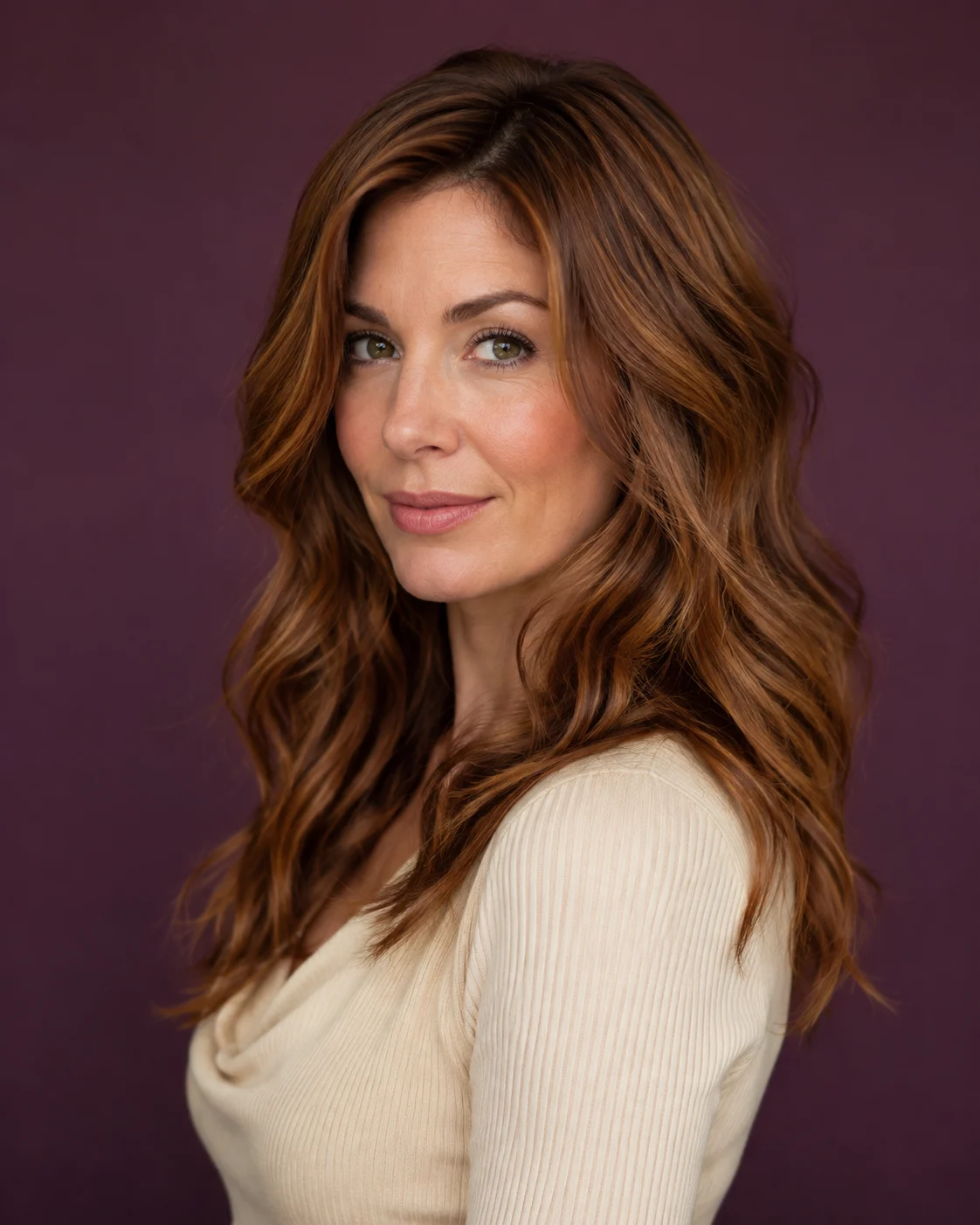
Shoulder length hair for men needs a wearing plan
Shoulder length hair for men can be worn loose, tucked back or gathered, but one haircut does not automatically make all three equally convenient. Start with the version you want on an ordinary day. Do you like hair moving beside your cheeks, or do you want it away from your face while working? Is a low tie essential, occasional or irrelevant? Those answers matter more than copying the longest point in a photograph. Name the function before asking for layers or a particular outline.
You do not need to justify longer hair through a beard, a face-shape category or a promise that it will look masculine enough. Choose the finish you enjoy and can maintain. If your current length is already close, identify one change rather than assuming everything needs reshaping. If you are growing from a shorter cut, separate the eventual goal from the next appointment. An interim tidy can preserve selected lengths without pretending that every shorter front section will immediately reach the shoulder.
Locate the dry endpoint around the whole head
Shoulder length describes a region, not a single precise line. Show where you want the dry ends to sit at the back and beside the collarbone. Turn your head and notice whether the ends meet a collar or shoulder. Decide whether you welcome that contact or prefer a little more clearance. The WorldSkills UK technical handbook lists one-length and long-layered cutting separately. That distinction is useful context: a length label alone does not settle the perimeter or the way the front is cut.
For waves, curls and coils, show your usual dry finish before discussing a wet or stretched measurement. A strand pulled downward is useful context but is not the silhouette you wear when it springs back. Ask the stylist to explain the expected dry endpoint without treating shrinkage as a fixed percentage. Keep the shorter side of your acceptable range visible in the consultation. If that boundary would be crossed to even out an older cut, you can choose a gradual transition rather than removing every difference today.

Choose side fullness before asking for layers
Look at the width beside the ears and the amount of hair that remains through the ends. A photograph with a narrow outline may reflect styling, finer density or hair placed behind the shoulders. It is not proof that extensive layering will create the same result for you. Explain whether the issue is side bulk, a heavy back outline or front sections falling into your eyes. These concerns can require different adjustments, and solving one can change another part you wanted to keep.
Ask to see where the shortest proposed layer would end. Would it still tuck behind the ear? Would it join a low tie? How would it look without the blow-dry shown in the reference? Longer layers and a fuller perimeter are options to discuss, not universal instructions for every texture. If you are happy with the overall mass, you may only need the outline refined. Do not approve a vague request to take weight out everywhere without understanding the intended change to the loose shape and shortest pieces.
Compare one visible choice on a consistent photo
If imagining the overall length is difficult, an optional Hair Muse preview can help you express a broad direction before booking. HairChapter and Hair Muse share a publisher. Hair Muse is free to download; some uses or features may require in-app purchases. Begin with a clear, ordinary photo at eye height, with your hair visible and even light. Keep the starting image consistent so you do not mistake a different angle, head tilt or lighting for a better haircut.
Compare one meaningful difference at a time, such as more retained length or a fuller side silhouette, where suitable previews are available. Keep a small shortlist rather than treating every generated strand as a cutting instruction. The preview cannot prove density, movement, drying time, whether a ponytail holds, chemical colour results, feasibility, salon results or exact fit. It also cannot promise how quickly shorter sections will grow. Write down what each option helps you describe, then take those preferences to an assessment of your real hair.


Test the front separately from the back length
Long hair at the back can coexist with much shorter pieces around the face. That may be exactly the look you like, but it changes how the haircut behaves when you tuck it away. Try your normal part and place the front behind your ears before the cut. Notice what stays comfortably and what falls forward. If you prefer a loose front, decide how much you want it to enter your field of view. Do not assume an open-face reference means the front was cut short.
For a low tie, gather the existing hair at the height you actually use. Show which pieces reach without pulling the roots tight and which remain loose. Ask the stylist to preserve the sections that make this work, or to explain the compromise if you want a shorter front. A half-up arrangement may be an alternative you enjoy, but it is not equivalent to gathering all the hair. Confirm which outcome matters before consenting to a fringe or substantially shorter face-framing sections.
Budget effort for washing, drying and resetting
Longer hair changes the routine, but it does not create one mandatory wash schedule for all men. Describe what you already do and which step you are willing to add. Consider when you wash, how long your usual drying method takes and whether you need the hair away from your face before it is ready to wear loose. Avoid choosing a reference that relies on a polished finish if you expect to leave with almost no daily styling.
Ask for a demonstration of the ordinary finish using the smallest routine you would realistically repeat. If you prefer air drying, say so; if you use a dryer, explain your time and skill limits. Think about the collar or hood you wear most and whether you often reset your hair after a commute. These are practical planning questions, not claims that a particular haircut prevents tangles or guarantees easy care. Choose a simpler outline or retain more front length when that better supports the way you actually live.

Book for the work you want and explain the limits
Choose a professional who is comfortable shaping your texture at the intended length, rather than relying only on a men’s or women’s category on the booking page. Ask which service covers the consultation, shaping and finish, and confirm any quoted price directly. Bring your ordinary loose-hair reference, a back view if available, and a short list of priorities. Useful boundaries might be keeping the front long enough to tuck, avoiding a shaved underlayer or retaining enough length for your existing low tie.
If the Hair Muse shortlist helped, show only the options that clarify those priorities. Describe the preferred endpoint or side width in plain language and distinguish the generated image from an ordinary reference. Then ask the professional to show the plan on your real hair. Agree what should happen if the reference needs more starting length than you currently have. A shape you can wear now and a later goal can coexist; you do not need an artificial guarantee that one appointment will deliver both.
Review the loose and gathered versions before leaving
Check the dry result from the front, both sides and the back. Look at the endpoint with your shoulders relaxed, then move your head normally. Try your usual part, tuck the front and, if it was part of the agreement, gather the hair at your chosen height. Ask about a particular section that behaves differently from the plan. More layers are not automatically the right correction when you are already missing the length needed to pull that section back.
After the first ordinary wash, keep a simple note of what works without the salon finish. Record whether the front stays out of your way, whether the perimeter feels right and which styling step you actually use. Plan the next visit around the first feature that stops working for you rather than a universal calendar interval. If you are still growing length, say which sections must be protected next time. This turns shoulder length from a vague destination into a haircut with a useful, revisable wearing plan.
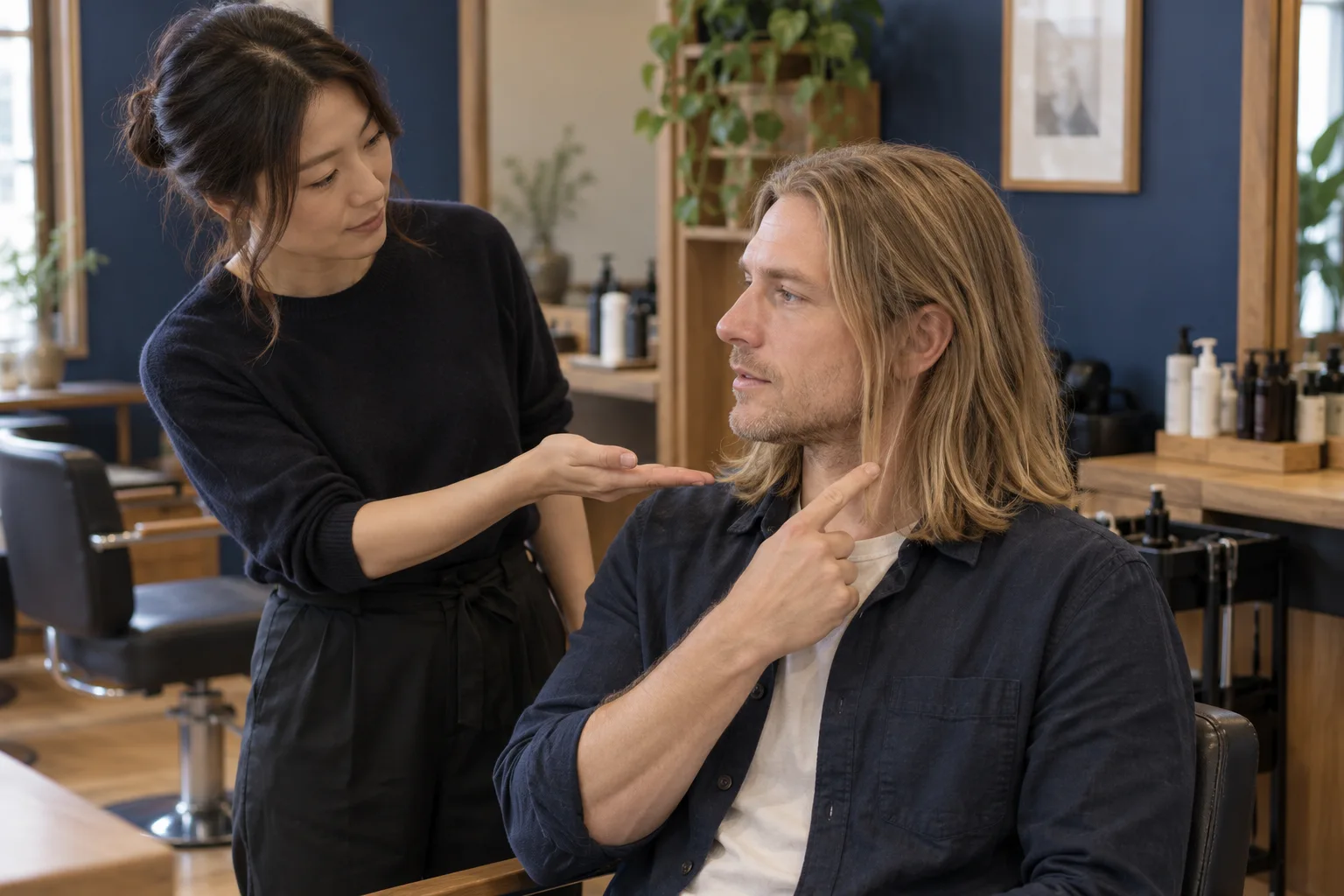
Three terms that make this conversation clearer.
You do not need to prescribe technique. Use these words to describe the visible structure, name the behavior you want, and ask what your stylist would adapt.
Silhouette
The complete outside shape a haircut creates when viewed as a whole: compact, rounded, triangular, elongated, wide, narrow, or deliberately irregular. It is often the most reliable feature to compare before discussing small details or a polished finish.
SAY IT IN THE CHAIR“I want this overall shape, but I am open to changing the internal technique for my hair.”Open full definition
Growth pattern
The direction hair naturally leaves the scalp and moves through areas such as the front hairline, crown, nape, and around the ears. Cowlicks, whorls, and directional changes can alter how short sections lift, split, or settle.
SAY IT IN THE CHAIR“Can we look at the front and crown dry before choosing the shortest length?”Open full definition
Internal weight
The mass and density held inside the visible outline of a haircut. Thoughtful internal removal can make dense hair move or sit closer without automatically weakening the perimeter; poor placement can create short pieces, expansion, or transparent ends.
SAY IT IN THE CHAIR“Where will you remove weight, and which parts of the outline will stay visually solid?”Open full definition
Turn this guide into a decision.
Three honest answers are more useful than ten additional reference photos. Your responses stay on this page and can be changed at any time.
- 01Can you separate the top, transition, sides, and outline in your request?
A haircut name alone rarely explains how those four zones should connect or grow out.
- 02Have you named the boundary you do not want traded away?
Examples: tie-back length, full ends, an open forehead, dry length, or support for natural texture.
- 03Does the plan fit your real styling and maintenance rhythm?
Count ordinary mornings, fallback styles, trim frequency, and the way the shape is likely to grow.
The short answers.
Does shoulder-length hair always fit into a ponytail?
No. The shortest front pieces, layers, texture and chosen tie height all matter. Test the existing hair with your usual gathering position and explain which sections must reach. A long back outline alone does not prove that the entire haircut will stay gathered.
Do men need layers at shoulder length?
Layers are a choice, not a requirement. Discuss side fullness, end density and the length of the shortest pieces. You may prefer a fuller perimeter or a modest adjustment. Ask how the proposal will work with your usual drying and wearing routine.
Should curly hair be measured wet or dry?
Agree the visible dry result first and let the professional explain how it relates to the cutting method. Show your normal curls or coils. A stretched strand can inform the discussion but does not replace the dry shape, and shrinkage is not one fixed percentage for everyone.
How long will growing to the shoulders take?
That depends on your starting lengths and individual growth, and shorter front sections can arrive at different times. A photo or preview cannot provide a reliable personal deadline. Plan the next shape and the lengths you want preserved rather than accepting a guaranteed month count.
Can I wear long hair without a beard or centre part?
Yes. Neither a beard nor a particular part is a condition for choosing longer hair. Show your preferred finish and discuss your natural direction, comfort and routine. The aim is a haircut you want to wear, without needing to satisfy a fixed appearance rule.
How this guide was built.
HairChapter separates haircut structure from styling, trend names, and medical claims. Our recommendations are decision tools, not universal rules: a stylist should adapt the direction to your starting length, density, pattern, condition, growth habits, and normal routine.
We do not claim that a photograph or AI preview can predict a finished service. Sudden shedding, patchy loss, scalp pain, persistent irritation, or an unexplained change in density belongs with a qualified medical professional—not a haircut guide.
Technical background on shape and consultation
- WorldSkills UK — Hairdressing Technical Handbook (2021) An older professional training reference listing one-length and long-layered cuts separately, with consultation and photographic-view guidance. Competition rules and appearance advice are not general haircut prescriptions.