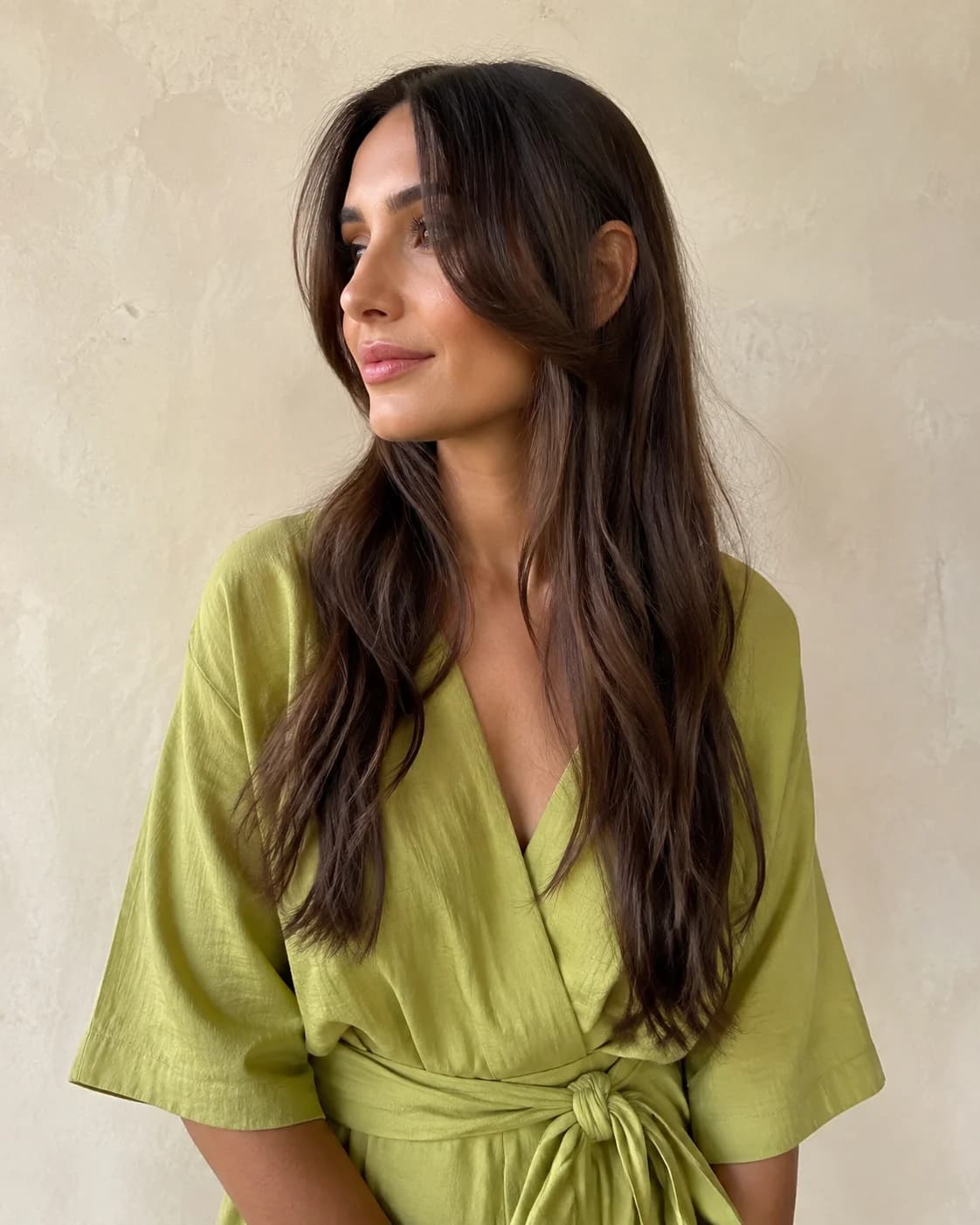
MID-LENGTH / MODERATE UPKEEP
The polished lob
A longer bob that creates a shorter-looking silhouette while preserving more tie-back and grow-out flexibility than a chin-length version.
- Length
- Mid-length
- Texture read
- Straight / Wavy
- Upkeep
- Moderate
Updated 06 Sep 2026 · Haircut guidance, not a universal suitability rule · Hair Muse relationship disclosed
How we publishTHE EDITORIAL READ
See what the finished photograph can hide.
The lob earns its flexibility from where it sits: short enough to create a new outline, long enough to preserve more fallback styles. The critical decision is not “long bob” but whether the ends land above, on, or below the shoulder in the finish you wear most often.
A polished reference may hide the daily friction at that point. Shoulders, coat collars, natural bends, and density can all redirect the ends. Choose the landing point with your body and routine in mind, then decide how solid or softened the perimeter should feel.
THE CUT IN FOUR LINES
Read the architecture.
- 01 / Silhouette
- Clean and slightly elongated
- 02 / Perimeter
- Full with limited graduation
- 03 / Movement
- Controlled rather than layered
- 04 / Pressure point
- The point where the ends meet the shoulders and begin to turn outward.
THE ROUTINE TEST
How the look lives after the salon finish.
Use the timeline as a planning lens, then adapt it to your wash rhythm, weather, styling method, and the way your own hair changes between appointments.
Read the shoulder contact.
If the ends turn, decide whether to refine them inward, encourage the outward bend, or wear a softer texture. Fighting the contact point every day is rarely the best plan.
Use the retained length.
A low tie, half-up shape, tuck, or loose bend should remain available. Confirm that the front pieces cooperate with the fallback you use most.
Notice weight before length.
A lob often becomes heavier before it feels dramatically longer. Crown flatness or a thick lower edge may set the next appointment more than centimeters do.
MAKE THE IDEA YOURS
Adapt the direction without losing its point.
A reference is useful when you know which structural idea should survive and which detail can change for your texture, density, routine, or comfort level.
Keep the perimeter dominant.
Use minimal visible layering and ask that any weight adjustment stays internal so the lower line continues to look substantial.
Release only where pattern begins.
A small amount of strategic movement can support bends without turning the lob into a highly layered shape.
Protect the front and nape.
Set the minimum length from the tie-back you actually wear rather than judging only the longest point at the back.
THE FINAL CHECK
Is this the right trade-off?
- Choose it when
- You want a clear length change with room for tie-backs, several finishes, and a relatively forgiving route back to longer hair.
- Reconsider when
- You want maximum short-cut impact or your preferred landing point fights the shoulder in every natural finish.
SAY IT IN THE CHAIR“Choose the line around my shoulders and keep enough front length for my tie-back.”