
Buzz cut: decide what the name means in your appointment
A buzz cut usually means a very short clipper-led shape, but the label does not tell your stylist everything you want. You might mean one retained length across the head, a little more hair on top, or short hair with a separately faded edge. Wahl’s manufacturer guide describes the uniform version across top, sides and back. Use that as vocabulary, not a rule that every salon menu follows. Bring a front, side and back reference and describe which part you mean. A close silhouette with a soft natural hairline is not the same request as bare sides and an outlined forehead.
Write down your reason for considering it. Perhaps you want less blow-drying, enjoy the look of a close crop, or want to stop managing long sections around your ears. Each reason leads to a different boundary. Someone seeking less morning work may prefer a slightly longer clipper cut that retains visible texture. Someone who likes the very close appearance may accept seeing more of the head contour. Neither needs a particular face shape or an explanation about being brave. Treat it as a haircut with choices, not a test of confidence or a compulsory fresh start.
Choose retained length rather than a number from a photograph
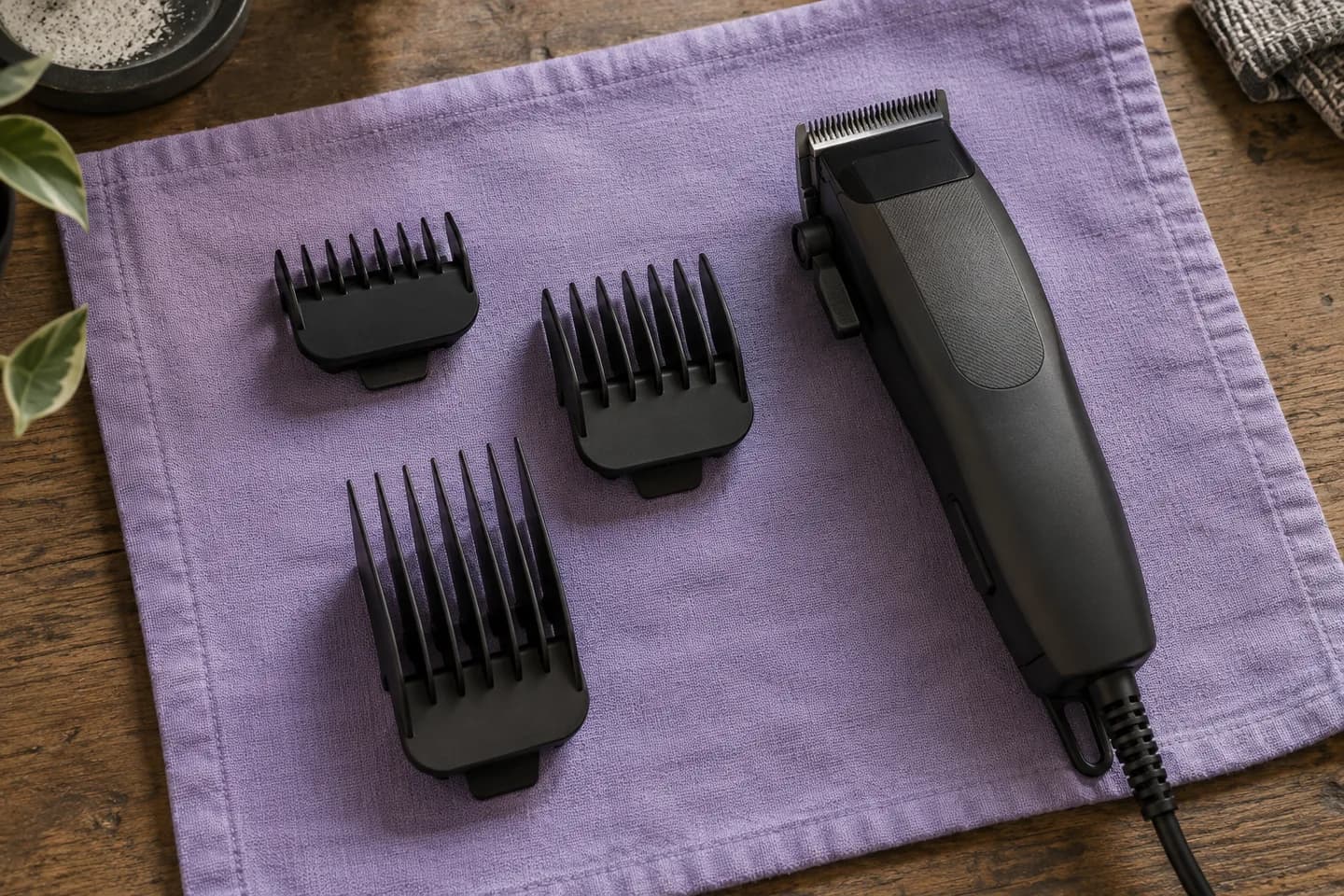
A photograph cannot reliably identify the guard that produced a haircut. Light, angle, hair color, density and finishing can change its apparent closeness. Ask the professional to explain the proposed remaining length on their equipment, including any blade or lever setting that affects it. Attachment numbers are useful within a known system, but a number copied from a caption is not a complete salon instruction. You do not need to learn every guard. You need to know whether the plan preserves a visibly short layer of hair, a little directional texture, or a much closer appearance than you currently want.
For an uncertain first visit, agree a longer initial setting and an explicit pause before any further shortening. Longer is not a universal safe length or a guarantee that you will like the result; it simply keeps more options available during the same appointment. Once the whole head is shorter, there is no immediate route back to the previous length. Do not ask for a hidden test patch that would leave an unwanted mark if you stop. Instead, let the professional propose a coherent first shape and show you where the shortest parts would be. Decide before the machine begins, rather than negotiating while it moves.
Evaluate coverage in normal light without diagnosing your hair
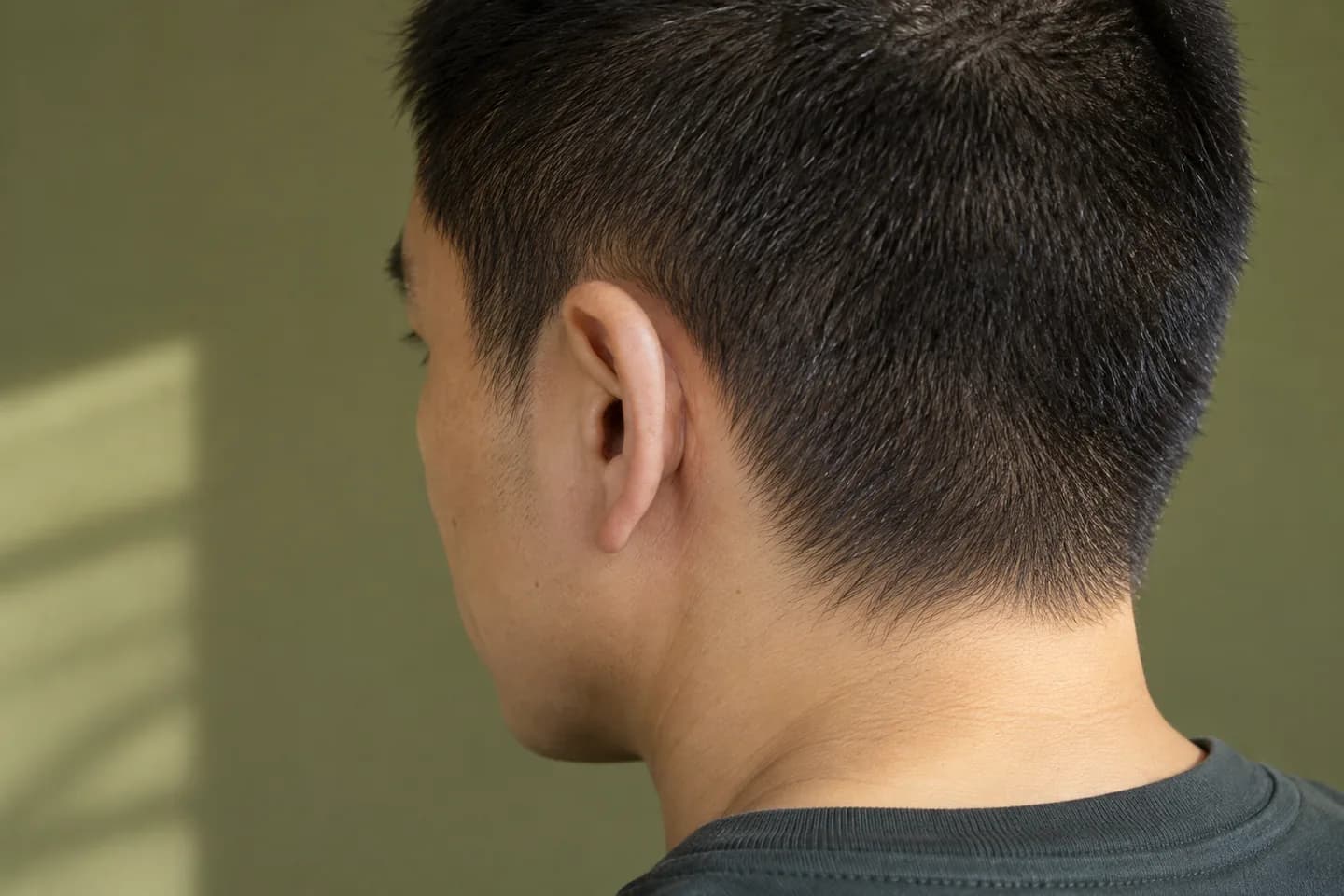
A close cut makes the head outline and variation in hair coverage more visible. Before booking, look at the front, crown, sides and nape in ordinary even light, without drawing conclusions from a harsh overhead lamp. You are considering an appearance, not performing a hair-loss assessment. Dark hair against lighter skin may look different from a lighter short crop, and photographs can exaggerate or soften that contrast. Tell the professional which degree of visible coverage you feel comfortable with. A haircut cannot guarantee a solid-looking surface everywhere or recreate another person’s density just because the nominal length matches.
Discuss growth direction and the way short hair lies around your crown. Some sections may show more directional texture as they become longer, while very close clipping changes what you can style. Do not assume the shortest option hides every irregularity. If you dislike an exposed outline, retaining more length or choosing another short cut may be the more useful compromise. The existing cowlick guide helps separate location and growth direction from a generic haircut label. Take that observation into the appointment, and let the stylist assess your actual hair rather than turning a reference into a promise about coverage.
Give separate consent for the hairline, ears and nape
An even short length does not automatically authorize a fade, a skin-close neckline or a freshly squared forehead. Point to the edges you want left soft and the areas you want tidied. Ask whether the intended finish follows your existing hairline or creates a stronger new outline. Those choices affect both the fresh appearance and the details you may notice first as the cut grows. If you have a reference with a sharply defined border, decide whether you like that border or simply the overall shortness. An attractive photograph can combine several services that you never intended to request together.
Keep the brief short enough to remember: uniform or slightly varied length, natural or stronger contour, and a clear minimum in the shortest zone. A taper or fade changes the side transition; it is not a compulsory upgrade to a buzz cut. You can keep the whole-head request simple and decide on a different edge later. Before starting, repeat what is excluded, especially if the salon normally finishes close cuts with detailed outlining. “Please check with me before changing the front hairline” is a useful consent boundary, not an attempt to direct the professional’s tool handling.

Count appointments as well as morning minutes
Little hair to arrange can make a morning simpler, but keeping exactly the fresh-cut appearance is a separate commitment. Decide what would actually prompt another visit: visible softness at the nape, a changed overall length, or short sections beginning to stand differently. Ask what a maintenance appointment includes and whether edge work is charged or booked separately. Avoid a universal timetable. Your tolerance for change, preferred finish, hair behavior and available time matter more than an online rule promising a certain number of effortless weeks. A naturally softer border and a crisp geometric finish do not ask for the same kind of attention.
Consider your ordinary routine without buying a new collection of products in advance. Do you prefer washing and leaving your hair alone, enjoy a little visible texture, or expect a permanently flat appearance? Ask the stylist to show the simplest suitable care and finish for the actual remaining hair. This guide is not a home-clipping lesson or a tool-shopping list. If you expect to maintain the cut yourself, discuss equipment suitability and its instructions with a qualified professional first. Ease of styling does not mean every contour or hard-to-see area is easy to cut accurately on your own.
Make the first week practical, not a performance
Think about the situations in which you will see the new cut most often: work, video calls, your normal jacket collar and the hats you actually wear. A close crop changes the relationship between hair and accessories simply because there is less hair around them. You need not replace your wardrobe or adopt a louder style. Bring your everyday glasses if their appearance or fit is part of your decision. View the result from the side as well as straight on, then check whether it matches the agreed length and outline rather than whether it recreates the mood of the inspiration photograph.
Give yourself space to become familiar with the change before requesting another irreversible adjustment. A first short cut can look unfamiliar even when the brief was followed. Record specific observations, such as wanting a softer nape next time or preferring more texture on top. Distinguish that from an undefined feeling that the whole cut is wrong. If something differs from what was agreed, contact the salon with clear photographs and the original brief. Do not repeatedly go shorter to chase a filtered image. Sometimes the next useful action is a conversation; sometimes it is simply leaving the retained length alone.
Use an optional preview only for the broad silhouette
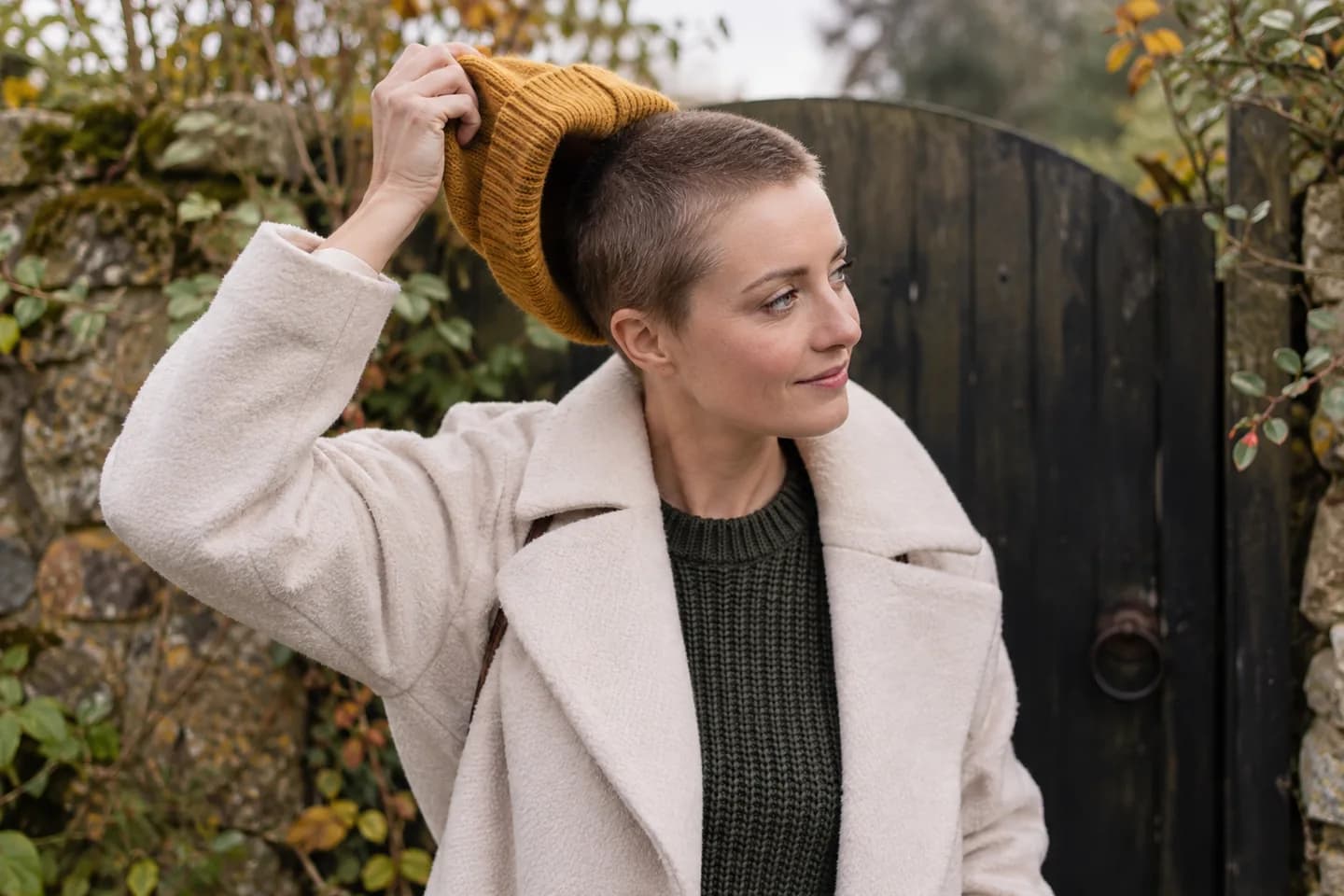
After making those real-world decisions, an optional Hair Muse comparison can help you express whether you prefer a close overall silhouette or more visible hair around the head. Start with a clear, evenly lit portrait and compare a small number of available short styles. Keep the original photo beside the previews. Do not assume an option corresponds to a specific guard, that an image accurately maps your scalp coverage, or that the app offers every buzz-cut variation. If the available images do not address your question, actual short-cut references and an in-person consultation are the better planning materials.
HairChapter and Hair Muse share the same publisher. Hair Muse is free to download; some uses or features may require in-app purchases. The official App Store invitations on this page are optional. A preview is a visual planning aid, not a prediction of real hair behavior, exact fit, cutting feasibility, chemical color results or a salon outcome. Save only the preference you can describe in ordinary words, such as more retained texture or a closer silhouette. Bring that preference with the real length and contour limits already agreed. No image overrides the assessment of the professional looking at your actual hair.
Choose a grow-out direction before the next reset
If the buzz cut is a temporary change, identify the first thing you want back: visible texture on top, softer ear coverage, a front section you can move, or a different short silhouette. Those are useful milestones, not promises about how many weeks they take. Re-clipping the whole head to the starting setting maintains the buzz but also removes progress toward those goals. At a later appointment, distinguish areas being kept longer from edges you merely want tidied. You do not have to accept a complete reset just because a little new length behaves differently around the crown.
Finish the first consultation with a concise record: retained length on the actual equipment, shortest zone, hairline finish, what would trigger maintenance, and your likely direction afterwards. Photograph the fresh shape from useful angles in neutral light with permission, then keep the record for the next visit. A good first buzz-cut decision is not the shortest possible haircut. It is one whose remaining length, visible outline and ongoing work you understand. The consultation checklist gives you a place to organize those permissions. Use it to protect the chosen boundaries while leaving the professional free to select an appropriate technique.

Three terms that make this conversation clearer.
You do not need to prescribe technique. Use these words to describe the visible structure, name the behavior you want, and ask what your stylist would adapt.
Perimeter
The outside boundary of the haircut: the line you read around the bottom, sides, and overall edge. A compact perimeter usually feels fuller and more controlled, while a broken or highly layered perimeter can feel lighter, softer, or more textured.
SAY IT IN THE CHAIR“I like the movement, but I want the outside edge to remain substantial when the hair is straight or air-dried.”Open full definition
Layer map
A plain-language way to describe where the shortest layers begin, how quickly they connect to longer sections, and where movement or volume is intended to appear. Two haircuts with the same overall length can feel completely different because their layer maps differ.
SAY IT IN THE CHAIR“Show me the shortest layer, where it connects, and how much weight remains beneath it.”Open full definition
Silhouette
The complete outside shape a haircut creates when viewed as a whole: compact, rounded, triangular, elongated, wide, narrow, or deliberately irregular. It is often the most reliable feature to compare before discussing small details or a polished finish.
SAY IT IN THE CHAIR“I want this overall shape, but I am open to changing the internal technique for my hair.”Open full definition
Turn this guide into a decision.
Three honest answers are more useful than ten additional reference photos. Your responses stay on this page and can be changed at any time.
- 01Can you point to the exact structural detail you want from this cut?
Name the shortest point, outside line, layer map, or placement of volume.
- 02Have you named the boundary you do not want traded away?
Examples: tie-back length, full ends, an open forehead, dry length, or support for natural texture.
- 03Does the plan fit your real styling and maintenance rhythm?
Count ordinary mornings, fallback styles, trim frequency, and the way the shape is likely to grow.
The short answers.
What length should a first buzz cut be?
There is no universal starting length. Describe the coverage and texture you want to retain, then agree a longer initial setting if uncertain. Confirm the actual equipment and pause before going closer. A photograph cannot establish the right guard for your hair.
Does a buzz cut have to include a fade?
No. A uniform whole-head cut and a side transition are separate choices. Specify whether you want one length, a little variation, or a fade, and give separate consent for any skin-close edge or outlined hairline.
Is a buzz cut always low-maintenance?
Morning styling may be minimal, but maintaining a precise length or crisp border can involve regular attention. Decide which visible changes bother you and ask what a maintenance appointment includes instead of assuming an automatic schedule.
Can I predict how much scalp will show?
Not exactly from a reference or app image. Actual coverage, color contrast, lighting and retained length all matter. Discuss your comfort with an exposed outline in person; do not use a haircut photograph to diagnose density or promise an even-looking surface.
How do I grow a buzz cut into another short style?
Choose a visible milestone and protect the length needed for it. Ask for selective tidying rather than another whole-head reset when appropriate. Timing and directional texture vary; an unrelated example photograph is not a guaranteed regrowth stage.
How this guide was built.
HairChapter separates haircut structure from styling, trend names, and medical claims. Our recommendations are decision tools, not universal rules: a stylist should adapt the direction to your starting length, density, pattern, condition, growth habits, and normal routine.
We do not claim that a photograph or AI preview can predict a finished service. Sudden shedding, patchy loss, scalp pain, persistent irritation, or an unexplained change in density belongs with a qualified medical professional—not a haircut guide.
A narrow professional reference
- Wahl UK — clipper and attachment-comb guide Manufacturer explanation of uniform buzz-cut length and attachment combs. No product ranking, universal number chart or result guarantee is adopted.