
Hair gloss vs toner is not a simple either-or
Hair gloss vs toner becomes easier to discuss when you stop treating the words as two sealed boxes. Gloss usually puts shine and a refreshed appearance at the center of the conversation; toning puts a change or refinement of the color tone there. A salon may describe one service using both words. Wella Professionals lists glossing alongside tone refinement in its professional menu. That is useful terminology, not evidence that every gloss is colorless, every toner is temporary or every service uses the same chemistry. Ask the colorist what their particular booking includes before choosing it.
Start with an ordinary sentence rather than a product request. Perhaps you like the depth of your brown hair but dislike a warm reflection near the ends. Perhaps you like the color and simply want to discuss the finish. Or perhaps you actually want lighter hair. Those are different goals even if each reference photograph looks shiny. Write down your main concern and one feature you want preserved. If you cannot yet describe the difference, book a consultation rather than guessing at a formula from an online menu.
Look at the color without the photograph’s lighting
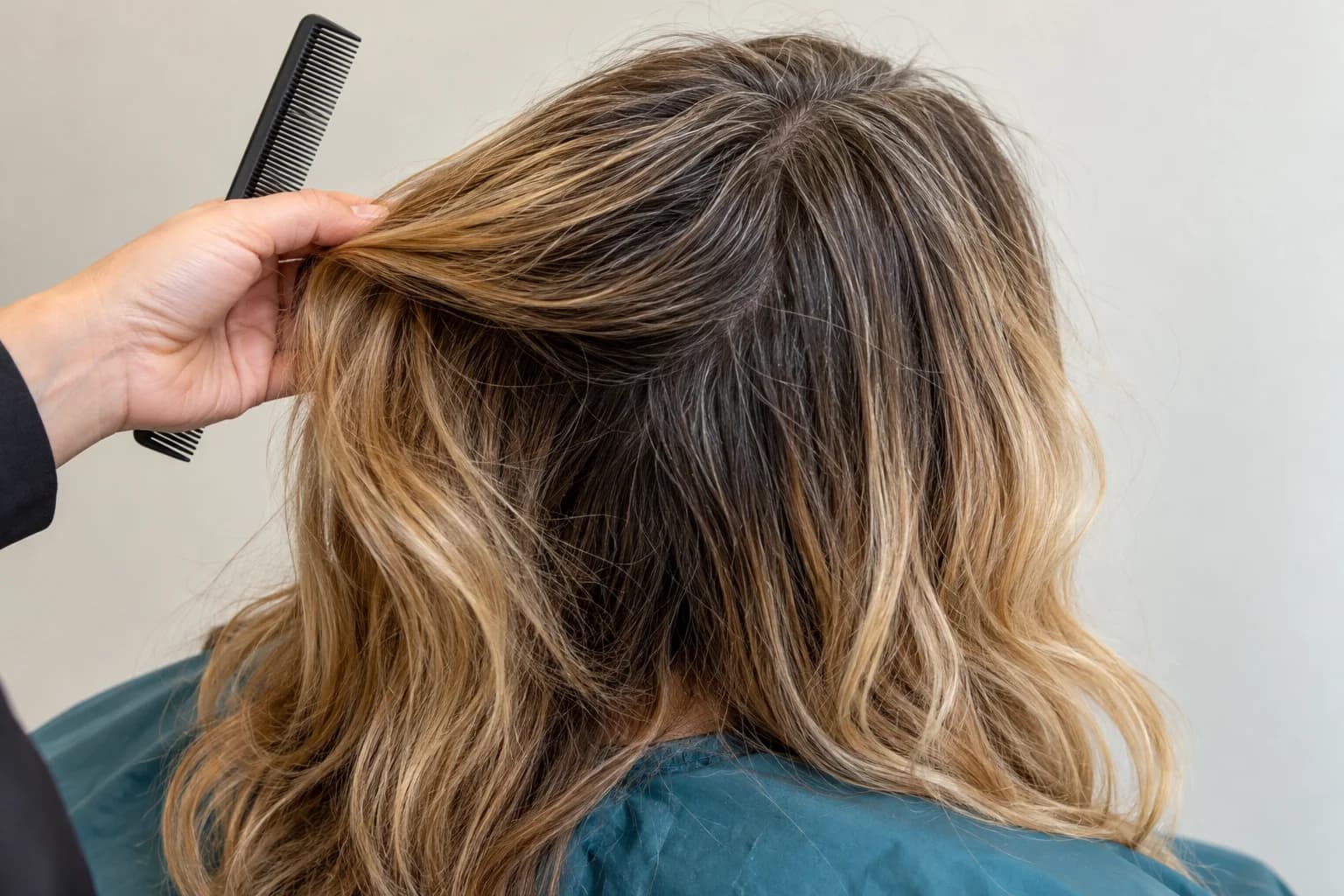
Take a current photograph in even daylight, away from direct sun and strongly colored walls. Include the roots, middle and ends; a tightly cropped face portrait may hide the area that bothers you. Keep an unedited version and describe what you see in person. A warm bathroom bulb, a filter or a bright reflection can change the impression of the same head of hair. Do not diagnose a correction from one unusually orange or dull photograph. Compare your own observations across a normal day before deciding that a new chemical service is needed.
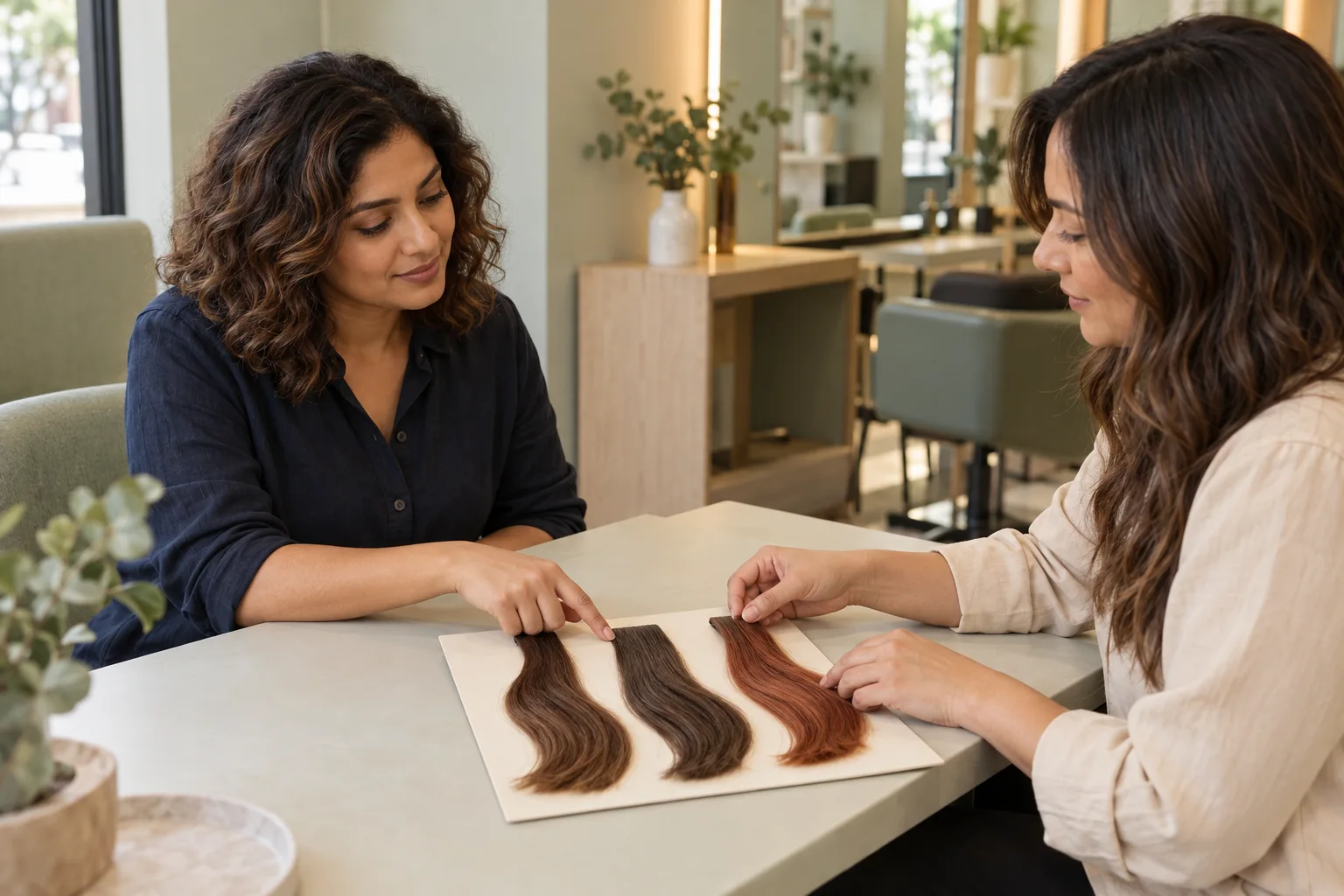
Bring a reference for the specific feature you like, not an instruction to reproduce the whole image. Point out whether it is the soft brown depth, a muted golden reflection or the relationship between light pieces and darker background. Separate the color from the haircut and the carefully arranged waves. If the reference is smoother than your ordinary hair, acknowledge that too. A color service and a styling finish are not interchangeable purchases. The colorist should be able to hear your goal without having to infer it from an attractive picture.

Make three separate decisions: shine, tone and brightness
First ask about shine: do you want the same visible color with a different finish, or are you comfortable with a shade change as well? If a clear option is discussed, ask what clear means in that salon’s system and whether anything else is being proposed. Do not take the word gloss as consent to make the lengths darker. Equally, do not assume a glossy-looking photograph proves that the person had a gloss service. Your reference establishes a visual preference, not a treatment history that can be copied.
Next describe tone in your own language: less golden, more copper, softer beige, less red-looking in a particular area. Then discuss brightness separately. Say whether you want to keep the present depth, appear darker or explore a lighter result. A request for less warmth does not automatically mean a request for more lightness. If your goal requires a different process from the booked service, ask for a revised plan and estimate before proceeding. The useful comparison is between explained options for your hair, not between two reassuring names on a menu.
Give the colorist the whole hair history
Prepare a short account of what has been done to the roots, lengths and ends, including salon color, home color, lightening and any other chemical services. Say when you are uncertain rather than turning a guess into a fact. Mention products used to change or maintain color, including tinted masks or shampoos. Bring names or photographs of packaging if you have them; you do not need to reconstruct a professional formula. A visible natural root does not mean the rest of the hair is untreated. Let the colorist decide what assessment or testing is appropriate.
Show the areas you most want protected. You may like the lighter front, prefer a darker background or want existing grey strands left visible. Ask which sections the proposed service would cover and what will happen to the rest. Do not agree to an all-over application merely because the booking sounds small. If the hair feels unusually fragile or the color history is unclear, a consultation can end with postponing the service. No online comparison establishes chemical suitability. Follow the professional’s and product manufacturer’s requirements rather than improvising tests, mixtures or timing yourself.

Ask what the appointment actually includes
Before confirming, ask whether the price covers the consultation, the proposed color service, drying and a finished assessment. Ask how the salon handles a change of plan if the hair needs something different. A menu starting price is not a quote for every head of hair. You also need to know whether lightening, root work or another separately charged service has been suggested. Avoid treating a short appointment name as evidence that the entire process is quick, gentle or inexpensive. The salon should explain the scope without making you learn its technical vocabulary.
State the boundary in plain terms: no extra lightening, no darker all-over result, or no change to the natural root without a new discussion. Choose whichever boundary matches your actual preference rather than reciting every possible restriction. Ask the professional to repeat the target back to you before beginning. A useful answer describes the intended visible change and its limits. If the explanation only repeats the word gloss or toner, ask again. You are consenting to a service on specific hair, not to a label with an assumed meaning.
Plan the fading you would be willing to live with
Ask how the proposed result may change between appointments and which part you might notice first. There is no single reliable wear time for every product, starting condition and routine. Explain how often you wash, whether you swim and what styling habits you actually keep. Ask for an aftercare plan tied to the chosen service, not a list of every available color product. Do not add strong color-maintenance products simply because an online photograph looks cool-toned. A home routine should support the agreed goal, not become an uncontrolled second color experiment.
Decide what would justify the next visit: an unwanted reflection becoming visible again, a contrast you no longer like, or a separate root decision. Not every change means the service failed, and not every faded result needs to be repeated immediately. Ask what to do if the result looks different once you wash and style it yourself. Keep the first follow-up descriptive and factual. Avoid layering another correction over it before speaking to the salon. You need a plan for an ordinary month of hair, not just the moment it is photographed.
Use optional previews only to clarify a color direction
If you are undecided between broadly warmer and cooler-looking directions, Hair Muse can be an optional visual planning aid. Use one clear portrait and compare a small number of available color previews without changing everything else at once. Note what you prefer in words, then return to an unedited current photograph for the consultation. HairChapter and Hair Muse share a publisher. The app is free to download; some functions or usage may require in-app purchases. The official App Store invitation earlier in this article is optional, and a consultation alone can answer the question.
A preview cannot identify the product system you need, inspect the color history or forecast fading. It does not guarantee actual hair behavior, chemical color results, exact fit, salon feasibility or the finished result. It cannot turn a request for a lighter shade into proof that a toner will achieve it. If a Hair Muse comparison clarified a preference, bring it as a conversation aid, not a recipe. Ask the colorist which part of the visual direction is realistic and which part belongs to lighting, styling or a different service.
Leave with a specific brief, not a new correction mission
Summarize your decision in three lines: what should change, what must stay and what needs professional assessment. For example, you might want a less warm reflection through the lengths while preserving their current depth and leaving the root alone. This is a personal brief, not a recommendation that everyone with warm hair should neutralize it. Warmth can be exactly what someone else wants. Keep one reference and one current photograph so that the conversation remains about your own result rather than a growing collection of incompatible examples.
Before leaving, look at the finished hair from more than one angle and ask for the recommended care instructions. Record what was actually done and any agreed follow-up, especially if the final plan differed from the original booking. You do not need to buy a matching home color to make the appointment worthwhile. If you remain uncertain, ask the salon to explain before making another change. The strongest outcome of this comparison is clarity: you know whether you are discussing shine, tone or a broader color change, and you understand what the chosen service cannot promise.
Three terms that make this conversation clearer.
You do not need to prescribe technique. Use these words to describe the visible structure, name the behavior you want, and ask what your stylist would adapt.
Consultation brief
A short, usable description of the result you want and the reality it must support. The strongest brief combines one structural change, one non-negotiable boundary, your normal styling routine, and a question that invites the stylist to adapt the plan.
SAY IT IN THE CHAIR“I want to change this, keep this boundary, and make sure the result still works when I style it this way.”Open full definition
Baseline
The lower edge or foundation of a haircut, especially visible in bobs and other compact shapes. A strong baseline can make the ends read as fuller and more graphic; a softer or broken baseline can make the outline feel lighter and less exact.
SAY IT IN THE CHAIR“I want the bottom line to feel complete, but not so sharp that the grow-out looks abrupt.”Open full definition
Maintenance window
The period during which a haircut still performs the job it was designed to do before a particular detail needs reshaping. The true window is set by the first meaningful change—often a fringe, nape, perimeter, crown, or loss of internal balance.
SAY IT IN THE CHAIR“Which detail will stop working first, and what is a realistic return window for that part?”Open full definition
Turn this guide into a decision.
Three honest answers are more useful than ten additional reference photos. Your responses stay on this page and can be changed at any time.
- 01Can you state one clear priority for this appointment?
A useful priority is specific enough to protect when the reference needs adaptation.
- 02Have you named the boundary you do not want traded away?
Examples: tie-back length, full ends, an open forehead, dry length, or support for natural texture.
- 03Does the plan fit your real styling and maintenance rhythm?
Count ordinary mornings, fallback styles, trim frequency, and the way the shape is likely to grow.
The short answers.
Are a gloss and a toner always different products?
No universal naming rule applies across salons and systems. The terms can describe overlapping goals. Ask which product and service are proposed, what visible change is intended and whether the existing depth and lighter pieces will be preserved.
Will a toner make my hair lighter?
Do not book on that assumption. Say explicitly that you want a lighter result and ask whether the proposed service can achieve it on your actual hair. Tone and brightness are separate decisions; an image cannot establish the process required.
Can I ask for shine without changing my color?
Yes, that is a useful preference to state. Ask what the salon offers for that goal and what its limits are. Do not assume everything called gloss is colorless, or that a clear label alone settles the full treatment plan.
How often should I repeat the service?
Agree a review based on the actual result, product and routine rather than a universal calendar. Identify the visible change that would bother you enough to return. Ask the salon before adding a different correction at home.
Can a preview choose the correct formula?
No. A preview can help explain an aesthetic direction, but it cannot assess chemical suitability, previous processing or the result of a particular product. Bring your real hair history and let the professional evaluate the service.
How this guide was built.
HairChapter separates haircut structure from styling, trend names, and medical claims. Our recommendations are decision tools, not universal rules: a stylist should adapt the direction to your starting length, density, pattern, condition, growth habits, and normal routine.
We do not claim that a photograph or AI preview can predict a finished service. Sudden shedding, patchy loss, scalp pain, persistent irritation, or an unexplained change in density belongs with a qualified medical professional—not a haircut guide.
Professional terminology, not a result guarantee
- Wella Professionals — glossing and toning services The professional service menu describes glossing alongside tone refinement. It illustrates overlapping service language, not a universal formula, damage claim, wear time or promise of lightening.