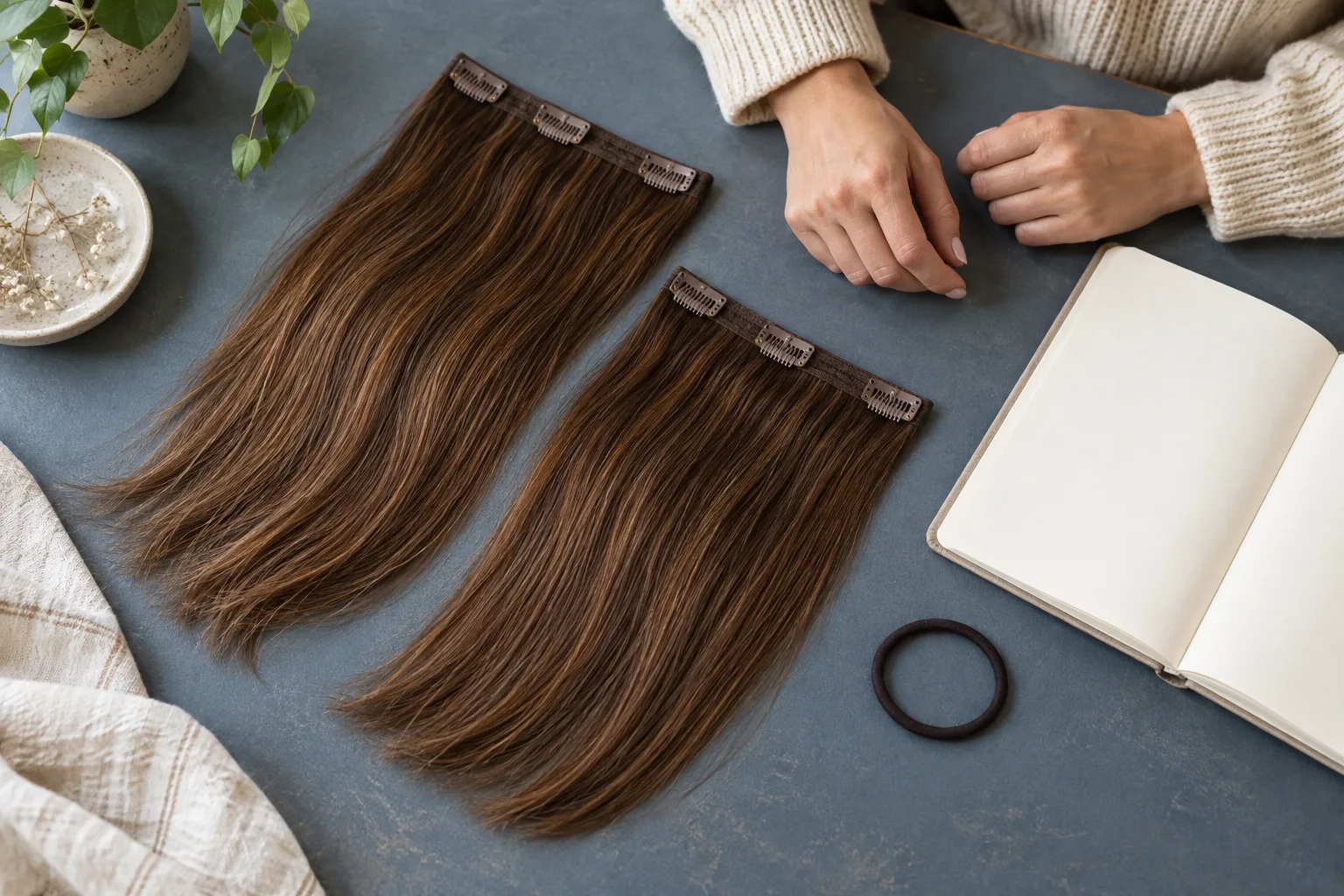
A haircut with extensions starts by identifying the two lengths
A haircut with extensions is not just a longer version of an ordinary trim. There is your own hair, there is added hair, and there is the outline they create together. Before approving any cutting, ask the stylist to show which material would be shortened in each area. The useful question is not simply whether extensions can be cut. It is whether the proposed adjustment changes only the added length, also alters your natural haircut, or requires another service before a sensible cut can begin.
Describe the result in plain terms: less weight at the bottom, a shorter overall length, a softer transition at the shoulders, or a fringe that stays independent of the extensions. Those are different requests. Chantal Haberland’s professional service description includes assessment of natural length and haircut shape, an extension blending cut and removal planning. That supports treating the appointment as a coordinated service, not assuming that every pair of scissors or every standard trim booking covers the same work.
Tell the salon what is fitted before booking
When booking, say whether the pieces are removable or fitted, which method you were told was used, who installed them and what you now want changed. If you do not know the method, say so rather than guessing. Ask whether the salon accepts work on an existing installation and whether it needs a consultation first. A photograph may help explain the request, but it cannot establish the condition of hidden attachments or replace an assessment in person.
Bring the installation details or care instructions you already have, without inventing a technical description. For removable pieces, ask whether to arrive wearing them, bring them separately, or have your natural haircut assessed first. Do not remove fitted extensions yourself to make the appointment simpler. Let the relevant professional decide whether cutting, adjustment or removal needs to happen first. Confirm what the booking includes so a short trim does not unexpectedly turn into a service you have not agreed to.
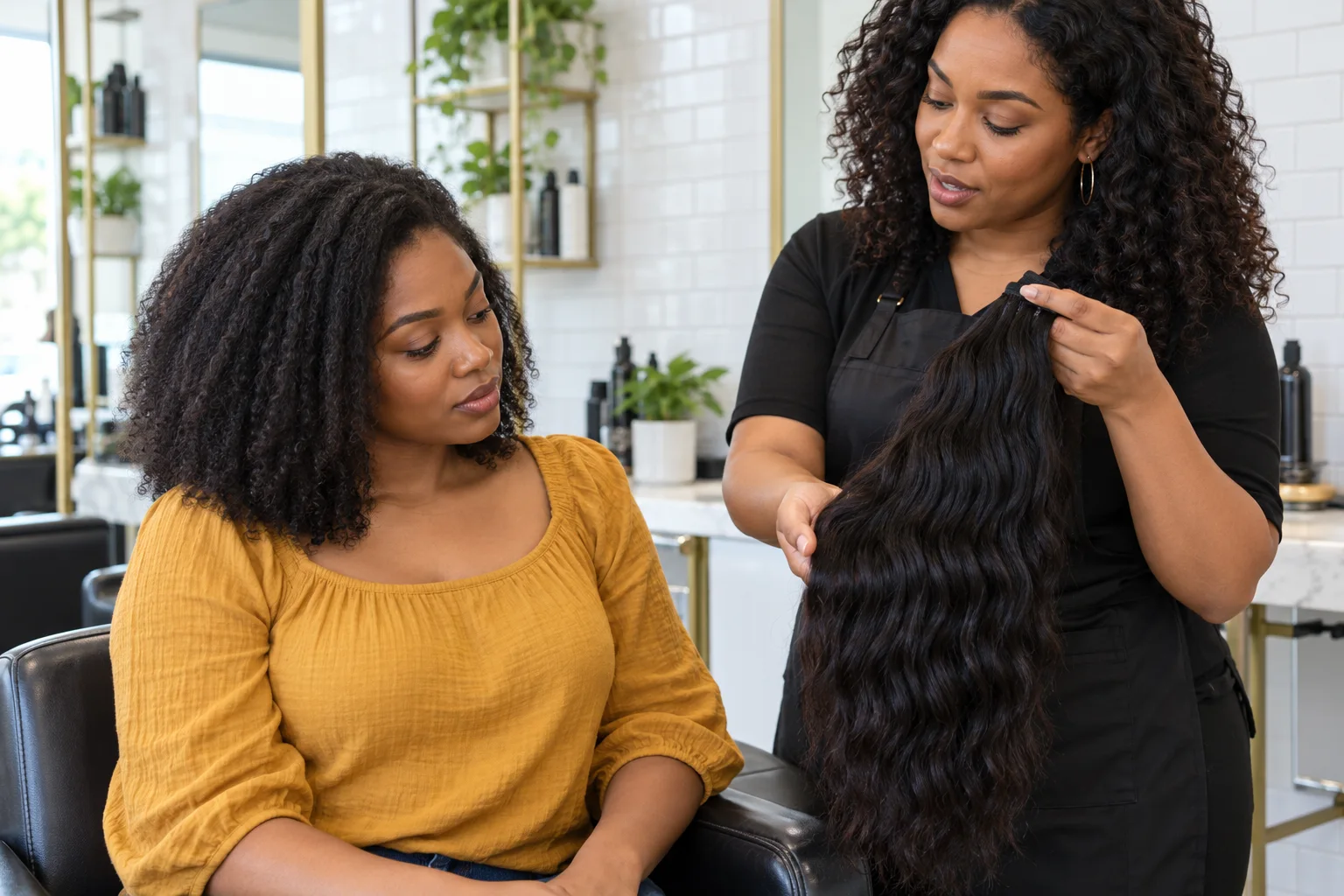
Protect your natural haircut with an explicit boundary
Ask to see your natural ends separately before they disappear into the combined style. Name the shortest length you would accept in your own hair and identify any front or side pieces you do not want shortened. A request to blend should not function as blanket permission to layer, thin or reshape everything. If the stylist says some natural hair must change, ask what problem that solves and what the remaining shape would look like without the extensions.
You may decide that a more modest change is preferable to a perfect-looking match. For example, keeping a compact natural bob may matter more to you than making a much longer set look seamless when worn straight. Ask what can realistically be improved while keeping that boundary. If the goals conflict, reducing the added length, accepting some styling work or postponing the change may be more acceptable than cutting your own hair into a shape you would not choose independently.
Choose the finished edge before discussing layers
Decide whether you want the combined ends to look compact, softly tapered or visibly layered. Bring a back view as well as a front view. A polished wave can hide a heavy ledge or make a thin lower edge look fuller than it does in ordinary wear. Ask the professional to explain what is responsible for the visible transition: length, placement, texture, amount of added hair or the existing haircut. More cutting is not automatically the answer to every mismatch.
Keep internal layers and the outer length as separate approvals. Saying keep the length can still leave room for more shortening higher up than you intended. Ask where the shortest proposed pieces would end and whether they belong to you or the added hair. Do not request a particular blade or cutting technique from an online demonstration. The professional should choose a method appropriate to the actual material and installation; your role is to agree the result and its limits.

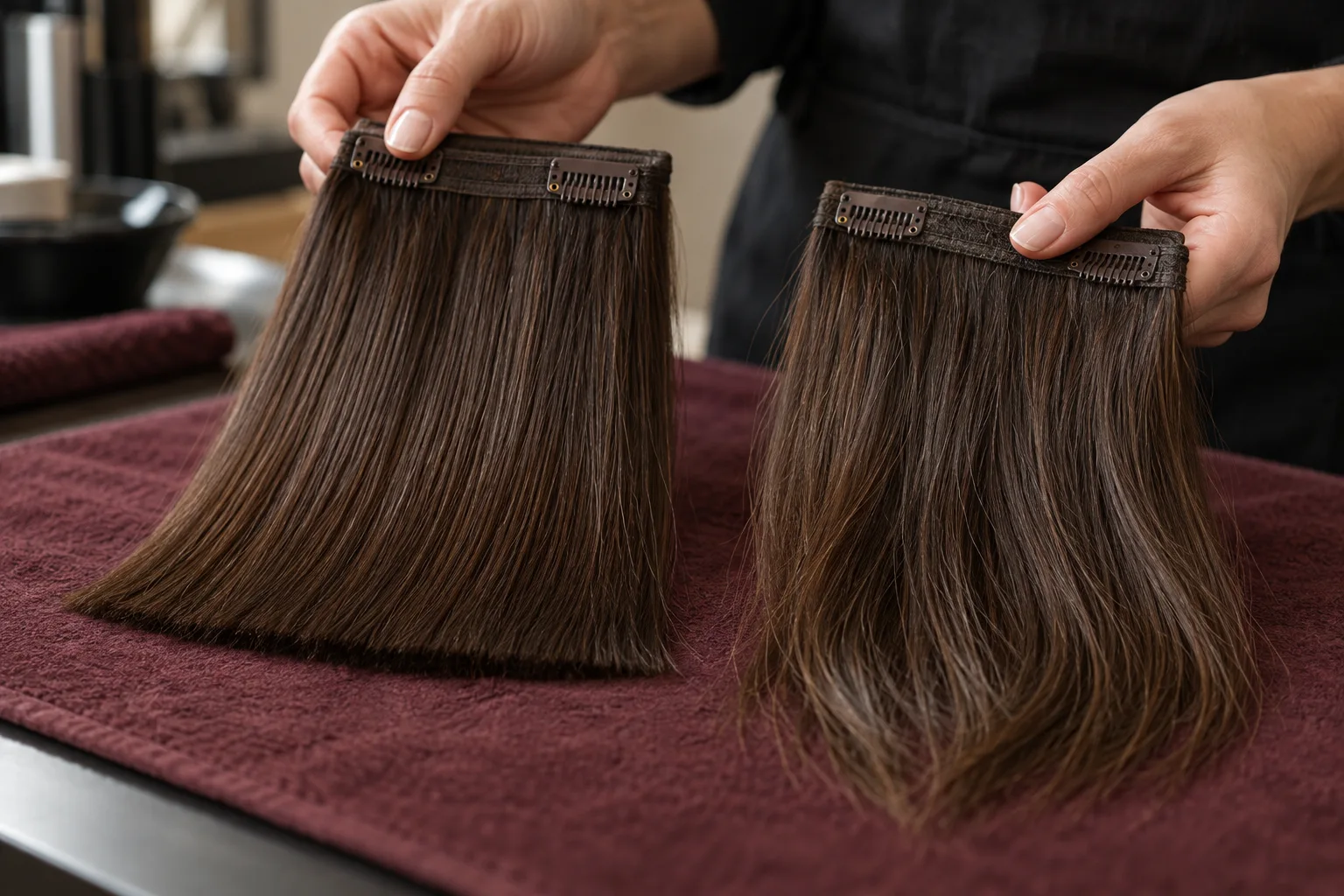
Check the everyday finish, not just the reveal
Describe how you normally wear your hair: straight, naturally wavy, curled occasionally, tucked behind the ears or loosely tied back. Ask to assess the blend in the finish you intend to repeat. If a result depends on curling both textures together every morning, that work belongs in the decision. You do not need to reject a styled finish, but you should know whether you are choosing a haircut, a styling commitment or both.
For optional broad style exploration, Hair Muse can help clarify whether you prefer a shorter or fuller overall silhouette. It cannot identify attachments, separate natural strands from extensions or calculate a safe blending cut. A frontal preview may not show the back transition at all. HairChapter and Hair Muse share a publisher. Hair Muse is free to download; some functions or usage may require in-app purchases. The App Store invitation is optional and does not replace an extension specialist’s assessment.
Think through movement and the styles you actually use
Tell the stylist which everyday positions matter: hair behind one shoulder, a low ponytail, a loose updo or a part that you sometimes move. Ask what can reasonably be checked with your particular installation without pulling or disturbing it. Do not copy an image that shows attachments exposed as if it were a fitting tutorial. The point is to discuss visibility and comfort with the person responsible for the system, not to experiment with tension at home.
If you wear removable pieces only for occasions, explain how often they are absent. A cut designed entirely around wearing them may be inconvenient on the other days. Ask how the front, sides and bottom edge will read on their own, and whether the pieces need a consistent position when used again. Have the professional explain any material-specific care or styling limits. There is no single heat setting, washing routine or maintenance interval that this haircut label can safely prescribe for every system.

Plan the next visit and the version without extensions
Before leaving, ask which future changes would call for a trim and which would require an extension check, adjustment or removal. If the bottom looks uneven later, do not assume you should simply cut the longest strands yourself. The visible outline may have changed for reasons that need professional assessment. Keep the contact details and service instructions from the provider, and ask how to describe the issue when booking so the right work is reserved.
Hair Muse can help you revisit a broad length preference before a later consultation, but it cannot forecast how your natural hair will look after removal or prove that a particular installation is suitable. For that decision, use a real current assessment and the natural length you agreed to preserve. If you plan to stop wearing extensions, ask for a transition plan that does not depend on buying another set. Any additional service or replacement should be a fresh choice, not an assumed consequence of today’s haircut.
Approve the scope once more before the first cut
Repeat the agreement as three short statements: the added length may finish here; my own shortest pieces must remain here; the daily finish I will maintain is this. Ask the stylist to pause and explain if achieving the requested blend would require going beyond any of those boundaries. This is not a demand to supervise the professional’s technique. It is a way to make consent about length and services specific enough that both people can recognise when the proposal changes.
If the consultation reveals that the installation needs attention or that the desired blend conflicts with preserving your haircut, it is reasonable to stop at a plan. Ask for the proposed order of services and what must be reassessed before proceeding. Do not try to rescue a rushed booking with an irreversible compromise. The best outcome may be a smaller trim today and a properly arranged follow-up, with your natural shape and your choices still intact.

Three terms that make this conversation clearer.
You do not need to prescribe technique. Use these words to describe the visible structure, name the behavior you want, and ask what your stylist would adapt.
Consultation brief
A short, usable description of the result you want and the reality it must support. The strongest brief combines one structural change, one non-negotiable boundary, your normal styling routine, and a question that invites the stylist to adapt the plan.
SAY IT IN THE CHAIR“I want to change this, keep this boundary, and make sure the result still works when I style it this way.”Open full definition
Baseline
The lower edge or foundation of a haircut, especially visible in bobs and other compact shapes. A strong baseline can make the ends read as fuller and more graphic; a softer or broken baseline can make the outline feel lighter and less exact.
SAY IT IN THE CHAIR“I want the bottom line to feel complete, but not so sharp that the grow-out looks abrupt.”Open full definition
Maintenance window
The period during which a haircut still performs the job it was designed to do before a particular detail needs reshaping. The true window is set by the first meaningful change—often a fringe, nape, perimeter, crown, or loss of internal balance.
SAY IT IN THE CHAIR“Which detail will stop working first, and what is a realistic return window for that part?”Open full definition
Turn this guide into a decision.
Three honest answers are more useful than ten additional reference photos. Your responses stay on this page and can be changed at any time.
- 01Can you state one clear priority for this appointment?
A useful priority is specific enough to protect when the reference needs adaptation.
- 02Have you named the boundary you do not want traded away?
Examples: tie-back length, full ends, an open forehead, dry length, or support for natural texture.
- 03Does the plan fit your real styling and maintenance rhythm?
Count ordinary mornings, fallback styles, trim frequency, and the way the shape is likely to grow.
The short answers.
Can I get a haircut while wearing extensions?
Ask a salon experienced with your actual system. Explain the method, installation history and desired change before booking. The professional may need to assess the installation or coordinate another service first. A standard trim appointment is not automatically the right booking.
Does blending always mean cutting my own hair?
Do not assume either yes or no. Ask the stylist to identify the proposed changes in the natural hair and the added hair separately. If preserving your own outline is essential, state that before agreeing to the blend and discuss the compromises.
Can clip-in pieces be cut for different hairstyles?
Ask a professional to assess the actual pieces, their material and how you wear them. Cutting changes the pieces permanently; they do not grow back. Agree the position, length and finish instead of trimming a detached set by eye at home.
Will more layers hide every transition?
No result can be promised from that instruction alone. Placement, texture, the starting haircut and the amount of added hair may also matter. Ask what is causing the visible mismatch before approving additional shortening or thinning.
Should I plan the haircut after removal now?
Yes, especially if you sometimes wear removable pieces or expect to stop using fitted extensions. Ask what natural length and shape remain after today’s proposed cut. A visual preview cannot establish that outcome or replace an in-person assessment.
How this guide was built.
HairChapter separates haircut structure from styling, trend names, and medical claims. Our recommendations are decision tools, not universal rules: a stylist should adapt the direction to your starting length, density, pattern, condition, growth habits, and normal routine.
We do not claim that a photograph or AI preview can predict a finished service. Sudden shedding, patchy loss, scalp pain, persistent irritation, or an unexplained change in density belongs with a qualified medical professional—not a haircut guide.
Professional context, not a treatment recommendation
- Chantal Haberland — consultation, blending cut and removal planning The salon describes assessing natural length and haircut shape, an extension blending cut and future removal planning. Its product claims, prices and wear intervals are not adopted here.