
A jellyfish haircut is a decision about two complete levels
A jellyfish haircut combines a shorter, readable upper outline with longer hair left underneath. Revlon Professional describes that deliberate separation as the defining structure. The important word is underneath: this is not merely a pair of short pieces near the cheeks. The upper shape can continue around the sides and back, changing how much hair participates in the longer section. Before agreeing to the cut, ask to see both levels as complete shapes. Keeping the lowest endpoint does not mean keeping the same amount of long hair.
The useful first question is whether you want that separation when the hair is worn normally, without careful arrangement for a photograph. A softly layered haircut can create movement while keeping more connection between lengths. A hime cut concentrates its contrast at the front side panels. A jellyfish request puts the relationship between a cap and its underlength at the center. Neither a strong fringe nor a new color is compulsory. Name those as separate choices so that an exciting reference does not silently expand the appointment.
Reserve enough long hair before drawing the upper edge
Look at the lower section against a plain shirt from the back and both profiles. Decide whether you want a substantial lower curtain or a smaller set of visible lengths. Two photographs can have the same chest-level endpoint yet leave very different amounts of hair underneath. Ask the stylist to show, on your own hair, which material would belong to the upper shape and which would stay long. An image cannot establish how full your lower section will look after that division.
Be especially clear if the fullness of your present ends is something you value. Say that preserving the long section means preserving a readable amount of it, not merely leaving a few longest pieces untouched. Do not ask for thinning as a vague precaution against heaviness. First understand what will remain in each level, then let the professional explain any proposed adjustment. If the available lower hair cannot support the outline you imagined, a less extensive short section or a different haircut may be a better agreement.

Choose the cap's dry landing point around the whole head
Mark where you would be comfortable seeing the upper edge at the front, near the ears and across the back. An upper shape near the jaw gives a different impression from one ending much higher, even if the lower length is identical. Sit normally and use your usual part. Ask which portions will fall forward and which will sit behind the ears. Do not approve the cut while the reference is doing all the explaining; the professional should show what the planned outline means on your own head.
Texture changes how that outline is read. Straight hair can make the separation look graphic; waves and curls may give the same structural decision a softer or more expanded appearance. Ask to discuss your ordinary dry finish rather than assuming you will straighten the cap daily. A curl at the front and a longer curl underneath need not end at the same relative positions as a smooth reference. The question is not which texture deserves the name. It is whether you like the version your real hair and routine can support.
Test three wearing modes, especially the rushed one
Discuss the cut worn completely down, with the long lower section gathered, and in whatever fastening you genuinely need for work or exercise. A low ponytail underneath may leave a bob-like upper shape loose around the face and nape. That may be exactly the feature you want, but it is not equivalent to tying every hair away. If all hair must be secured, state the requirement before choosing a short upper boundary. Neither a long back nor an attractive ponytail photograph proves that the upper pieces can reach the same elastic.
Show your ordinary glasses, collar and preferred clips if they affect comfort. Turn your head and look down during the consultation rather than holding a flattering pose. Ask which pieces may come forward when only the underlength is tied and what a practical alternative would involve. Pinning the cap separately is a different routine from one quick ponytail. Do not accept it as effortless unless it feels acceptable to you. If fastening is non-negotiable, retaining more upper length may matter more than creating the strongest possible separation.

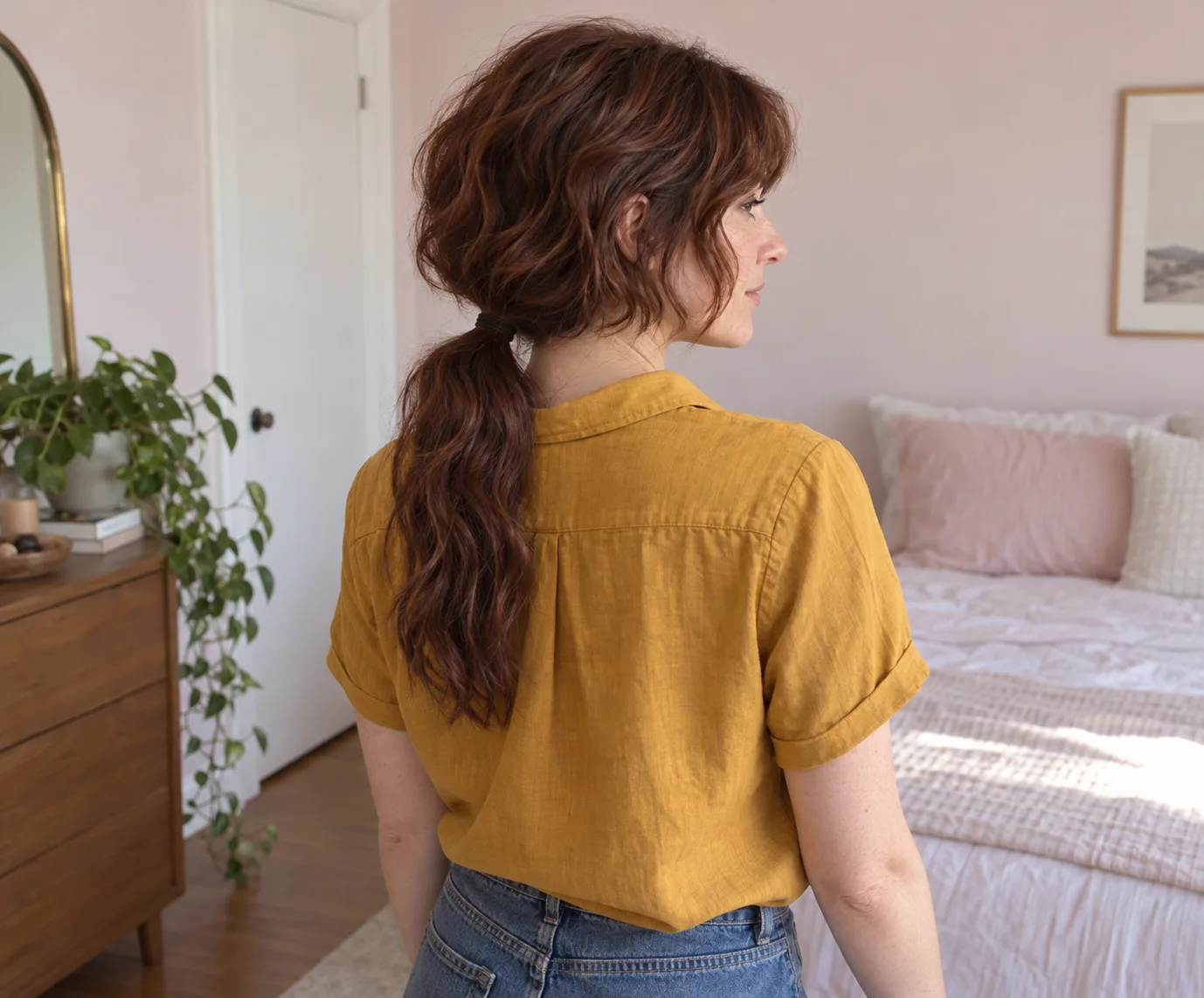
Use a preview to compare one proportion, not to invent a section map
If the overall proportion is difficult to picture, Hair Muse can provide optional visual comparisons using a clear photo and available styles. Compare a rounded shorter upper impression with a longer, more connected silhouette while keeping the broad color direction steady. The exact jellyfish variation may not be available; do not treat another style as a custom technical design. Note the single preference you discover, such as a lower upper edge or less width beside the cheeks. Return to actual side and back references before deciding how the hair would be divided.
HairChapter and Hair Muse share a publisher. The app is free to download; some functions or usage may require in-app purchases. The official App Store invitation earlier on this page is optional. A preview does not guarantee actual hair behavior, chemical color results, exact fit, salon feasibility or the finished result. It cannot measure your lower density, predict which hairs reach an elastic or draw a trustworthy cutting boundary around the back. A professional consultation alone can answer the decision. Use the picture as a question, not as proof.
Budget for two different lengths in the same morning
Tell the stylist how you normally wash, detangle and dry, including what happens on days when you do very little. You may enjoy arranging a compact upper shape but want the long section to remain natural. Or you may prefer soft movement in both rather than a polished cap over highly styled ends. Ask for the least elaborate finish that still makes the distinction you want readable. A cut with long hair underneath still carries the handling and drying needs of those lengths.
Request a demonstration with the tools you actually intend to use. Do not buy an entire routine before finding out which part needs attention. During the first home wash, keep the process familiar enough to evaluate the dry outline and the relationship between the levels. If the upper section sits wider than expected, describe where and when it happens before requesting more removal. Cutting extra material from the lower section may not solve an upper-shape problem. Keep the two questions separate rather than chasing a photograph through repeated adjustments.
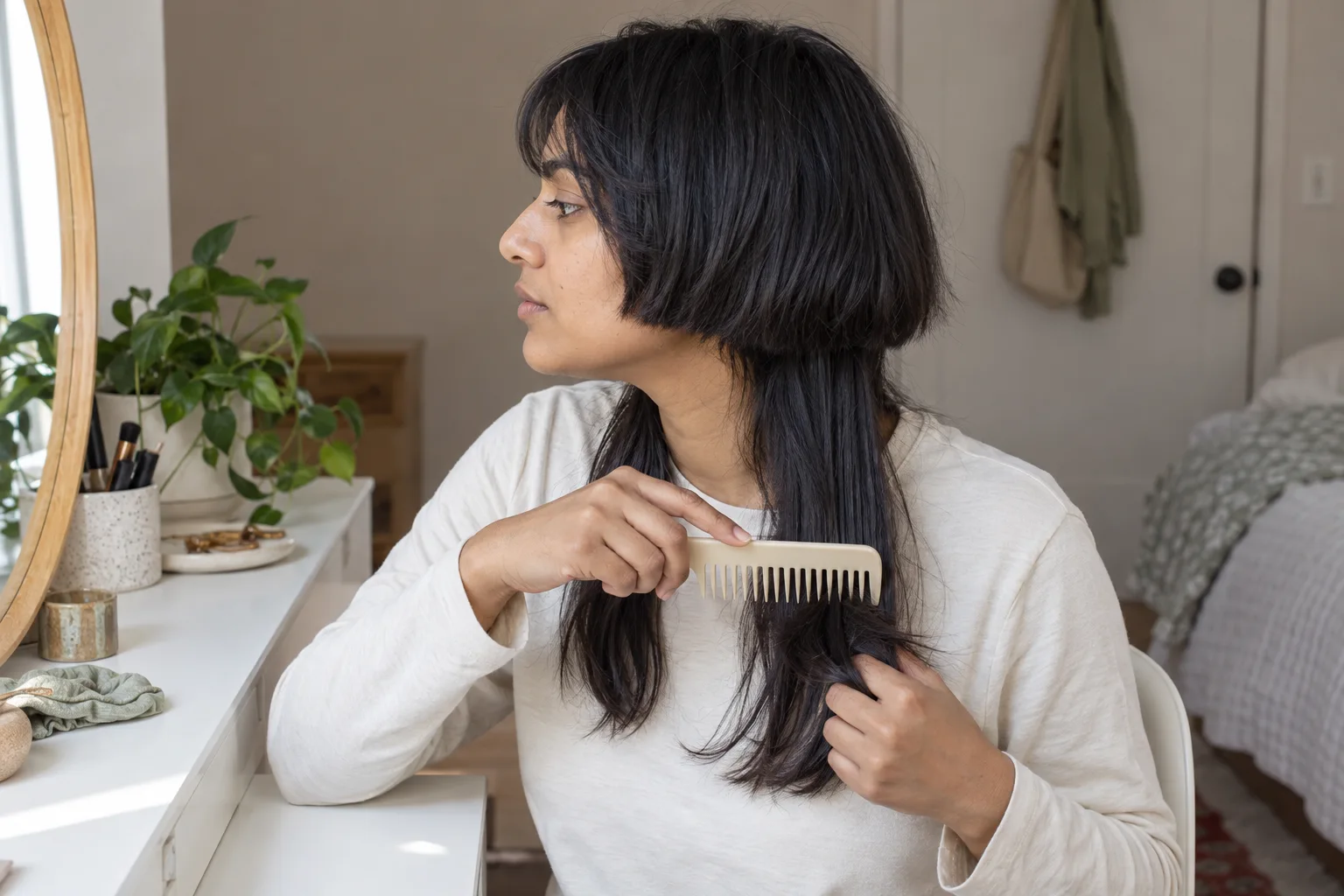
Decide which direction a later change would take
A future change can preserve the long lower length while the cap grows, or bring the lower hair upward toward a shorter overall haircut. Those are different commitments. Ask which transition you would prefer before choosing an especially short upper edge or a very long lower tail. A haircut does not become easy to reverse simply because some hair remains long. If the goal later becomes a continuous long outline, the upper sections need time and a plan rather than another automatic reset to their shortest point.
At a maintenance visit, say whether you want to sharpen the two levels or gradually soften their relationship. Do not let the word tidy make that decision for you. Identify the change that would actually bother you: an upper edge approaching the eyes, an imbalance in the lower curtain or a less distinct gap. There is no universal visit interval for every version. If a Hair Muse comparison clarified a preferred proportion, keep the written preference for this follow-up, while checking the actual hair rather than expecting the preview to predict its growth.
Give consent to the division, not just the hairstyle name
Before cutting, ask the stylist to identify the hair reserved long and explain the upper outline from the front, both sides and behind. Confirm fringe separately, along with any proposed texturizing or color service. A useful brief might say: a rounded jaw-level cap, a lower section that still reads as a full length, no new fringe, and a fastening alternative you have agreed to try. Adapt those boundaries to your own priorities. Do not copy them as measurements or assume that one version is the standard everyone should want.
Finish with a checkpoint: what will you review dry before allowing further shortening, and what happens if the remaining lower section looks less substantial than expected? You can choose a smaller change or pause for another consultation. After the cut, photograph the ordinary front, profiles and back rather than judging only the most flattering angle. The images in this guide are generated illustrations, not documented results or a tested transformation. A successful decision is one in which you understand both lengths, what they can fasten into and what you would do when your preference changes.
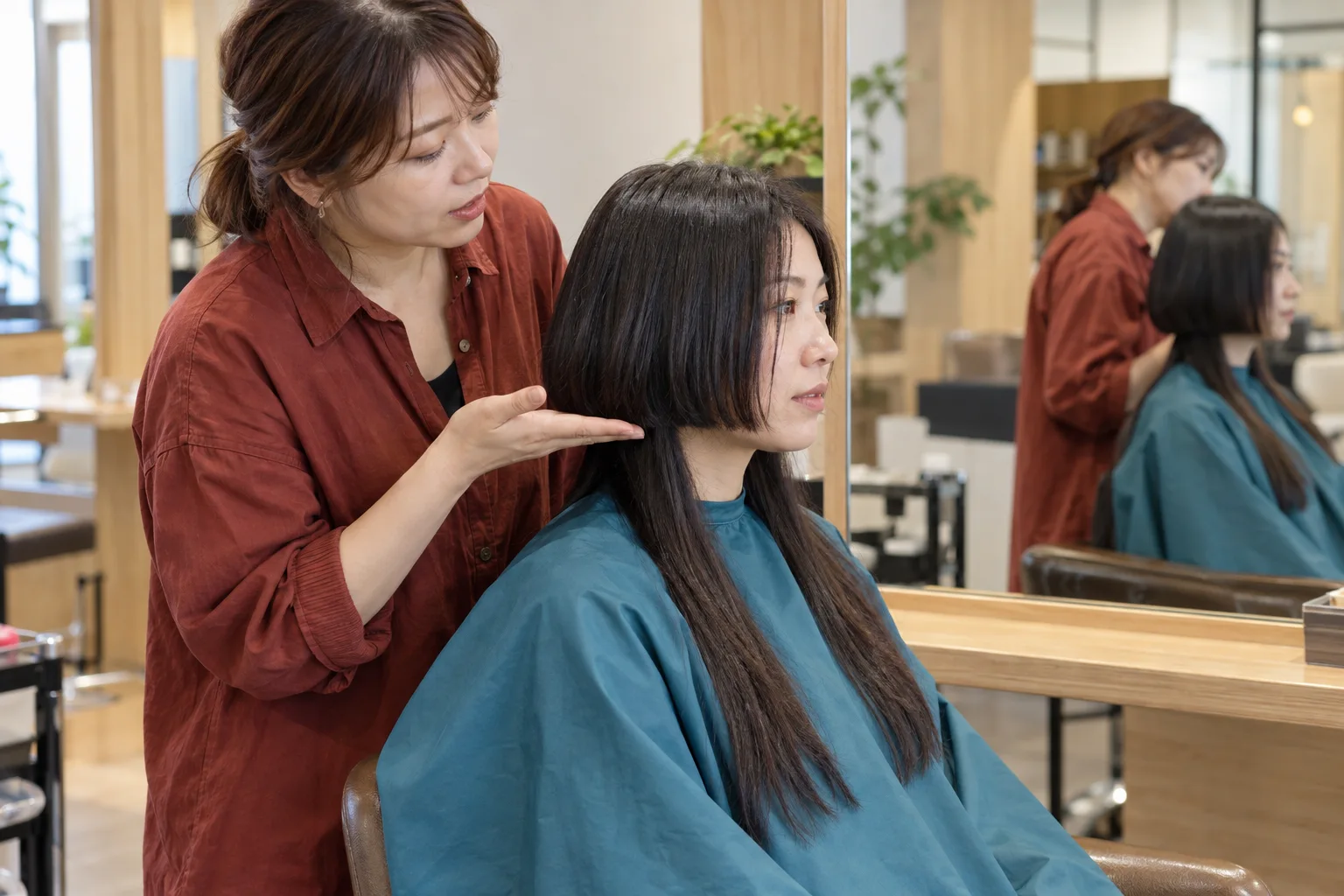
Three terms that make this conversation clearer.
You do not need to prescribe technique. Use these words to describe the visible structure, name the behavior you want, and ask what your stylist would adapt.
Perimeter
The outside boundary of the haircut: the line you read around the bottom, sides, and overall edge. A compact perimeter usually feels fuller and more controlled, while a broken or highly layered perimeter can feel lighter, softer, or more textured.
SAY IT IN THE CHAIR“I like the movement, but I want the outside edge to remain substantial when the hair is straight or air-dried.”Open full definition
Layer map
A plain-language way to describe where the shortest layers begin, how quickly they connect to longer sections, and where movement or volume is intended to appear. Two haircuts with the same overall length can feel completely different because their layer maps differ.
SAY IT IN THE CHAIR“Show me the shortest layer, where it connects, and how much weight remains beneath it.”Open full definition
Silhouette
The complete outside shape a haircut creates when viewed as a whole: compact, rounded, triangular, elongated, wide, narrow, or deliberately irregular. It is often the most reliable feature to compare before discussing small details or a polished finish.
SAY IT IN THE CHAIR“I want this overall shape, but I am open to changing the internal technique for my hair.”Open full definition
Turn this guide into a decision.
Three honest answers are more useful than ten additional reference photos. Your responses stay on this page and can be changed at any time.
- 01Can you point to the exact structural detail you want from this cut?
Name the shortest point, outside line, layer map, or placement of volume.
- 02Have you named the boundary you do not want traded away?
Examples: tie-back length, full ends, an open forehead, dry length, or support for natural texture.
- 03Does the plan fit your real styling and maintenance rhythm?
Count ordinary mornings, fallback styles, trim frequency, and the way the shape is likely to grow.
The short answers.
Is a jellyfish haircut just a hime cut?
Not necessarily. The jellyfish brief concerns a shorter upper shape over long hair underneath, often continuing around the back. Hime usually emphasizes separate front side panels. Show the exact boundaries you mean rather than relying on either label.
Can I still put all my hair in a ponytail?
Do not assume so. The long lower section may gather while the shorter cap remains loose. State any requirement to secure every piece before cutting. Ask which extra clips or retained upper length would be needed.
Will keeping the long ends preserve their fullness?
Not automatically. Moving hair into the short upper section changes how much remains underneath. Ask the stylist to show the proposed division on your actual hair before agreeing to the cap or any additional thinning.
Can wavy or curly hair keep the two-level shape?
Discuss the dry silhouette in the finish you normally wear. The separation may look softer or wider than in a straight reference. The stylist should assess the available hair and explain the version your routine can support, without promising an identical image.
Does an app preview show the cutting sections?
No. It can clarify a broad proportion, not density, full-head sectioning, fastening reach or growth. Exact variations may not be available. Bring real front, side and back references and treat the preview as a conversation aid.
How this guide was built.
HairChapter separates haircut structure from styling, trend names, and medical claims. Our recommendations are decision tools, not universal rules: a stylist should adapt the direction to your starting length, density, pattern, condition, growth habits, and normal routine.
We do not claim that a photograph or AI preview can predict a finished service. Sudden shedding, patchy loss, scalp pain, persistent irritation, or an unexplained change in density belongs with a qualified medical professional—not a haircut guide.
Professional definition, not a universal cutting recipe
- Revlon Professional — the jellyfish cut's two levels The professional reference describes a short structured upper section over longer disconnected lengths. We use that definition only, not its face-shape exclusions, trend claims, products or cutting instructions.