
Peekaboo hair color is not a promise of invisibility
Peekaboo hair color places a contrasting area beneath other hair, rather than distributing the change across the whole visible surface. In Hairdressers Journal, colorist Harriet Stokes describes panels that can be hidden or visible and reveal themselves with movement. That distinction matters more than the surprise in a photograph. Something covered while you sit still may appear when you turn your head, tuck a side behind an ear or gather the hair. Treat hidden as one wearing condition, not a permanent property of the service.
Start by naming your real boundary. You might welcome a glimpse at the ear but want the front hairline untouched. You might want the color obvious in an updo and subtle when loose. Or you might need it completely unseen in particular situations. The last requirement is much harder to assume from a picture. Tell the professional which situation matters most and ask whether the proposed design can reasonably meet it. If certainty is essential, choosing not to color that area remains a valid outcome.
Separate the colored area from the covering haircut
Ask the colorist to indicate the proposed section on your own dry hair before discussing an exact shade. Look at where it would begin near the nape or behind the ears, how far it would extend sideways and where its ends would sit. Then identify the hair intended to cover it. Do not approve a broad underlayer simply because the reference appears discreet. The photograph may have more covering hair, a different part or a deliberately arranged finish that you do not normally wear.
The haircut is part of this decision. Shorter layers, a change of part or an opened side can alter what falls over the color. Explain any haircut you are considering, even if a different appointment will handle it. Ask what should remain long or substantial if coverage is a priority. This is not a reason to avoid every layer, and there is no universal minimum length. It is a reason to agree the cover and the colored material as two related areas instead of making one decision after the other.
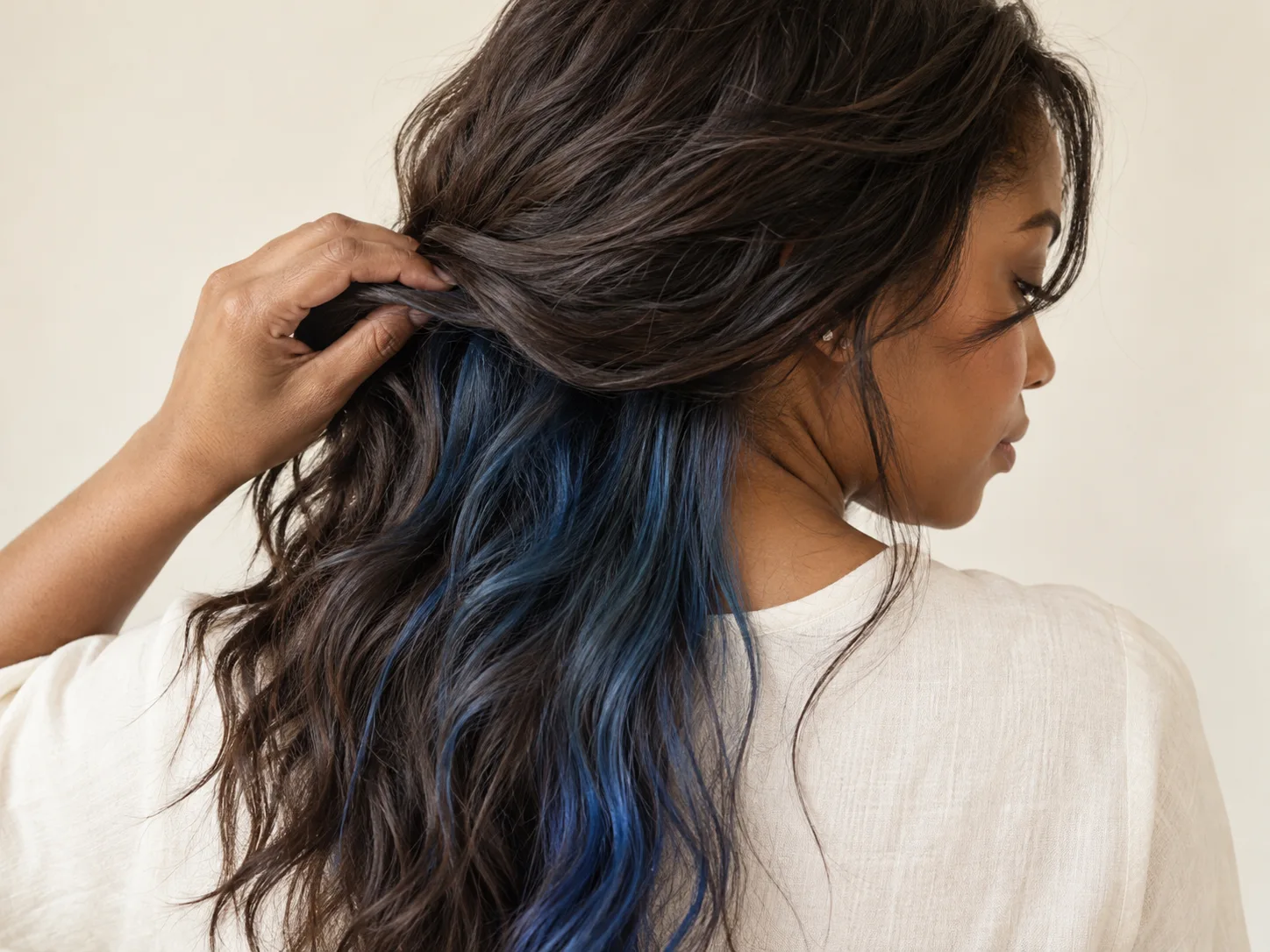
Test the ordinary movements that a reference leaves out
Use three familiar wearing situations: loose in your usual part, tucked as you wear it during the day, and secured for work or exercise. At the consultation, demonstrate each on your current hair. Turn both ways and look at the back with a second mirror or an ordinary photograph. Ask the professional to show which proposed boundaries become exposed in each situation. You are checking a design, not proving that untreated hair will behave exactly like a finished color service.
Consider the inconvenient version too. A coat collar can push hair outward; glasses may encourage you to tuck it; a clip may expose more nape than your usual low ponytail. Choose examples from your actual life rather than collecting every possible hairstyle. If you would need constant arranging to maintain the desired concealment, count that as work. Do not call the plan low maintenance merely because most of the head stays its current color. Coverage, daily handling and color upkeep are separate commitments.
Bring two kinds of reference, not a single perfect reveal
Bring an example of the amount of color you like and another of the loose appearance you want to keep. A striking lifted-hair photograph answers the first question but may say nothing about the second. Add unedited current views of your own front, both sides and back in ordinary light. Mark whether your reference is about area, contrast or shade. A professional can then explain which preference is transferable and which relies on different hair or styling.
Compare pictures at similar brightness without treating a screen as a color chart. A bright narrow panel and a muted broad panel are different choices, even when both are called peekaboo. Decide which variable you care about before asking to copy the whole image. The guide's generated photographs illustrate visibility questions only; they are not proof of a formula, achievable lightness or a completed salon service. Keep room to reduce the area or choose a less contrasting direction after the real assessment.

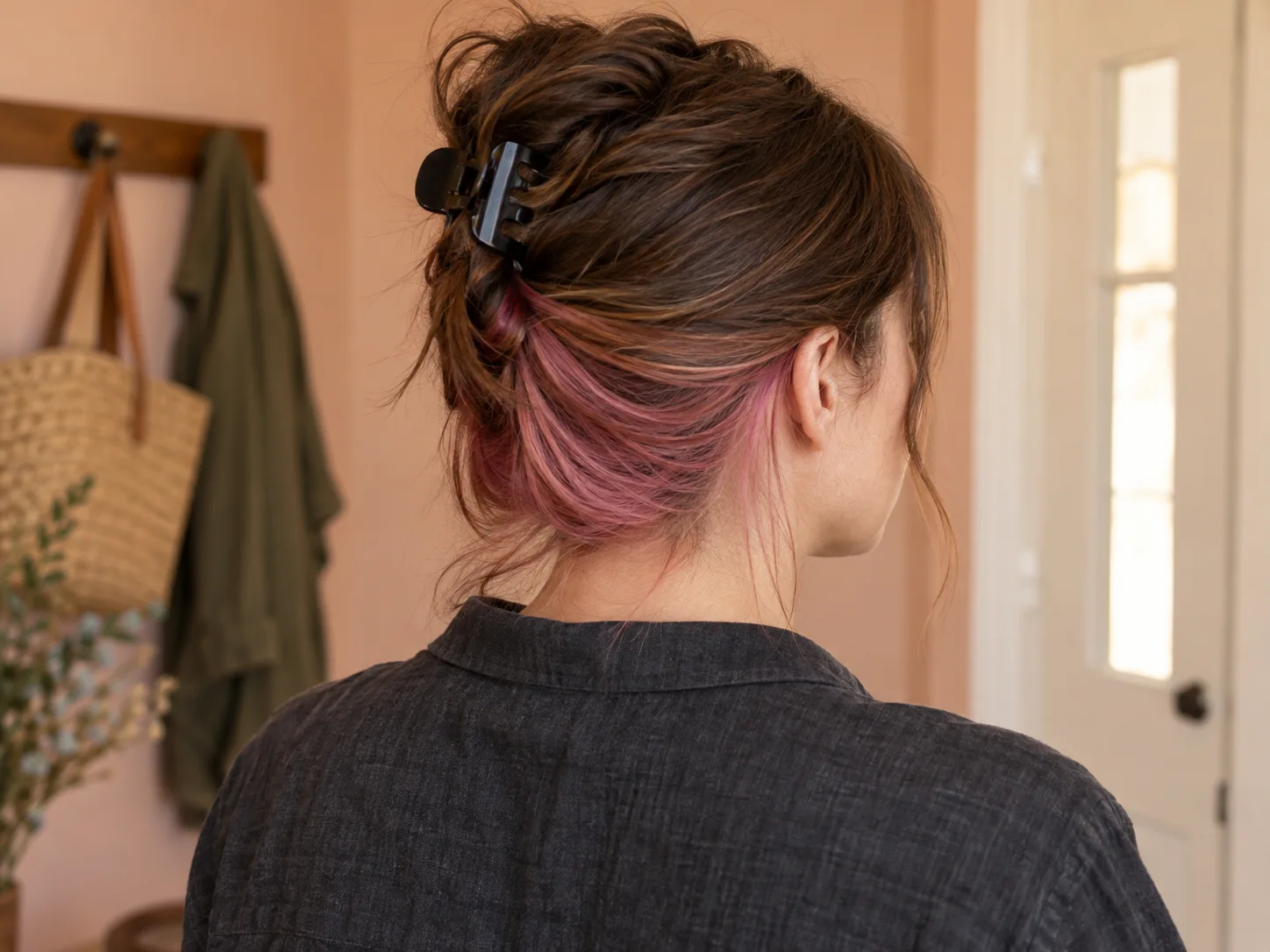
Keep a color preference separate from a technical promise
A colorist needs to assess the actual lower hair, not just the darker hair resting above it. Describe previous color, lightening and other relevant services honestly, including work that is now partly grown out. Ask whether the desired contrast would require lightening and what alternatives exist if you do not want that step. Do not choose a developer strength, processing time or correction method from a guide. A smaller area does not make an unfamiliar chemical history irrelevant.
If a broad color direction is difficult to imagine, Hair Muse can offer optional comparisons on your own clear photograph using available looks. Exact hidden panels or placement controls may not be available; an all-over preview is not a section plan. HairChapter and Hair Muse share a publisher. The app is free to download, with possible in-app purchases for some functions or usage. The official App Store invitation earlier is optional. Previews do not guarantee real hair behavior, chemical color results, exact fit, salon feasibility or the finished result.
Ask what upkeep means for the way you already live
Describe your normal washing, drying, swimming and fastening habits before agreeing to the service. Ask for care instructions specific to the proposed color and starting hair, rather than adopting a universal timetable from a photograph. Find out which parts you would manage at home and which changes should be assessed in the salon. You should understand the work and likely follow-up needs without being promised an identical shade for a fixed number of weeks.
Ask what you might notice first: a change in tone, a more visible root boundary or a different contrast against the covering hair. These are separate reasons to book advice, and not every change calls for coloring the whole section again. If a home color-depositing product is proposed, request precise product instructions and its limitations; do not improvise a mixture to chase a screen image. A plan you cannot realistically maintain is useful information before the appointment, not a failure afterward.
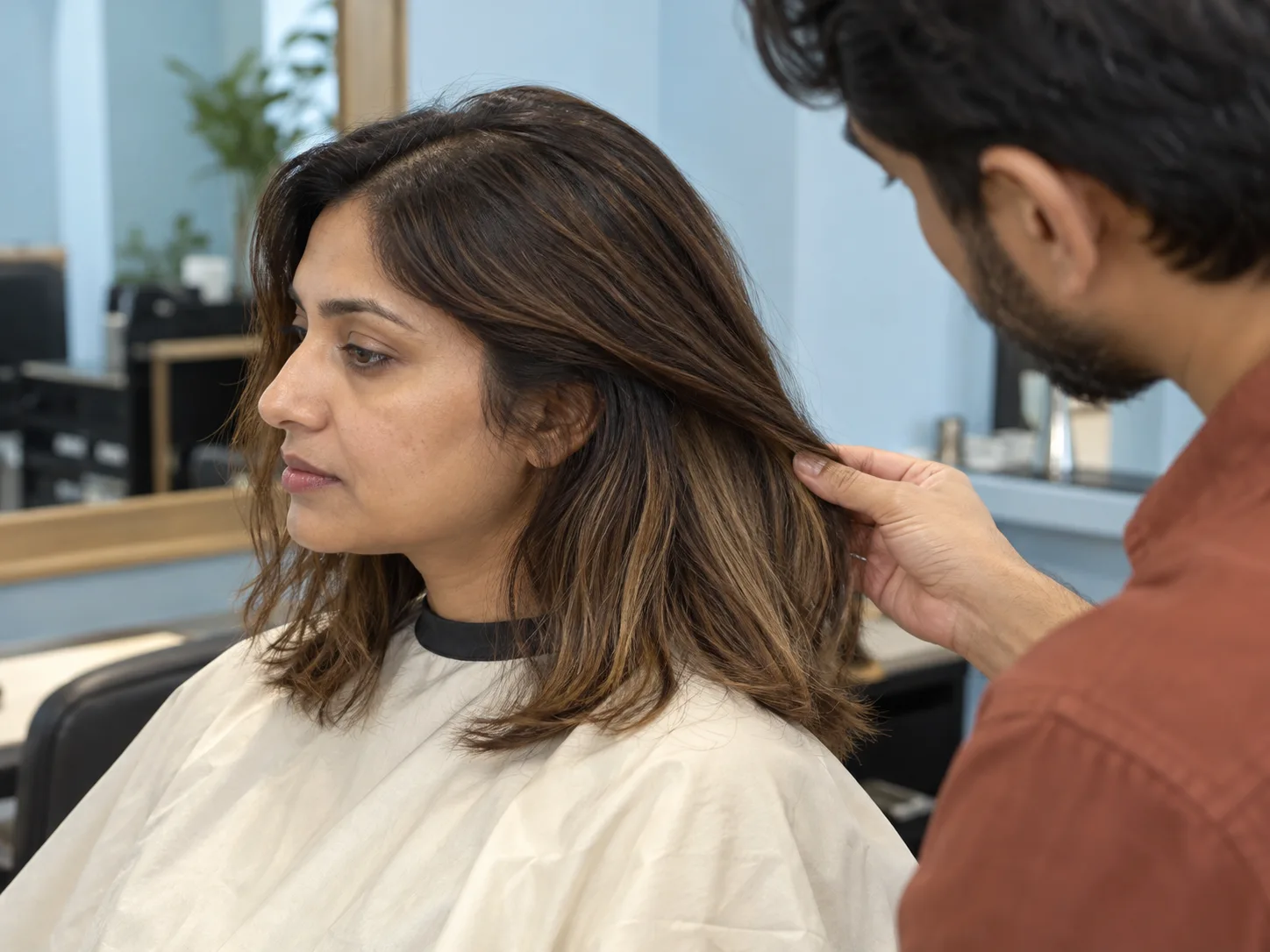
Choose an exit that does not assume the color simply disappears
Discuss what you would do if you stopped wanting the contrast. Growing the area out, gradually cutting it away and asking about professional color adjustment are different routes. Do not assume that fading pigment recreates the original starting hair, particularly if lightening was involved. Ask what an acceptable in-between appearance might be and which lengths you want to protect. You do not need to select a future corrective formula; you need to know whether the available options fit your priorities.
Review coverage again before a later haircut. A shorter outer layer may reveal an area you were happy keeping discreet, even if no fresh color is added. Take a current back view and explain whether the next visit is meant to preserve concealment, show more color or move away from the design. Do not let the request for a tidy-up decide that silently. If keeping every bit of length matters more than quickly removing the contrast, state that trade-off before consenting to another service.
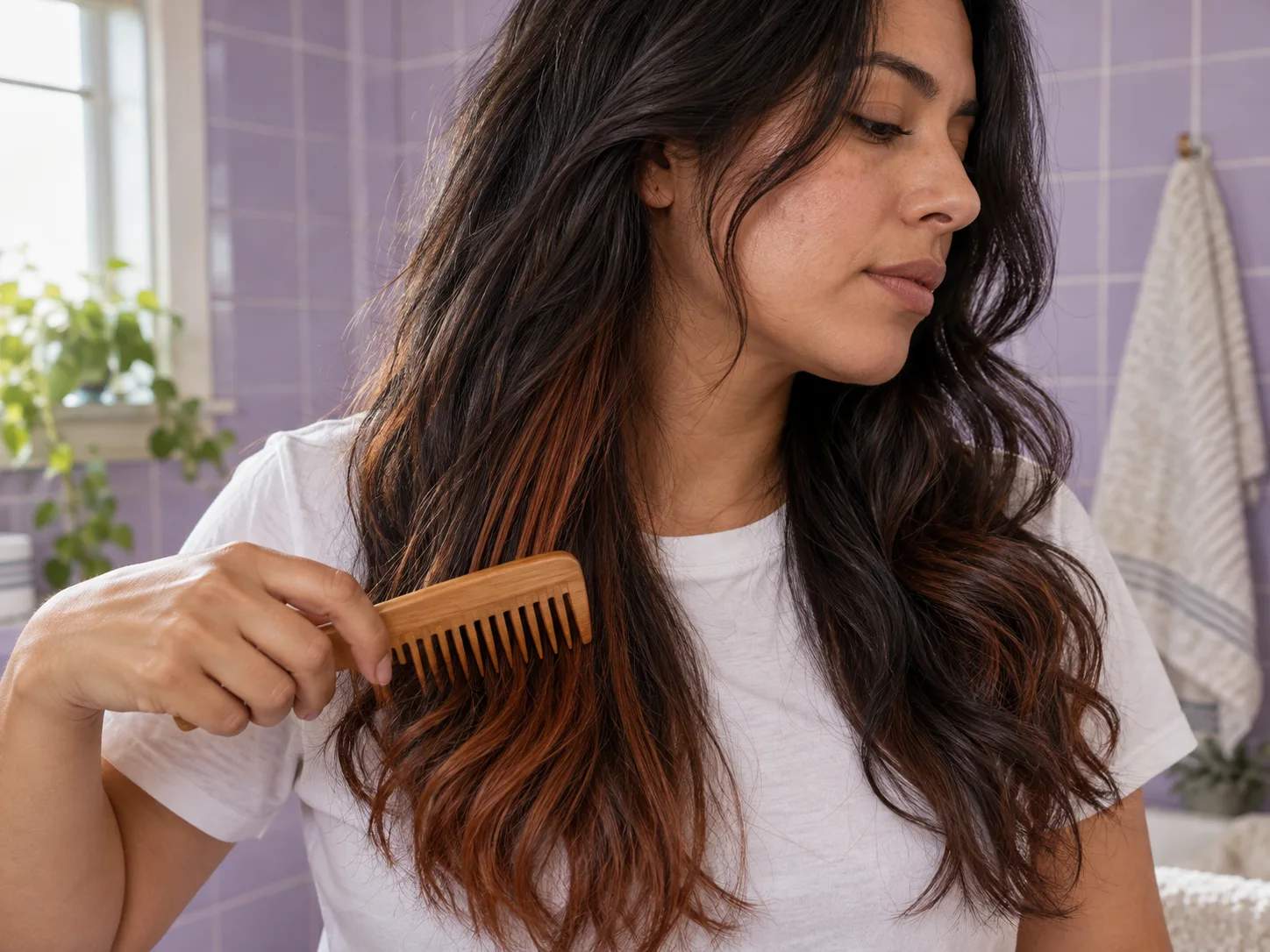
Leave with a visibility agreement you can repeat
Before the service starts, repeat the agreed area, the untreated cover and the three wearing situations that matter. Clarify whether the hairline, sides or nape are included and what happens if the starting-hair assessment changes the proposal. Ask where you can pause before an additional step. A useful brief describes your own boundaries: for example, a limited nape area, untouched front pieces and an accepted glimpse when hair is tied. Those are preferences to adapt, not a universal sectioning recipe.
If Hair Muse helped identify a broad contrast preference, bring that note alongside the real references, not as proof of hidden placement. At the finish, review the hair loose and in your usual fastening before judging only the most dramatic lifted pose. Keep the agreed care instructions and photograph the ordinary appearance for a future consultation. The useful result is an understood relationship between color, cover and daily habits, with a realistic option to decline or revise the plan.
Three terms that make this conversation clearer.
You do not need to prescribe technique. Use these words to describe the visible structure, name the behavior you want, and ask what your stylist would adapt.
Perimeter
The outside boundary of the haircut: the line you read around the bottom, sides, and overall edge. A compact perimeter usually feels fuller and more controlled, while a broken or highly layered perimeter can feel lighter, softer, or more textured.
SAY IT IN THE CHAIR“I like the movement, but I want the outside edge to remain substantial when the hair is straight or air-dried.”Open full definition
Layer map
A plain-language way to describe where the shortest layers begin, how quickly they connect to longer sections, and where movement or volume is intended to appear. Two haircuts with the same overall length can feel completely different because their layer maps differ.
SAY IT IN THE CHAIR“Show me the shortest layer, where it connects, and how much weight remains beneath it.”Open full definition
Silhouette
The complete outside shape a haircut creates when viewed as a whole: compact, rounded, triangular, elongated, wide, narrow, or deliberately irregular. It is often the most reliable feature to compare before discussing small details or a polished finish.
SAY IT IN THE CHAIR“I want this overall shape, but I am open to changing the internal technique for my hair.”Open full definition
Turn this guide into a decision.
Three honest answers are more useful than ten additional reference photos. Your responses stay on this page and can be changed at any time.
- 01Can you point to the exact structural detail you want from this cut?
Name the shortest point, outside line, layer map, or placement of volume.
- 02Have you named the boundary you do not want traded away?
Examples: tie-back length, full ends, an open forehead, dry length, or support for natural texture.
- 03Does the plan fit your real styling and maintenance rhythm?
Count ordinary mornings, fallback styles, trim frequency, and the way the shape is likely to grow.
The short answers.
Will peekaboo color stay invisible with my hair down?
Do not assume so. The cover depends on your haircut, part, movement and the proposed area. Ask to review ordinary loose, tucked and tied situations. If complete concealment is essential, explain that before agreeing to any color.
Can dark hair have an underlayer color without lightening?
The colorist must assess the real starting hair and the contrast you want. Ask for alternatives if you do not accept lightening. A photo or app cannot establish what chemical process would be needed or promise the same visible shade.
Is coloring a smaller area automatically easier to maintain?
Not necessarily. Less colored hair does not remove its care needs, and keeping it covered can add styling work. Separate daily concealment from color upkeep, then ask for a routine you can realistically follow.
Can I add short layers after the color?
Discuss that haircut before placing the color. Changing the outer layers may expose more of the underlayer. At a later cut, bring current views and repeat whether keeping the color discreet or preserving length matters more.
Can a preview map the hidden section for my stylist?
No. Available looks can clarify a broad color preference, not the exact covering hair, section boundary or treatment feasibility. Use real front, side and back references and let the professional assess your actual hair.
How this guide was built.
HairChapter separates haircut structure from styling, trend names, and medical claims. Our recommendations are decision tools, not universal rules: a stylist should adapt the direction to your starting length, density, pattern, condition, growth habits, and normal routine.
We do not claim that a photograph or AI preview can predict a finished service. Sudden shedding, patchy loss, scalp pain, persistent irritation, or an unexplained change in density belongs with a qualified medical professional—not a haircut guide.
Professional placement context
- Hairdressers Journal — Harriet Stokes on peekaboo placement The original professional interview describes panels that may be hidden or visible and revealed by movement. Only that placement distinction is used, not its trend, revenue, suitability or product claims.