
A two block haircut separates the top from what sits underneath
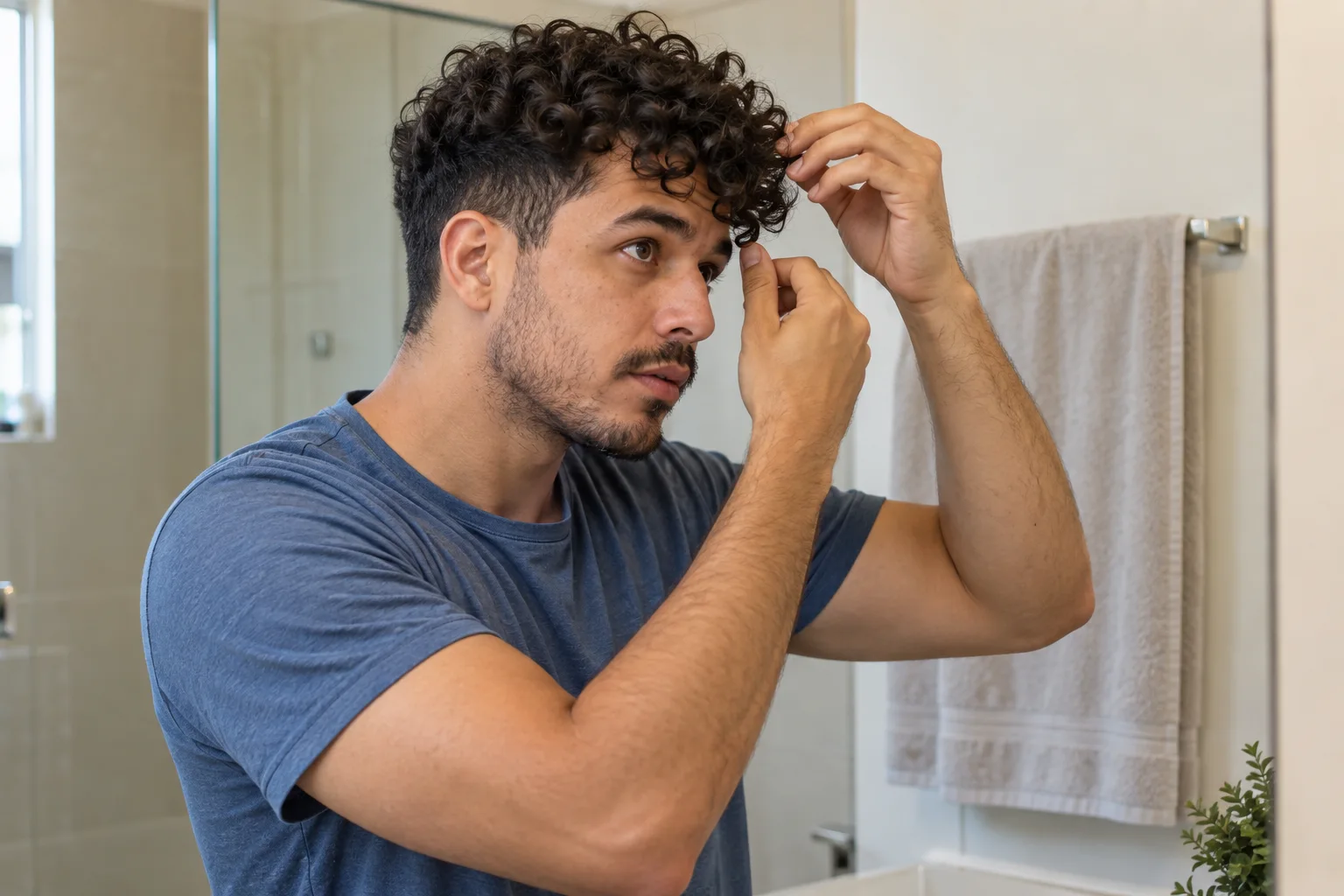
A two block haircut keeps a longer upper section over substantially shorter sides and back. CADMEN Barber Academy identifies that separation between the two lengths as its defining structure. The name alone does not tell the barber how much scalp you want visible, where the longer hair should land or whether the front should open. Those choices matter more than copying a fashionable label. Start with the relationship between top and sides, not a clipper number borrowed from someone else's appointment.
Look at a reference from the front, profile and back. An attractive fringe can conceal a much shorter lower section than you expected. Conversely, an exposed side in one photograph may come from hair being pushed away rather than a completely different haircut. Ask which part of the image is the cut and which is the styling. If you mainly like the loose front, a less disconnected shape might answer your question without taking the lower area as short.
Set the upper coverage before selecting a lower length
Say where you want the top to finish when dry and worn in its usual direction. You may want it to overlap the upper ear, sit clear of the ear or drape toward the cheek. Show the point with your hand rather than saying long enough. Then ask the barber to indicate which hair would stay in that upper section. Preserving the longest front pieces is not the same as preserving enough material to cover a side comfortably.
Discuss the side length only after that boundary is clear. Short need not mean skin-bare, and a neat neckline does not require a high fade. If the reference exposes skin, explain whether that is an essential feature or something you would prefer to soften. Ask to begin with a conservative proposal if you are unsure; the professional can explain how it would alter the contrast. There is no universal guard number that produces the same appearance on every head.

Check the ear, temple and nape as three different views
Do not assume that one appealing side view settles the whole lower haircut. Look at the temple near your glasses, the space around the ear and the nape above your usual collar. Ask the barber to show where the short area would continue around the back. A low, tidy outline and a high exposed panel can both be described casually as short sides, yet they make different commitments. Agree the visible area as well as the length left within it.
Move the top gently into the positions you actually use. Part it, let it fall forward and push it away as you would after exercise. Notice which lower areas become visible in each position. You are discussing preferences, not conducting a test that predicts the finished cut exactly. Cowlicks, density and the way your own hair rests still need an in-person assessment. A haircut should not depend on you holding the same still pose as a carefully arranged reference.
Use one photo comparison to settle a broad silhouette
If the proportions remain hard to imagine, use Hair Muse as an optional planning step before the appointment. Begin with a clear, current photo in ordinary light, with the whole hair outline visible and no filter hiding its edges. Explore the available styles for a broad contrast between a fuller upper outline and more exposed sides. A named two-block preset or independent top-and-side controls may not be available. Do not treat a different hairstyle preview as an exact rendering of the proposed structure.
Compare only one meaningful question at a time: do you prefer more upper coverage or a more open side? Keep the image conditions as consistent as the available workflow allows and set aside the appealing color or polish of a generated finish. Retain a small shortlist by whatever save or share options are actually available to you. HairChapter and Hair Muse share a publisher. Hair Muse is free to download; some functions or usage may require in-app purchases. The early App Store invitation is optional.


Bring the comparison back to your real dry texture
A preview cannot measure your density, show how a cowlick will settle or establish whether a lifted top will stay lifted. Put your current unedited photograph beside the preferred silhouette and write down the difference in ordinary language. For example: I like the top staying fuller, but I do not want the ear area taken bare. That sentence gives the barber a preference to assess rather than a demand to reproduce invented strands. Keep the original reference too, especially its side and rear views.
Describe whether you usually air-dry, use a dryer or arrange only the front. Waves and curls can make the upper outline fuller or less straight-edged than a smooth reference. That is not a flaw that automatically needs correction. Ask to see the proposed landing point in your normal dry finish and discuss what daily work a different finish would require. Do not agree to thinning, straightening or a perm simply because the picture looks lighter or smoother.
Separate the fringe decision from the short sides
A two-block structure does not require one particular fringe. Decide whether the front should fall over the forehead, open at a part or move sideways. Consider what happens when you look down, put on glasses or walk outside. A photograph of an open front may rely on deliberate styling, while the same length can fall forward when left alone. Ask the professional to demonstrate the likely direction with your current hair before agreeing to shorten the front.
Name your least acceptable outcome. Perhaps you dislike hair entering your eyes, or you want to keep enough front length to change direction. A useful brief can include both a preference and a boundary: softer forward movement, but no short straight fringe. Avoid collecting several incompatible front references and expecting the word two-block to reconcile them. Choose the everyday version first, then discuss whether an occasional styled version can remain possible without changing the underlying plan.

Budget for both the morning and the next appointment
The upper section and short lower outline can need attention for different reasons. You may still like the top when the side begins to feel wider, or the fringe may bother you before the nape looks untidy. Ask what an actual maintenance appointment would include and which lengths could be left alone. A side refresh should not silently become another full shortening of the top. Agree to reassess the plan if maintaining its contrast feels more demanding than you expected.
Use your own routine rather than a promised number of minutes or weeks. Ask for a simple demonstration using the finish you intend to repeat, and explain any limit on heat styling or product use. Hair Muse can help you revisit a broad preference later, but it cannot forecast your grow-out, maintenance interval or daily styling success. An attractive preview is not evidence that a haircut is easy. Count the work you are genuinely willing to do on an ordinary morning.
Leave with a brief that includes a way back
Before cutting starts, repeat four details: the dry upper landing point, the lower exposure you accept, the direction of the front and the finish you plan to wear. Ask the barber to confirm any proposed step that goes beyond those choices. If you have brought a shortlist, point to the specific feature you like rather than handing over several images without explanation. A clear limit is more useful than asking for the same haircut but somehow less dramatic.
Discuss what changing your mind later would involve. Growing the lower section out while keeping the top can pass through a period of extra side width; connecting the lengths may instead require shortening some of the top. Neither route needs a guaranteed timetable. Decide which compromise you would tolerate and what should not be cut at a routine refresh. Leave with a plan that makes sense without the reference photograph: fuller above, agreed exposure underneath, and no unapproved extra service.
Three terms that make this conversation clearer.
You do not need to prescribe technique. Use these words to describe the visible structure, name the behavior you want, and ask what your stylist would adapt.
Silhouette
The complete outside shape a haircut creates when viewed as a whole: compact, rounded, triangular, elongated, wide, narrow, or deliberately irregular. It is often the most reliable feature to compare before discussing small details or a polished finish.
SAY IT IN THE CHAIR“I want this overall shape, but I am open to changing the internal technique for my hair.”Open full definition
Growth pattern
The direction hair naturally leaves the scalp and moves through areas such as the front hairline, crown, nape, and around the ears. Cowlicks, whorls, and directional changes can alter how short sections lift, split, or settle.
SAY IT IN THE CHAIR“Can we look at the front and crown dry before choosing the shortest length?”Open full definition
Internal weight
The mass and density held inside the visible outline of a haircut. Thoughtful internal removal can make dense hair move or sit closer without automatically weakening the perimeter; poor placement can create short pieces, expansion, or transparent ends.
SAY IT IN THE CHAIR“Where will you remove weight, and which parts of the outline will stay visually solid?”Open full definition
Turn this guide into a decision.
Three honest answers are more useful than ten additional reference photos. Your responses stay on this page and can be changed at any time.
- 01Can you separate the top, transition, sides, and outline in your request?
A haircut name alone rarely explains how those four zones should connect or grow out.
- 02Have you named the boundary you do not want traded away?
Examples: tie-back length, full ends, an open forehead, dry length, or support for natural texture.
- 03Does the plan fit your real styling and maintenance rhythm?
Count ordinary mornings, fallback styles, trim frequency, and the way the shape is likely to grow.
The short answers.
Is a two block haircut the same as a fade?
Not necessarily. Two-block describes the relationship between a longer upper section and shorter lower sections; a fade describes a progressive change of length. Some interpretations combine them. Ask the barber to show the actual transition rather than assuming that either label specifies the whole haircut.
Do the sides have to be shaved to skin?
No single photo or style name sets your consent. Explain how much lower-side exposure you accept and ask which retained length supports that preference. A less exposed proposal may change the contrast. Agree that trade-off explicitly instead of copying a guard number.
Can wavy or curly hair use this structure?
Discuss the structure in your ordinary dry texture with a professional who understands it. A full or curly top will not read like a straight reference, and a picture cannot determine your density or fall. Bring a texture-relevant example rather than planning around compulsory straightening.
Will a preview show my exact two-block result?
No. Available previews are visual planning aids, not technical section maps. They do not guarantee real hair behavior, chemical color, exact fit, feasibility or a salon result. Use them to explain a broad preference and let the barber assess the real hair.
What if I want to grow away from it?
Tell the barber whether keeping upper length or reducing side width matters more. Growing the lower section and connecting the lengths involve different compromises. Ask what to preserve at the next appointment; do not automatically cut the top each time the lower outline is refreshed.
How this guide was built.
HairChapter separates haircut structure from styling, trend names, and medical claims. Our recommendations are decision tools, not universal rules: a stylist should adapt the direction to your starting length, density, pattern, condition, growth habits, and normal routine.
We do not claim that a photograph or AI preview can predict a finished service. Sudden shedding, patchy loss, scalp pain, persistent irritation, or an unexplained change in density belongs with a qualified medical professional—not a haircut guide.
Professional reference for the structure
- CADMEN Barber Academy — the two-block structure Used only to define the longer upper section and shorter disconnected sides/back. No fixed guard, thinning instruction, hair-type rule or styling guarantee is adopted.