U-shaped vs V-shaped haircut: decide what must stay
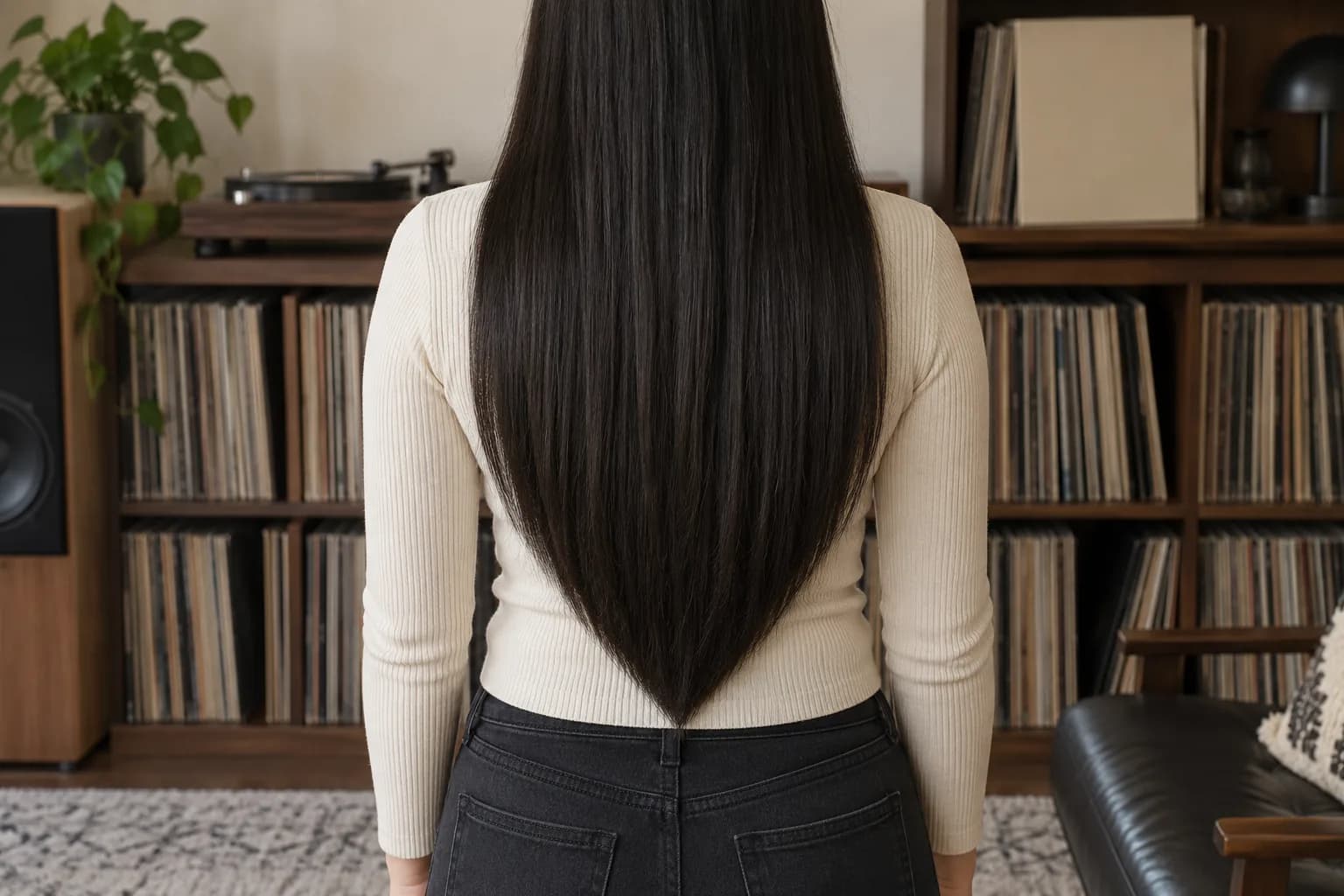
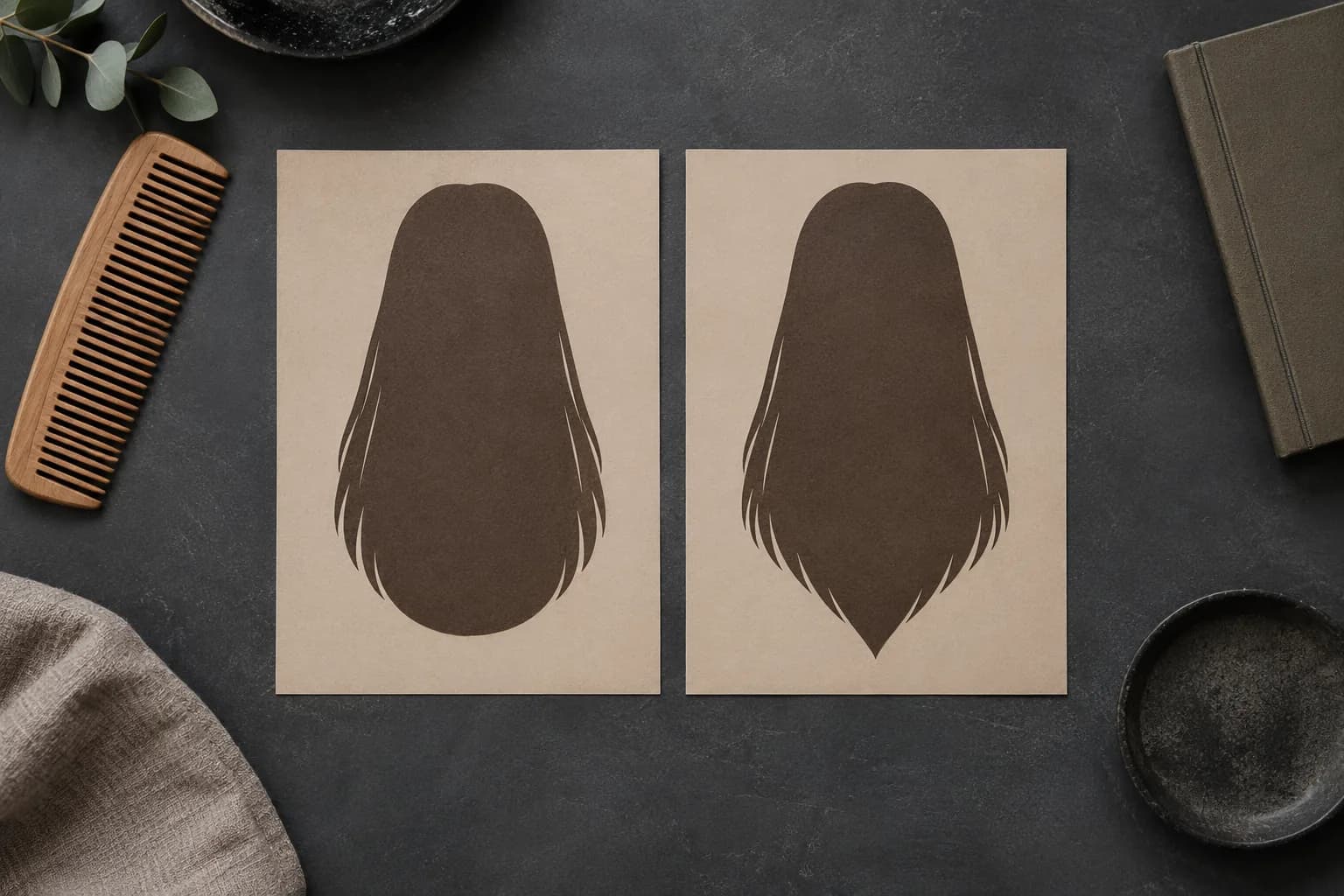
The useful starting point for a U-shaped vs V-shaped haircut is not which letter looks more fashionable. A U describes a rounded lower outline when the hair hangs down your back; a V describes an outline that converges towards a more distinct central point. Neither name tells the stylist how deep to make that shape. If you mainly want a softer edge without sacrificing much side length, discuss a shallow U. If you want a visible point and accept shorter sides, discuss a V with explicit limits.
Look at your own hair from behind before collecting idealised references. Keep your head level, release the hair and use the finish you normally wear. Identify the centre length you want to retain and the side pieces you would miss if they became shorter. Those are two separate measurements. Saying “keep it long” can preserve the very longest strand while allowing a surprising amount of hair to disappear elsewhere. Your minimum acceptable side length deserves as much attention as the maximum length down the middle.
Protect the shortest length that matters to you, not only the longest point.
Separate the outline from layers and face framing
Think of the consultation as four decisions: the longest centre, the two side endpoints, the layers through the body of the haircut and any shorter pieces around the face. A rear U or V belongs to the lower outline. Layers concern how shorter lengths sit above or within that outline. Face framing concerns the front. You can approve a rounded back without approving short crown layers, or choose a pointed perimeter without asking for a strongly feathered front.
Petit Salon Paris / Tokyo makes this distinction in its explanation of the U cut: the back perimeter and the layering are different parameters. Use that distinction to annotate your reference. Perhaps you like the curve but not the wispy ends; perhaps you like the front but not the pointed back. Say which part is the request and which part is not. A photograph is a bundle of decisions, not a single cutting instruction. If the stylist proposes layers as well, ask what job they will do and how short the first one will be.
Set a side-length boundary you can actually show
At the salon, ask the stylist to bring a representative side section forward gently and show its proposed endpoint. Compare it with the rear outline rather than assuming the hair at your chest will be as long as the centre down your back. Where hair falls changes with posture and how it is brought over the shoulder, so agree the checking position too. A familiar body landmark can help communication, but it is not a universal measurement or a promise that every strand will finish there.
Ask for a restrained first version if you are undecided. You can deepen a shallow curve or make a point more pronounced after assessing the released hair. You cannot restore a shortened side in that appointment. The same caution applies when your lengths are already uneven: creating an orderly outline may require either accepting the existing side shortage or shortening the centre. Ask to see both options before approving either. Do not let the appeal of retaining a single long point hide the cost to the rest of the perimeter.
- Show the proposed centre endpoint.
- Show the shortest side endpoint on each side.
- Agree which front pieces remain untouched.
- Pause before deepening the shape or adding layers.
Judge fullness at the ends, not the thickness label
Individual strand thickness and the number of strands reaching the perimeter are different things. Hair that feels coarse near the roots can still have a relatively narrow lower edge. Hair with fine strands can have substantial coverage at the ends. Assess the actual lower lengths against a plain contrasting top, with no hand spreading them into extra width. If a compact, substantial hemline is your priority, a modest curve may offer a smaller compromise than an emphatic point. There is no rule that every fine-haired person needs the same shape.
A pointed outline intentionally concentrates the longest hair into a narrower area. That can be the feature you love, but it should not be mistaken for preserving fullness everywhere. Ask how much hair would remain beside the point and whether extra texturising is part of the proposal. Removing weight and reshaping the perimeter are different interventions. If the ends already look sparse, do not automatically add both. Your stylist can assess whether a shallower outline, fewer layers or a different overall length better supports the finish you actually want.

Use a preview for direction, not a rear-view guarantee
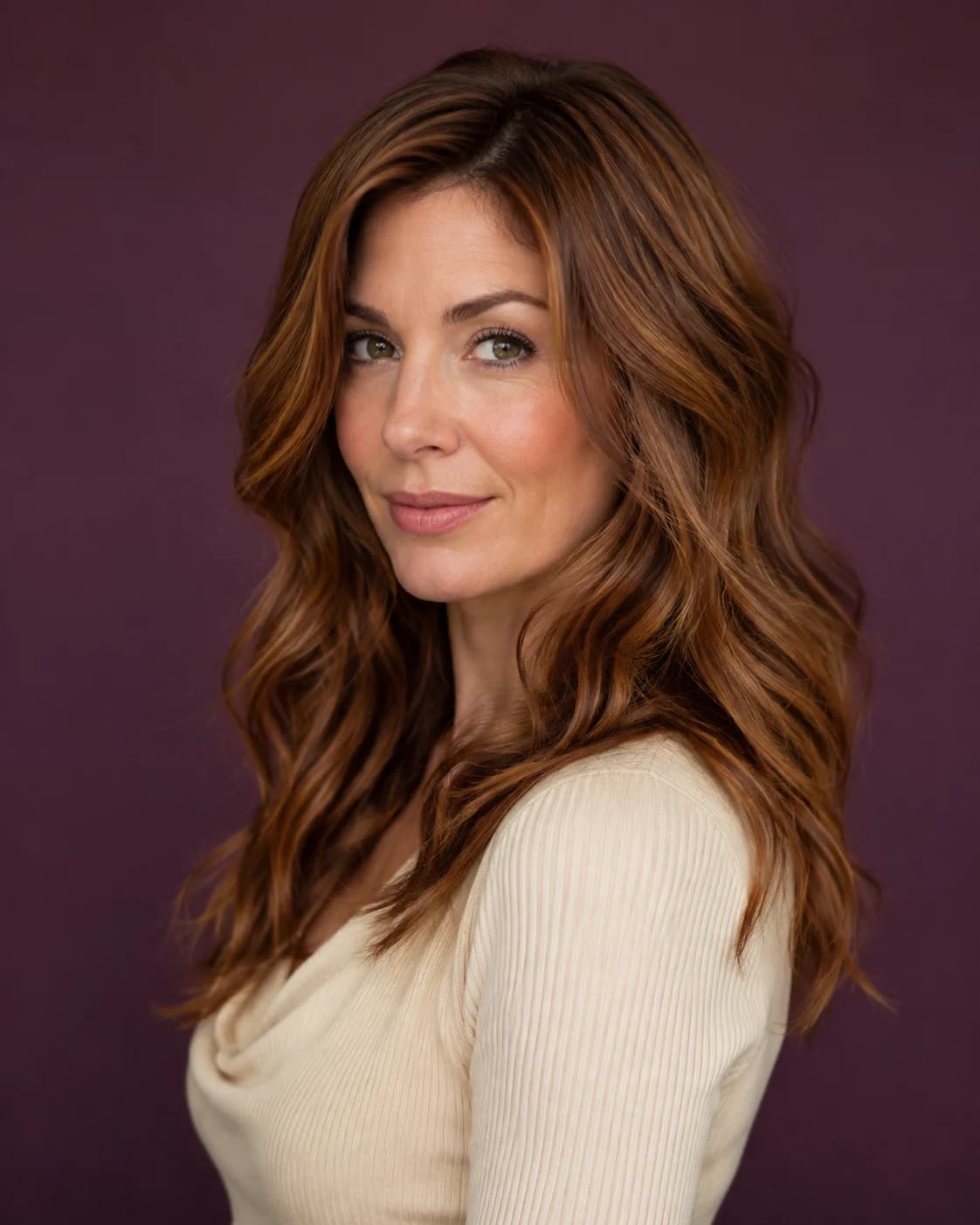
A front photograph cannot establish the precise U or V line down your back. If you are also deciding whether to keep your overall length or change the front silhouette, Hair Muse can help you explore that broader direction on your photo. Use a clear portrait in even light, then compare two focused ideas rather than changing length, colour and texture at once. Keep the original alongside your shortlist so you can explain which visual difference matters. Do not label a flattering front preview as evidence that a particular back outline will work.
HairChapter and Hair Muse share a publisher. Hair Muse is free to download; some uses or features may require in-app purchases. Its previews are planning aids, not guarantees of real density, exact back geometry, hair behaviour or salon feasibility. Keep a separate rear reference and your written side-length boundary for the appointment. If you only need a modest back-edge adjustment and are happy with the front, there is no need to invent a larger transformation for the app. A simple, specific salon discussion may already resolve the decision.
Let waves and curls fall before judging the shape
A crisp letter in a straightened photograph is not a promise of the same visible outline in natural waves or curls. Different groups can finish at different heights, and movement can interrupt what looks like a continuous edge. Arrive with your normal texture or explain how it will be assessed dry. Ask the stylist to check both sides without stretching one into agreement with the other. The goal is a balanced everyday silhouette, not a perfect diagram that requires you to keep the hair unusually still.
If you routinely straighten your hair, discuss that finish as well as the one you wear between styling days. A shape designed only for a smooth blow-dry may be less legible when released. That does not make it wrong, but the styling effort belongs in the decision. Ask which details are meant to remain visible naturally and which rely on finishing. Avoid promising yourself that a deeper V will organise every curl or that a U will automatically reduce bulk. The actual texture and distribution need an individual assessment.

Check the shape outside the rear photograph
Bring the hair forward, gather your usual ponytail and try a familiar braid before choosing a dramatic outline. Different endpoints can change how the bundle tapers or where shorter pieces become visible. This is not a generic test of whether you can tie the hair back; it is a check of whether the new perimeter supports the particular finishes you like. If you value a broad-looking braid end or a substantial ponytail, say so. If you enjoy a tapered result, that preference is equally valid.
Consider the clothes and tasks around the haircut too. Hair that usually sits over the shoulders presents a different view from hair worn entirely down the back. Do you want the outline mainly for loose-hair days, and how often are those? Maintenance should follow your tolerance for a softened edge, not an arbitrary calendar. Ask what a refresh will preserve and how the stylist will avoid gradually making the sides shorter at every visit. Keep a rear photograph of the first agreed result as a record of the boundary, not a do-it-yourself cutting template.
Agree the route back before committing to a deep point
Changing a pronounced V into a broader U may mean shortening the centre, waiting for the sides to gain length, or making smaller adjustments across several appointments. Which route is realistic depends on the current shape and your length priorities. Keeping the central point unchanged while instantly filling the empty corners is not an available cutting option. Growing hair does not automatically make all those endpoints equal either. Ask what will be left alone and what will be trimmed during the transition.
Finish the consultation with a short written brief: the outline you want, minimum side length, centre length, layer limits and normal finish. Ask the stylist to repeat the plan and show the key endpoints before starting. If you cannot agree them, postpone the deeper change and choose a smaller adjustment. That is a useful decision, not a lack of confidence. The successful haircut is the one whose trade-offs you understood before cutting, whose sides remain useful to you and whose ordinary dry shape you are willing to wear.

Three terms that make this conversation clearer.
You do not need to prescribe technique. Use these words to describe the visible structure, name the behavior you want, and ask what your stylist would adapt.
Perimeter
The outside boundary of the haircut: the line you read around the bottom, sides, and overall edge. A compact perimeter usually feels fuller and more controlled, while a broken or highly layered perimeter can feel lighter, softer, or more textured.
SAY IT IN THE CHAIR“I like the movement, but I want the outside edge to remain substantial when the hair is straight or air-dried.”Open full definition
Layer map
A plain-language way to describe where the shortest layers begin, how quickly they connect to longer sections, and where movement or volume is intended to appear. Two haircuts with the same overall length can feel completely different because their layer maps differ.
SAY IT IN THE CHAIR“Show me the shortest layer, where it connects, and how much weight remains beneath it.”Open full definition
Silhouette
The complete outside shape a haircut creates when viewed as a whole: compact, rounded, triangular, elongated, wide, narrow, or deliberately irregular. It is often the most reliable feature to compare before discussing small details or a polished finish.
SAY IT IN THE CHAIR“I want this overall shape, but I am open to changing the internal technique for my hair.”Open full definition
Turn this guide into a decision.
Three honest answers are more useful than ten additional reference photos. Your responses stay on this page and can be changed at any time.
- 01Can you point to the exact structural detail you want from this cut?
Name the shortest point, outside line, layer map, or placement of volume.
- 02Have you named the boundary you do not want traded away?
Examples: tie-back length, full ends, an open forehead, dry length, or support for natural texture.
- 03Does the plan fit your real styling and maintenance rhythm?
Count ordinary mornings, fallback styles, trim frequency, and the way the shape is likely to grow.
The short answers.
Does a U-shaped haircut always have layers?
No. The U describes the rounded lower perimeter, not the shorter lengths through the haircut. Specify the outline and layers separately. If you want a substantial edge without extra layers, say that before the stylist interprets the reference.
Can I keep my length with a V-shaped haircut?
You may retain a long centre while losing length at the sides. Ask which lengths will be removed and where the shortest side will end. “Keep it long” is not precise enough if you want to protect the whole perimeter.
Which is better when my ends look thin?
Assess how much hair reaches your lower edge rather than relying on a hair-type label. A shallow curve can preserve more visual width than a deep point, but your existing side lengths and layering matter. Discuss the smallest useful change.
Can I change a V cut into a U without cutting the centre?
Not necessarily. A broader outline may need shorter central length or time for the sides to catch up. Ask for a transition plan and agree which area will remain untouched. Neither a trim nor a preview can add missing side length.
Can an app show the exact U or V result on me?
Do not use a front-portrait preview to validate the back outline. It can help communicate general length or front shape, but the stylist must assess the rear perimeter, density and dry texture on your actual hair.
How this guide was built.
HairChapter separates haircut structure from styling, trend names, and medical claims. Our recommendations are decision tools, not universal rules: a stylist should adapt the direction to your starting length, density, pattern, condition, growth habits, and normal routine.
We do not claim that a photograph or AI preview can predict a finished service. Sudden shedding, patchy loss, scalp pain, persistent irritation, or an unexplained change in density belongs with a qualified medical professional—not a haircut guide.
Professional sources and context
- Petit Salon Paris / Tokyo — understanding the U-shaped outline A salon explanation of a rounded lower perimeter and its distinction from layers.