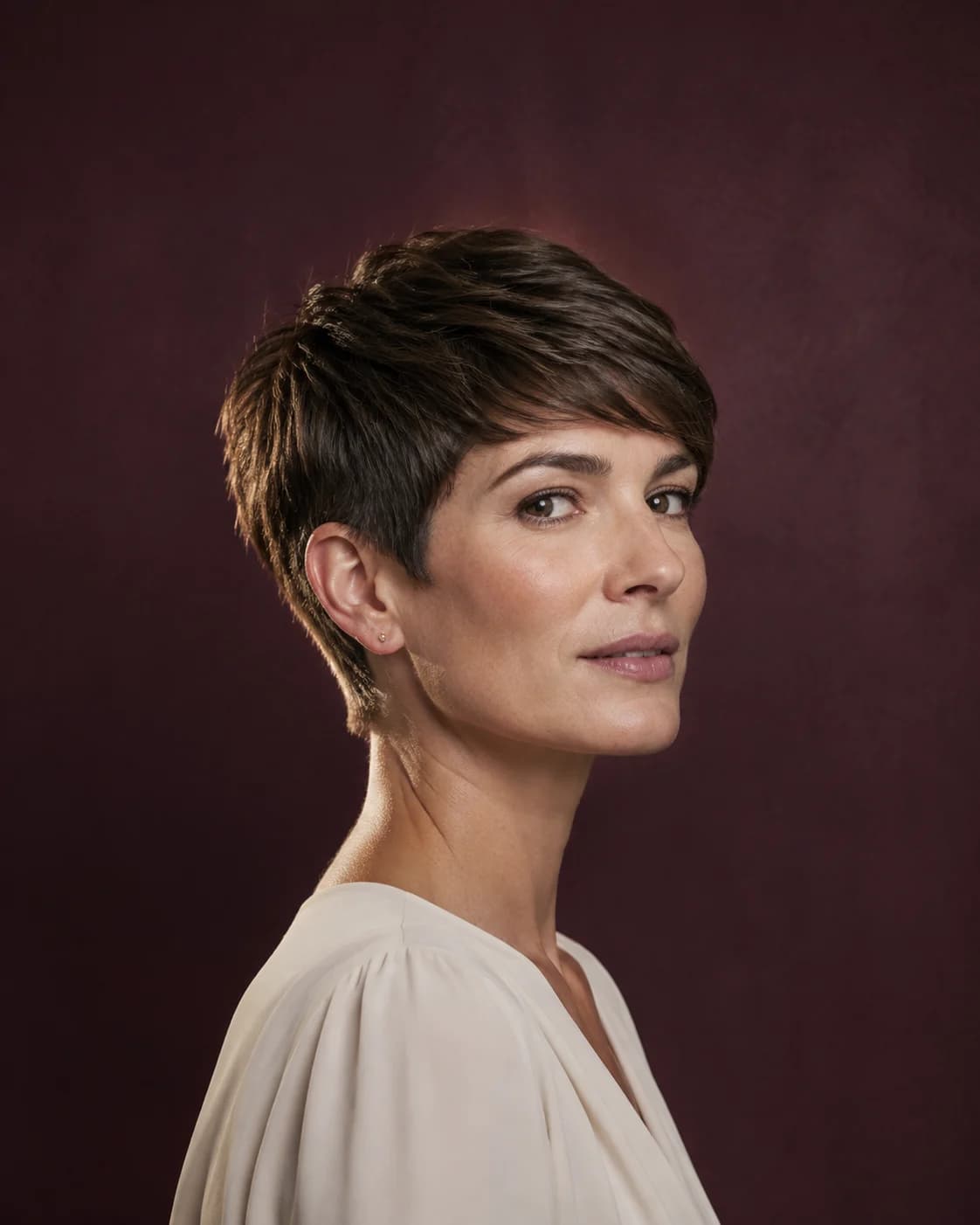
LONG / LOW UPKEEP
The long blended layer
A lower-contrast layer map that releases movement while protecting the overall length, perimeter density, and dependable tie-back behavior.
- Length
- Long
- Texture read
- Straight / Wavy / Curly
- Upkeep
- Low
Updated 06 Sep 2026 · Haircut guidance, not a universal suitability rule · Hair Muse relationship disclosed
How we publishTHE EDITORIAL READ
See what the finished photograph can hide.
Long blended layers create movement through a relatively small difference between the shortest internal section and the perimeter. Their strength is subtlety: they can release weight and create bend without turning every shorter piece into a separate visual event.
That subtlety is also the trade-off. On very straight, heavy, or minimally styled hair, the layer story may be quieter than the reference. Decide whether you want movement to exist in the cut, appear in the finish, or both, then set the shortest point accordingly.
THE CUT IN FOUR LINES
Read the architecture.
- 01 / Silhouette
- Long with a softly released interior
- 02 / Perimeter
- Full and visibly connected
- 03 / Movement
- Low-contrast and blended
- 04 / Pressure point
- Layers that are too subtle to show without styling or too short to remain in a tie-back.
THE ROUTINE TEST
How the look lives after the salon finish.
Use the timeline as a planning lens, then adapt it to your wash rhythm, weather, styling method, and the way your own hair changes between appointments.
Let the foundation lead.
The perimeter should keep the haircut readable even when the internal movement is not deliberately styled. Add bend only where you want the layers to separate.
Use reliable containment.
Long layers should preserve most ties, clips, and half-up styles. Note any front or crown pieces that repeatedly escape your preferred fallback.
Watch heaviness return.
The layers often disappear into the length gradually. Rebook when movement collapses or the lower section feels heavy, not only when the ends look longer.
MAKE THE IDEA YOURS
Adapt the direction without losing its point.
A reference is useful when you know which structural idea should survive and which detail can change for your texture, density, routine, or comfort level.
Keep the layer map low.
Begin movement closer to the ends and preserve more strands in the perimeter so the foundation does not become transparent.
Release targeted interior weight.
Ask where bulk can be removed without exposing the lower edge or creating short pieces that expand away from the shape.
Move the face frame first.
A stronger front section can create freshness while the main layer map stays connected, reversible, and friendly to tie-backs.
THE FINAL CHECK
Is this the right trade-off?
- Choose it when
- You want a forgiving first layer change, fuller ends, dependable fallback styles, and a grow-out that merges quietly.
- Reconsider when
- You want dramatic crown lift, obvious separation, or a haircut whose internal architecture reads strongly without styling.
SAY IT IN THE CHAIR“Add movement without making the ends transparent or losing my usual tie-back.”